Nila Kartika Wati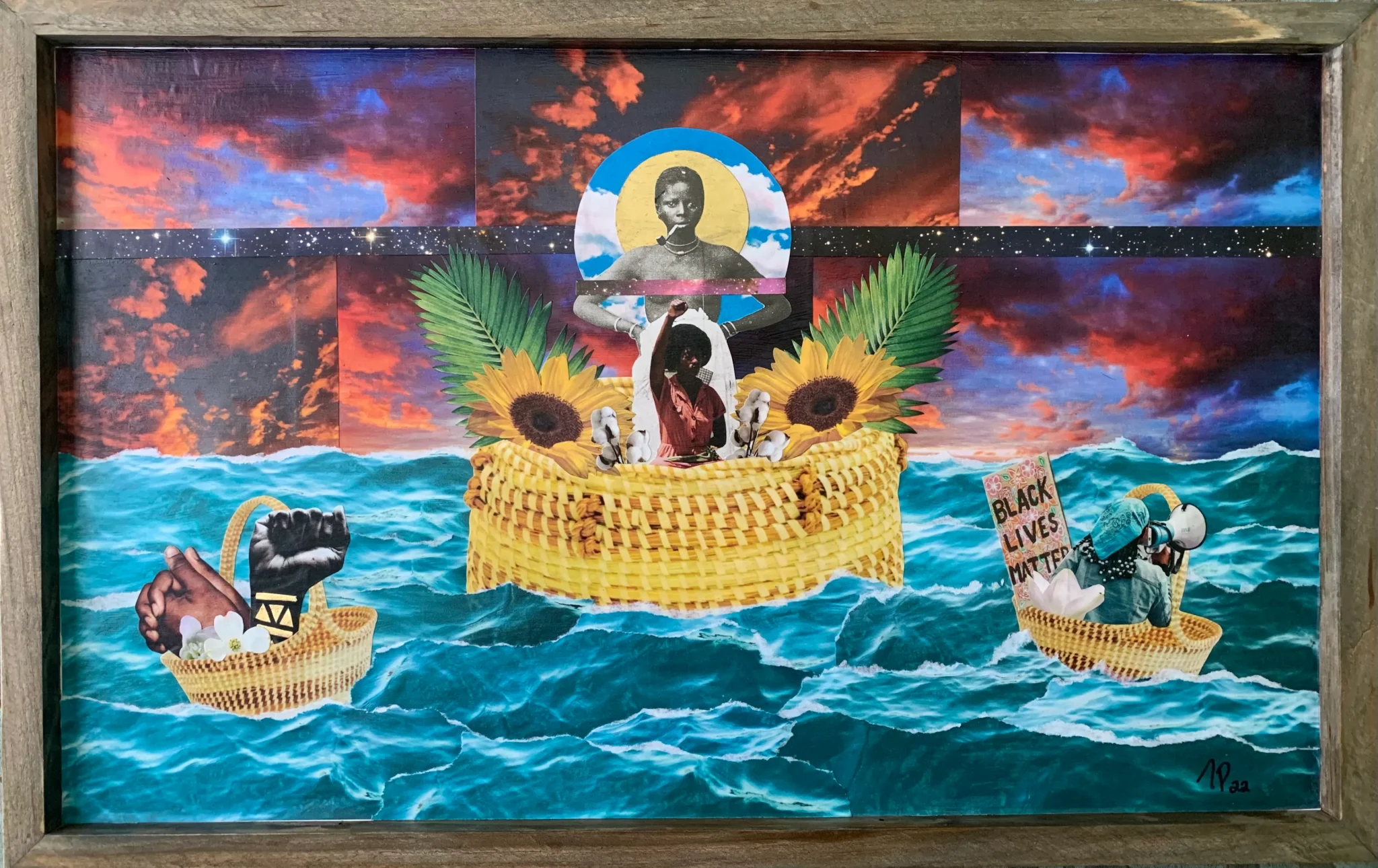
The Artistic Vision of Nancey B. Price
Nancey B. Price is a storyteller and analog collage artist whose work is deeply rooted in the soil of the American South. Based in rural Georgia, Price utilizes her medium to blur the boundaries between the everyday and the extraordinary, drawing heavily from folklore, oral histories, and Southern Gothic traditions. Her practice is a meticulous process of reconstruction; by using analog collage—cutting and assembling physical pieces of paper—she mirrors the historical process of piecing together fragmented memories and suppressed histories.
Price’s career has been marked by a series of high-profile commissions and features that underscore her influence in the contemporary art world. Her work has appeared in major publications such as O, The Oprah Magazine, Garden & Gun Magazine, and Southern Cultures. Beyond the gallery space, Price’s art has reached literary and musical audiences, notably through her cover artwork for the National Book Award-nominated "The Unboxing of a Black Girl" by Angela Shanté and album artwork for the Cincinnati Symphony Orchestra’s "Harlem Renaissance." This multidisciplinary reach highlights the versatility of her visual language and its resonance across different sectors of American culture.
Historical Context: The Intangible Cargo of the Middle Passage
The thematic core of Things We Carried lies in the historical reality of the Middle Passage. While historical records often focus on the physical brutality and economic aspects of the slave trade, Price’s work shifts the focus toward the "cargo" that could not be shackled: the intellect, the faith, and the creative spirit of the enslaved.
Historians have long documented how enslaved Africans brought sophisticated agricultural knowledge to the Americas. For example, the cultivation of rice in the Lowcountry of South Carolina and Georgia was made possible by the specific expertise of people from the "Rice Coast" of West Africa. Similarly, the spiritual practices that evolved into the Black church and various syncretic religions across the Caribbean and South America were born from the ancestral beliefs carried across the ocean. Price’s collage serves as a modern visual repository for these legacies, suggesting that the "things we carried" are the very foundations of American culture and survival.
Chronology of Artistic Development and Public Engagement
The evolution of Price’s work, culminating in pieces like Things We Carried, follows a timeline of increasing community engagement and professional recognition:
- Early Career: Focus on analog collage as a personal tool for exploring Southern identity and memory in rural Georgia.
- Expansion into Storytelling: The launch of the podcast "Dreaming in Color with Nancey B. Price," which provided a platform for discussing the intersection of Blackness, art, and the Southern landscape.
- Educational Outreach: Price began leading workshops with organizations such as the DEEP Center and the Savannah Black Art Expo. These sessions focused on using collage as a tool for personal storytelling and reflection, particularly for marginalized voices.
- National Recognition: High-profile commissions for the National Book Award nominees and major symphony orchestras solidified her status as a leading voice in contemporary Black art.
- Academic Collaboration: Facilitating workshops at the University of South Carolina and the University of Rhode Island, where her methods were integrated into broader discussions on visual literacy and historical memory.
Analysis of Visual Symbolism and Resistance
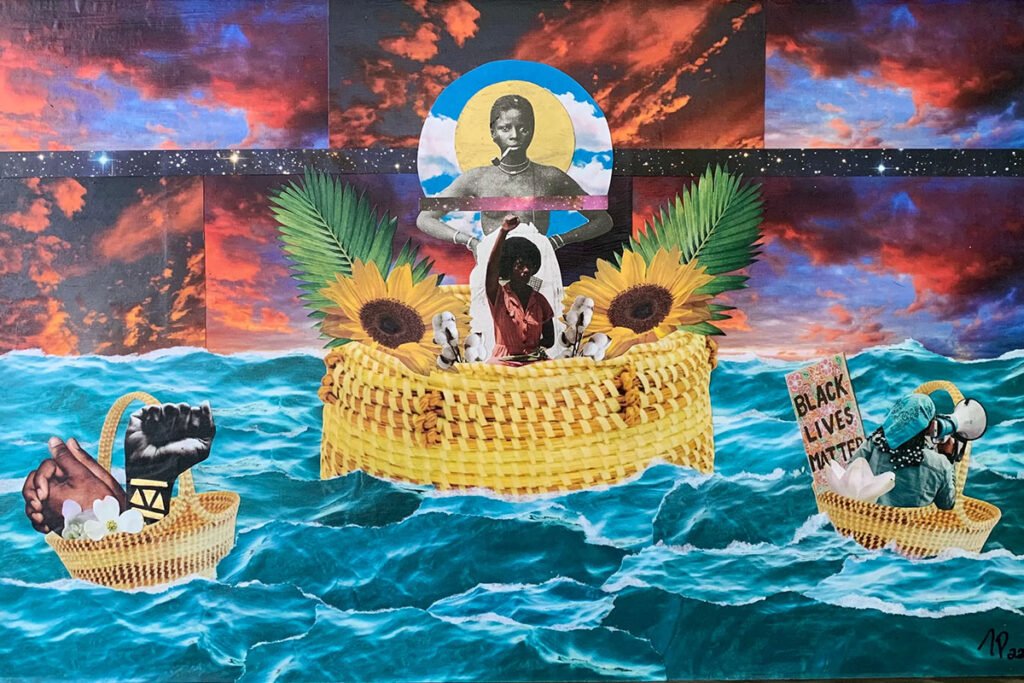
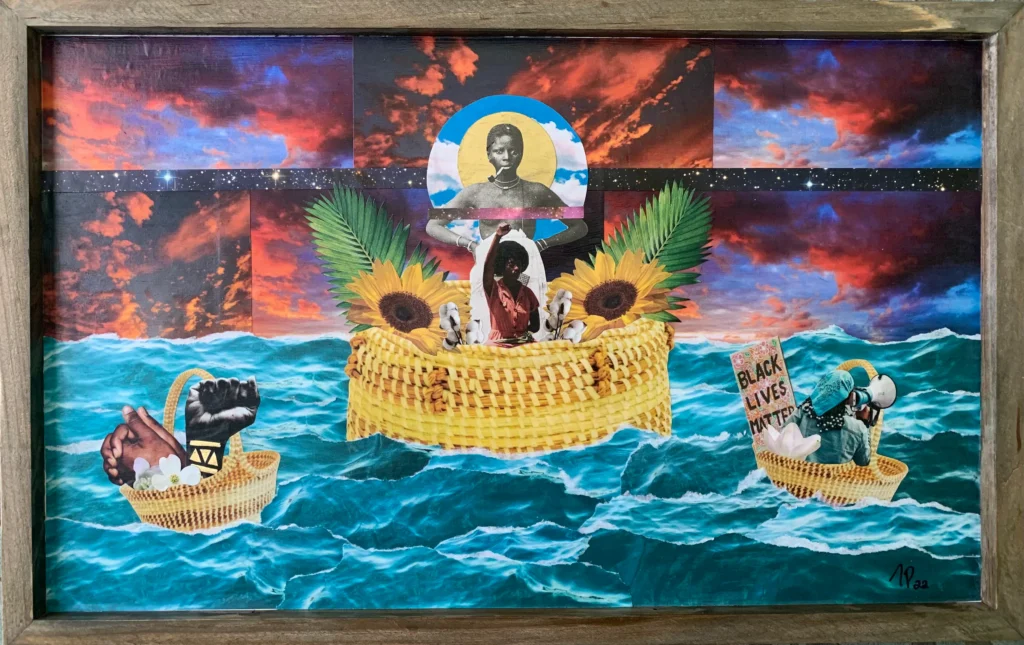
In Things We Carried, the imagery is both surreal and deeply grounded in political reality. The collage features a woman floating in a basket upon the ocean—a direct reference to the maritime journey of the Middle Passage. However, rather than a scene of despair, the composition suggests a vessel of preservation. Accompanying baskets contain powerful symbols: black fists raised in solidarity and a protester holding a "Black Lives Matter" sign.
This juxtaposition of historical transit and modern activism is a deliberate choice by the artist to show that the struggle for liberation is a continuous thread. The black fists represent the "spirit that could not be ignored," while the reference to Black Lives Matter grounds the work in the 21st-century fight against systemic inequality. By placing these symbols in the context of the ocean, Price suggests that the tools for resistance were present from the very beginning of the African diaspora in the West.
Supporting Data: The Role of Black Art in the Modern Economy
The significance of artists like Nancey B. Price is underscored by the shifting demographics and economic realities of the art world. According to a 2019 study published in the journal PLOS ONE, which analyzed the collections of 18 major U.S. museums, 85.4% of the artists represented are white, and 87.6% are men. Black artists accounted for only 1.2% of the works in these institutional collections.
However, the demand for Black art and narratives has seen a sharp increase in recent years. Market reports from Artnet and Sotheby’s have indicated a rising valuation for works that engage with social justice and Black history. This economic shift reflects a broader societal recognition of the need for diverse perspectives in the American canon. Organizations like the Nonprofit Quarterly (NPQ) play a crucial role in this ecosystem by providing a platform for artists and nonprofit leaders to share insights that challenge traditional power structures.
Official Responses and Community Impact
The impact of Price’s work extends into the nonprofit and educational sectors. Facilitators at the DEEP Center in Savannah have noted that Price’s workshops provide a vital outlet for youth to process complex emotions through visual art. By teaching participants to "bring their stories to life" through collage, Price empowers a new generation to view their personal and communal histories as sources of strength.
Public reaction to Things We Carried has emphasized its role as a bridge between generations. Viewers have noted that the work provides a visual language for the "intergenerational resilience" often discussed in sociological circles. The ability of the artwork to communicate across various media—from magazines to album covers—has allowed it to serve as a catalyst for conversations regarding the protection of nonprofit voices and the health of a multiracial democracy.
Broader Implications and the Future of Black Southern Art
The work of Nancey B. Price sits at the intersection of art, history, and social advocacy. Things We Carried is more than a single piece of art; it is part of a larger movement to reclaim the narrative of the American South. For decades, Southern art was often pigeonholed into "folk art" or "outsider art" categories that marginalized Black creators. Price’s sophisticated use of analog collage and her engagement with Southern Gothic traditions demand a reevaluation of these labels.
As journalism, nonprofits, and democratic institutions face increasing scrutiny and pressure, the role of the artist-as-witness becomes even more critical. Price’s work suggests that the "spirit" she describes—the flame that refused to be extinguished—is the same spirit required to protect truth and equity in the modern era. By documenting what was carried, Price ensures that the contributions and the resilience of the African diaspora remain at the forefront of the American consciousness.
The continued success of Price’s workshops and her presence in major cultural publications suggest a growing appetite for art that does not shy away from the complexities of the past. As she continues to explore memory and land, her work will likely remain a cornerstone for those seeking to understand the enduring power of the Black spirit in the face of historical and contemporary adversity. Things We Carried stands as a definitive marker of this journey, reminding the public that while much was taken, the most essential elements of humanity and culture were preserved and continue to thrive.