Lana Rhoades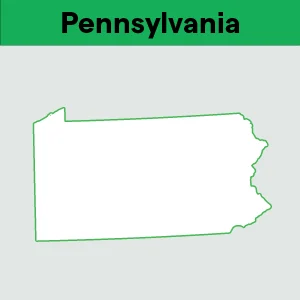
The administration of sales and use tax in the United States remains one of the most complex regulatory hurdles for retailers, particularly those operating within the food and beverage sector. In Pennsylvania, the Department of Revenue oversees a tax structure that seeks to balance the necessity of consumer goods with the state’s fiscal requirements. While the Commonwealth is often categorized as a "tax-friendly" state regarding essential groceries, the nuances between what constitutes a non-taxable grocery item and a taxable prepared meal require meticulous attention to detail. For businesses operating in the Keystone State, understanding the distinction between exempt "necessities" and taxable "luxuries" or "services" is paramount to maintaining compliance and avoiding costly audits.
The Foundation of Pennsylvania Sales and Use Tax
The Pennsylvania Sales and Use Tax was originally authorized by the Tax Reform Code of 1971. Currently, the state maintains a base sales tax rate of 6%. However, local jurisdictions have the authority to impose additional levies. For instance, items sold in Allegheny County are subject to an additional 1% local tax, bringing the total to 7%, while the City of Philadelphia imposes a 2% local tax, resulting in a total sales tax of 8%.
The primary objective of the state’s tax code regarding food is to alleviate the financial burden on residents for "essential" living expenses. Consequently, most food items intended for home preparation and consumption are exempt from the 6% state tax. However, the definition of what constitutes "food" versus "prepared food" is a frequent source of confusion for both brick-and-mortar retailers and e-commerce sellers who have established nexus within the state.
Grocery Exemptions: The Core of the Keystone State Policy
In Pennsylvania, the general rule is that "food for human consumption" is exempt from sales tax. This category encompasses the vast majority of items found in a typical grocery aisle. This includes, but is not limited to:
- Fresh produce (fruits and vegetables)
- Meat, poultry, and fish
- Dairy products (milk, cheese, yogurt)
- Grains, cereal, and bread products
- Canned goods and frozen entrees (not heated)
A unique aspect of Pennsylvania’s tax code is its treatment of confectionery products. While many states have moved toward taxing "junk food" or candy as a way to generate revenue and discourage unhealthy consumption, Pennsylvania remains an outlier. Due in large part to the state’s historical and economic ties to the chocolate industry—most notably as the home of the Hershey Company—candy and gum are classified as non-taxable food items. This exemption extends to chocolate bars, fruit drops, hard candies, and chewing gum, provided they do not meet the criteria for "prepared food."
The Taxation of Prepared Meals and Ready-to-Eat Foods
The tax landscape shifts significantly when food is processed, heated, or served for immediate consumption. Under Pennsylvania law, "prepared food" is generally taxable at the standard 6% rate (plus any applicable local taxes). The Department of Revenue defines taxable prepared food as:
- Food sold in a heated state or heated by the seller.
- Food containing two or more ingredients mixed or combined by the seller for sale as a single item (with certain exceptions for bakery items).
- Food sold with eating utensils provided by the seller, such as plates, knives, forks, spoons, or straws.
This classification applies to restaurants, cafes, snack bars, and even grocery store delis. For example, a cold rotisserie chicken sold in the refrigerated section of a grocery store is typically exempt as a grocery item. However, if that same chicken is sold under a heat lamp, it becomes a taxable "hot meal." Similarly, a sandwich prepared at a deli counter for a customer is taxable, whereas a pre-packaged loaf of bread and a package of deli meat purchased separately are exempt.
Beverage Taxability: Navigating the 25% Rule
The taxation of beverages in Pennsylvania follows a specific set of criteria based on ingredients and carbonation. Non-taxable beverages—those considered "food" for the purpose of the law—include:
- Coffee and coffee substitutes
- Tea (excluding ready-to-drink sweetened bottled teas in some cases)
- Pure water
- Cocoa
- Milk and non-carbonated drinks made from milk derivatives
Conversely, soft drinks are strictly taxable. Pennsylvania defines soft drinks as non-alcoholic beverages, in any form, which are carbonated. This includes soda, ginger ale, and carbonated water.
Fruit drinks and "ades" (like lemonade) occupy a middle ground. To be exempt from sales tax, a fruit drink must contain at least 25% natural fruit juice by volume. Any fruit-flavored beverage containing less than 25% natural juice is classified as a taxable soft drink, regardless of whether it is carbonated. This distinction requires retailers to carefully examine the nutritional labels of the products they stock to ensure accurate tax collection at the point of sale.
A Chronology of Pennsylvania Food Tax Policy
The evolution of Pennsylvania’s food tax policy reflects the state’s shifting economic priorities over the last half-century:
- 1953: The first temporary sales tax was introduced in Pennsylvania at a rate of 1%.
- 1956: The Selective Sales and Use Tax Act was passed, which began the trend of exempting specific "necessities," including many grocery items.
- 1971: The Tax Reform Code consolidated various tax laws and established the 6% rate. This era solidified the exemption for "food for human consumption" while clarifying that "meals" were a taxable service.
- 1991: Significant amendments were made to the definition of "soft drinks," expanding the taxable base to include various non-carbonated fruit-flavored beverages with low juice content.
- 2016: The City of Philadelphia introduced the "Philadelphia Sweetened Beverage Tax" (often called the Soda Tax). While this is an excise tax paid by distributors rather than a sales tax paid by consumers at the register, it fundamentally changed the pricing and retail landscape for beverages in the state’s largest city.
Data and Economic Implications
The exemption of groceries represents a significant "tax expenditure" for the Commonwealth. According to data from the Pennsylvania Independent Fiscal Office (IFO), sales tax is the second-largest source of revenue for the state’s General Fund, trailing only the Personal Income Tax.
In the 2022-2023 fiscal year, Pennsylvania collected over $13 billion in sales and use tax. Analysts estimate that if the state were to eliminate the exemption on groceries, it could generate an additional $1.5 billion to $2 billion annually. However, such a move is widely considered politically untenable, as it would disproportionately affect low-income households who spend a higher percentage of their earnings on food.
For businesses, the cost of non-compliance is high. The Pennsylvania Department of Revenue conducts regular audits of "mixed" retailers—businesses like convenience stores or "grocerants" (grocery stores with large prepared food sections). These audits often focus on the misclassification of prepared foods as exempt groceries.
Industry Perspectives and Regulatory Responses
Trade organizations, such as the Pennsylvania Food Merchants Association (PFMA), frequently engage with state legislators to clarify these definitions. The rise of "ready-to-eat" meals in grocery stores has created a "gray area" that many retailers find difficult to navigate.
"The challenge for our members is the speed of innovation," says a representative of the retail sector. "When a grocery store starts offering sushi made on-site or a salad bar, they are essentially operating a restaurant within a grocery store. The software requirements to handle these different tax statuses for thousands of SKUs are immense."
The Department of Revenue has responded by issuing periodic "Retailer’s Information" guides (such as the REV-717), which provide exhaustive lists of taxable and exempt items. However, as new products enter the market—such as plant-based milk alternatives or hybrid energy drinks—the state often has to issue specific letter rulings to determine their taxability.
Comparative Analysis: Pennsylvania vs. Other States
Pennsylvania’s approach to food tax is relatively straightforward compared to some of its neighbors.
- New Jersey: Also exempts most groceries and candy but taxes soft drinks.
- New York: Exempts most groceries but has complex rules regarding "similar" items, such as the famous "sliced bagel tax," where a whole bagel is exempt but a sliced or toasted bagel is taxable as a prepared meal.
- West Virginia: Previously taxed groceries but eliminated the tax in 2013 to remain competitive with Pennsylvania and Ohio.
- Illinois: Represents a different model entirely, where groceries are not exempt but are taxed at a significantly reduced rate (1%) compared to the general sales tax.
Pennsylvania’s decision to remain "candy-friendly" remains its most distinct feature in the regional landscape, effectively subsidizing a major local industry while keeping consumer costs low for confectionery goods.
Broader Impact and the Role of Automation
As e-commerce continues to dominate the retail landscape, the concept of "nexus"—the connection between a seller and a state that requires the seller to collect sales tax—has become a central focus. Following the Supreme Court’s 2018 Wayfair decision, businesses with no physical presence in Pennsylvania must still collect sales tax if they exceed $100,000 in annual sales into the state.
For a national food brand, this means managing 50 different sets of rules. An item that is exempt in Pennsylvania might be taxed at 1% in Illinois, 4% in New York, and 7% in Indiana. This complexity has led to a surge in the adoption of tax automation software. These systems use Application Programming Interfaces (APIs) to categorize products instantly based on Global Trade Item Numbers (GTINs) and apply the correct local and state tax rates.
Conclusion: Navigating Future Compliance
The Pennsylvania food and beverage tax code is designed to protect consumers’ access to basic nutrition while ensuring that the service-oriented sector of the food industry contributes to the state’s revenue. For the retailer, the burden of proof remains on their ability to distinguish between a "grocery" and a "meal."
As consumer habits continue to lean toward convenience and prepared options, the lines between these categories will likely blur further. Success for businesses in the Pennsylvania market will depend on a combination of rigorous internal auditing, staying abreast of Department of Revenue updates, and leveraging technological solutions to automate the calculation of taxes in real-time. In a state where a chocolate bar is a necessity but a hot rotisserie chicken is a taxable service, precision is not just a best practice—it is a legal requirement.