Dwi Wanna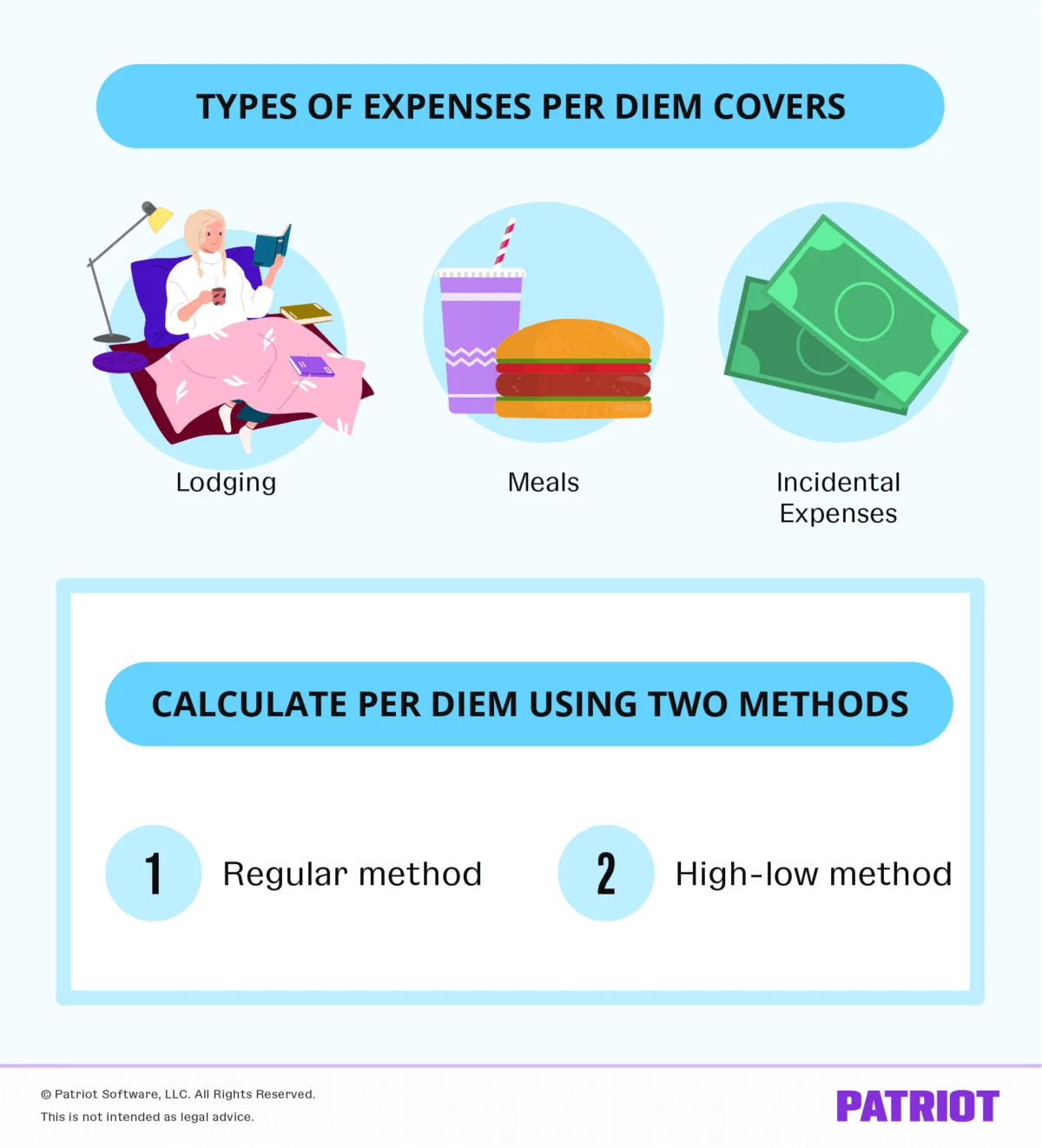
The landscape of corporate travel reimbursement is undergoing a significant shift as the 2026 fiscal year approaches, with the General Services Administration (GSA) and the Internal Revenue Service (IRS) releasing updated figures for per diem allowances. Per diem, a Latin term meaning “for each day,” serves as a fixed daily stipend provided to employees to cover essential costs incurred while traveling for business purposes. This method of reimbursement stands as a streamlined alternative to the "actual expense" model, which requires exhaustive tracking of every individual receipt. By utilizing per diem, organizations can predict travel costs with greater accuracy while reducing the administrative burden on accounting departments. As businesses navigate an era of fluctuating hospitality costs and evolving federal regulations, understanding the mechanics of per diem—ranging from lodging and meal rates to tax implications and the Fair Labor Standards Act (FLSA) exemptions—remains a critical component of human resources and payroll management.
The fundamental structure of a per diem payment typically encompasses three specific categories: lodging, meals, and incidental expenses (M&IE). Lodging includes the cost of overnight stays in hotels, motels, or other commercial establishments. The M&IE portion covers breakfast, lunch, and dinner, as well as small but necessary costs such as fees and tips for porters, baggage carriers, and hotel staff, along with dry cleaning or laundry services. It is a common misconception that per diem covers all travel-related costs; however, federal guidelines explicitly exclude transportation expenses. Costs such as airfare, rental cars, and mileage for personal vehicle use must be reimbursed separately, often based on the standard IRS mileage rate, rather than through a daily per diem stipend.
The regulatory environment surrounding per diem is governed primarily by the IRS and the GSA, which adjust rates annually to reflect changes in the cost of living and market prices in the hospitality sector. For the 2026 fiscal year, which begins on October 1, 2025, the federal government has established a standard per diem rate of $178 per day for most locations within the Continental United States (CONUS). This is subdivided into $110 for lodging and $68 for meals and incidental expenses. While this standard rate applies to the majority of the country, the GSA identifies hundreds of "non-standard areas" (NSAs) where the cost of living is significantly higher, requiring elevated rates to ensure employees are not paying out of pocket for mandatory business travel.
A critical nuance in the application of per diem pay is the treatment of travel days. Under federal guidelines, employees are generally not entitled to the full M&IE rate on the first and last days of a business trip. Instead, employers typically pay 75% of the applicable daily rate for these transition days. This policy accounts for the fact that travelers often spend part of their first and last days at home, where they would have provided their own meals. For example, an employee traveling to a standard-rate location for a three-day trip would receive the full $110 lodging rate for the two nights spent away, but the $68 meal allowance would be adjusted. They would receive $51 (75%) for the first day, $68 (100%) for the second day, and $51 (75%) for the third day, totaling $390 for the entire trip.
Chronologically, the process of managing per diem begins well before the employee departs. Most corporate policies allow for per diem to be distributed either as an advance or as a reimbursement following the submission of an expense report. Regardless of the timing of the payment, the IRS requires a level of accountability to maintain the tax-exempt status of these funds. Employees are mandated to file an expense report within 60 days of the expense being incurred. This report must document the date, time, place, and business purpose of the travel. Notably, because per diem is a fixed rate, employees are not required to provide specific receipts for every meal or incidental purchase, provided the payment does not exceed the federal maximum. If an employee manages to spend less than the daily allowance, they are generally permitted to keep the difference as a tax-free "bonus," which serves as an incentive for employees to choose more cost-effective dining and lodging options.

From a legal and labor perspective, it is important to note that the Fair Labor Standards Act does not mandate the provision of per diem. Employers are not legally required by federal law to reimburse employees for travel expenses, much in the same way they are not required to provide paid vacation or sick leave. However, many states have more stringent labor laws that may require reimbursement for necessary business expenses to prevent an employee’s wages from falling below the minimum wage. Furthermore, providing per diem is widely considered an industry standard for talent retention and recruitment. In a competitive labor market, the absence of a robust travel reimbursement policy can be a significant deterrent for high-level professionals whose roles require frequent transit.
The taxability of per diem is perhaps the most complex aspect for payroll departments to navigate. Under an "accountable plan"—a set of IRS rules for reimbursement—per diem payments are not considered part of an employee’s taxable wages. Consequently, employers do not withhold Social Security, Medicare, or income taxes on these amounts, and they do not appear on the employee’s Form W-2. However, this tax-exempt status is forfeited under several conditions. If the per diem rate paid by the employer exceeds the maximum federal rate for a specific locality, the excess amount is considered taxable income and must be reported as wages. Similarly, if an employee fails to submit a timely expense report or if the employer provides a "flat" allowance without requiring any documentation of the business trip, the entire amount becomes taxable.
To simplify the administration of these varying rates, many organizations utilize the "high-low" substantiation method. This method categorizes cities into two groups: high-cost localities and all other CONUS locations. For the 2026 period, the high-cost rate has been set at $319 per day, while the rate for all other localities is $225 per day. High-cost areas typically include major metropolitan hubs such as New York City, San Francisco, Chicago, and Washington, D.C., as well as seasonal resort destinations during their peak periods. This binary system allows payroll departments to avoid the administrative burden of looking up specific GSA rates for every small town an employee might visit, though it requires careful monitoring of the IRS list of high-cost localities, which is updated annually in late September.
Economic analysts suggest that the continued use of per diem rates reflects a broader trend toward corporate cost-containment and transparency. By setting a "ceiling" on daily spending, companies can more accurately budget for annual travel expenditures. For the employee, the system provides a sense of autonomy and eliminates the "shoebox of receipts" phenomenon that often delays reimbursement cycles. However, the rise of the "gig economy" and remote work has introduced new challenges. As more employees work from home, the definition of "away from the tax home" has become a point of contention in audits. The IRS defines a tax home as the general area of an employee’s main place of business, regardless of where they maintain their family residence. If an employee travels to a satellite office but returns home the same day, they are generally not eligible for a tax-free per diem lodging allowance, though they may receive a taxable meal allowance depending on company policy.
The broader implications of per diem policies extend into the realm of corporate culture and employee satisfaction. Industry reactions from travel management consultants indicate that per diem is often viewed as a "trust-based" system. When a company provides a set amount and allows the employee to manage it, it fosters a sense of professional maturity. Conversely, overly restrictive policies or the use of the "actual expense" method can sometimes lead to friction, as employees may feel their personal choices are being scrutinized by accounting staff. Furthermore, as inflation impacts the cost of food and services, the GSA’s annual adjustments are closely watched by both labor unions and corporate lobbyists. A failure to adjust rates in line with inflation effectively results in a pay cut for traveling employees, who must then absorb the rising costs of meals and incidentals themselves.
As businesses finalize their budgets for 2026, the integration of automated payroll and expense management software has become a necessity for managing per diem compliance. These systems can automatically cross-reference travel locations with current GSA and IRS tables, ensuring that payments remain within tax-free limits. They also track the 60-day window for expense report submissions, flagging potential tax liabilities before they become issues during an audit. In summary, while per diem pay is a voluntary benefit under federal law, its role in the modern economy is indispensable. It balances the employer’s need for fiscal predictability with the employee’s need for fair compensation while navigating the complexities of the national and local hospitality markets. Adhering to the 2026 standard rates and high-low methods ensures that organizations remain compliant, competitive, and operationally efficient in an increasingly mobile business world.