Nila Kartika Wati
The intersection of restorative justice and global conflict resolution has emerged as a critical focal point for sociologists, economists, and policymakers seeking to address long-standing systemic inequalities. While the term "reparations" is frequently relegated to discussions of historical grievances and "peacebuilding" is often viewed through the lens of international diplomacy, contemporary research suggests these two concepts are inextricably linked. By integrating peacebuilding frameworks into the discourse on reparations, scholars argue that society can move beyond mere acknowledgement of past harms toward the construction of "positive peace"—a state characterized not just by the absence of conflict, but by the presence of justice, equity, and healthy social structures.
The Concept of Positive Peace and Systemic Repair
To understand the synergy between these fields, one must first define the parameters of modern peacebuilding. In professional conflict resolution, "peace" is categorized into two distinct forms: negative and positive. Negative peace refers simply to the cessation of direct physical violence, such as a ceasefire or the ending of a riot. Positive peace, however, describes a society where the root causes of conflict have been addressed. This includes the fulfillment of basic needs, the establishment of equitable legal structures, and the cultivation of communities capable of navigating disputes without reverting to violence.

Reparations serve as a primary mechanism for achieving positive peace. As defined by Robert Turner of the Braxton Institute, reparations constitute the "repair or redress of an offense," serving as a societal atonement for historical wrongs while simultaneously correcting the residual damages that persist in the present. In the United States, where the foundational economy was built upon the displacement of Indigenous populations and the enslavement of African people, reparations are increasingly viewed not as a radical demand, but as a prerequisite for national stability and social cohesion.
A Chronology of Reparative Movements and Transitional Justice
The movement for reparations in the United States is not a modern phenomenon but part of a long-standing historical continuum. Understanding this timeline is essential for situating reparations within the peacebuilding "long view of time."
- 1865: Special Field Orders No. 15: General William Tecumseh Sherman promised "40 acres and a mule" to formerly enslaved families. The order was later rescinded by President Andrew Johnson, marking the first major failure of federal reparative justice.
- 1921: The Tulsa Race Massacre: The destruction of "Black Wall Street" resulted in massive generational wealth loss. For decades, survivors and descendants sought legal redress, highlighting the gap between direct violence and structural repair.
- 1988: The Civil Liberties Act: President Ronald Reagan signed legislation providing $20,000 and a formal apology to Japanese Americans incarcerated during World War II. This remains a primary domestic precedent for federal reparations.
- 1989: Introduction of H.R. 40: Representative John Conyers first introduced the Commission to Study and Develop Reparation Proposals for African Americans Act. The bill has been reintroduced in every subsequent congressional session.
- 2021: Evanston, Illinois: The city became the first in the U.S. to implement a funded reparations program, specifically targeting housing disparities caused by historical redlining.
- 2023: California Reparations Task Force: The state issued a comprehensive 1,100-page report detailing the systemic impact of discrimination and recommending billions in potential compensation and policy changes.
Frame 1: The Longitudinal Perspective of Conflict
The first frame provided by peacebuilding is the "long view of time." In traditional political cycles, issues are often treated as isolated incidents. Peacebuilding, conversely, recognizes that modern conflicts are frequently the "festering wounds" of unaddressed history.

Author Isabel Wilkerson, in her analysis of American hierarchy, utilizes the metaphor of an "old house" to describe this phenomenon. She notes that the owner of an old house understands that ignoring a structural flaw does not make it disappear; rather, the defect worsens over time. In this context, the United States is an "old house" where the structural rot of enslavement and Jim Crow continues to affect the stability of the entire building.
From a peacebuilding perspective, ignoring the past ensures that the "present" remains volatile. Reparations act as the structural renovation required to keep the "house" from collapsing. Data from the Federal Reserve supports this need for repair: as of 2022, the median wealth of White households was approximately $285,000, compared to $44,900 for Black households. This gap is not a result of contemporary choices alone but is the cumulative result of 400 years of systemic exclusion from wealth-building mechanisms like the GI Bill, Social Security (which originally excluded domestic and agricultural workers), and equitable mortgage lending.
Frame 2: Expanding the Typology of Violence
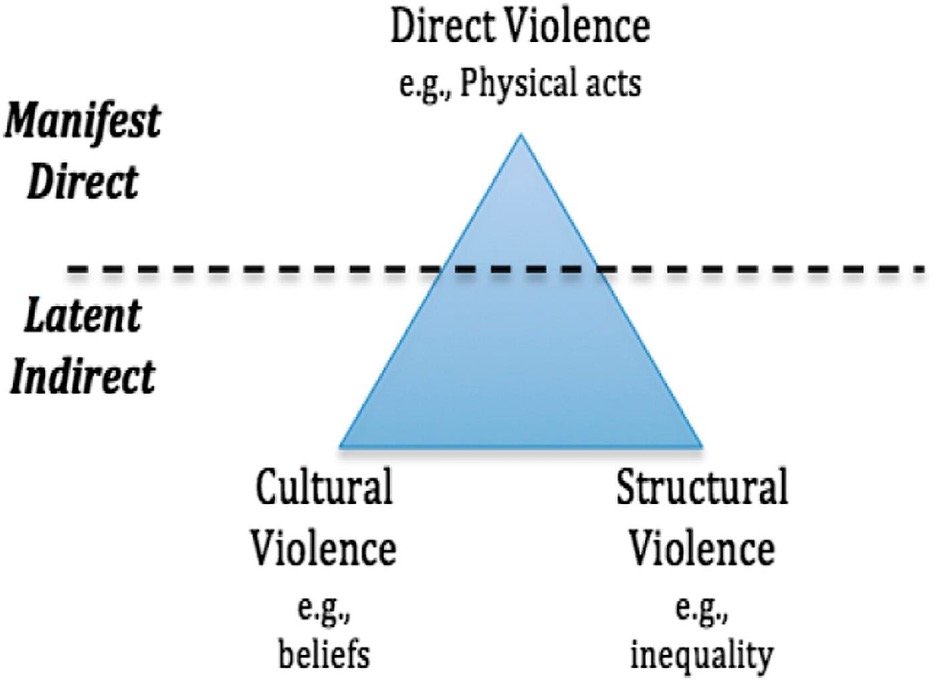
The second frame involves the categorization of violence, popularized by peace scholar Johan Galtung. Galtung’s "Violence Triangle" identifies three tiers: Direct, Structural, and Cultural.

- Direct Violence: This is the most visible form, involving physical harm such as assault, police brutality, or hate crimes.
- Structural Violence: This is indirect and often invisible to those not affected by it. it is embedded in the laws, customs, and economic systems of a society. Examples include environmental racism (placing toxic waste sites near marginalized communities), redlining, and the disproportionate sentencing of minority offenders.
- Cultural Violence: This tier consists of the prevailing ideologies—such as white supremacy, misogyny, or American exceptionalism—that serve to justify or "normalize" structural and direct violence.
The peacebuilding frame argues that society cannot be considered "at peace" if only direct violence is absent. If structural and cultural violence remain, the society exists in a state of "unpeace." Reparations are designed to dismantle structural violence by transferring resources and opportunities back to those from whom they were extracted. By addressing the economic and legal "structures" of inequality, reparations also begin to erode the "cultural" justifications for that inequality.
Frame 3: Truth-Telling as a Condition for Healing
The third frame emphasizes that healing is impossible without a shared commitment to truth-telling. In the aftermath of mass atrocities—such as the Holocaust or South African Apartheid—the establishment of Truth and Reconciliation Commissions (TRCs) has been a standard peacebuilding tool.
Psychiatrist Judith Herman notes that the natural human response to atrocity is to banish it from consciousness. However, she argues that "denial does not work," and that "remembering and telling the truth about terrible events are prerequisites both for the restoration of social order and for the healing of individual victims."
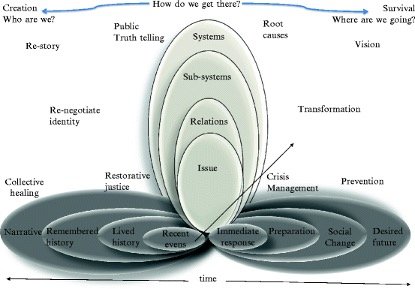
Reparations are the tangible manifestation of truth-telling. They require a society to officially document the harm, acknowledge the perpetrators and victims, and take responsibility for the consequences. Without this process, the "wounds" of the past are continually reopened by modern-day policy failures. For example, the lack of repair for the 1921 Tulsa Massacre is not just a historical fact; it is a present-day trauma for descendants who live in the shadow of that uncompensated theft.
Economic Implications and Stakeholder Reactions
The debate over reparations often centers on the perceived cost, yet peacebuilding analysis suggests that the cost of inaction may be higher. A 2020 study by Citigroup estimated that the U.S. economy lost $16 trillion over the previous 20 years due to racial gaps in wages, housing, and education. By closing these gaps through reparative investment, the study suggested the U.S. GDP could see a significant long-term boost.
Reactions to these proposals remain polarized. Proponents, including the National Coalition of Blacks for Reparations in America (N’COBRA) and various human rights organizations, argue that reparations are a legal obligation under international law, which mandates that victims of human rights violations have a right to "full and effective reparation."

Conversely, critics often cite the logistical difficulty of determining eligibility and the unfairness of taxing current citizens for the "sins of their ancestors." However, peacebuilding experts counter this by noting that "heirs" to a system inherit both its assets and its liabilities. Just as a corporation remains liable for environmental damage caused decades ago, a nation remains liable for the systemic theft that built its current infrastructure.
Analysis of Broader Impacts
Integrating reparations into a peacebuilding framework transforms the conversation from one of "charity" or "punishment" into one of "sustainability." When viewed as peacebuilding, reparations become a tool for national security and social stability. Societies with high levels of inequality and unaddressed historical grievances are statistically more prone to civil unrest, political polarization, and economic volatility.
Furthermore, the "Three Frames" approach allows for a more creative application of reparations. It suggests that repair does not always have to be a direct cash payment; it can include land transfers, debt forgiveness, the establishment of community trust funds, and the radical redesign of educational and healthcare systems.
As global conflicts continue to highlight the fragility of "negative peace," the lessons of the Braxton Institute and other peacebuilding organizations offer a roadmap for domestic stability. By acknowledging the long view of time, expanding the definition of violence, and committing to radical truth-telling, societies can move toward a "positive peace" that is durable, just, and truly inclusive. Reparations, in this light, are not merely an act of looking backward, but the essential labor of building a future where the "old house" of the nation is finally made whole.