Nila Kartika Wati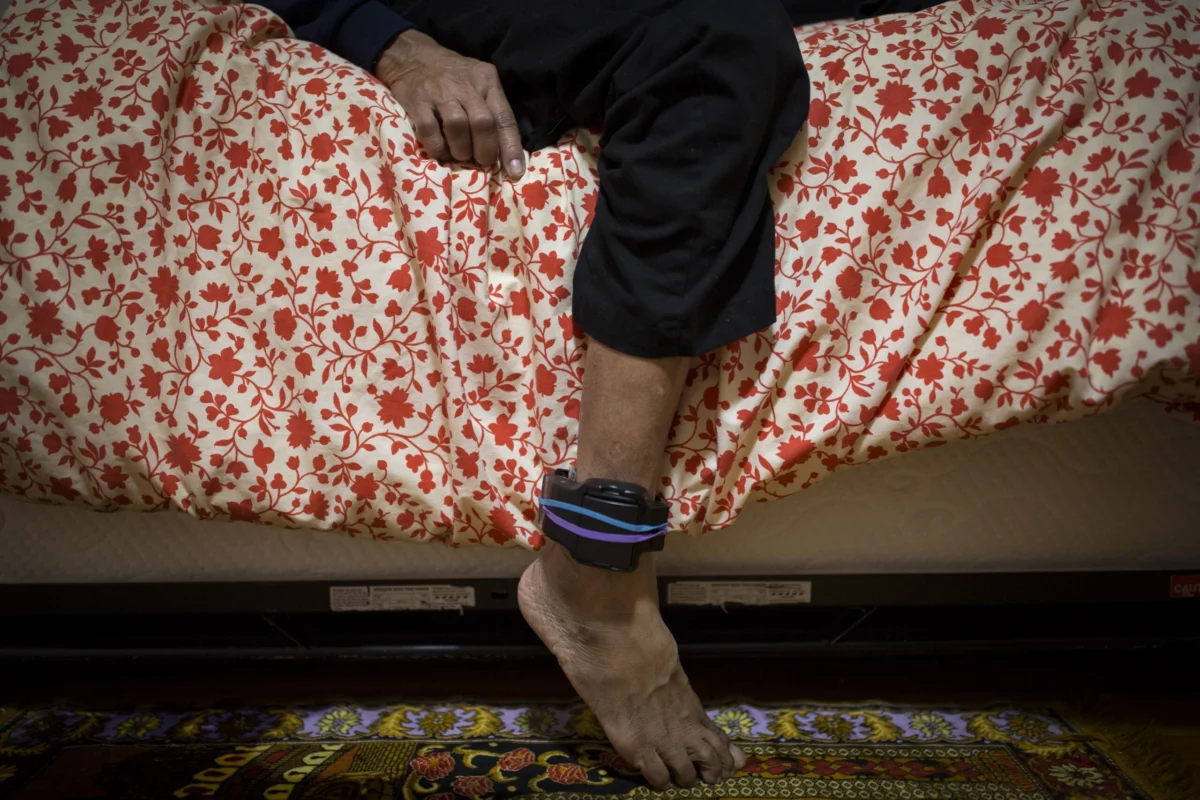
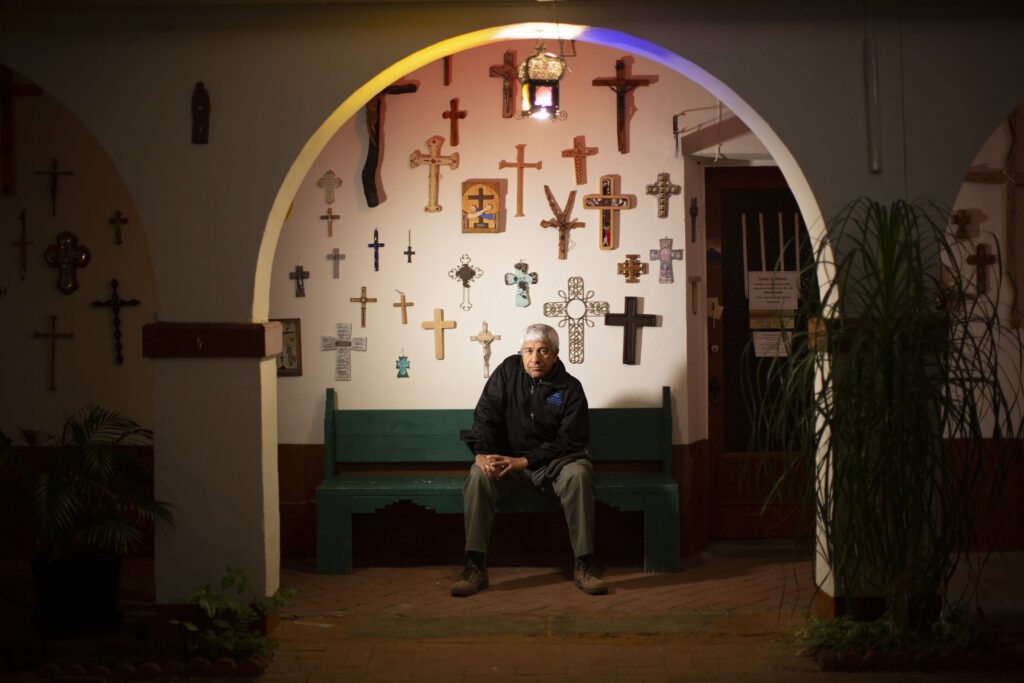
The landscape of American immigration policy has undergone a radical transformation over the past decade, oscillating between periods of heightened enforcement and community-led resistance. In 2017, as the first Trump administration initiated a surge in Immigration and Customs Enforcement (ICE) arrests and controversial family separation policies, photojournalist and ethnohistorian Cinthya Santos Briones began documenting the quiet, desperate reality of those seeking refuge. Her work, particularly the series Living in Sanctuary, captured a movement of immigrants who sought shelter in churches and temples—spaces that, while not legally exempt from federal law, have traditionally served as sensitive locations where enforcement is avoided. Santos Briones, herself an immigrant from Mexico of Nahua descent, observed that while the concept of "sanctuary" suggests peace, the lived reality was often one of "church arrest," where individuals spent years confined to religious buildings to avoid deportation or detention.
As the United States navigates the complexities of a second Trump term, these historical tensions have re-emerged with renewed intensity. The intersection of immigration enforcement, public health disparities, and climate change has created a multifaceted crisis for displaced populations. Today, the resistance is no longer confined to the shadows of chapels; it has evolved into sophisticated networks of herbal medicine, labor organizing, and "worker-driven social responsibility" programs that aim to reclaim agency in a climate of increasing criminalization.
The Evolution of Enforcement and the Environmental Toll
The transition into the mid-2020s has seen a significant escalation in the technological and environmental footprint of U.S. border and immigration policies. Since January 2025, federal agencies have significantly increased the integration of Artificial Intelligence (AI) to track and locate undocumented individuals. This digital shift has not only raised privacy concerns but has also contributed to environmental degradation; the massive data centers required to power these surveillance networks have driven up energy demand and increased mining activities on Indigenous territories.
The physical borders have also seen unprecedented industrialization. In the Rio Grande, the federal government has moved forward with the construction of thousands of miles of industrial-grade buoys, a move criticized by environmentalists for disrupting natural river flows and endangering local ecosystems. Simultaneously, the expansion of the detention system has seen new facilities erected on fragile lands, including Florida’s Everglades. These sites often overlap with toxic industrial zones, posing long-term health risks to both detainees and staff.
Data from the early months of 2026 highlights the significant carbon footprint of these enforcement strategies. Between January 2025 and April 2026, ICE conducted more than 20,000 deportation flights. This surge resulted in an 88 percent increase in the agency’s carbon emissions compared to the previous year, releasing an estimated 370,240 tons of CO2 into the atmosphere. Analysts point out that while the U.S. remains one of the world’s largest emitters of greenhouse gases, the specific environmental cost of mass deportation is a growing factor in the broader climate crisis, impacting communities far beyond U.S. borders.

Chronology of Policy Shifts and Legal Challenges
The current state of immigration is the result of a series of pivotal legal and executive decisions:
- June 2024: The Supreme Court greenlit the termination of Temporary Protected Status (TPS) for several nations, leaving hundreds of thousands of refugees from conflict-ridden areas like Syria and Haiti vulnerable to deportation.
- January 2025: Upon returning to office, the Trump administration rescinded Biden-era "protected areas" policies. This move effectively allowed ICE agents to conduct operations near hospitals, clinics, and places of worship, areas previously considered off-limits.
- July 2025: New restrictions were implemented on asylum seekers fleeing climate-related disasters, further tightening the criteria for legal entry.
- Early 2026: The administration ramped up the use of expedited removal proceedings, supported by new AI-driven biometric tracking systems.
These policies have been met with sharp criticism from human rights organizations. Human Rights Watch has noted that the U.S. is increasingly "shutting its doors" to the very people it once claimed to welcome, disproportionately targeting non-white migrants and those from the Global South.
Healing as a Political Act: The Rise of Migrant Herbalism
In response to the erosion of traditional safety nets and the increasing danger of accessing mainstream healthcare, immigrant communities have turned toward ancestral knowledge as a form of "healing justice." Cinthya Santos Briones’ project, Herbolario Migrante (Migrant Herbalism), serves as a primary example of this cultural reclamation. Launched as a community workshop in New York City, the project focuses on recovering the use of herbs, seeds, and barks for healing among displaced Indigenous communities.

Participants, primarily working-class immigrant women, engage in "participatory ethnography," sharing family remedies and creating a collective archive through cyanotypes—photographic prints made using sunlight and plant matter. This practice is more than a hobby; it is a vital response to the healthcare gap. Research indicates that nearly 50 percent of undocumented immigrant adults in the U.S. lack health insurance. For many, plants like epazote, rosemary, and manzanilla (chamomile) are not just culinary ingredients but essential medicines brought across borders to sustain life.
In Sonoma County, California, this movement has taken a more formalized shape through the Botanical Bus. Founded in 2019 by Jocelyn Boreta, a licensed herbalist of Nahua heritage, the mobile clinic provides culturally centered healthcare to Latine and Indigenous farmworkers. In 2025 alone, the Botanical Bus served over 1,300 people, providing 2,500 health services including acupuncture, massage, and herbal consultations. Boreta emphasizes that 83 percent of their clients face significant barriers to primary care, often due to fear of costs, language barriers, or the risk of ICE encounters at traditional clinics. By bringing care directly to vineyard worksites, the clinic bypasses these obstacles, asserting that the right to heal is a form of activism.
The Crisis in the Fields: Labor Exploitation and Heat Standards
While plants offer healing in some contexts, they represent a site of extreme labor struggle in others. The U.S. plant nursery industry, a multi-billion dollar sector that boomed during the pandemic, relies heavily on immigrant labor. Florida, the national epicenter of this industry, produces nearly 70 percent of the country’s indoor foliage. However, a report by the human rights organization WeCount!, titled The Human Cost of Houseplants, reveals a systemic crisis of abuse.

Nursery workers, many with irregular immigration status, face some of the most dangerous conditions in the American workforce. Florida leads the nation in heat-related hospitalizations, yet many workers report having no access to clean drinking water. In a survey conducted by WeCount!, 86 percent of nursery workers reported accidents or illnesses on the job, often stemming from extreme heat or pesticide exposure.
The legal landscape for these workers is historically fraught. The 1935 National Labor Relations Act explicitly excluded agricultural and domestic workers—groups that were then primarily Black—from the right to organize and bargain collectively. Today, that exclusion persists, leaving a largely immigrant workforce without federal protections.
The struggle for safety reached a boiling point in July 2024, when Florida’s House Bill 433 went into effect. The law prohibits local governments from enacting their own heat safety standards, effectively nullifying years of grassroots organizing by the ¡Que Calor! campaign. Advocates point to lobbying efforts by major agricultural and construction interests as the primary force behind the bill.

Planting Justice: A New Model for Accountability
Despite legislative setbacks, organizations like WeCount! are pioneering a new model of resistance known as "worker-driven social responsibility." This approach shifts the power dynamic from corporate "sustainability" reports to legally binding agreements between workers and retailers.
On February 14, 2026, WeCount! launched the "Planting Justice" campaign. Inspired by the success of the Coalition of Immokalee Workers’ Fair Food Program—which transformed the tomato industry—Planting Justice seeks to establish a code of conduct for the houseplant industry. The goal is to force major retailers like Home Depot, Lowe’s, and IKEA to buy only from nurseries that meet strict safety and wage standards.
Oscar Londoño, Co-Executive Director of WeCount!, argues that the current system treats immigrant labor as a disposable resource. "We have to ask ourselves, ‘What was the work that we allowed immigrants to do?’" Londoño stated. The campaign emphasizes that if consumers demand "abuse-free" plants, the multi-billion dollar companies at the top of the supply chain will be forced to implement industry-wide heat illness prevention protocols and provide paid time off.

Broader Implications: Climate Change and the Future of Belonging
The intersection of immigration and climate change is no longer a theoretical concern. As the U.S. experiences what is projected to be one of its hottest summers on record in 2026, the vulnerability of outdoor workers and displaced populations has become a national flashpoint. Wildfire smoke and extreme heat domes have disrupted daily life across the country, serving as a reminder that environmental crises do not respect national boundaries.
The stories of Santos Briones, Boreta, and Londoño suggest that the future of immigrant resistance lies in the reclamation of dignity through both ancestral knowledge and modern labor organizing. While federal policies may focus on walls and surveillance, these communities are building "care hubs" and "collective archives" that assert a different vision of belonging—one rooted in the land and the networks of care that sustain it.
The analysis of these trends suggests that as the climate crisis intensifies, the pressure on the U.S. immigration system will only grow. The environmental impact of enforcement, the health disparities in immigrant communities, and the exploitation of agricultural labor are increasingly viewed not as separate issues, but as a single, interconnected struggle for human and planetary survival. In this context, the fight for immigrant rights is becoming inextricably linked to the broader movement for environmental justice, suggesting that the path to a sustainable future must include the protection and empowerment of those on the frontlines of both the border and the fields.