Candice Horbacz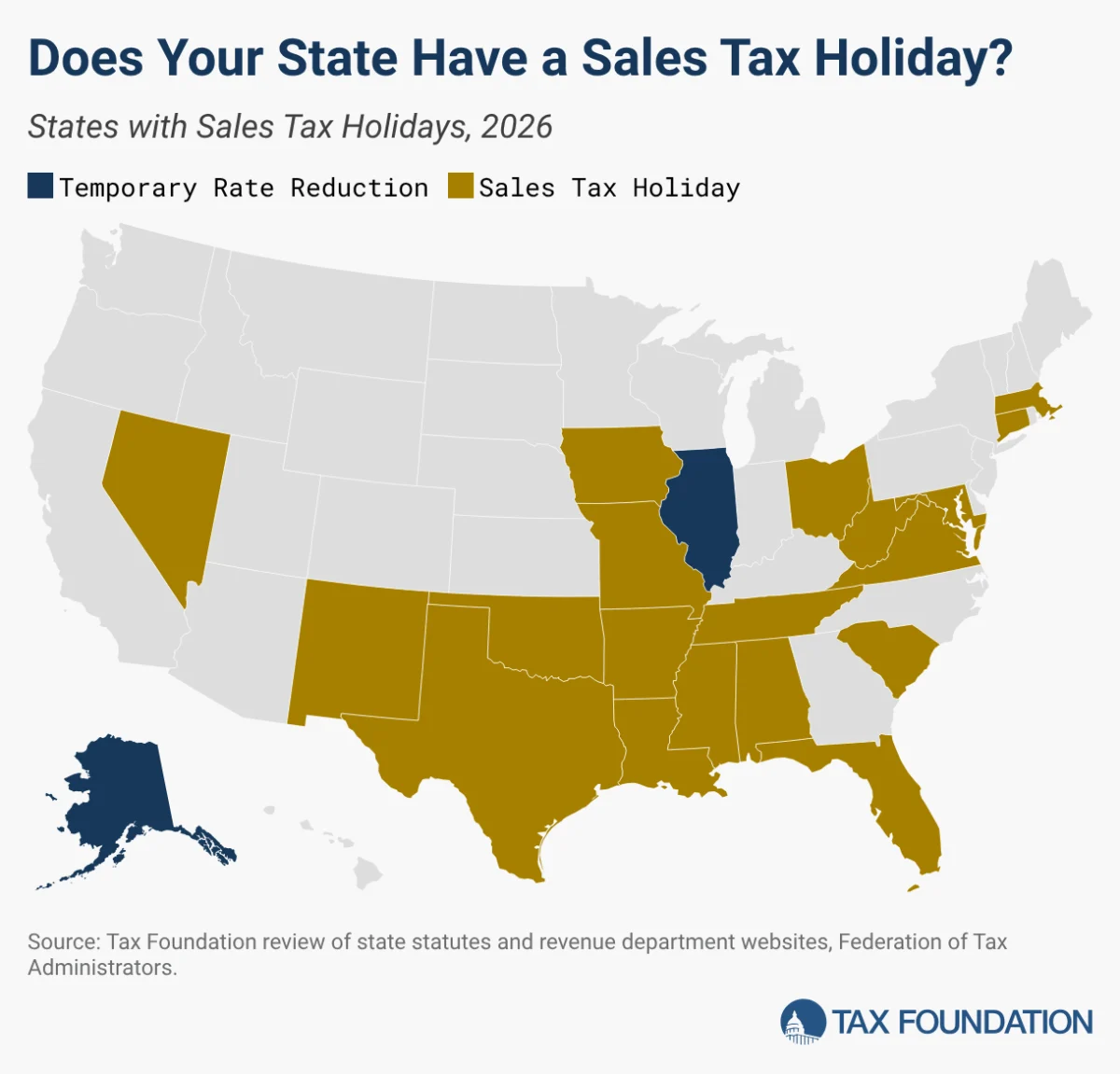
Sales tax holidays, designated periods when select goods or services are exempted from state (and sometimes local) sales taxes, continue to be a politically popular phenomenon across the United States. In 2026, a significant twenty states have either already held or are scheduled to hold such holidays, marking an increase from nineteen states in the previous year. This growing trend underscores an enduring appeal among policymakers, even as economists and tax policy experts consistently highlight their limited economic benefits and potential drawbacks.
The Annual Ritual: A Growing Trend
The expansion of sales tax holidays in 2026 is driven by several key developments. Illinois, for instance, has reinstated a holiday that was previously in effect in 2010 and 2022, signaling a return to this temporary tax relief mechanism. Meanwhile, Alabama has introduced a new sales tax holiday specifically for SNAP-eligible food items, augmenting its existing severe weather preparedness and back-to-school sales tax holidays. This move by Alabama reflects a broadening scope of items targeted for exemption, moving beyond traditional categories to address affordability concerns for essential goods.
It is important to note that this count of twenty states does not encompass all forms of temporary tax relief. For example, one municipality in Alaska offers a localized sales tax holiday, a testament to the granular appeal of such measures. Furthermore, the total explicitly excludes state gas tax holidays that some states have implemented in 2026 in direct response to fluctuating and often rising fuel prices, indicating a distinct category of temporary tax relief aimed at broader economic pressures rather than specific consumer goods.
The targeted nature of sales tax holidays is diverse. Historically, numerous states have exempted clothing during these periods. Beyond apparel, states like Maryland, Missouri, Texas, and Virginia have focused their temporary sales tax relief on energy-efficient appliances, aiming to incentivize environmentally conscious consumer choices. The enduring appeal for policymakers stems from the holidays’ visibility and ease of understanding as a direct tax break. Consumers, in turn, are drawn by the perception of savings, despite analyses suggesting the benefits are often limited, accompanied by economic inefficiencies and unintended consequences.
A Brief History of Sales Tax Holidays
The concept of a sales tax holiday is not new, but its widespread adoption is a relatively modern phenomenon. The first sales tax holidays emerged in the late 1990s, with states like New York and Florida pioneering the idea. New York introduced its first clothing and footwear sales tax exemption in 1997, and Florida followed suit with its first back-to-school holiday in 1998. The initial motivations were often twofold: to provide immediate financial relief to consumers, particularly families preparing for the school year or specific seasonal events, and to stimulate retail activity within state borders.
In the early 2000s, especially following economic downturns, the popularity of these holidays surged. States, seeking quick and visible ways to demonstrate support for their constituents and local businesses, increasingly adopted the practice. The types of goods exempted also diversified, moving from basic back-to-school items like clothing and school supplies to more specialized categories such as hurricane preparedness supplies (common in coastal states), energy-efficient appliances, and even firearms and hunting supplies in some instances. The consistent expansion, particularly in the wake of economic challenges or as a response to inflation, solidified sales tax holidays as an annual fixture in many state legislative calendars. This trend highlights a recurring political strategy to offer palpable, albeit temporary, relief to taxpayers without undertaking more complex, permanent tax reforms.
The Allure and the Reality: Political Popularity vs. Economic Scrutiny
The political appeal of sales tax holidays is undeniable. For legislators, they offer a tangible, easily communicable benefit to voters, often framed as "helping working families" or "boosting local economies." The temporary nature allows politicians to claim credit for tax relief without committing to permanent revenue reductions that could impact long-term state budgets. For consumers, the immediate savings, even if modest, create a perception of financial benefit, often leading to increased purchasing activity during the holiday window.
However, a closer examination by economists and tax policy experts reveals a more nuanced and often less favorable picture. Proponents frequently claim that sales tax holidays generate economic growth by increasing retail activity. Yet, studies consistently challenge this assertion. Research from institutions such as the National Bureau of Economic Research and various academic analyses widely indicates that a significant portion of the increased shopping observed during these holidays is not new economic activity but rather a temporal shift of purchases that consumers would have made anyway. For instance, studies suggest that upwards of 70-80% of purchases during tax holidays represent accelerated spending, with consumers simply delaying purchases of items like school supplies or clothing until the tax-free window opens.
While some consumers may make incidental "impulse" purchases during these periods, the economic impact of such additional buying is typically insufficient to offset the revenue costs associated with the exemptions. The net effect is that sales tax holidays primarily shift the timing of demand rather than increasing its overall magnitude. This results in reduced state and local tax collections for little to no genuine economic benefit. For example, estimates from organizations like the Tax Policy Center and the Tax Foundation suggest that states collectively forgo hundreds of millions, potentially exceeding a billion dollars, in annual revenue due to these holidays, a cost that is rarely justified by verifiable new economic growth.
Unpacking the Economic Inefficiencies
The revenue losses incurred during sales tax holidays are not inconsequential. These funds, which would otherwise contribute to state and local coffers, must be offset by revenue generated elsewhere. This often means relying on other tax sources that can be more economically damaging or foregoing investments in public services. For states that consistently run budget surpluses, the argument is often made that these excess funds could be better utilized for more economically efficient tax reforms, such as permanent rate reductions across the board, which offer continuous relief and foster a more stable economic environment.
Furthermore, sales tax holidays often introduce market distortions. They are frequently scheduled to exempt specific goods and services during periods of naturally high demand—think back-to-school products in August or hurricane preparedness items before storm seasons. This timing exacerbates revenue losses, as a substantial portion of the retail transactions would have occurred regardless of the tax incentive. This strategy also sends mixed signals about the state’s fiscal policy, implicitly acknowledging that the standard sales tax rate is burdensome if a temporary suspension is deemed necessary to stimulate economic activity. Critics argue that if suspending the sales tax for a week can stimulate growth, it logically implies the tax suppresses growth for the other 51 weeks, highlighting a structural weakness in the underlying tax code.
Impact on Consumers: A Closer Look
While sales tax holidays are marketed as broad consumer relief, their benefits are often diluted and can even disproportionately disadvantage lower-income households. The perceived savings can be misleading. For instance, the incentive to delay shopping for selected items until the holiday period can backfire. A lower-income family waiting to purchase school supplies on the weekend before school starts might find shelves poorly stocked, limiting their choices and potentially forcing them to compromise on quality or availability, long after many other families have completed their shopping.
Another significant concern is the behavior of retailers. Faced with an induced spike in demand for a narrow set of goods during a limited timeframe, some retailers may strategically increase prices. While difficult to definitively quantify due to market complexities, some research has indicated that companies can absorb a portion—potentially up to 20 percent—of the sales tax benefit through price adjustments. This blunts the intended savings for consumers, particularly those with the lowest incomes, who are most sensitive to price fluctuations. These same shoppers are also typically less able to prepare for sales tax holidays by accumulating savings or taking time off work to shop strategically. If the genuine goal is to assist low-income consumers, more targeted assistance policies, such as direct cash transfers, expanded social programs, or permanent reductions in regressive taxes, are generally considered far more effective and equitable.
Moreover, many sales tax holidays impose price caps on qualifying goods. For example, a holiday might exempt clothing items under $100. While intended to focus benefits on everyday items, this can inadvertently influence consumers to purchase less expensive, potentially lower-quality products to stay within the exemption limit, even if they would have preferred a higher-quality, more durable item that exceeds the cap. This also disadvantages smaller businesses whose products might inherently have higher price points due to craftsmanship or specialized nature, making them less competitive during these periods.
The Burden on Businesses: Compliance Nightmares
Beyond the economic inefficiencies, sales tax holidays impose significant administrative and compliance burdens, particularly on small businesses. The induced spikes in demand often necessitate additional short-term staffing, which can be challenging to manage for businesses with fewer employees and tighter margins. Furthermore, small businesses may struggle more to absorb the spending slowdowns that often occur in the weeks immediately before and after sales tax holidays, as consumers delay or accelerate purchases. Consistent revenue streams are crucial for small businesses, and these timing distortions, even if overall revenue remains stable, can be painful and disruptive.
The work required to comply with sales tax holiday provisions is also substantial. Retailers must accurately determine which specific products qualify for exemption, often navigating nuanced definitions, and adjust their cash register settings accordingly. This task is especially arduous for small businesses, which typically lack dedicated legal or compliance teams to handle such complexities.
The structural variations across states further complicate matters. Beyond differences in eligible product lists and price caps, states often have divergent rules for shipping and handling charges, layaway sales, and "rain check" sales. These details are frequently finalized and communicated at the last minute, forcing businesses to scramble. For instance, Illinois’s Public Act 104-0468, reinstating a back-to-school sales tax holiday for August 7 through August 16, 2026, was signed into law on June 16, 2026—leaving retailers barely six weeks to implement changes for a period where the state’s 6.25 percent sales tax rate on qualifying items is reduced to 1.25 percent. Such short notice creates immense pressure and potential for error.
For small online retailers selling into multiple states, compliance can escalate into a logistical nightmare. They face the daunting task of making real-time sales tax determinations on an evolving range of products, often with definitions requiring careful product-by-product eligibility judgments. The legal consequences for over-collecting sales tax from consumers are real, adding another layer of risk to an already complex compliance landscape. Ultimately, sales tax holidays pick winners and losers among both businesses and consumers, without offsetting their costs with any meaningful economic benefit.
Nevada’s National Guard sales tax holiday, while simpler for retailers, highlights a different type of compliance burden. In this model, eligible Guard members and their qualifying relatives must apply for the exemption at least 45 days in advance, pay the sales tax upfront during the holiday, and then later request a refund from the Department of Taxation by providing supporting documentation. While this reduces the immediate burden on retailers, the cumbersome refund process may deter participation, especially for smaller purchases where the savings might not justify the administrative effort involved for the consumer.
Official and Expert Reactions
The discourse surrounding sales tax holidays is characterized by a clear divide between political expediency and economic rationale.
State Legislators (Proponents): Many state legislators frequently champion sales tax holidays as a direct and immediate way to "put money back into the pockets of our constituents" and "provide tangible relief to families grappling with inflation and rising costs." They often emphasize the perceived boost to local retail sectors, particularly small businesses, during these periods, framing them as essential tools for economic stimulus and consumer support. "We believe in empowering our citizens by reducing their tax burden, even if for a short period, to help them afford essential items," a hypothetical state representative might state during a legislative debate.
State Treasurers/Revenue Departments: Officials responsible for state fiscal health often express a more cautious view. They typically highlight concerns regarding revenue volatility and the administrative costs associated with implementing and managing these holidays. While acknowledging the political popularity, they may privately or publicly point to the challenges in accurate revenue forecasting and the opportunity cost of foregone revenue that could otherwise fund critical public services or be allocated to more stable, long-term tax reforms.
Economists/Tax Policy Think Tanks (Critics): Experts from organizations like the Tax Foundation, the Tax Policy Center, and various academic institutions are consistently critical. They often articulate that "these holidays are largely political theater, offering minimal net economic benefit while creating significant market distortions and administrative headaches." They argue that sales tax holidays "are a band-aid solution to a structural problem," emphasizing that they do not generate new economic activity but merely shift existing demand, leading to inefficient resource allocation and a net loss of revenue for the state without commensurate economic gains. They advocate for permanent, broad-based tax reforms, such as lower, flatter sales tax rates, which would provide consistent relief and foster a more predictable economic environment.
Small Business Advocates: While some small businesses might see a temporary uptick in sales, many small business associations voice concerns about the disproportionate compliance burden. "While the intent may be good, the reality for many small businesses is a scramble to comply with complex rules, train staff on shifting exemptions, and manage inventory for an artificial demand spike," a representative from a state chamber of commerce might explain. They often point out that larger retailers with more sophisticated systems and greater staff capacity are better equipped to handle these complexities.
Consumer Advocacy Groups: These groups often highlight the potential for sales tax holidays to inadvertently harm vulnerable populations. They argue that "the perceived savings often mask hidden costs or disadvantages for the most vulnerable shoppers," such as the risk of depleted stock for essential items or the possibility of retailers absorbing the tax benefit through price increases. They, too, often advocate for more targeted and permanent forms of assistance for low-income families.
Beyond the Numbers: Political Ramifications and Future Outlook
From a political standpoint, sales tax holidays are inherently problematic because they create an environment where politicians and lobbyists can pick political favorites by selecting specific eligible products. Any decision about which goods are, and are not, exempt invariably discriminates against some consumers or businesses. This selective application can lead to accusations of undue influence and undermines the principle of a neutral tax system.
Overall, sales tax holidays remain an inefficient vehicle for providing genuine tax relief or generating additional economic activity. They frequently end up hurting some of the very taxpayers they intend to help. They inject unnecessary instability into government and business revenue streams, create administrative and compliance costs for businesses, governments, and consumers alike, and demonstrably fail to promote long-term economic growth. Several states, recognizing these inherent downfalls, have accordingly abandoned their sales tax holidays in recent years. However, their enduring electoral utility—the ability for politicians to offer a visible, albeit temporary, benefit to voters—remains a powerful incentive for policymakers. With twenty states offering sales tax holidays in 2026, it appears this popular, yet economically questionable, practice is not likely to disappear from the American fiscal landscape anytime soon. This persistent reliance on short-term political gimmicks over meaningful, permanent tax reform continues to be a central point of debate in state fiscal policy.