Pevita Pearce
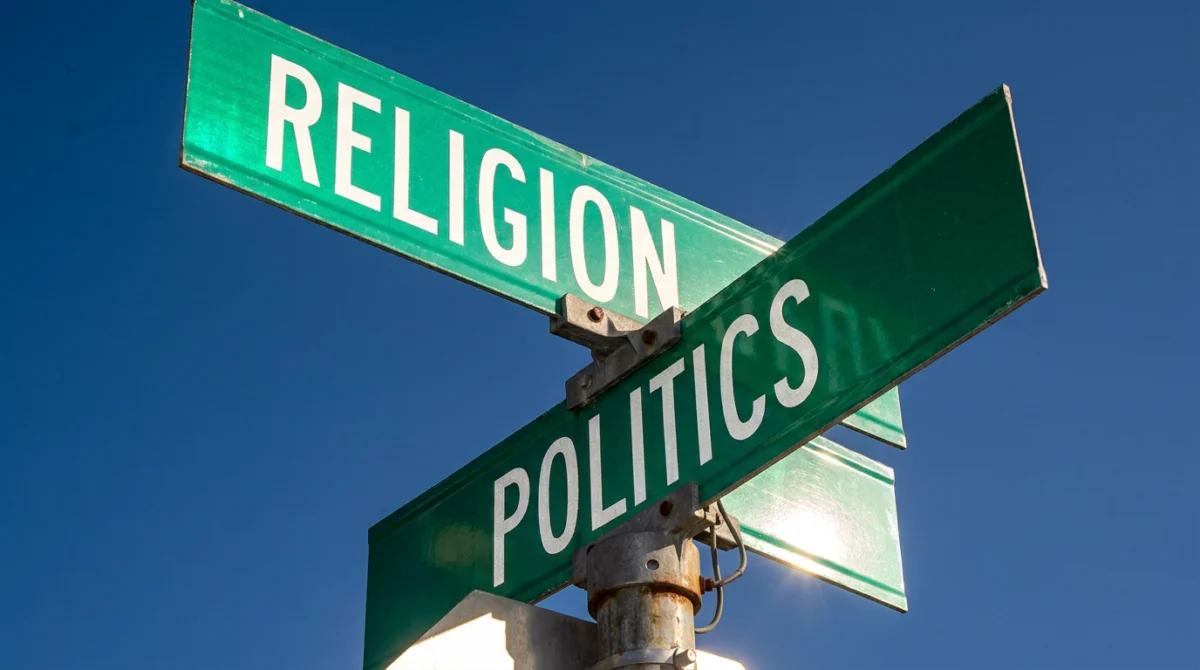
What’s it to you? This seemingly simple rhetorical question, often wielded as a dismissive taunt, encapsulates a profound legal principle: standing. It signifies that one must have a direct, personal stake in a dispute to bring a case before a court. Former Supreme Court Justice Antonin Scalia, a towering figure in legal conservatism, famously employed this phrase to articulate the concept of legal standing, emphasizing that only those directly harmed by an alleged wrong should seek redress in the judiciary. This principle, rooted in the fundamental idea that courts are for resolving actual controversies, not abstract grievances, is currently at the heart of a legal battle challenging the Johnson Amendment, a long-standing provision that restricts political endorsements by churches and other tax-exempt organizations.
The current legal challenge revolves around the Johnson Amendment, enacted in 1954 as an amendment to Section 501(c)(3) of the Internal Revenue Code. This provision prohibits organizations granted tax-exempt status from directly or indirectly participating in, or intervening in, any political campaign on behalf of or in opposition to any candidate for public office. While individuals, including pastors and congregants, retain their First Amendment right to express their political opinions, the organization itself, by virtue of its tax-exempt status, is barred from engaging in partisan political activity. The rationale behind this restriction is to protect the integrity of the tax-exempt system and prevent the diversion of charitable resources for political purposes, thereby maintaining a separation between religious institutions and partisan politics.
The crux of the recent legal dispute lies in whether faith-based organizations challenging the Johnson Amendment possess the requisite legal standing to do so. In a case filed in the Eastern District of Texas, several faith-based organizations argued that the Johnson Amendment infringes upon their First Amendment rights and unduly restricts their ability to engage in political discourse. However, the District Court dismissed the lawsuit, ruling that the plaintiffs lacked standing. The court’s reasoning was based on the absence of any demonstrable injury. Specifically, the Internal Revenue Service (IRS) had not initiated any action to revoke the plaintiffs’ tax-exempt status, nor was there evidence suggesting an imminent threat of such action. The IRS, historically, has been characterized by a relatively lax enforcement of the Johnson Amendment, a point acknowledged by the current administration’s Department of Justice, which, in a surprising twist, reportedly agreed with the plaintiffs’ claims regarding the amendment’s overreach.
Despite the District Court’s dismissal, the plaintiffs have appealed their case to the Fifth Circuit Court of Appeals, which presides over Texas, Louisiana, and Mississippi. The plaintiffs’ arguments before the appellate court continue to center on the perceived unconstitutionality of the Johnson Amendment. However, the fundamental issue of standing remains a significant hurdle. For a plaintiff to establish standing, they must typically demonstrate three elements: an actual injury, that the injury is fairly traceable to the defendant’s challenged conduct, and that a favorable court decision is likely to redress the injury. In this instance, the plaintiffs have not suffered a direct and concrete injury, such as the revocation of their tax-exempt status, which would clearly satisfy the standing requirement. The IRS’s consistent pattern of non-enforcement, while perhaps frustrating to those seeking to openly engage in political advocacy from the pulpit, means that the "injury" alleged is largely speculative.
The history of the Johnson Amendment’s enforcement reveals a complex and often inconsistent approach. While the law has been on the books for nearly seven decades, outright revocation of tax-exempt status for violating the amendment has been exceedingly rare. Critics of the amendment argue that this inconsistent enforcement creates an environment of uncertainty and chills legitimate political expression. Conversely, proponents, including the author of the original article, contend that the amendment strikes a reasonable balance. They argue that while pastors and church members are free to express their political views as individuals, the organization itself should not leverage its tax-exempt status to endorse or oppose political candidates. This distinction is crucial: a church can host candidate forums, provided all candidates are invited and have equal opportunity to participate, or individual members can discuss politics within the church premises. However, when the organization, through its official leadership or publications, advocates for a specific candidate or party, it crosses the line established by the Johnson Amendment.
The plaintiffs’ strategy in bringing this lawsuit appears to be a calculated attempt to provoke a definitive legal ruling on the Johnson Amendment. Some faith-based organizations, frustrated by the perceived limitations, have reportedly engaged in deliberate acts of defiance, openly endorsing political candidates from the pulpit with the explicit hope of triggering an IRS challenge. Their aim is to force the issue into the courts, believing that a favorable ruling could potentially lead to the amendment’s invalidation on First Amendment grounds, thereby granting religious institutions greater latitude in political engagement. However, as noted, the IRS has largely refrained from taking the bait, and the current plaintiffs, having not faced direct IRS action, struggle to demonstrate a concrete injury.
Justice Scalia’s articulation of standing, drawing a parallel to the narrative of "The Caine Mutiny," provides a potent analogy. In the film, Lt. Keefer, the instigator of a perceived mutiny, skillfully avoided direct responsibility for his actions, ultimately leaving Lt. Maryk to bear the full brunt of the court-martial. Maryk was the one with "skin in the game," directly impacted by the events. Keefer, in contrast, was a spectator who had distanced himself from the immediate consequences. Similarly, in legal disputes, plaintiffs must demonstrate that they are not mere spectators but are directly affected parties whose rights or interests have been infringed. The faith-based organizations challenging the Johnson Amendment, in the absence of direct IRS action, are akin to Keefer – seeking to litigate a principle without having suffered a direct, actionable harm.
The implications of this ongoing legal challenge are significant. If the Fifth Circuit were to find that these plaintiffs do have standing, it could open the door to a broader judicial review of the Johnson Amendment itself. This could lead to a redefinition of the boundaries of political speech for religious organizations and potentially alter the long-standing balance between religious freedom and the government’s interest in maintaining a neutral tax system. Proponents of the amendment argue that its continued existence is vital to preventing the politicization of religious institutions and ensuring that tax-exempt status is not exploited for partisan gain. Conversely, opponents argue that the amendment stifles legitimate religious expression and that the government should not dictate the extent to which religious leaders can speak out on matters of public concern.
The IRS, as the primary enforcer of the Johnson Amendment, has historically adopted a cautious approach. This has led to a situation where many organizations believe the amendment is effectively unenforced, while others operate under the assumption that any political engagement carries potential risks. The Department of Justice’s recent alignment with the plaintiffs’ claims suggests a potential shift in the federal government’s stance, though the specific reasons for this alignment remain subject to interpretation. It could signal a recognition of the amendment’s potential for overreach, or it could be a strategic move within the broader context of the litigation.
The broader impact extends beyond the immediate legal dispute. The question of how religious organizations engage with the political sphere is a recurring theme in American public life. The Johnson Amendment, in its current form, represents a legislative attempt to navigate this complex terrain. The ongoing legal battles highlight the inherent tensions between the First Amendment’s guarantees of free speech and the Establishment Clause, which prohibits government establishment of religion, and the government’s interest in ensuring fairness and impartiality in its tax policies.
As the case proceeds to the Fifth Circuit, legal observers will be keenly watching to see how the court grapples with the issue of standing and, potentially, the merits of the challenge to the Johnson Amendment itself. The outcome could have far-reaching consequences for the relationship between religious institutions, political discourse, and the tax code, underscoring the enduring relevance of Justice Scalia’s incisive question: "What’s it to you?" For the plaintiffs to succeed, they must demonstrate that the legal challenge is not merely an abstract concern but a matter of direct and tangible consequence to their organizations. Until then, the Johnson Amendment, despite its controversial nature and inconsistent enforcement, remains the operative law, and the IRS’s restraint suggests that for many, the threat of its application remains, for now, a hypothetical rather than an actual injury.
Jim Hamill, director of tax practice at Reynolds, Hix & Co. in Albuquerque, NM, offers a pragmatic perspective on the situation. "The reality is that the IRS is not litigating Johnson Amendment cases," Hamill notes. "And if a church is simply worried that they might, it’s fair to say, ‘What’s it to you?’" This perspective emphasizes that without a direct threat or action from the IRS, the alleged harm is speculative, making the legal standing of the plaintiffs tenuous. The IRS’s historical approach, characterized by a reluctance to aggressively enforce the Johnson Amendment, means that many organizations have operated with a degree of freedom, while still technically being subject to its provisions. This has created a situation where the law exists, but its application is inconsistent, leading to confusion and, for some, a desire for judicial clarity. The current litigation, therefore, represents an attempt to move beyond this ambiguity, though the path through the courts, particularly concerning the fundamental requirement of standing, remains challenging.