admin
admin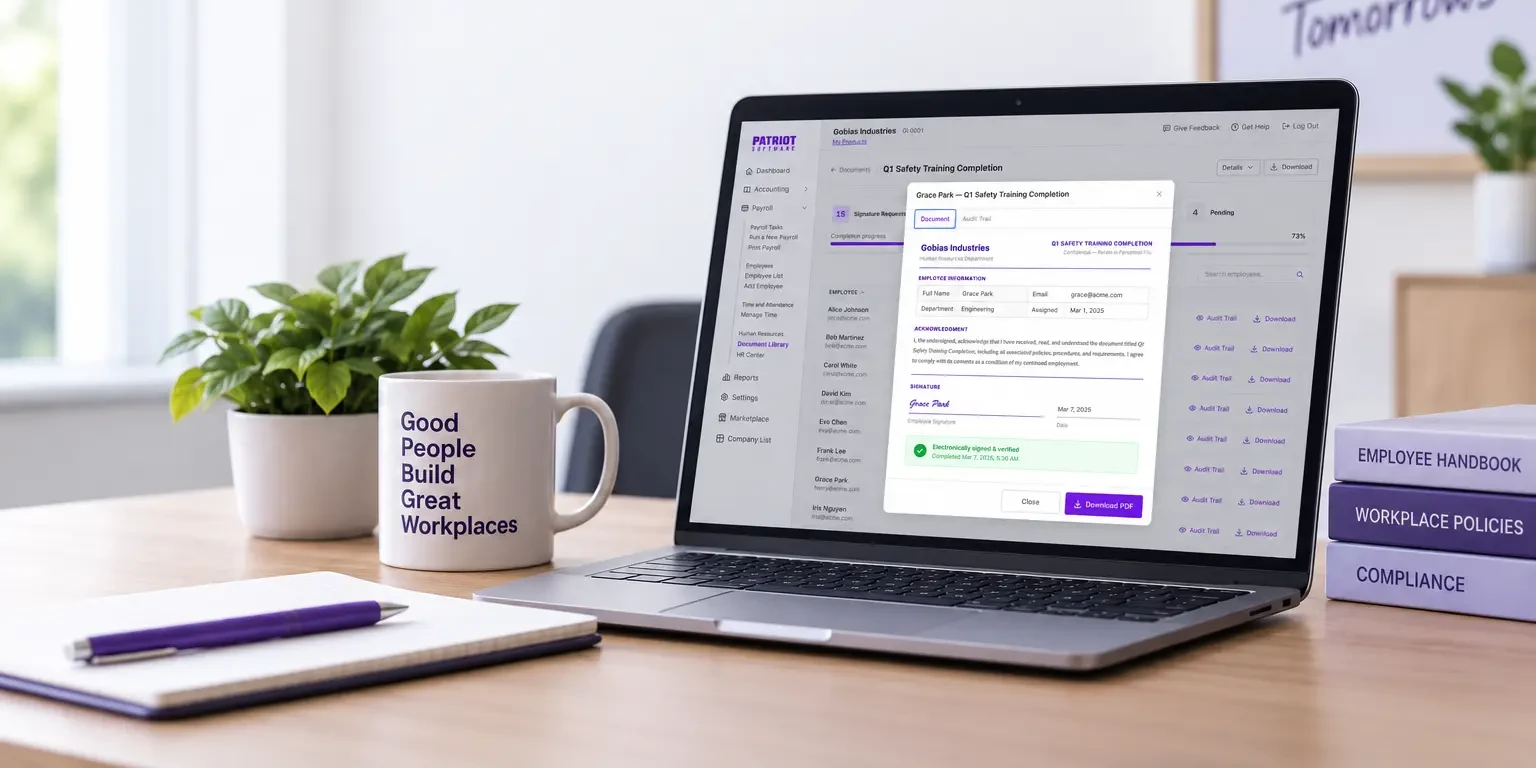
The landscape of human resources is perpetually evolving, marked by increasing regulatory complexity, the rise of remote work, and a persistent demand for operational efficiency. In this dynamic environment, a seemingly minor administrative task—collecting employee acknowledgments for policies—can often escalate into a significant compliance challenge, exposing businesses to undue risk and administrative burden. Many employers are familiar with the scenario: a critical policy update regarding, for instance, a new safety protocol, revised paid time off (PTO) rules, or an updated employee handbook, is communicated via email and discussed in team meetings. Months later, an employee asserts ignorance of the change, prompting a frantic search through email archives and physical files to produce proof of acknowledgment. This "paper chase" of printed forms, often marred by missing signatures, illegible handwriting, and overstuffed, disorganized personnel files, represents a substantial drain on resources and a tangible compliance vulnerability. The digital revolution, however, offers a robust, legally sound, and remarkably efficient alternative: electronic signatures. By enabling employees to sign documents digitally, businesses can generate a time-stamped, unalterable, and easily searchable record, definitively linking specific individuals to specific policy acknowledgments. This transformative shift not only streamlines administrative processes but fundamentally strengthens an organization’s compliance posture, offering a clear audit trail and reducing legal exposure. Understanding the legal underpinnings, practical advantages, and essential features of e-signature solutions is paramount for any modern employer aiming to optimize their HR operations and fortify their defenses against compliance infractions.
The Legal Foundation of Electronic Signatures: A Framework for Trust and Enforceability
The widespread adoption of e-signatures in the United States is underpinned by robust federal and state legislation, which unequivocally grants electronic signatures the same legal weight and enforceability as traditional ink-on-paper signatures. This legal parity eliminates ambiguity and provides a secure framework for digital transactions, including critical HR documents. The journey to this legal certainty began at the close of the 20th century, recognizing the need to modernize commercial and legal practices in an increasingly digital world.
At the federal level, the Electronic Signatures in Global and National Commerce (ESIGN) Act of 2000 serves as the cornerstone. Enacted during a period of burgeoning internet commerce and dot-com boom, the ESIGN Act’s primary objective was to facilitate the use of electronic records and signatures in interstate and foreign commerce by ensuring their legal validity. It stipulated that a contract, signature, or record could not be denied legal effect, validity, or enforceability solely because it was in electronic form. This landmark legislation, signed into law on June 30, 2000, provided a uniform baseline, removing significant barriers to digital business practices across state lines and establishing a national standard for electronic transactions.
Complementing the federal act, the Uniform Electronic Transactions Act (UETA), drafted by the National Conference of Commissioners on Uniform State Laws (NCCUSL) in 1999, has been adopted by 49 U.S. states, the District of Columbia, Puerto Rico, and the U.S. Virgin Islands. UETA provides a consistent legal framework for electronic transactions within individual states, harmonizing state laws with the principles of the ESIGN Act. When a state adopts UETA in a manner consistent with the uniform law, state law typically governs electronic transactions within its borders. In instances where a state has not adopted UETA, or where its adopted rules conflict with federal requirements, the ESIGN Act ensures the foundational legal validity of electronic signatures and records. This dual-layer legal architecture guarantees that e-signatures, when properly implemented, are legally sound and enforceable across nearly all jurisdictions within the United States, providing businesses with the confidence to transition from paper-based systems.
For an electronic signature to be legally valid and hold up under scrutiny, several critical conditions must generally be met, as outlined by both ESIGN and UETA:
- Intent to Sign: The individual must clearly demonstrate an intent to sign the document. This is often satisfied by clicking an "I agree" button, typing their name into a designated signature field, or utilizing a stylus to create a digital rendition of their signature.
- Consent to Do Business Electronically: The signer must affirmatively consent to conduct the transaction electronically. This ensures that parties are not forced into digital interactions against their will and acknowledge their willingness to engage with electronic records.
- Association of Signature with the Record: The electronic signature must be logically associated with the record being signed. This typically involves embedding the signature within the document or linking it inextricably to the digital file in a manner that proves the signature applies to that specific content.
- Attribution and Authentication: There must be a reliable method to attribute the electronic signature to a specific person. This often involves unique login credentials, multi-factor authentication (e.g., an email verification or SMS code), or other verifiable identity measures that connect the digital act to a known individual.
- Retention and Accurate Reproduction: The signed electronic record must be capable of being retained and accurately reproduced for future reference by all parties involved. This is where specialized e-signature software truly proves its value. A robust system doesn’t merely capture a signature; it securely stores the signed document, inextricably links the signature to the exact version of the document the employee reviewed and signed, and ensures its retrievability for the duration required by law or company policy. Crucially, an effective e-signature feature must incorporate safeguards to prevent the alteration or deletion of a document by either party once it has been signed, preserving its integrity as a legally binding record.
From Paper Piles to Digital Trails: The Evolution of HR Record-Keeping and Compliance
Historically, human resources departments have been synonymous with vast repositories of paper—employee files bulging with contracts, handbooks, policy acknowledgments, performance reviews, and myriad other documents. This reliance on physical records, while once the standard, presented inherent challenges that grew exponentially with the size and geographical dispersion of a workforce. The process of disseminating a new policy, for instance, involved printing countless copies, distributing them across various departments or locations, tracking down individual employees for signatures, and then physically filing each signed document. This manual workflow was not only time-consuming and labor-intensive but also highly susceptible to errors, loss, and inconsistencies. Documents could be misplaced, signatures overlooked, or versions confused, creating significant compliance gaps and administrative bottlenecks.
The advent of digital technology began to chip away at these inefficiencies. Early digital solutions often involved scanning paper documents, which merely shifted the storage medium without fundamentally addressing the manual process of collection and verification. The real paradigm shift occurred with the development and legal recognition of true electronic signatures. This innovation coincided with broader trends in digital transformation, spurred by the need for greater efficiency, transparency, and accessibility in business operations. As organizations moved towards paperless offices and cloud-based solutions, the HR function, traditionally slower to adopt cutting-edge technology due to its sensitive and compliance-heavy nature, began to embrace digital tools. The rise of remote and hybrid work models, particularly catalyzed by global events in recent years, further accelerated this transition, making physical document exchanges impractical and often impossible. E-signatures emerged not just as a convenience, but as an indispensable tool for maintaining operational continuity and compliance in a geographically dispersed workforce. Industry reports indicate that companies adopting digital HR solutions, including e-signatures, can reduce administrative costs by as much as 30% and significantly decrease document processing times, sometimes by over 80%. This efficiency gain is critical for HR departments that are often stretched thin, managing complex employee lifecycles from recruitment to offboarding. Furthermore, a 2022 survey by the Society for Human Resource Management (SHRM) found that over 70% of HR professionals reported increased efficiency in document management after implementing e-signature solutions.
Why E-Signature Acknowledgment Tracking Matters: Mitigating Employer Risk and Enhancing Accountability
Policy acknowledgments are far from mere administrative formalities; they represent a crucial line of defense for employers when disputes arise. In an increasingly litigious environment, a robust record of employee acknowledgment can be the decisive factor in protecting an organization from significant legal and financial repercussions. HR professionals and legal experts consistently emphasize that clear, documented proof of policy communication is paramount.
1. Legal Compliance and Defense: Many labor laws and regulations mandate that employers inform employees of specific policies (e.g., anti-harassment, discrimination prevention, workplace safety protocols, data privacy, FMLA rights). A signed acknowledgment serves as irrefutable proof that the employee received, accessed, and understood the policy. In the event of a lawsuit, an Equal Employment Opportunity Commission (EEOC) complaint, or a regulatory audit (e.g., by OSHA), this documentation can be pivotal in demonstrating due diligence and compliance, potentially shielding the employer from liability, substantial fines, or penalties. Without such proof, an employer’s defense against claims of negligence, lack of awareness, or non-compliance is significantly weakened.
2. Policy Enforcement and Fair Discipline: Acknowledgment ensures that employees are aware of their responsibilities and the consequences of non-compliance. If an employee violates a company policy, the signed acknowledgment reinforces the employer’s ability to enforce disciplinary actions, up to and including termination, with confidence that the employee cannot credibly claim ignorance of the rules. This clarity is essential for maintaining a fair, consistent, and legally defensible workplace environment, reducing the risk of wrongful termination claims.
3. Risk Mitigation in Grievances and Internal Investigations: Employee grievances, whether internal or external, often hinge on whether an employee was adequately informed of company procedures or protections. A signed acknowledgment can quickly resolve disputes about policy awareness, allowing HR to address the substantive issues rather than being bogged down by procedural arguments. For instance, if an employee alleges a manager violated a communication policy, a signed acknowledgment of that policy by both parties strengthens the investigation’s foundation.
4. Onboarding and Training Verification: Beyond general policies, e-signatures are invaluable for confirming that new hires have received and understood critical onboarding documents, employment contracts, non-disclosure agreements, and initial training materials. This establishes a clear baseline of understanding from the outset of employment, minimizing misunderstandings and future disputes. For instance, an employee acknowledging receipt of a company’s intellectual property policy during onboarding can be crucial if future disputes arise over ownership of work product or trade secrets.
5. Audit Preparedness and Operational Efficiency: Regulatory bodies and internal auditors frequently request proof of policy dissemination and acknowledgment. With e-signatures, these records are centralized, searchable, and instantly retrievable, dramatically simplifying the audit process and demonstrating organizational rigor. This proactive approach significantly reduces the stress, labor, and potential disruption associated with audits, which can otherwise be incredibly time-consuming and resource-intensive for HR departments.
The Transformative Efficiency of E-Signatures in Modern HR Workflows
The contrast between manual and electronic acknowledgment tracking could not be starker. While paper-based systems demand a labor-intensive cycle of printing, distributing, chasing down stragglers, filing, and constant vigilance against loss, e-signatures automate and streamline this entire process, ushering in unprecedented levels of efficiency and accuracy. Industry analysts from Deloitte and Gartner consistently highlight digital document management as a key driver for HR transformation, projecting significant gains in operational speed and data integrity.
- Instantaneous Distribution and Reach: Policy documents can be digitally distributed to all relevant employees simultaneously, irrespective of their geographical location or time zone. This eliminates the delays and logistical complexities of physical mail, inter-office delivery, or in-person collection, which is particularly vital for organizations with remote or hybrid workforces.
- Automated Tracking and Reminders: E-signature platforms provide real-time dashboards showing who has viewed and signed a document, and who has not. Automated reminders can be scheduled and sent to non-signers via email or internal messaging, significantly reducing the HR team’s manual follow-up efforts and improving completion rates.
- Centralized, Secure Storage: All signed documents are securely stored in a centralized digital repository, accessible only to authorized personnel. This eradicates the risk of misplaced files, enhances data security through encryption and access controls, and ensures compliance with stringent data retention policies. Cloud-based storage solutions offer robust backup, versioning, and disaster recovery capabilities far superior to traditional physical filing systems.
- Improved Accessibility and Employee Experience: Employees can conveniently review and sign documents from any internet-enabled device—desktop, laptop, tablet, or smartphone—at their leisure, whether they are in the office, working remotely, or traveling. This flexibility greatly enhances the employee experience, expedites the acknowledgment process, and caters to the expectations of a digitally native workforce.
- Reduced Administrative Overhead and Cost Savings: The elimination of printing costs, paper procurement, scanning, manual filing, and the labor associated with chasing signatures translates into substantial time and direct cost savings for HR departments. Resources previously dedicated to these mundane, repetitive tasks can be reallocated to more strategic HR initiatives such as talent development, employee engagement, or organizational design.
- Enhanced Audit Trails and Transparency: Every action related to a document—from its creation and distribution to viewing, signing, and retrieval—is meticulously logged with precise timestamps and user identifiers. This comprehensive, immutable audit trail provides an unassailable record for compliance verification, internal investigations, and legal defense, offering unparalleled transparency.
- Impeccable Version Control and Document Integrity: E-signature systems inherently link a signature to a specific, immutable version of a document. If a policy is updated, a new version is created and distributed for acknowledgment, ensuring that all records precisely reflect the policy an employee signed at a given time. This eliminates confusion and disputes over which policy version applies, a common pitfall in manual systems.
- Environmental Benefits: While often a secondary consideration, the significant reduction in paper consumption and associated logistical carbon footprint contributes to an organization’s sustainability efforts, aligning with broader corporate social responsibility goals and demonstrating environmental stewardship.
Selecting the Right E-Signature Solution for Your HR Needs: Key Considerations
Not all e-signature tools are created equal, especially when it comes to meeting the specific and rigorous demands of HR compliance. As organizations evaluate HR or payroll software with integrated e-signature capabilities, it’s crucial to look beyond basic functionality and identify features that provide robust security, comprehensive tracking, and seamless integration, aligning with best practices advocated by HR technology consultants.
1. Comprehensive Audit Trail Detail: A foundational requirement is a system that meticulously records every action. Beyond simply noting who signed what and when, a superior system will capture events such as when the document was first viewed, how long it was viewed, and any intermediate steps taken by the signer. This level of detail is invaluable for establishing that an employee not only received but also actively accessed and had ample opportunity to review the policy, strengthening the employer’s position in potential disputes.
2. Robust Document Version Control: In HR, policies are living documents, subject to frequent updates. If an employee handbook is revised in March and again in October, it is imperative to know precisely which version each employee acknowledged. The e-signature solution must irrevocably tie each signature to the exact document version presented at the time of signing, preventing any ambiguity or retroactive claims about outdated policies. This ensures an accurate historical record.
3. Secure Signer Authentication: To ensure the legal enforceability of an e-signature, the system must reliably verify the identity of the signer. This typically involves secure authentication methods such as unique employee login credentials linked to the HR system, multi-factor authentication (e.g., a code sent to a registered mobile device), or an emailed link securely tied to their