Candice Horbacz
The United States trade policy landscape underwent a significant transformation in early 2026 following a landmark Supreme Court decision that invalidated a substantial portion of the tariffs imposed by the Trump administration in 2025. On February 20, 2026, the Supreme Court, in a 6-3 ruling in the consolidated cases of Learning Resources Inc. v. Trump and V.O.S. Selections v. United States, declared that the International Emergency Economic Powers Act (IEEPA) does not grant the President the authority to impose tariffs. This pivotal decision effectively struck down a wide array of tariffs that had been in effect, triggering a massive wave of refunds for collected duties and significantly altering the projected economic and fiscal impacts of the administration’s aggressive trade stance.
Prior to the Supreme Court’s intervention, the 2025 tariffs, which included measures enacted under both Section 232 of the Trade Expansion Act of 1962 and the now-defunct IEEPA provisions, were poised to represent the largest tax hike since 1993. The ruling, however, curtailed the most expansive of these tariff regimes, leading to a projected refund of approximately $1.4 trillion in revenue collected over the preceding years and reducing the anticipated economic drag on the U.S. economy. While Section 232 tariffs, targeting specific industries like steel, aluminum, and automobiles for national security reasons, remain in effect, the broader IEEPA tariffs that affected a vast array of imports from numerous countries are now null and void.
A Tumultuous Timeline: From Executive Order to Supreme Court Mandate
The origins of the 2025 tariff surge trace back to an executive order signed by President Trump on January 20, 2025. This order directed cabinet secretaries to conduct comprehensive reviews of trade practices and propose recommendations for new tariffs, with initial reports due by April 1, 2025. The administration subsequently moved to implement a series of tariffs, citing national security concerns under Section 232 and broader economic emergencies under IEEPA. These actions ignited a fierce debate over presidential authority in trade policy and quickly led to legal challenges.
The legal battle commenced swiftly, with multiple court cases challenging the legality of the executive order and the tariffs it spawned. On May 28, 2025, a panel of judges at the U.S. International Court of Trade delivered an initial blow to the IEEPA tariffs, ruling them illegal. This decision was subsequently upheld by the U.S. Court of Appeals. The ultimate arbiter, the Supreme Court, delivered its definitive judgment on February 20, 2026, confirming that IEEPA could not be invoked to justify such tariff impositions. This ruling marked a significant legal defeat for the administration’s expansive use of emergency powers in trade.
The Supreme Court’s decision drew a clear line between the President’s authority under various trade statutes. While Section 232, which permits tariffs based on national security findings, remained untouched, the IEEPA tariffs—which included broad "reciprocal" tariffs on countries deemed to have high tariff rates against U.S. goods, as well as specific measures like those on fentanyl from China—were deemed unlawful. This distinction means that while certain industries continue to face increased import costs, the sweeping punitive tariffs envisioned under IEEPA will no longer burden American consumers and businesses.
Reshaping the US Tariff Landscape: Average Rates Post-Ruling
The Supreme Court’s decision has dramatically recalibrated the average tariff rates applied to U.S. imports. Before the ruling, the array of new tariffs had significantly escalated the country’s import duties. According to World Bank data, the weighted average applied tariff rate in the U.S. was a modest 1.5 percent in 2022. However, with the implementation of the IEEPA tariffs, estimates suggested this rate would have surged to 13.8 percent.
Post-ruling, with the IEEPA tariffs invalidated, the picture has changed. The U.S. is now estimated to face a weighted-average applied tariff rate of 10.2 percent while the temporary 10 percent Section 122 tariffs are in effect. This is a considerable reduction from the pre-ruling projections and, if the Section 122 tariffs expire as planned after 150 days, the rate is expected to fall further to 6.7 percent. To provide context, if the Section 122 tariffs had been set at 15 percent, the applied rate would have been 12.1 percent. The weighted average applied tariff rate is a statutory measure, reflecting the legal tax rate on various products from different countries, distinct from actual revenue collected as a share of total imports.
Looking at the average effective tariff rate, which measures actual tariff revenues as a share of total goods imports, the impact is equally stark. In 2025, before the IEEPA tariffs were ruled illegal, this rate had surged from 2.4 percent in 2024 to an alarming 7.7 percent, marking the highest level since 1947. Following the Supreme Court’s decision and assuming the 10 percent Section 122 tariffs conclude after 150 days, the average effective tariff rate for 2026 is projected to be 5.6 percent. While still elevated, this is significantly lower than the prior estimate and represents the highest rate since 1972 (or 6.0 percent, highest since 1971, if Section 122 tariffs were 15 percent). These revised figures underscore the profound impact of the legal challenge on the practical costs of importing goods into the U.S.
The Fiscal Impact: Revenue Collections and the Refund Burden
The invalidation of the IEEPA tariffs has profound implications for federal government revenue. In calendar year 2025, customs duties generated $264 billion for the federal government, a substantial increase from $79 billion in 2024. These figures included both the newly imposed IEEPA and Section 232 tariffs, as well as pre-existing duties. The Supreme Court’s ruling, however, necessitates the refund of all revenue collected under the illegal IEEPA tariffs. This amounts to an estimated $1.4 trillion in revenue that would have been collected over the next decade, now subject to repayment.
The total revenue raised by tariffs is inherently less than the direct collections reported, as tariffs mechanically reduce the bases for income and payroll taxes. Factoring in these offsets, the government netted an estimated $36 billion from the Section 232 tariffs in 2025.
When examining the long-term revenue impacts, the distinction between conventional and dynamic estimates becomes crucial. Conventional estimates do not account for the negative economic effects of tariffs, while dynamic estimates incorporate how tariffs reduce economic output, thereby shrinking income and other tax bases. On a conventional basis, the Section 232 tariffs alone are projected to increase U.S. federal tax revenue by $635 billion from 2026 through 2035. The temporary 10 percent Section 122 tariffs are expected to contribute an additional $25 billion in 2026 ($33 billion if levied at 15 percent), effectively replacing nearly 52 percent (or 70 percent, respectively) of the revenue that IEEPA tariffs would have generated over 150 days. The invalidated IEEPA tariffs had been projected to raise an additional $1.4 trillion over the same decade.
However, on a dynamic basis, the revenue projections are significantly lower. Incorporating the negative economic effects of the U.S.-imposed tariffs, the Section 232 and temporary Section 122 tariffs are now estimated to raise $515 billion from 2026 through 2035, a reduction of $145 billion compared to conventional estimates. The IEEPA tariffs, had they stood, would have dynamically raised $1.1 trillion over the decade, $264 billion less than their conventional estimate. Furthermore, the persistent threat and imposition of retaliatory tariffs from other nations, affecting an estimated $223 billion of U.S. exports based on 2024 values, further reduces this 10-year revenue by an additional $136 billion.
In 2026, the combined Trump tariffs, including IEEPA, would have constituted a $171.1 billion increase in federal tax revenues, equivalent to 0.54 percent of GDP, making it the largest tax hike since 1993. With the IEEPA tariffs now illegal, the remaining Section 232 and 10 percent Section 122 tariffs are estimated to increase federal tax revenues by $79 billion in 2026, or 0.25 percent of GDP. This revised figure, while still substantial, now ranks as the 20th largest tax increase since 1940 (or $87 billion, 0.28 percent of GDP, ranking 18th, if Section 122 were at 15 percent). The Supreme Court’s ruling thus dramatically scaled back what would have been an unprecedented surge in tariff-driven federal revenue.
Trade Deficit: A Persistent Economic Puzzle
One of the stated primary objectives of President Trump’s tariff policy was to shrink the U.S. trade deficit. However, economic analysis consistently highlights that a country’s balance of trade is not primarily determined by trade policy alone. Instead, it fundamentally reflects broader macroeconomic balances between domestic saving and investment, and the net flow of lending and borrowing with the rest of the world.
In the United States, domestic investment typically outpaces domestic saving. This gap necessitates a capital inflow from foreign entities to finance business investment and the government’s budget deficit. Since tariffs do not directly alter this fundamental balance between domestic saving and investment, they are generally unable to permanently change the trade balance. This economic reality explains why the U.S. has consistently run a trade deficit every year since 1975, with the last trade surplus occurring that year.
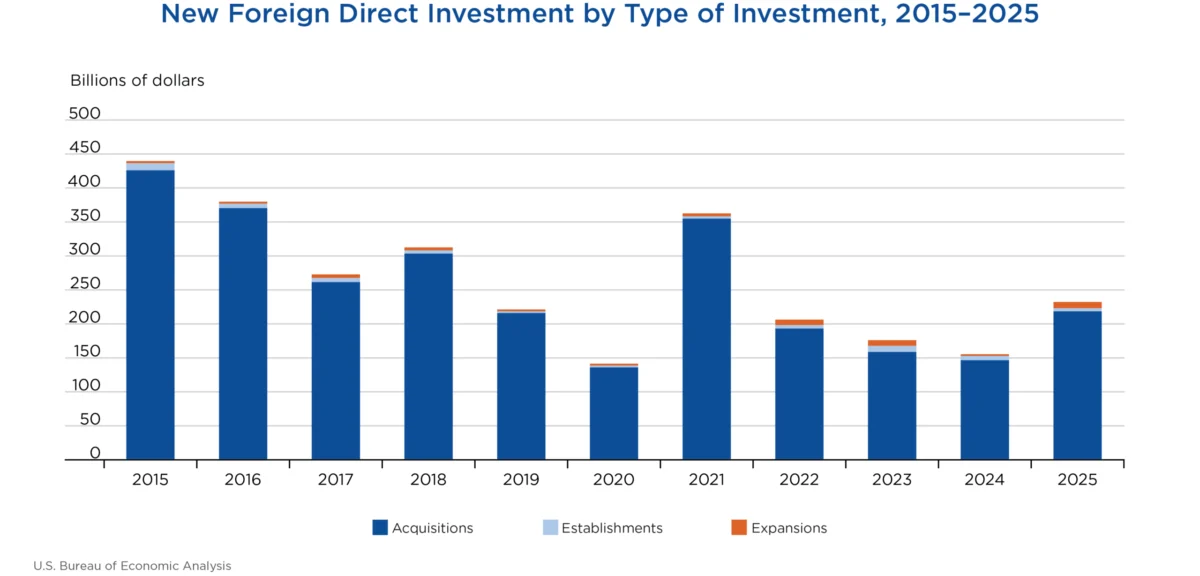
Far from being an "imminent economic problem," as often framed by proponents of protectionist policies, consistent net imports (a trade deficit) can, in fact, signal the strength and attractiveness of the U.S. economy. It reflects the nation’s ability to draw significant foreign investment and its role as a stable, reliable haven for global capital. When these net imports help finance the capital stock, it can lead to higher levels of productivity and economic growth than might otherwise be achieved.
Despite the sweeping tariffs implemented in 2025, the trade deficit saw only a marginal reduction of $2.1 billion compared to 2024. This minor decrease was primarily attributable to an increase in the trade surplus of services, while the goods deficit, a key focus of the tariffs, actually increased by $25.5 billion year over year. This outcome underscores the widely held economic view that tariffs are largely ineffective in fundamentally altering the trade balance, which is driven by deeper macroeconomic forces.
Broader Economic Repercussions: GDP, Jobs, and Wages
The Supreme Court’s decision to invalidate the IEEPA tariffs has significantly mitigated the projected negative economic effects on the U.S. economy. Prior to the ruling, the combined impact of Section 232 and IEEPA tariffs, along with threatened "reciprocal" tariffs, was estimated to reduce long-run U.S. GDP by 0.5 percent. The Section 122 tariffs, being temporary (expiring after 150 days), were not expected to have a long-run economic impact.
With the IEEPA tariffs now removed from the equation, the estimated long-run reduction in U.S. GDP is now solely attributed to the Section 232 tariffs, projected at 0.2 percent. This represents a considerable alleviation of the economic drag initially anticipated. The components of this reduction include:
- Section 232 Steel and Aluminum: Less than -0.05% reduction in GDP, with an estimated loss of 27,000 full-time equivalent jobs.
- Section 232 Autos and Auto Parts: -0.1% reduction in GDP, leading to an estimated loss of 98,000 jobs.
- Section 232 Furniture, Kitchen Cabinets and Vanities, Lumber: Less than -0.05% reduction in GDP, with a loss of 3,000 jobs.
- Section 232 Heavy Trucks and Parts: Less than -0.05% reduction in GDP, resulting in a loss of 23,000 jobs.
Collectively, the Section 232 tariffs are projected to reduce the capital stock by 0.1 percent and result in a loss of approximately 154,000 full-time equivalent jobs. The impact on pre-tax wages is estimated to be negligible (0.0%).
Crucially, the Supreme Court’s ruling averted the additional, more substantial economic damage projected from the IEEPA tariffs. These tariffs alone would have led to a further 0.4 percent reduction in long-run GDP, a 0.3 percent decrease in the capital stock, and a significant loss of 282,000 jobs. This includes the impact of IEEPA tariffs on fentanyl from China (-0.1% GDP, -59,000 jobs), Mexico (less than -0.05% GDP, -12,000 jobs), Canada (less than -0.05% GDP, -15,000 jobs), and a baseline 10% IEEPA tariff on other countries (-0.2% GDP, -142,000 jobs). The "reciprocal" tariff increases on the rest of the world and the ending of De Minimis rules under IEEPA would have contributed additional, albeit smaller, negative effects.
However, even with the IEEPA tariffs invalidated, the U.S. economy still faces headwinds from retaliatory tariffs imposed by other nations. As of September 1, 2025, these imposed retaliatory tariffs affect $223 billion of U.S. exports (based on 2024 values). If fully implemented, these countermeasures are estimated to reduce long-run U.S. GDP by an additional 0.2 percent and lead to a loss of 141,000 full-time equivalent jobs, along with a 0.1 percent reduction in the capital stock. This highlights that while the U.S. itself has scaled back its tariff ambitions, the global trade environment remains impacted by the broader trade disputes.
Distributional Impacts: Who Pays the Price?
Tariffs, often described as taxes on consumers and businesses, typically have regressive distributional impacts, disproportionately affecting lower and middle-income households. The 2025 tariffs were no exception, and while the Supreme Court’s ruling mitigated the overall burden, a significant impact remains.
In 2026, the tariffs that remain in effect are still projected to reduce after-tax incomes across all income groups. Notably, the top 1 percent of income earners are expected to experience a comparatively smaller reduction in after-tax income relative to other groups, underscoring the regressive nature of these taxes.
Before the Supreme Court’s ruling, the combined effect of all 2025 tariffs would have amounted to an average tax increase of $1,000 per U.S. household in 2025, projected to rise to $1,300 in 2026. However, with the invalidation of the IEEPA tariffs, this burden has been significantly reduced. The remaining Section 232 tariffs alone are now estimated to result in an average tax increase of $400 per household in 2026. If the temporary 10 percent Section 122 tariffs are also factored in, this average tax burden would rise to $600 per household.
It is crucial to note that these average figures represent direct tax increases. They do not fully capture the additional, often invisible, costs borne by U.S. households. These include higher prices for alternative goods due to reduced competition, a diminished range of consumer choices, and potential reductions in product quality as supply chains adjust to tariff barriers. For instance, the lowest 20% of income earners would see a 0.1% reduction in after-tax income from Section 232 tariffs alone, while the top 1% would see a 0.0% reduction. The combined effect with Section 122 tariffs would see the lowest 20% lose 0.2% of after-tax income, versus a 0.1% loss for the top 1%. These nuances highlight that while the overall economic hit has been softened, the burden is not evenly distributed.
The Enduring Legacy: Presidential Authority and Future Trade Policy
The Supreme Court’s ruling in Learning Resources Inc. v. Trump and V.O.S. Selections v. United States stands as a monumental check on presidential power, particularly concerning the use of emergency statutes like IEEPA for broad trade policy objectives. By clarifying that IEEPA does not authorize the President to impose tariffs, the Court has limited a tool that could have been wielded to fundamentally reshape U.S. trade relations without explicit congressional approval. This decision reinforces the separation of powers and the constitutional role of Congress in regulating commerce.
The immediate implication of the ruling is a significant financial obligation for the federal government to refund the unlawfully collected tariff revenues. This fiscal burden, estimated at $1.4 trillion over a decade, underscores the tangible costs of executive overreach. For businesses and consumers, it offers a degree of relief from higher import costs and reduced uncertainty, though the Section 232 tariffs and the threat of foreign retaliation persist.
Looking forward, the decision is likely to influence how future administrations approach trade policy. It signals that presidents must rely on established trade statutes, such as Section 232 or Section 301, which typically involve more defined processes and often greater congressional oversight, rather than attempting to bypass these through emergency powers. The ongoing debate over the effectiveness and economic costs of tariffs as a policy tool remains central. While tariffs may be seen as a means to protect specific domestic industries, economic analyses consistently point to their broader negative impacts on GDP, employment, and consumer welfare. The 2025-2026 saga serves as a potent reminder of the complex interplay between trade policy, legal authority, and national economic well-being.