Layla Zulfa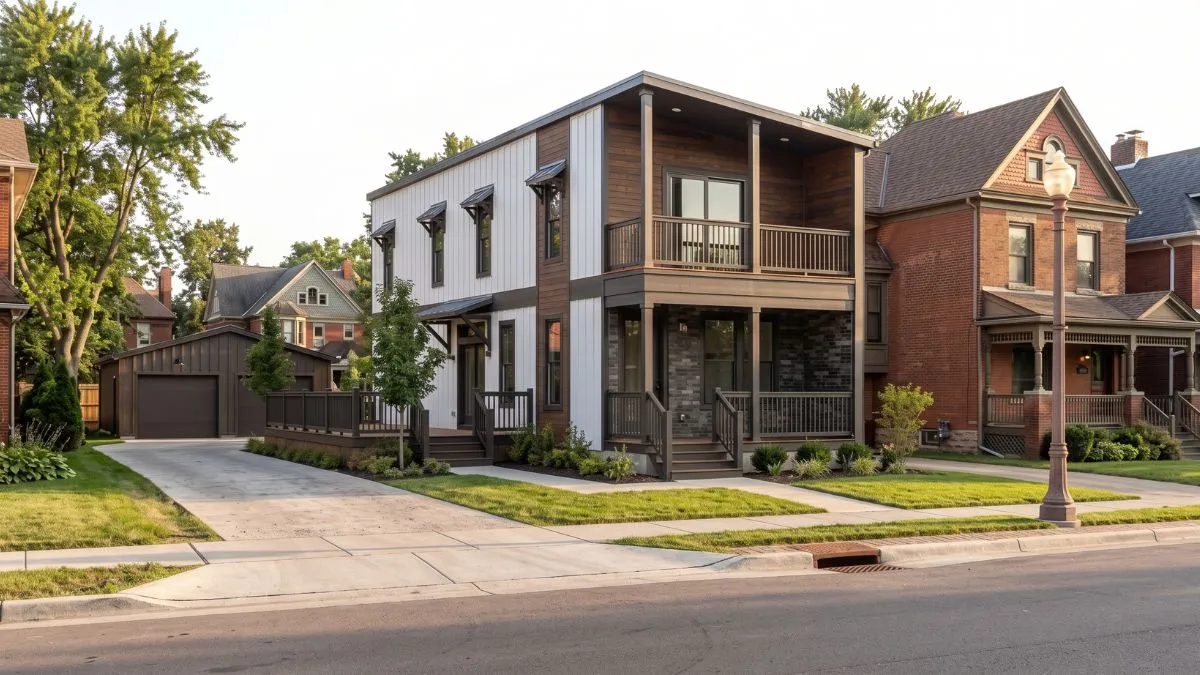
The manufactured housing industry has achieved a significant policy milestone with the recent removal of the permanent chassis requirement, a pivotal change enacted through the 21st Century ROAD to Housing Act. This landmark legislation, passed in July, is poised to revolutionize the production and deployment of manufactured homes, potentially ushering in an era of greater acceptance and expanded utility for factory-built housing across diverse market segments. The U.S. Department of Housing and Urban Development (HUD) has now provided its first concrete indication of the implementation process with the release of its "Next Generation Manufactured Housing Action Plan," signaling the beginning of a comprehensive overhaul of the federal manufactured housing code.
For decades, the permanent chassis has been an intrinsic component of manufactured homes, serving as both a structural element and a necessary platform for transportation. However, this requirement has also contributed to the perception of manufactured homes as strictly mobile dwellings, limiting their integration into suburban, urban, and infill housing markets where higher-density and multi-story constructions are often the norm. Industry leaders have long advocated for the removal of this constraint, arguing that it hinders innovation and restricts the potential for manufactured housing to address the nation’s pressing housing affordability crisis. The 21st Century ROAD to Housing Act directly addresses these concerns, paving the way for a new generation of factory-built homes that can be more seamlessly incorporated into traditional housing developments.
The implications of this policy shift are far-reaching. By allowing for chassis-free construction, manufacturers can now design and build homes that are more akin to site-built residences, offering greater architectural flexibility and the potential for multi-story configurations. This opens up new possibilities for denser housing developments, including duplexes, townhouses, and even apartment buildings, which were previously challenging or impossible to achieve with traditional manufactured housing designs. Experts believe this will not only expand the market appeal of manufactured homes but also contribute significantly to increasing overall housing supply and affordability in areas where land is at a premium.
However, the realization of these benefits is not instantaneous. Industry stakeholders acknowledge that a substantial implementation period will be necessary. HUD must meticulously revise its existing manufactured housing code to incorporate the new flexibility afforded by the removal of the permanent chassis requirement. This process involves intricate rulemaking, public comment periods, and the development of new standards for construction, transportation, installation, and energy efficiency. While the exact timeline for full implementation remains fluid, the release of HUD’s "Next Generation Manufactured Housing Action Plan" signifies a proactive approach to this complex undertaking.
The "Next Generation Manufactured Housing Action Plan" outlines a strategic roadmap for modernizing the manufactured housing regulatory framework, ensuring its alignment with the objectives of the 21st Century ROAD to Housing Act. The overarching goal, as stated in the document, is to "preserve the strengths of the federal manufactured housing system while ensuring that it can support innovation and the next generation of factory-built housing." This plan details seven critical actions that HUD intends to pursue to achieve this ambitious vision.
The Seven Pillars of HUD’s Modernization Plan
HUD’s comprehensive action plan is structured around seven key initiatives designed to facilitate the transition to a more adaptable and innovative manufactured housing sector:
-
Updating Energy Efficiency Standards: In accordance with the 21st Century ROAD to Housing Act, HUD will initiate rulemaking procedures to revise the energy efficiency standards outlined in 24 CFR Part 3280. This update is crucial for ensuring that future manufactured homes, regardless of their construction method, meet modern energy performance requirements, contributing to lower utility costs for homeowners and reduced environmental impact.
-
Accommodating Chassis-Free Construction: A central tenet of the plan is the revision of the Manufactured Home Construction and Safety Standards (24 CFR Part 3280) to explicitly permit homes built without a permanent chassis. This will involve establishing clear guidelines for structural design, the complexities of transportation and lifting for homes without an integrated chassis, inter-module connections, and other essential technical specifications. The objective is to create a flexible regulatory environment that supports a diverse range of home designs and construction methodologies.
-
Revising Foundation and Installation Standards: The standards for foundations and installation, detailed in 24 CFR Part 3285, will undergo significant updates to address the unique requirements of chassis-free manufactured homes. HUD’s Manufactured Housing Consensus Committee will play a vital role in recommending changes related to ground support systems, anchoring techniques, structural connections, and the precise procedures for setting homes. These revisions aim to ensure that chassis-free homes are installed safely and reliably, accommodating various foundation types and new design innovations.
-
Establishing a Multi-Module Construction Pathway: Recognizing the potential for chassis-free homes to be constructed in multiple factory-produced sections, HUD plans to develop more adaptable pathways for multi-module construction. This initiative will explore how these transportable modules can be effectively designed, transported, assembled, and finished on-site, while still capitalizing on the benefits of substantial factory completion. The ultimate goal is to broaden the spectrum of housing types and designs that manufacturers can offer to the market.
-
Developing a Performance-Based Code for Multi-Unit Buildings: A significant step towards expanding the scope of factory-built housing is the development of a performance-based federal construction and safety code for residential structures containing five or more units. The current standards often fall short when addressing the complexities of larger buildings, such as common corridors, shared stairwells, accessibility requirements, fire separation, integrated building systems, and multiple egress points. A performance-based code, modeled on Part 3280, would establish a standardized federal framework for the repeatable construction of multi-family housing, significantly boosting the capacity of factory-built methods in this sector. In line with this objective, HUD has already selected the National Institute of Building Sciences to support an initiative focused on expanding the use of factory-built construction for multi-family housing, following a recent update to manufactured housing standards that now permit duplexes, triplexes, and quadplexes.
-
Creating Chassis-Free Case Studies and Knowledge Dissemination: To facilitate understanding and adoption, HUD intends to document early projects that successfully implement chassis-free manufactured home construction. These case studies will provide valuable insights into all facets of the process, including design, transportation logistics, foundation engineering, installation techniques, zoning considerations, appraisal practices, lending requirements, and market reception. By sharing these real-world findings, HUD aims to equip stakeholders with the knowledge necessary to navigate and embrace this new approach to manufactured housing.
-
Establishing a Manufacturer On-Ramp to the HUD Regulatory System: To encourage broader participation and streamline the entry process for off-site construction manufacturers, HUD will develop comprehensive guidance and resources. This support will cover critical areas such as factory certification, design approval processes, robust quality assurance and control mechanisms, state and third-party inspection protocols, certification labeling requirements, and installation standards. The stated purpose of this initiative is to reduce barriers to entry, making it more accessible for manufacturers to produce HUD-regulated homes.
The Road Ahead: Implementation and Market Integration
The passage of the 21st Century ROAD to Housing Act and HUD’s subsequent action plan mark a pivotal moment for the manufactured housing industry. However, the transition will require time and concerted effort from both regulatory bodies and industry participants.
Lesli Gooch, CEO of the Manufactured Housing Institute, has emphasized that even after HUD finalizes the necessary rulemaking and implementation procedures, further steps will be required. Manufacturers will need to submit their chassis-free designs to HUD-approved third-party inspection agencies for rigorous evaluation and approval. Only upon receiving this approval will they be permitted to bring these innovative homes to the market.
Early indications suggest that major manufacturers are already anticipating and preparing for this shift. At recent industry showcases, companies have begun to unveil prototype designs that leverage the new policy. Champion Homes, for example, presented new two-story, chassis-free home models specifically engineered for urban infill development. Similarly, Cavco Industries debuted the Grande Arbor, its inaugural manufactured home model constructed without a permanent steel chassis.
Despite this forward momentum, Cavco Industries CEO William Boor cautioned during a recent earnings call that a definitive timeline for the market availability of these chassis-free models has not yet been established. He expressed confidence in the long-term benefits of the new law, stating that "directionally, I know it’s going to be helpful," and that "the benefits of this law will show themselves over time." This sentiment underscores the expectation that while the immediate impact may not be quantifiable, the foundational changes are set to drive significant growth and innovation within the industry.
The removal of the permanent chassis requirement represents more than just a technical adjustment; it is a fundamental reimagining of what manufactured housing can be. By enabling greater design flexibility, facilitating integration into diverse housing markets, and supporting the construction of multi-story and multi-unit dwellings, this policy change has the potential to significantly enhance housing affordability and availability across the United States. The successful implementation of HUD’s modernization plan will be critical in unlocking this potential and ensuring that the next generation of factory-built housing meets the evolving needs of American communities. The coming years will undoubtedly witness a transformation in how manufactured homes are conceived, built, and integrated into the broader housing landscape.