Nila Kartika Wati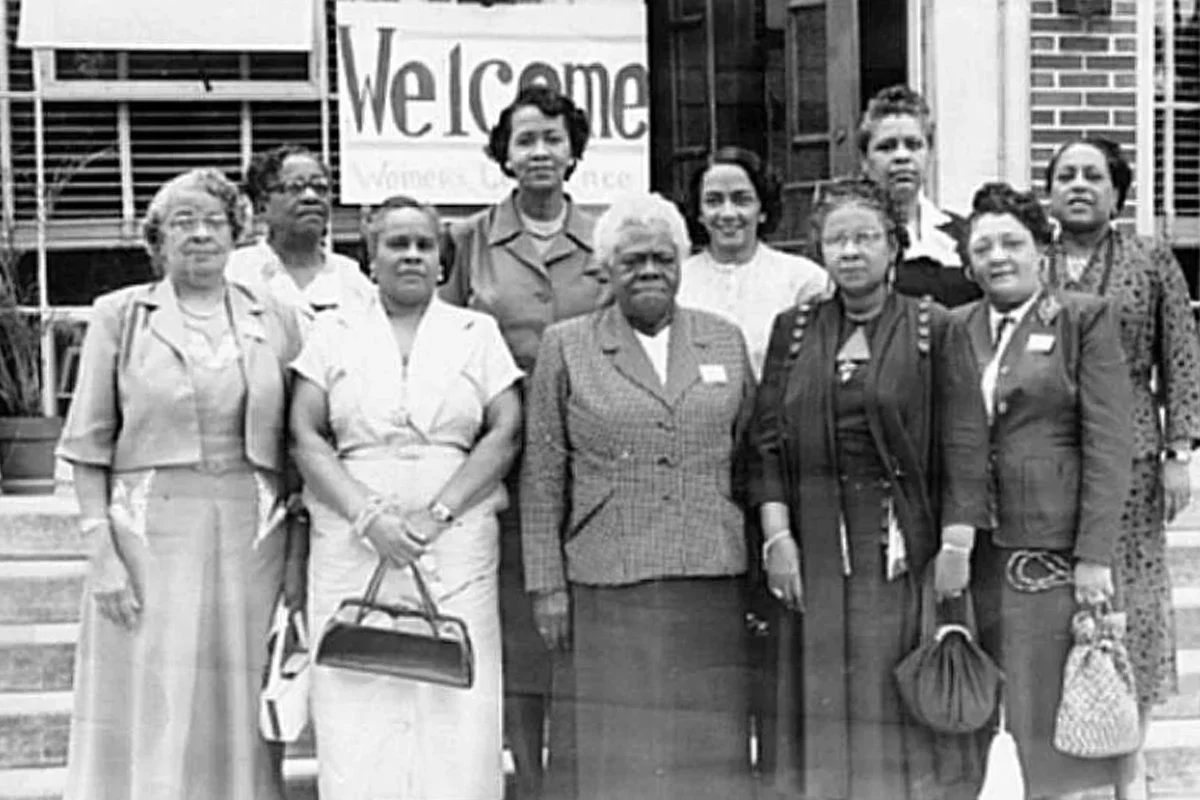
In the wake of the anniversary of the 1965 Voting Rights Act, a new data set from the Black Women’s Roundtable has illuminated a persistent paradox in American political life: a deepening skepticism of federal institutions paired with an unyielding commitment to civic participation. According to the latest polling, nearly 70 percent of Black women report they are certain to vote in upcoming election cycles, and an equal percentage believe their individual ballot remains a potent tool for systemic change. This figure represents a significant increase from just two years prior, even as public trust in Washington, D.C., continues to reach historic lows.
This phenomenon—the refusal to retreat from a flawed system—is not a contemporary anomaly but rather the hallmark of a 130-year history of institutional building. For over a century, when the ballot box was denied to them by law or rendered inaccessible through state-sanctioned violence, Black women did not merely protest; they constructed a parallel infrastructure of governance. These organizations, ranging from national federations to local civic clubs, provided the essential services and advocacy that the American state refused to offer. Today, as the United States approaches its semiquincentennial in 2026, these organizations stand as the most durable examples of "lasting civic infrastructure" in the nation’s history.
The Foundation of Collective Action: The National Association of Colored Women
The formalization of Black women’s political power began in earnest in July 1896. Recognizing that fragmented local efforts were insufficient to combat the rising tide of Jim Crow laws and the epidemic of lynching, three major organizations—the National Federation of Afro-American Women, the Woman’s Era Club of Boston, and the Colored Women’s League of Washington—merged to form the National Association of Colored Women (NACW).
Under the leadership of its first president, Mary Church Terrell, and the guiding motto "Lifting As We Climb," the NACW introduced a structural innovation that allowed it to scale rapidly. By choosing a federated model, the national body could set a broad policy agenda while allowing local chapters the autonomy to address the specific needs of their communities. This model proved extraordinarily effective. By 1897, the organization had 5,000 members; by 1924, that number had swelled to approximately 100,000 across hundreds of state and local federations.
The NACW functioned as a de facto social welfare state for Black Americans. In an era when public funds were strictly segregated or entirely withheld, NACW clubs funded and operated kindergartens, orphanages, hospitals, and vocational schools. During World War I, the organization demonstrated its administrative prowess by mobilizing its chapters to raise more than $5 million in war bonds. This was not merely charity; it was a sophisticated exercise in institutional capacity that proved Black women could govern, fund, and maintain complex systems of public service entirely independent of the white-dominated political establishment.
Creating the Central Wheel: The Rise of the National Council of Negro Women
By the mid-1930s, the landscape of Black women’s organizing had grown complex, with dozens of professional, religious, and fraternal organizations operating across the country. In 1935, Mary McLeod Bethune identified a new structural requirement: a "central wheel" to connect these disparate spokes of influence. This led to the founding of the National Council of Negro Women (NCNW) in New York City.
The NCNW’s primary innovation was the creation of a "coalition infrastructure." Rather than competing with existing groups for members, the NCNW served as a coordinating body for 14 national organizations. This allowed for the consolidation of political messaging and the pooling of resources for national advocacy. The council established a permanent headquarters in Washington, D.C., in 1942, signaling its intent to influence federal policy directly.
Through publications like the Aframerican Woman’s Journal and the Telefact newsletter, the NCNW disseminated policy analysis and organizing strategies to millions of women. During the height of the Civil Rights Movement in the 1960s, the NCNW expanded its reach into the Deep South. In 1964, it launched "Wednesdays in Mississippi," a program that sent integrated teams of professional women into the state to bridge racial divides and support Black communities during the dangerous "Freedom Summer" voter registration drives. Today, the NCNW continues this legacy as an "organization of organizations," linking 300 campus and community-based sections with 32 national affiliate groups.
From Campaigns to Institutions: The Evolution of BWOPA
While the NACW and NCNW focused on service and coalition-building, later organizations emerged to translate electoral momentum into permanent political machines. In 1968, a group of 12 women in the San Francisco Bay Area organized "Bay Area Women for Dellums" to support the congressional campaign of Ron Dellums. After successfully raising $75,000 and securing his victory, the group faced a choice: disband or evolve.
They chose the latter, reorganizing as Black Women Organized for Political Action (BWOPA). This transition represented a shift in philosophy—the recognition that political power must be institutionalized to survive the end of an election cycle. BWOPA established a statewide 501(c)(4) advocacy structure in California, creating a permanent home for policy development on issues such as reparations, criminal justice reform, and economic security.
By creating the Training Institute for Leadership, BWOPA built a formal pipeline for Black women to enter public office, ensuring that the labor of campaigning resulted in a seat at the decision-making table. The organization now operates chapters across the state, from Oakland to the Inland Empire, proving that the ad hoc energy of a single campaign can be harnessed into a decades-long instrument of political influence.
A Chronology of Institutional Growth and Resilience
To understand the impact of these organizations, one must view them through the lens of a continuous timeline of American civic development:
- 1896: Formation of the NACW, establishing the federated model of service and advocacy.
- 1912: NACW establishes a national scholarship fund, formalizing the role of education in political liberation.
- 1935: Founding of the NCNW, introducing the "coalition of coalitions" model.
- 1942: NCNW establishes a permanent national headquarters in Washington, D.C.
- 1964: "Wednesdays in Mississippi" bridges the gap between Northern professional women and Southern activists.
- 1968: BWOPA transitions from a campaign committee to a permanent political organization.
- 1970: The National Coalition on Black Civic Participation is formed, anchoring contemporary efforts like the Black Women’s Roundtable.
- 2017: The Black Women’s Roundtable begins annual polling to track political attitudes, providing data-driven insights into the electorate.
Modern Implications: Redistricting and the New Voting Frontier
The relevance of this historical infrastructure is currently being tested in the modern fight over democratic access. In Virginia, Roundtable-affiliated organizers recently led a grassroots campaign that resulted in the most racially equitable state legislative maps in the Commonwealth’s history. This success underscores a critical shift in strategy: Black women’s organizations are moving beyond "Get Out The Vote" (GOTV) efforts toward the more technical and systemic fights of redistricting and census participation.
However, the challenges remain significant. Recent polling data highlights that Black women are entering the current political cycle under intense economic pressure. Financial insecurity, combined with a perceived lack of responsiveness from both major political parties, has fueled the skepticism noted in the Black Women’s Roundtable report. Furthermore, new legislative proposals at the federal and state levels—such as increased photo-identification requirements and stricter documentation for mail-in ballots—are viewed by advocates as direct attempts to narrow the democratic window that these organizations have fought for 130 years to open.
Melanie Campbell, President and CEO of the National Coalition on Black Civic Participation, has noted that the resilience of Black women voters is often taken for granted. Analysts suggest that the "institutional home" provided by these organizations is what prevents this skepticism from turning into total civic withdrawal. By providing a space for collective action that exists outside of the two-party system, these organizations offer a sense of agency that the federal government often fails to provide.
The America250 Context: A Model for Civic Renewal
As the United States prepares for its 250th anniversary, the America250 commission has called for the creation of "lasting civic infrastructure" and a renewed commitment to the principles of the Declaration of Independence. When measured against this goal, the organizations built by Black women are not merely historical footnotes; they are the gold standard of American civic engagement.
The durability of the NACW, NCNW, and BWOPA offers a vital lesson for the future of American democracy. These groups survived the Great Depression, the Jim Crow era, and the internal fractures of the 1960s because they were built as institutions, not as personality-driven movements. They established formal leadership pipelines, secured permanent physical headquarters, and created diversified funding streams.
In a political climate often dominated by short-term digital activism and fleeting campaign cycles, the 130-year lineage of Black women’s organizing provides a blueprint for how to build power that lasts. As the country moves toward the midterms and the 2026 milestone, the strength of this infrastructure will likely be the determining factor in whether the promise of the ballot box is fulfilled for the next generation. The work of these organizations suggests that the true story of American democracy is not found solely in the halls of Congress, but in the "central wheels" and "federated clubs" that have quietly maintained the nation’s civic heart for over a century.