Candice Horbacz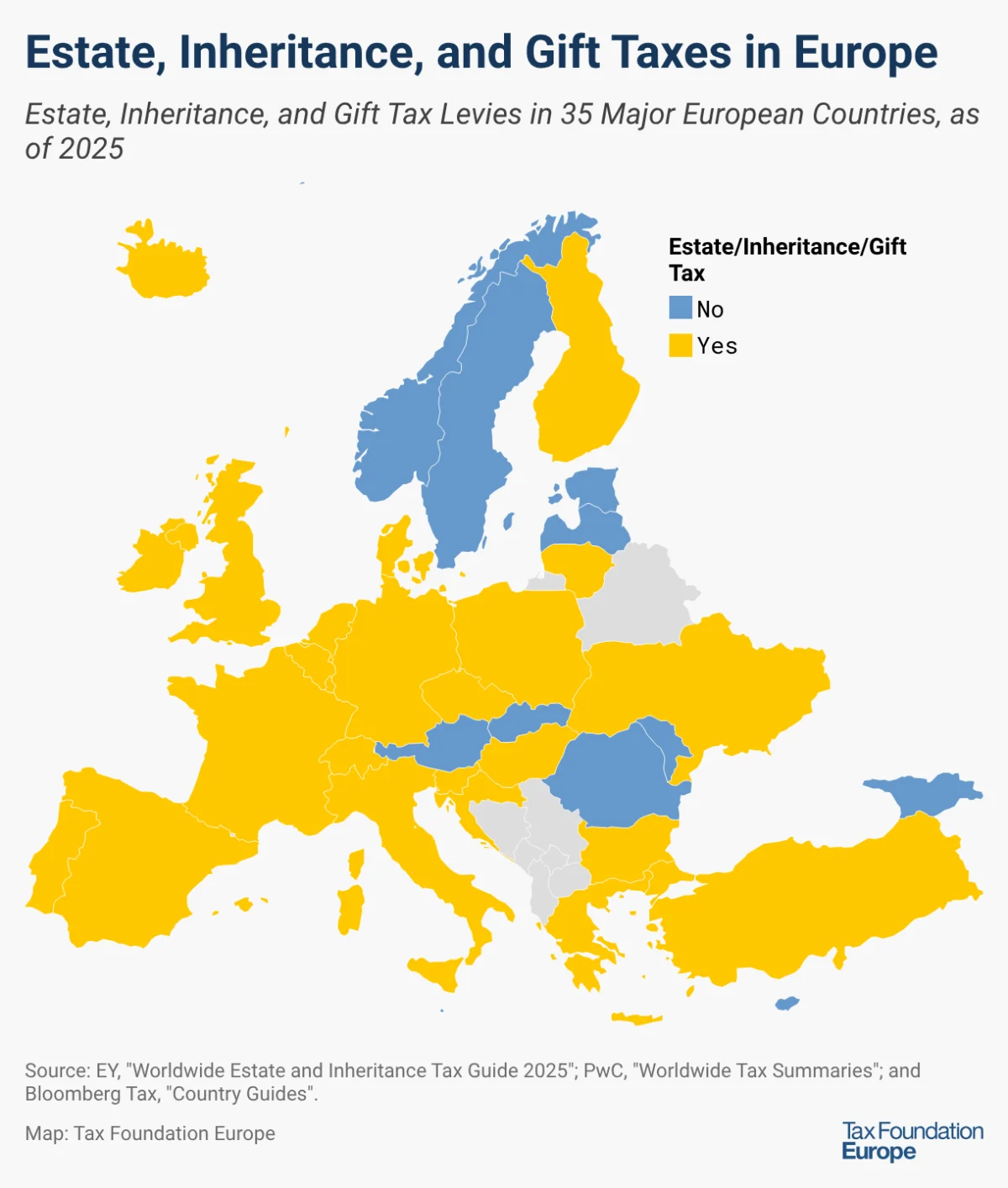
Inheritance taxes, a fiscal instrument with roots stretching back to ancient civilizations, remain a contentious yet widespread feature of modern European fiscal policy. Tracing their origins to the Roman Empire, where a 5 percent vicesima hereditatium was levied on inherited property to fund soldiers’ pensions, these taxes have evolved significantly but continue to serve as a vital, albeit often debated, component of national treasuries. Today, a substantial majority of European nations, specifically 24 out of 35 countries observed in a recent survey, actively employ some form of estate, inheritance, or gift tax, reflecting a persistent global interest in taxing wealth transfers across generations.
Historical Context: From Roman Legions to Modern States
The Roman Empire’s implementation of the vicesima hereditatium by Emperor Augustus in 6 AD marked one of the earliest documented instances of a systematic inheritance tax. This levy was crucial for financing the vast Roman military and providing pensions for its veterans, showcasing an early recognition of wealth transfer as a legitimate tax base for public services. Following the collapse of the Western Roman Empire, the concept largely receded in Europe, only to resurface in various forms during the medieval period, often as feudal dues or "death duties" tied to land ownership and succession. These early forms were typically fragmented and applied unevenly, primarily targeting aristocratic estates and serving as a means for monarchs to consolidate power and wealth.
The modern iteration of inheritance taxation began to take shape in Europe during the 17th and 18th centuries, often in response to the escalating costs of warfare and the burgeoning administrative needs of emerging nation-states. France, particularly after its revolution, played a significant role in popularizing a more standardized form of inheritance tax, viewing it as a tool to promote equality and fund the new republic. The 19th and early 20th centuries witnessed a more widespread adoption across the continent, with countries like the United Kingdom, Germany, and the Scandinavian nations progressively introducing or expanding their own versions. These taxes became increasingly sophisticated, moving beyond simple land transfers to encompass a broader range of assets and often incorporating progressive rate structures. This period also saw a philosophical shift, with inheritance taxes increasingly justified not just as revenue generators, but also as mechanisms to mitigate burgeoning wealth inequality and foster social mobility in rapidly industrializing societies.
Defining the Mechanisms: Estate, Inheritance, and Gift Taxes
Understanding the nuances between estate, inheritance, and gift taxes is crucial for comprehending their application and impact. While often grouped under the umbrella term "death duties," they target different points in the wealth transfer process and assign the tax liability to different parties.
-
Estate Taxes: These are levied on the total net value of a deceased individual’s property (their "estate") before assets are distributed to heirs. The tax is paid by the estate itself, meaning the overall pool of assets is reduced before any beneficiary receives their share. Countries like the United Kingdom and Ireland primarily utilize an estate tax system, where the focus is on the aggregate wealth left behind by the decedent. The rationale often centers on the idea that the state has a claim on a portion of this accumulated wealth as a final contribution to society.
-
Inheritance Taxes: In contrast, inheritance taxes are levied on the value of assets transferred to specific beneficiaries. The tax liability falls directly on the heirs or recipients, not the estate. The rates and thresholds for inheritance tax can vary significantly based on the relationship between the deceased and the heir (e.g., spouses, direct descendants, distant relatives, or non-relatives often face different rates and exemptions). Countries such as Germany, France, and Spain operate systems that are predominantly inheritance-based, emphasizing the recipient’s ability to pay and the perceived "unearned" nature of the windfall. This approach allows for greater differentiation based on familial ties and often incorporates higher tax-free allowances for close family members.
-
Gift Taxes: These taxes are levied when property or assets are transferred by a living individual to another without full consideration. Gift taxes are crucial companions to estate and inheritance taxes, designed to prevent individuals from circumventing death duties by transferring their wealth before passing away. They ensure that significant wealth transfers, regardless of timing, contribute to the public purse. The rates and exemptions for gift taxes often mirror those of inheritance taxes, maintaining consistency in taxing intergenerational wealth transfers.
Many European countries employ a hybrid system or use gift taxes in conjunction with either an estate or inheritance tax to create a comprehensive framework for taxing wealth transfers. This approach ensures that a broad spectrum of asset movements, both during life and at death, are accounted for within the tax system.
The European Landscape: A Patchwork of Policies
The prevalence of wealth transfer taxes across Europe is undeniable, with 24 out of 35 surveyed European countries implementing some form of these levies. However, beneath this broad adoption lies a significant diversity in approaches, rates, thresholds, and exemptions.
Countries with Robust Systems: Nations like France, Belgium, and Spain are known for their relatively high inheritance and gift tax rates, particularly for transfers to more distant relatives or non-family members. In France, for example, direct descendants benefit from substantial allowances, but rates can quickly escalate to 45% or even higher for less direct heirs. The UK’s Inheritance Tax, while having a relatively high threshold, applies a flat rate of 40% above that allowance. Germany employs a system with varying tax classes and allowances based on relationship, with rates ranging from 7% to 50%.
Countries with Abolished or Minimal Taxes: Conversely, some European nations have taken a different path, either abolishing these taxes entirely or implementing them with very low rates or broad exemptions. Austria notably abolished its inheritance and gift tax in 2008, following a Constitutional Court ruling on valuation issues. Sweden, a country often associated with high taxation, abolished its inheritance and gift taxes in 2004, citing concerns about their negative impact on family businesses and capital flight. Norway, another Nordic nation, followed suit in 2014. Other countries that have abolished these taxes include Estonia, Latvia, the Czech Republic, and Slovakia. These policy decisions are often driven by economic considerations, such as a desire to attract investment, retain entrepreneurial wealth, or simplify the tax system, as well as philosophical arguments about the fairness of taxing wealth that has already been subject to income or capital gains tax during a lifetime.
Variations and Exemptions: Even among countries that levy these taxes, the specifics can differ wildly. Exemptions for spouses, minor children, agricultural land, or family businesses are common but vary in scope. The thresholds at which taxes begin to apply can range from tens of thousands to hundreds of thousands of euros, significantly impacting who pays and how much. For instance, while France offers generous allowances for direct heirs, its rates can be among the highest for non-relatives. This patchwork approach means that the burden of wealth transfer taxes is far from uniform across the continent, creating complex scenarios for individuals and families with cross-border assets.
The Challenge of Double Taxation in a Borderless Europe
The increasing mobility of capital and people within the European Union presents unique challenges for inheritance and gift taxation, particularly the risk of double taxation. A situation can arise where an estate or inheritance falls under the tax jurisdiction of more than one country, leading to the same assets being taxed twice. This can happen if, for instance, the deceased resided in one EU Member State, owned property in another, and their heirs reside in a third. Each state might claim the right to tax based on different criteria (e.g., domicile, nationality, location of assets).
Recognizing this potential for financial burden and impediment to free movement within the single market, European Union Member States and the European Commission have established various mechanisms to prevent or relieve double taxation. These primarily include:
- Bilateral Tax Treaties: Many EU countries have signed bilateral conventions specifically addressing inheritance and gift taxes. These treaties typically allocate taxing rights between the two signatory states, define which country has primary jurisdiction, and provide for relief methods such as tax credits (where tax paid in one country can be offset against tax due in another) or exemptions.
- Unilateral Relief: In the absence of a specific bilateral treaty, many countries offer unilateral relief mechanisms in their domestic law. This might involve granting a credit for foreign inheritance tax paid or exempting foreign assets from domestic taxation if they have already been taxed abroad.
- EU Coordination Efforts: The European Commission actively promotes better coordination among Member States’ tax systems to reduce obstacles to cross-border activities. While there is no harmonized EU inheritance tax law, the Commission has issued recommendations and guidelines, such as the Succession Regulation (EU) No 650/2012, which helps determine which country’s law applies to cross-border successions, though it doesn’t directly address tax issues. The goal is to ensure legal certainty and predictability for citizens and businesses.
Despite these efforts, complexities persist. The sheer number of differing national laws and the absence of a comprehensive multilateral EU agreement mean that navigating cross-border inheritance can still be a labyrinthine process, often requiring specialized legal and tax advice.
The Economic and Social Debate: Revenue, Equity, and Incentives
The discourse surrounding inheritance, estate, and gift taxes is deeply polarized, balancing arguments for social equity and revenue generation against concerns about economic efficiency and individual liberty.
Arguments for Taxation (The Equity Perspective):
The Organisation for Economic Co-operation and Development (OECD) frequently highlights wealth transfer taxes as a tool to mitigate wealth inequality, a concern that has grown significantly in recent decades. Proponents argue that these taxes:
- Reduce Intergenerational Wealth Inequality: They prevent the perpetual accumulation of wealth within a few families, promoting a more meritocratic society where success is based more on individual effort than inherited advantage. Data from organizations like the European Central Bank consistently show significant wealth disparities, and inherited wealth is a major contributor to these gaps.
- Fund Public Services: While often a smaller percentage of total tax revenue compared to income or consumption taxes, they still provide a stream of funds that can be allocated to essential public services, contributing to the welfare state. For instance, in some European countries, inheritance tax revenue can amount to several billion euros annually.
- Promote Fairness and Social Justice: Many view inherited wealth as "unearned income" that should contribute to the collective good, especially when significant wealth transfers occur without any productive economic activity by the recipient. They are seen as a way to ensure that those who benefit from society’s infrastructure and opportunities contribute back.
Arguments Against Taxation (The Efficiency and Incentive Perspective):
Conversely, organizations like the Tax Foundation and many economists argue that the downsides of these taxes often outweigh their benefits, advocating for their repeal or significant reduction. Their primary concerns include:
- Limited Revenue Capacity: Despite their political salience, wealth transfer taxes typically generate a relatively small fraction of national tax revenues. In many OECD countries, they account for less than 0.5% of GDP or a mere 1-2% of total tax revenue. This limited revenue generation questions their effectiveness as a primary fiscal tool.
- Negative Impact on Entrepreneurial Activity: Critics contend that these taxes can disincentivize wealth creation and entrepreneurial risk-taking. If a significant portion of a successful business or accumulated wealth is taxed at death, it might reduce the incentive for individuals to build and grow businesses, especially family-owned enterprises, potentially leading to asset sales or disinvestment.
- Discouragement of Saving and Investment: The prospect of substantial taxation on inherited wealth can discourage individuals from saving and investing for the future, particularly for their descendants. This can reduce the overall capital stock available for economic growth.
- Administrative Burden and Compliance Costs: Administering and complying with complex inheritance and estate tax laws can be costly and time-consuming for both tax authorities and individuals, involving valuation disputes, legal fees, and planning expenses.
- Capital Flight and Brain Drain: High wealth transfer taxes can motivate wealthy individuals to move their assets or even themselves to jurisdictions with more favorable tax regimes, leading to capital flight and a loss of potential investment and tax revenue for the original country.
- "Double Taxation" Perception: Many argue that wealth taxed at death has already been subject to income tax, capital gains tax, or property taxes during the decedent’s lifetime, leading to a perception of "double taxation" on the same economic base.
Supporting Data and Current Trends
Recent data underscores the ongoing debate. While the OECD champions these taxes for their potential to address wealth concentration, the actual revenue collected often falls short of expectations. For instance, in 2022, inheritance and gift tax revenues across the OECD averaged around 0.4% of GDP. Even in countries with higher rates, like the UK, the contribution to total tax receipts remains modest.
The discussion around these taxes is particularly pertinent given the significant intergenerational wealth transfer expected in the coming decades, often termed the "Great Wealth Transfer." As Baby Boomers age, unprecedented sums of wealth are projected to pass to younger generations. This demographic shift intensifies calls for revisiting the structure and purpose of inheritance taxes. Some policymakers argue for increasing rates or lowering thresholds to capture a larger share of this transfer, while others reiterate concerns about economic distortions.
In recent years, several European countries have engaged in reforms or intense debates concerning these taxes. The UK, for example, has seen perennial calls for reform or abolition of its Inheritance Tax. Spain has witnessed regional variations, with some autonomous communities offering significant reductions or effective abolition of inheritance tax for close relatives, leading to "tax tourism" where families move residence to benefit from lower rates. These examples illustrate the dynamic and often politicized nature of these fiscal instruments.
Official Responses and Policy Discourse
The varying perspectives from influential organizations highlight the complexity. The OECD’s stance generally supports progressive wealth taxation, including inheritance taxes, as part of a broader strategy to combat rising wealth inequality and ensure fiscal sustainability. They often publish analyses advocating for careful design to minimize negative impacts while maximizing equity benefits.
Conversely, think tanks like the Tax Foundation consistently present data and arguments suggesting that these taxes are inefficient and economically detrimental. Their research often points to the low revenue yield, the administrative burden, and the potential for discouraging productive economic activity.
The European Commission, while respecting national tax sovereignty, continues to facilitate discussions and coordination among Member States to ensure that cross-border wealth transfers are handled smoothly and fairly, without unduly penalizing citizens or distorting the single market. Their focus is primarily on administrative cooperation and preventing double taxation, rather than dictating tax rates or structures.
Broader Impact and Future Outlook
The trajectory of inheritance, estate, and gift taxes in Europe is poised at a critical juncture. The demographic shifts, increasing wealth concentration, and ongoing fiscal pressures mean that these taxes will likely remain a central point of contention in policy debates.
The broader impact extends beyond mere revenue collection. These taxes influence:
- Wealth Distribution: They directly affect how wealth is distributed across generations and among different segments of society.
- Economic Behavior: They can alter decisions regarding saving, investment, entrepreneurial activity, and even residential choices.
- Social Cohesion: The perception of fairness and the extent to which society provides opportunities regardless of birthright are deeply intertwined with the design of these taxes.
Policymakers face the intricate task of balancing competing objectives: generating revenue, promoting social equity, and minimizing economic distortions. Future reforms might involve harmonizing aspects of cross-border taxation within the EU, adjusting thresholds and rates to reflect current economic realities, or exploring alternative mechanisms for wealth transfer taxation. As Europe continues to grapple with economic recovery, social cohesion, and demographic change, the debate over who pays for accumulated wealth, and when, will undoubtedly continue to shape the continent’s fiscal and social landscape.