Lina Irawan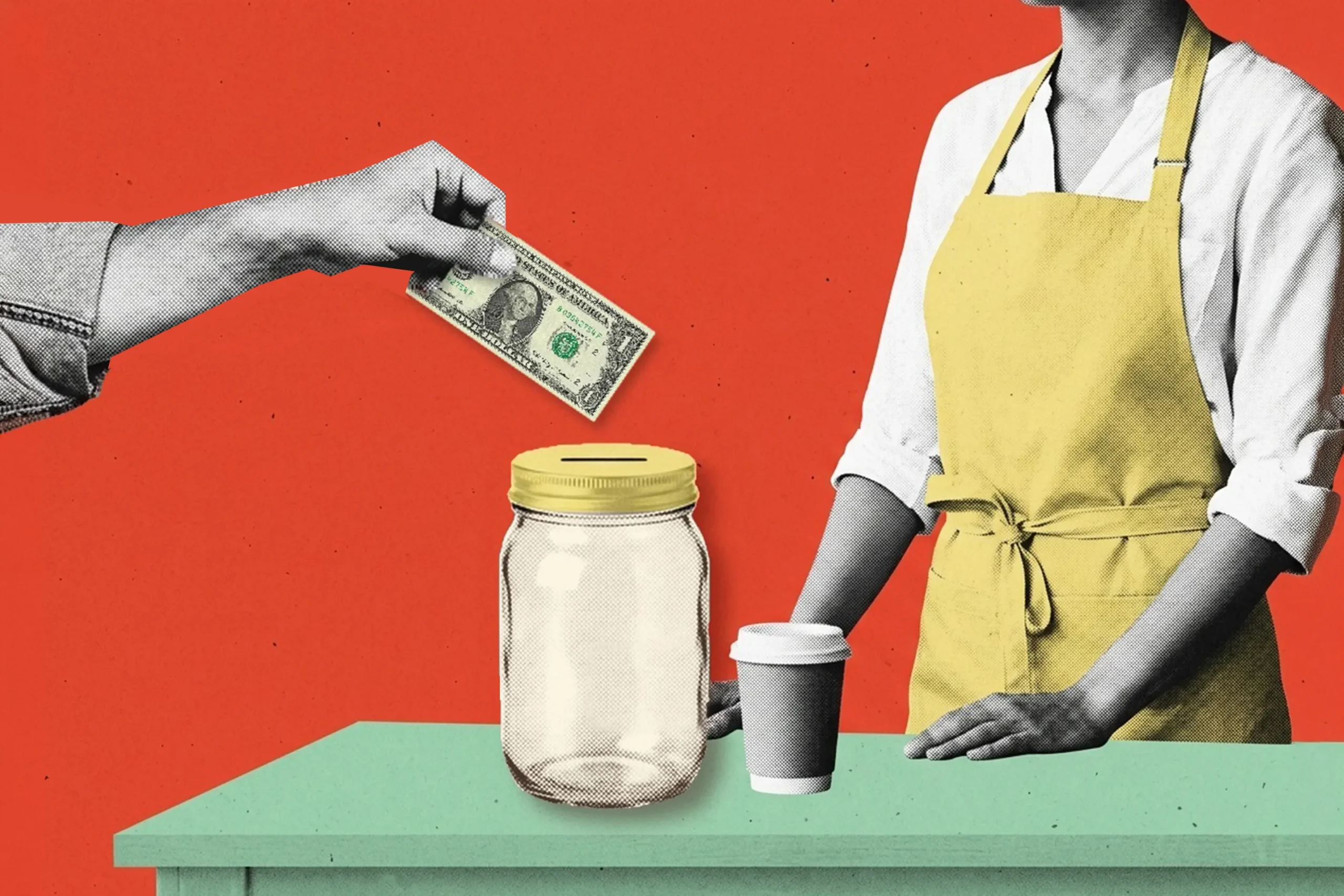
We research all brands listed and may earn a fee from our partners. Research and financial considerations may influence how brands are displayed. Not all brands are included. Learn more.
For decades, the simple act of receiving a haircut or purchasing a coffee carried with it an unspoken social contract, particularly when the person behind the counter was also the establishment’s owner. The prevailing etiquette, enshrined by authoritative voices for generations, dictated a clear answer to the question of gratuity: no. Tipping the owner was, for many, an unnecessary gesture, even an awkward one. Yet, as the calendar inches towards 2026, the landscape of service transactions has undergone a profound transformation, leaving consumers and proprietors alike grappling with a complex new reality. The once-clear lines of tipping etiquette have blurred, redefined by technological shifts, evolving economic pressures, and a palpable sense of "tipping fatigue" among the public.
This historical aversion to tipping owners was not arbitrary; it was deeply rooted in the socio-economic perceptions of labor and status that characterized much of the 20th century. Daniel Post Senning, a coauthor of Emily Post’s Etiquette, The Centennial Edition, and the great-great-grandson of the seminal etiquette authority Emily Post, explains this long-standing tradition. "It was a traditional etiquette and still is a traditional etiquette," Senning observes, referring to the practice of withholding a tip from a business owner. Emily Post, whose bestselling etiquette text in 1922 became the touchstone for American manners, shaped public understanding of social graces, including the nuances of gratuity. In her era, and for much of the century that followed, "there was the potential for a tipping or a gratuity to be offensive," Senning notes. This sentiment stemmed from the widespread association of tipping with service workers—individuals often earning lower wages and reliant on gratuities to supplement their income—rather than with salaried professionals or business proprietors who were understood to set their own prices to ensure fair compensation.
By not leaving a tip, patrons were, in effect, performing an act of deference, acknowledging and respecting their service provider’s "status" as a business owner. This approach implied that owners, by virtue of their entrepreneurial standing, had already accounted for their worth in their pricing structure and did not require supplemental income from tips, which were then seen as a form of charity or an acknowledgment of subservient labor. This distinction was crucial in a society that valued clear social hierarchies and professional boundaries.
The Historical Trajectory of Tipping in America
To fully appreciate this shift, it’s essential to understand the complex history of tipping in the United States. While tipping has European origins, where it often served as a class marker or a gesture to demonstrate generosity, its adoption in America in the post-Civil War era took on a different, more controversial dimension. Initially viewed by many as an undemocratic and aristocratic practice, tipping gained traction, particularly as a way to employ newly freed slaves in service industries without paying them a living wage. This controversial genesis laid the groundwork for a system where many service workers became reliant on customer gratuities, a practice that continues to impact compensation structures today.
Throughout the early to mid-20th century, as Emily Post’s influence solidified, the general consensus was that business owners, from barbers to restaurateurs, set their prices to cover their costs and provide themselves with a salary or profit. Therefore, a tip was considered superfluous and could even imply that the owner’s pricing was inadequate, potentially causing offense. This etiquette prevailed for decades, a silent agreement between patrons and proprietors.
The Digital Age and the Erosion of Traditional Norms
However, the dawn of the 21st century has ushered in an entirely new era, one characterized by rapid technological advancement and profound shifts in consumer behavior and economic realities. We are now immersed in a world where "swiveling iPad tip screens" have become ubiquitous at checkout counters, where "Venmo-barcode tip jars" offer seamless digital gratuities, and where automated payment terminals frequently present a "question" about adding a tip. Tips are, quite literally, everywhere, transcending traditional service sectors and appearing in environments ranging from fast-casual dining to retail stores where no traditional "service" might be perceived. This pervasive request for gratuities has led to what many are now calling "tipping fatigue."
Recent data underscores this sentiment. A 2023 Bankrate survey revealed that a significant 66% of U.S. adults now hold a negative view of tipping, a substantial increase from just a few years prior. Consumers report feeling pressured, confused, and overwhelmed by the sheer volume and context of tipping requests. This widespread burnout directly challenges the established social contracts surrounding gratuities, including the long-held rule about not tipping owners.
Modern Etiquette and the Owner’s Role
Given this dramatic evolution, the central question for consumers and business owners in 2026 remains pressing: Does the old rule that you don’t tip the owner still hold up? The answer, like much in modern etiquette, is nuanced and less rigid than its historical predecessor.
The Emily Post Institute, while acknowledging the historical context, now advises that most owners who actively work in a service capacity today are comfortable accepting tips. This adjustment reflects a recognition of changing economic realities and evolving social perceptions. Nevertheless, the institute’s updated guidance does not entirely negate the old etiquette, and a substantial segment of customers still adhere to the traditional rule, opting to skip a tip in situations where they would otherwise tip an employee.
The guidelines offered by the Emily Post Institute for traditional tipping scenarios provide a baseline for understanding the system. They emphasize that tipping is "not optional" when dining out, recommending a minimum of 15% and typically up to 20% for standard service. This norm for restaurant workers is rooted in the "assumption that they receive a tip on each customer’s bill to balance their total take-home pay," an assumption heavily influenced by the federal tipped minimum wage of $2.13 per hour, which remains significantly below the general federal minimum wage. For personal services like hair, nails, and massages, a 15% to 20% tip is also commonly recommended. For baristas, tips are "discretionary," with a dollar or two sufficing, and at a bar, $1 to $2 per drink or 10% to 20% is considered appropriate.
However, these established rules become significantly trickier when the owner of the establishment is the one providing the service. The traditional logic that owners set their own prices to ensure fair compensation is increasingly being re-evaluated in the face of modern economic pressures and the blurred lines between proprietor and service provider.
The Economic Realities of Small Business Ownership
The perception of business owners as invariably wealthy individuals who do not need or deserve tips is often far from the truth, particularly for small, independent operators. Andrea Andrews, owner of Hearts & Hair, a salon in Fort Collins, Colorado, challenges this stereotype directly. She observes that she receives fewer tips than her employees, a reality that directly contradicts the traditional etiquette. Andrews rejects the notion that withholding a tip honors a proprietor’s status, stating, "I think a tip is a sign of respect in today’s day and age." For her, a tip is "never expected, but it’s definitely a form of appreciation — that you really respect this hairdresser or even a barista for what they’ve invested in their time and their energy."
Andrews’s personal experience underscores the financial precarity many small business owners face. When she opened her salon in 2008, she lived out of the break room due to lack of housing funds. Starting a salon, or any small business, involves substantial risk, years of specialized training or education, and considerable upfront and ongoing costs. These include rent, utilities, insurance, supplies, marketing, and often the wages of employees, all before the owner can draw a salary. Andrews argues that, if anything, owner-operators, who bear 100% of the financial risk and expense, should be tipped more than regular service workers. She cites the example of her eyelash technician: "She’s the business owner, so she’s taking 100% of the expense cost and the risk and everything. So I’m going to tip her more than I would just a regular service provider, because they’re guaranteed their hourly wages."
Supporting Andrews’s perspective, a 2025 Consumer Financial Protection Bureau (CFPB) report on "The Financial Security of Small Business Owners" provides critical data. The report indicates that while small business owners typically earn more money than their employees on average, their personal finances are significantly more volatile. Owners are almost twice as likely to report monthly fluctuations in their income compared to non-owners, and they are more prone to overdrafting their checking accounts three or more times annually. This financial instability highlights that the "owner" title does not automatically equate to guaranteed wealth or steady income. For many, especially in the early years of a venture, tips can be a crucial component of their personal take-home pay. "I don’t pay myself an hourly wage," Andrews explains. "So when I get tips, I take that home. That’s my pay — my tips are pay."
Consumer Pushback and the "Tip Creep" Debate
While the economic realities for small business owners are compelling, consumer sentiment is also undergoing a significant recalibration. The widespread feeling of "tipping fatigue" has led to a growing pushback against what some call "tip creep"—the expansion of tipping expectations into areas where it was previously uncommon.
Quentin Latham, a YouTuber and self-described urban pop culture critic, vocalized this sentiment in a recent video, arguing that tipping expectations have gone too far. "I’m sorry, but when you are a stylist, or a barber, or a nail tech, you set your price, so your price should be set in such a way that even if you don’t get a tip… you feel like you’ve been justly compensated for your time, your expertise and your supplies," Latham asserted. He points out that most people do not tip car mechanics, roofers, HVAC repair people, or gardeners, all of whom provide essential services and operate their own businesses. Latham contends that tips should be reserved primarily for "hospitality" services, where a direct, personalized, and often extended service experience warrants an extra show of appreciation. A Money.com survey on "where not to tip" further illustrates this, revealing a societal consensus against tipping many service professionals, highlighting the inconsistency in current norms.
This perspective raises important questions about the ethical implications of tipping. Should consumers be expected to subsidize business models that do not pay their owners a sufficient wage, or should businesses be transparent about their pricing to cover all costs, including fair owner compensation? The debate often circles back to the fundamental purpose of a tip: Is it a reward for exceptional service, a supplement for low wages, or simply an expected part of the transaction?
The Tipping Wage and Broader Economic Implications
The discussion around tipping business owners is inextricably linked to the broader structure of the tipping system in the U.S., particularly the federal tipped minimum wage. At $2.13 per hour, this wage forces many service employees to rely heavily on tips to reach even the standard minimum wage, let alone a living wage. This system creates a dynamic where customers are implicitly expected to bridge the gap between a low base wage and a livable income. While owners typically do not fall under this specific tipped wage category, the cultural expectation of tipping—fueled by this system—pervades the service industry, influencing consumer behavior even towards proprietors.
Some argue that the entire tipping system, in its current form, masks the true cost of labor, allowing businesses to keep menu prices lower and externalize a portion of their payroll onto customers. If tips were abolished and replaced by higher, livable wages, prices would undoubtedly increase, but the financial burden and ambiguity for consumers might decrease. However, transitioning away from tipping is a complex undertaking, as evidenced by failed experiments in some restaurants that attempted to implement service charges or higher base wages, often leading to customer confusion and employee dissatisfaction due to reduced overall earnings.
Navigating the Contemporary Tipping Landscape
Ultimately, in 2026, there is no single, uniform answer to the question of whether to tip a business owner. The decision often boils down to a confluence of factors: the specific type of business, the nature of the service, the perceived financial situation of the owner (e.g., a solo proprietor versus the owner of a large chain), and individual consumer discretion.
Daniel Post Senning offers practical advice for those caught in this modern dilemma: if you want to leave a tip but are unsure how it might be received, simply ask. It doesn’t have to be an awkward interaction. He suggests phrasing it politely and with context: "I’m aware you own this shop. You do such a great job here. I started to wonder the other day: Are you comfortable accepting a tip?" This direct approach not only clarifies the situation for the patron but also empowers the owner to express their preference, fostering transparency and mutual respect.
Future Outlook and Potential Shifts
The ongoing evolution of tipping norms suggests that this debate is far from settled. As technology continues to shape payment methods and consumer expectations, further shifts are inevitable. The conversation may increasingly focus on alternative compensation models, such as mandatory service charges, transparent pricing that incorporates fair wages, or a move towards a higher, universal minimum wage for all service workers, potentially reducing the reliance on discretionary tips.
The societal conversation about fair compensation, the responsibilities of business owners, and the role of consumers in supporting a sustainable service economy will continue to unfold. For now, navigating the etiquette of tipping business owners requires a blend of historical awareness, empathy for economic realities, and a willingness to adapt to a rapidly changing service landscape. The days of a simple, unequivocal "no" are largely behind us, replaced by a more complex, nuanced, and often personal decision in the modern marketplace.