Layla Zulfa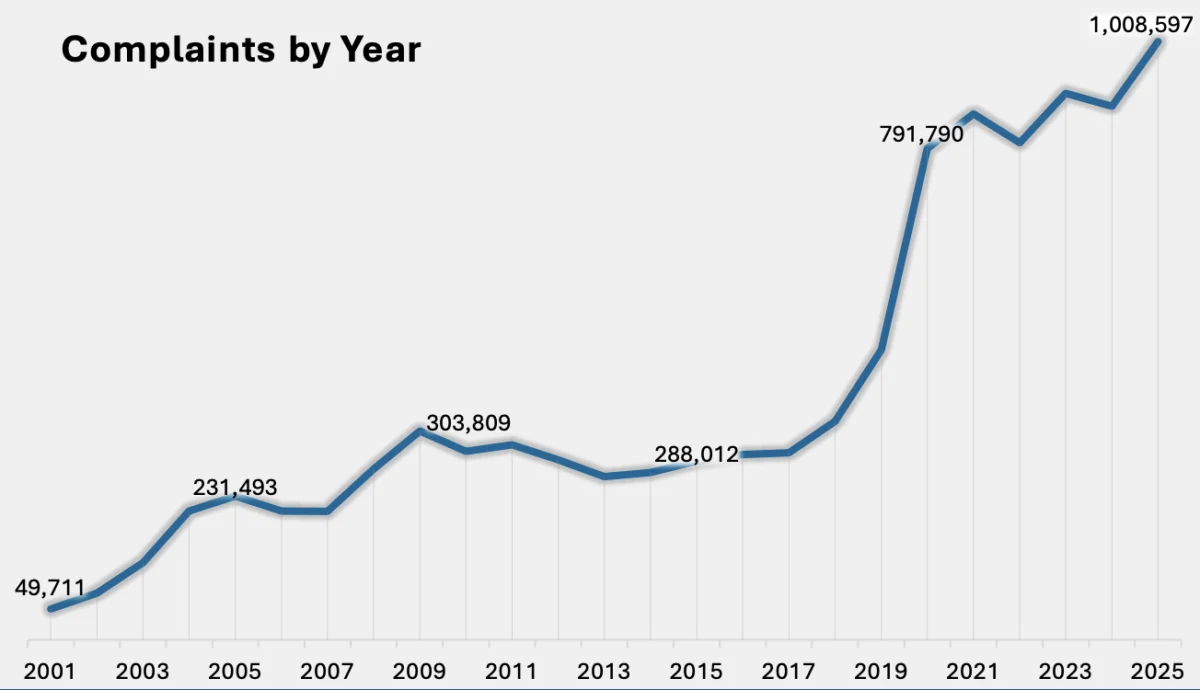
The FBI’s Internet Crime Complaint Center (IC3) has released its annual report for 2025, revealing a landscape of escalating cyber threats with over 1,008,597 reported complaints of cyber-enabled crime. The financial fallout from these incidents has reached unprecedented levels, with reported losses soaring past $20.8 billion, marking a significant 26% increase compared to the previous year. This surge underscores a growing and pervasive challenge for individuals, businesses, and critical sectors like real estate, which is increasingly becoming a lucrative target for sophisticated criminal enterprises.
The real estate sector, in particular, experienced a substantial impact, with 12,368 complaints directly related to real estate fraud. These incidents resulted in reported losses totaling $275.1 million, indicating a persistent and escalating threat for housing professionals and their clientele. This figure represents a critical concern for a market that relies heavily on trust and secure financial transactions.
Further compounding the issue, business email compromises (BEC) emerged as the second-highest category for total losses, amassing $3.04 billion across 24,768 complaints. BEC schemes frequently target the critical junctures of home closings and wire transfers, exploiting vulnerabilities in communication channels to divert substantial sums of money. The sophistication and frequency of these attacks highlight the need for enhanced security protocols within financial and transactional processes.
A significant driver behind the escalating sophistication of cybercrime is the rapid adoption of artificial intelligence (AI) by malicious actors. The IC3 report indicates that AI is being leveraged to enhance the credibility and effectiveness of fraudulent schemes. In 2025, the center received over 22,000 complaints that specifically referenced the use of AI, with adjusted losses exceeding $893 million. This represents a nascent but rapidly growing threat vector that law enforcement and cybersecurity experts are actively monitoring.
AI’s Evolving Role in Cybercrime
The report elaborates on how AI is transforming the modus operandi of cybercriminals. "Chat generators can quickly create official-sounding emails mimicking a company’s CEO or other officials," the report explains. These AI-generated communications can be highly convincing, often containing sophisticated phishing links or direct instructions to initiate wire transfers. The ability of AI to mimic the communication styles of authoritative figures significantly lowers the barrier to entry for complex social engineering attacks.
Beyond text-based communication, voice cloning technology is also being employed, enabling criminals to impersonate individuals and request wire payments with a disturbing level of authenticity. This dual threat of forged digital correspondence and synthesized vocal impersonations presents a formidable challenge in verifying the legitimacy of financial transactions.
The impact of AI is particularly pronounced in investment scams. These schemes are increasingly utilizing AI-generated videos and deepfake endorsements from celebrities or trusted public figures to create an illusion of legitimacy. These tactics are highly effective in lulling victims into a false sense of security, leading to a staggering $8.64 billion in losses from this category alone, making it the largest contributor to overall financial damage. The ability to create seemingly credible endorsements from influential personalities amplifies the persuasive power of these scams, making them harder to detect.
The Human Element: Confidence and Romance Scams Persist
While AI introduces new layers of sophistication, traditional social engineering tactics continue to inflict significant damage. Confidence and romance scams, which prey on emotional vulnerabilities, resulted in $929 million in losses. These scams often ensnare victims into liquidating assets or tapping into retirement funds, demonstrating a direct impact on individuals’ long-term financial security. The emotional manipulation inherent in these scams makes them particularly insidious, as victims may not realize they are being defrauded until substantial financial damage has occurred.
Elder Fraud: A Growing Crisis of Vulnerability
A particularly alarming trend highlighted in the IC3 report is the disproportionate impact of cybercrime on seniors. Complainants aged 60 and older filed 201,266 reports in 2025, marking a significant 37% increase from the previous year. The financial losses incurred by this demographic also surged dramatically, reaching $7.75 billion, a substantial 59% year-over-year increase.
The severity of these elder fraud cases is underscored by the fact that over 12,400 seniors reported individual losses of at least $100,000 each. This indicates that sophisticated scams are targeting vulnerable older adults with significant financial assets. The emotional and financial toll on these individuals and their families can be devastating, often leaving them with little recourse.

Cryptocurrency: The Preferred Transaction Method for Fraudsters
Cryptocurrency continues to be the transaction method of choice for cybercriminals, facilitating anonymity and often obscuring the origin of illicit funds. The report recorded 181,565 complaints with a cryptocurrency nexus, a 21% increase from the previous year, leading to $11.36 billion in losses. The decentralized nature of many cryptocurrencies, coupled with the speed of transactions, makes them an attractive, albeit risky, medium for illicit financial activity.
These cryptocurrency-driven scams frequently originate through seemingly innocuous channels such as text messages or dating applications, before escalating to encrypted messaging platforms to further shield their communications. This multi-stage approach allows criminals to build rapport and trust before initiating the fraudulent transaction.
Operation Level Up: A Proactive Defense Against Crypto Fraud
In response to the escalating threat of cryptocurrency investment fraud, the FBI’s Operation Level Up, launched in January 2024, has been instrumental in identifying victims and preventing significant financial losses. The operation has reportedly prevented more than $500 million in potential losses. In 2025 alone, Operation Level Up notified 3,780 victims, and a striking 78% of them were unaware they were being targeted by fraudulent schemes.
The report provides compelling examples of the operation’s success. "The program stopped a victim from cashing out $750,000 from his 401K," the report states. In another critical intervention, it "stopped a victim from selling her house to invest $500,000." These interventions highlight the crucial role of proactive law enforcement efforts in safeguarding individuals from devastating financial ruin.
Protecting Real Estate Transactions: A Critical Lifeline
For real estate agents and brokers, navigating the increasingly treacherous cyber landscape is paramount. The IC3’s Financial Fraud Kill Chain offers a critical lifeline in this endeavor. This initiative focuses on rapid response and asset recovery, demonstrating a significant success rate in mitigating financial losses. In 2025, the recovery team initiated 3,900 incidents, successfully freezing $679 million of $1.16 billion in attempted thefts, resulting in an impressive 58% success rate.
A case study from Missouri, detailed within the report, exemplifies the effectiveness of these intervention efforts. A senior citizen in the process of closing on a property became the target of a sophisticated scam. The victim received a compromised email purportedly from a title company, containing fraudulent wire instructions for over $1.3 million. Acting swiftly, the FBI froze the recipient’s account. Further investigation revealed that this same account had been targeted in a separate $6 million wire transfer intended for a city government office in Oregon. This latter transaction was also successfully intercepted, showcasing the interconnectedness of financial fraud and the importance of rapid, coordinated responses.
Broader Implications and Future Outlook
The IC3’s 2025 report paints a stark picture of the evolving threat landscape in cybercrime. The increasing sophistication of attacks, fueled by advancements in AI, coupled with the persistent exploitation of human vulnerabilities, presents a dual challenge for law enforcement and the public. The significant increase in reported complaints and financial losses signifies that current defenses are struggling to keep pace with the ingenuity and scale of cybercriminal operations.
The financial sector, particularly real estate, remains a prime target due to the high volume of transactions involving substantial sums of money. The report’s findings emphasize the urgent need for enhanced cybersecurity measures, robust fraud detection systems, and continuous public education initiatives to equip individuals and professionals with the knowledge and tools to identify and resist these evolving threats.
The FBI’s commitment to initiatives like Operation Level Up and the Financial Fraud Kill Chain demonstrates a proactive approach to combating cybercrime. However, the sheer volume and financial impact of these incidents suggest that a multi-faceted strategy, involving enhanced public-private partnerships, international cooperation, and a continuous adaptation of defensive technologies, will be essential to mitigate future losses.
The FBI urges anyone who discovers a fraudulent transfer to contact their financial institution immediately and to file a complaint at the official IC3 portal, ic3.gov. This critical step is vital for enabling law enforcement to track illicit activities, recover stolen funds, and bring perpetrators to justice. The sustained rise in cybercrime underscores the ongoing need for vigilance and a collective commitment to bolstering digital security across all sectors.