Nila Kartika Wati
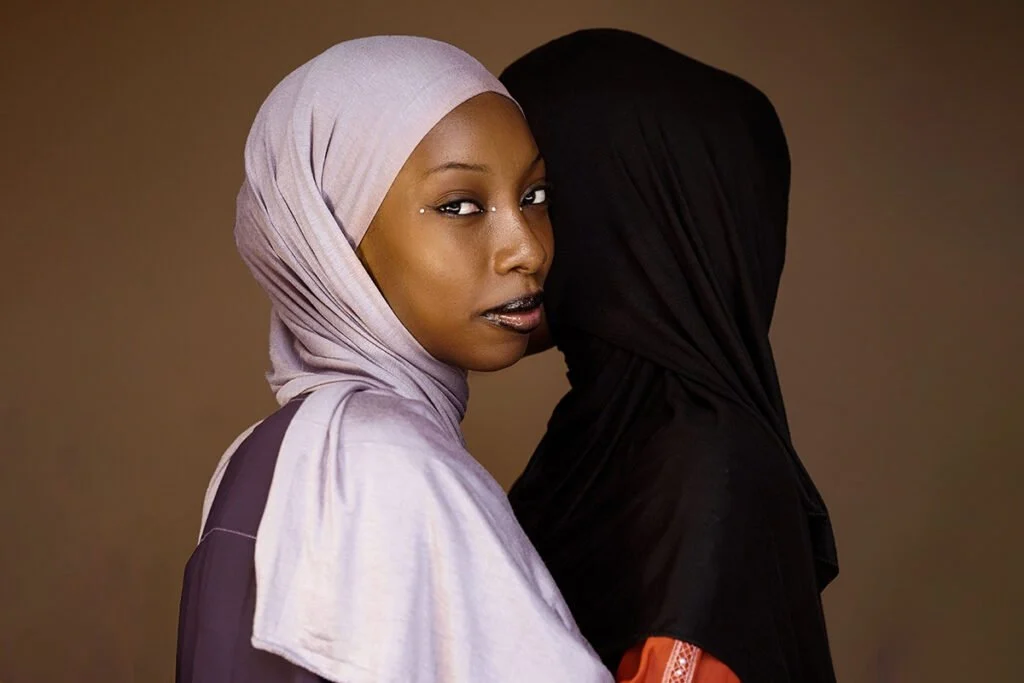
The historical narrative of Islam in the Americas is frequently framed through the lens of 21st-century geopolitics, yet the roots of Muslim presence and resistance on the continent date back over half a millennium. While the 2017 executive orders regarding travel from several Muslim-majority nations sparked global debate, historians and scholars point to a much earlier precedent of state-sanctioned exclusion. On December 25, 1521, on a plantation in Hispaniola governed by Diego Colón, the son of Christopher Columbus, approximately 20 enslaved Africans initiated the first recorded slave revolt in the New World. Many of these insurgents were Wolof Muslims from the Senegambia region of West Africa, a population known for its high rates of literacy and military organization. This event prompted the Spanish Crown to issue a series of decrees—the first "Muslim bans"—aimed at prohibiting the importation of enslaved Black Muslims, who were deemed too rebellious and ideologically fortified to be subjugated.
A Chronology of Exclusion and Resistance
The 1521 uprising was not an isolated incident but the beginning of a centuries-long pattern of organized resistance. By 1526, the Spanish monarchy had formalized restrictions against Muslims, fearing that their religious convictions and educational backgrounds provided a framework for liberation movements. Scholars such as Margarita Rosa have documented how these early bans were designed to strip enslaved populations of their intellectual and spiritual tools for revolt. Historian Sylviane Diouf notes that these decrees established a criminal narrative around Islam nearly 400 years before the religion became a central fixture of modern American political discourse.
Throughout the 18th and 19th centuries, Black Muslims continued to build secret and overt networks of care and resistance. In 1835, the Malê Revolt in Bahia, Brazil, led primarily by enslaved Yoruba and Hausa Muslims, further solidified the perception of Muslim identity as a threat to colonial stability. In the United States, despite the systematic attempt to erase Islamic practices during the transatlantic slave trade, an estimated 20 to 30 percent of enslaved Africans were Muslim. They maintained their faith through clandestine prayers, the writing of Arabic manuscripts, and the practice of zakat (obligatory almsgiving), which functioned as an early form of mutual aid and community insurance.
The Phenomenon of Intersectional Invisibility
Despite this deep historical footprint, Black Muslims today face a unique sociological challenge known as "intersectional invisibility." According to research by psychologist Valerie Purdie Vaughns, individuals who possess multiple marginalized identities—such as being both Black and Muslim—are often not perceived as "prototypical" members of either group. Consequently, they are frequently erased from the collective imagination and excluded from policy discussions that affect both the Black community and the broader Muslim diaspora.
Kameelah Mu’Min Oseguera, a leading voice in Black Muslim psychology, argues that this invisibility is not merely a social oversight but a structural failure. In the United States, Black Muslims constitute approximately one-third of the total Muslim population, yet media representations and civil rights advocacy often prioritize the experiences of Arab or South Asian Muslims. Simultaneously, within some Black American spaces, the Islamic identity is treated as an external or secondary characteristic rather than a foundational element of Black history. This dual erasure complicates the ability of Black Muslim organizations to secure funding, visibility, and political protection.
Data and Demographics: The Current Landscape
According to Pew Research Center data, the American Muslim community is one of the most racially diverse religious groups in the United States. No single ethnic group makes up a majority, with Black Muslims representing roughly 20 to 28 percent of the total population. Despite this diversity, the distribution of resources within the non-profit sector reflects significant disparities.
In the broader philanthropic landscape, data from the National Committee for Responsive Philanthropy (NCRP) indicates that less than 10 percent of grantmaking in the U.S. is explicitly designated for communities of color. When filtered further for religious minority groups, the funding for Black Muslim-led initiatives becomes even more scarce. This lack of financial support persists despite the fact that Black Muslim organizations are often at the forefront of addressing systemic issues such as mass incarceration, housing insecurity, and food deserts.
Models of Community Governance and Self-Sufficiency
In response to historical exclusion and current funding gaps, Black Muslim communities have developed sophisticated models of self-sufficiency. These initiatives often blend spiritual principles with radical social work, focusing on "building the alternative" rather than seeking inclusion within existing systems.
- Dream of Detroit: This organization combines community organizing with strategic housing and land development. By rehabilitating abandoned properties and fostering local entrepreneurship, they have created a holistic model for neighborhood revitalization that serves residents regardless of their religious background.
- The Muslim Power Building Project: This initiative provides rigorous training for Muslim organizers to advance racial equity. It focuses on shifting power dynamics rather than merely providing social services, teaching participants how to navigate political systems while maintaining community autonomy.
- The Muslim Wellness Foundation (MWF): Founded by Dr. Kameelah Mu’Min Oseguera, the MWF hosts the Black Muslim Psychology Conference. This space addresses the specific mental health needs of Black Muslims, acknowledging the unique trauma associated with the intersection of anti-Blackness and Islamophobia.
These organizations operate on the principle that survival is a collective endeavor. The practice of zakat, for instance, is not viewed as charity but as a mechanism for the circulation of wealth. Historical records show that even in the most dire conditions of enslavement, Black Muslims pooled resources to purchase the freedom of others or to support those too ill to work.
Analysis of Philanthropic Responsibility and Structural Repair
For the philanthropic sector, the history of Black Muslim resistance offers a blueprint for how to approach "repair" rather than just "reconciliation." Current philanthropic models are often criticized for being extractive—collecting data and stories from marginalized communities without shifting actual decision-making power.
A critical point of analysis for civil society is the "5 percent rule." By law, private foundations in the United States are only required to distribute 5 percent of their investment assets annually. The remaining 95 percent is typically invested in global markets, which advocates argue often fund the very industries (such as the prison-industrial complex or extractive environmental practices) that harm the communities the foundations claim to serve.
Experts suggest three primary shifts for a more equitable philanthropic approach:
- From Stewardship to Power-Shifting: Rather than foundations acting as "stewards" of wealth extracted from the labor of others, they should transition toward returning that capital to community-governed endowments.
- Long-Term Resource Allocation: Movements for social change operate on decadal timelines, yet funding is often restricted to one- or two-year grant cycles. Resistance to systemic oppression requires the same level of disciplined, long-term financing that the structures of oppression receive.
- Solidarity over Inclusion: Inclusion implies an invitation into an existing structure. Solidarity, however, requires funders to take on the risks associated with radical social change and to support the autonomy of those closest to the problems.
Broader Implications for Global Liberatory Movements
The lessons derived from the Black Muslim tradition extend beyond the borders of the United States. There is a growing recognition of the "shared humanness" between different movements for justice. Analysts point to the similarities in tactics used by state actors across different geographies—such as the surveillance techniques developed in urban American centers being exported to conflict zones abroad.
The Black Muslim experience serves as a reminder that narratives of "terror" or "threat" are often used to delegitimize those who refuse to be subjugated. By studying the history of the 1521 revolt and the subsequent 500 years of resilience, modern movements for justice can find a precedent for persistence. The infrastructure of liberation, though often under-resourced, is built on a foundation of spiritual and communal discipline that has survived centuries of state-sanctioned erasure.
As the United States continues to grapple with its foundational myths, the history of Black Muslims provides a necessary corrective. It suggests that the "founding" of the nation was not just a political act by a few individuals in the 18th century, but a continuous process of contestation and survival by those who were never intended to be part of the body politic. The call for repair is not an appeal for a seat at the table, but a demand for the resources necessary to build a new one.