Nila Kartika Wati
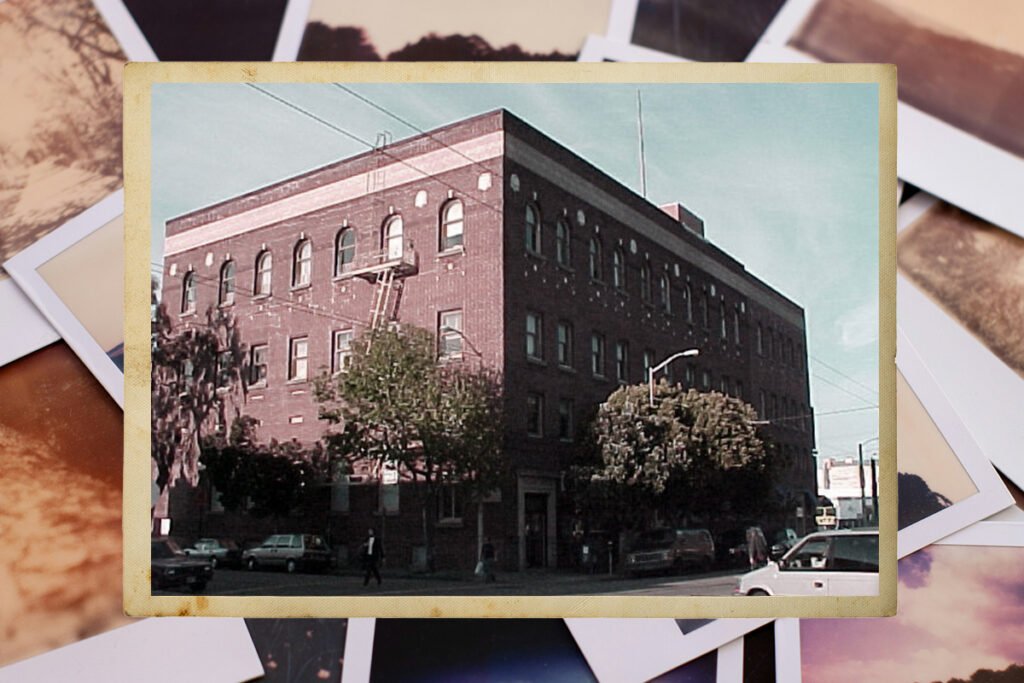
The recent sale of the San Francisco Labor Temple, more widely known as the Redstone Building, marks a pivotal moment in the ongoing struggle between private real estate interests and the preservation of civic infrastructure. Located at the intersection of 16th Street and Capp in the heart of the Mission District, the red-brick landmark has been acquired by a group of private investors associated with Graymark Capital for $7.1 million. This transaction represents the second time in a decade that the building has changed hands, despite concerted efforts by local nonprofits and community organizations to secure the property for permanent public benefit. The sale highlights a growing national crisis: the systemic inability of mission-driven organizations to compete with private equity in an increasingly aggressive commercial real estate market.
The Historical Foundation: From Labor Hub to Community Nexus
To understand the significance of the Redstone Building is to understand the history of the American labor movement in the early 20th century. Constructed in 1914 by the San Francisco Labor Council, the building held its formal grand opening on February 27, 1915. At the time, it was envisioned as a "secular cathedral" for the working class, designed not only as an administrative center but as a comprehensive social hub. In its prime during the 1940s and 1950s, the facility housed the headquarters for over 130 labor unions.
The building’s architecture reflected its multifaceted purpose. Beyond office spaces, it provided medical clinics, reading rooms, family areas, and recreational spaces like billiard tables. A 1916 Union Directory documented the sheer diversity of trades that converged under its roof, including blacksmiths, cigar makers, sail makers, butchers, and wagon drivers. This concentration of labor power reached its zenith during the 1934 San Francisco General Strike. It was from the Redstone Building that labor leaders coordinated citywide work stoppages following the "Bloody Thursday" events on the waterfront, eventually leading to monumental shifts in workers’ rights and collective bargaining across the West Coast.
However, as the influence of organized labor began to wane in the latter half of the 20th century, the building’s role shifted. By 1968, the Labor Council, facing declining membership and rising costs, sold the property. Renamed the Redstone, the building transitioned into a sanctuary for the arts, social services, and grassroots activism. Today, it remains a visual testament to this history through the Labor Temple Mural Project. Funded by the Creative Work Fund and organized by the Clarion Alley Mural Project, these murals depict the struggle of Chinese garment workers, the career of labor leader Dow Wilson, and the 1934 strike, anchoring the building’s physical presence in its historical legacy.
A Decade of Displacement: The Chronology of Failed Preservation
The most recent $7.1 million sale is the culmination of a decade-long attempt by the community to reclaim the building. The timeline of these efforts reveals the specific hurdles that nonprofits face when attempting to acquire large-scale urban assets.
In 2019, the building was put on the market, sparking a major mobilization by the Mission Economic Development Agency (MEDA). MEDA, a nonprofit developer specializing in affordable housing and commercial preservation, sought to purchase the Redstone to ensure it remained a permanent center for cultural resources. Christopher Gil, a spokesperson for MEDA at the time, articulated a vision of maintaining affordable rents for existing tenants to prevent the displacement of the very organizations that give the Mission District its character.
Despite a robust community campaign, a petition with thousands of signatures, and public rallies, the building was sold to Lakeside Investments. The private buyer intended to renovate portions of the structure into modern office spaces—a move that aligned with the tech-driven real estate boom in San Francisco. However, the commercial office market’s subsequent volatility, exacerbated by the shift toward remote work, eventually led to the building being placed back on the market.
In 2024, the nonprofit sector attempted to intervene once again. The Lab, a prominent artist-centered nonprofit that has occupied 7,000 square feet within the Redstone for years, led a community-backed effort to purchase the building. Andrew Smith, CEO of The Lab, confirmed that their coalition submitted three separate letters of intent. According to Smith, the offers were at "fair market value." However, the seller opted for a private investment group, citing the speed and certainty of the transaction. This highlights a recurring theme in nonprofit real estate: even when organizations have the funds, they often lack the "transactional velocity" that private equity firms provide.
Data and Market Trends: The Competitive Gap
The loss of the Redstone Building to private investors is not an isolated incident but a reflection of broader economic trends. Data from CBRE and other real estate analytics firms suggest that commercial real estate investment activity is projected to rise significantly, with estimates placing total U.S. investment at approximately $562 billion by 2026—a 16 percent increase from previous years.
For nonprofits, this influx of capital creates a hostile environment. Private equity firms often operate with "dry powder"—large reserves of cash that allow them to close deals in 30 days or less. In contrast, nonprofits typically rely on a patchwork of government grants, philanthropic donations, and low-interest loans, all of which require extensive due diligence and bureaucratic approval processes that can take months.
The disparity is further exacerbated by rising property values in urban cores. In San Francisco, despite the "urban doom loop" narrative surrounding downtown office space, historic buildings in vibrant neighborhoods like the Mission remain high-value targets for investors looking for long-term appreciation. When a building like the Redstone is sold for $7.1 million, the debt service on that purchase often necessitates higher rents, which can price out the very social service providers and artists the building was meant to house.
Civic Infrastructure as a Necessity, Not a Luxury
The debate over the Redstone Building touches on a deeper sociological concept: the role of "social infrastructure." Sociologist Eric Klinenberg, in his research on democratic participation, argues that physical spaces—libraries, parks, and community centers—are the "social glue" that holds societies together. When these spaces are privatized, the "civic health" of the neighborhood suffers.
The Redstone Building functions as a form of infrastructure in the same way a bridge or a power grid does. It provides the physical platform for coalition-building and democratic engagement. A study from New York University’s Institute for Public Knowledge and Gehl Studio supports this, finding that public and community-owned spaces are essential for community resilience.
When a building like the Redstone transitions to private ownership, its primary objective shifts from "community service" to "return on investment." This shift often results in the loss of "unproductive" spaces—the very reading rooms, meeting halls, and low-cost studios that facilitate civic life. As Klinenberg notes, treating these spaces as mere real estate assets ignores their essential role in maintaining a functioning democracy.
Reactions and the Search for New Models
The reaction from the San Francisco community has been a mixture of resignation and a call to action. While Graymark Capital has not yet detailed its long-term plans for the tenant mix, the precedent set by similar sales suggests a gradual "upgrading" of the tenant base toward higher-paying commercial entities.
The Lab’s Andrew Smith noted that the inability to secure the building, despite a fair offer, points to a systemic failure in how the city and philanthropic sectors support nonprofit ownership. "We might have the means to fundraise operating funds," Smith observed, "but very few have the capital needed to retain ownership of their spaces."
In response to these challenges, new models are beginning to emerge. The Community Arts Stabilization Trust (CAST) is one such example. CAST works to secure permanent, affordable space for arts and cultural organizations in high-cost markets by purchasing buildings and eventually transitioning ownership back to the nonprofits. Similarly, the Africatown Community Land Trust in Seattle has demonstrated that by treating land as a community asset rather than a commodity, neighborhoods can resist the pressures of gentrification.
Implications for the Future of Civil Society
The sale of the Redstone Building serves as a warning for the nonprofit sector nationwide. If mission-driven organizations continue to operate as tenants rather than owners, they remain perpetually vulnerable to the whims of the real estate market. The preservation of civic space requires a shift in how nonprofits view their facilities—not as an "overhead" expense to be minimized, but as a strategic asset to be protected.
For this to happen, the sector requires new financing tools. This includes the creation of "rapid-response" acquisition funds that allow nonprofits to move at the speed of private investors, as well as tax incentives for property owners who sell to community land trusts or mission-aligned developers.
The Redstone Building is more than a collection of bricks and mortar; it is a repository of labor history and a vital organ of the Mission District’s cultural life. Its transition to private investment ownership is a reminder that without intentional intervention, the physical spaces that enable civic life will continue to be absorbed by the global real estate market, leaving the communities they serve without a place to stand. The story of the Redstone is a call for a new era of "civic real estate," where the value of a building is measured not just by its cap rate, but by the strength of the community it supports.