Nila Kartika Wati
When flash floods tore through the rugged terrain of Nepal’s Nuwakot district on August 26, the immediate focus of humanitarian efforts was on search, rescue, and the provision of food and shelter. However, as survivors began to settle into temporary encampments, a more personal and silent crisis emerged. Sriram Haridass, the Nepal representative for the United Nations Population Fund (UNFPA), recently visited these affected communities to assess the conditions of displaced women and girls. His findings highlighted a stark reality: when climate-driven disasters strike, the biological reality of menstruation does not stop, yet the infrastructure required to manage it often vanishes in an instant.
In the makeshift shelters of Nuwakot, Haridass met women who had lost every possession to the rising waters, including basic clothing, undergarments, and hygiene supplies. The lack of private spaces and clean water made managing menstruation nearly impossible. Reports indicated that some women were unable to bathe for five consecutive days during their periods, while others were forced to wear the same soiled underwear for nearly a week due to a lack of alternatives. This situation, according to Haridass, is not merely a matter of inconvenience but a fundamental violation of health, dignity, and personal safety.
Chronology of the Disaster and Immediate Humanitarian Response
The floods of late August were triggered by intense monsoon rains, a phenomenon increasingly linked to the warming of the Hindu Kush Himalaya region. On August 26, several rivers breached their banks, sending torrents of mud and debris through villages. Within 48 hours, the scale of the displacement became clear, with thousands seeking refuge in schools and community centers.
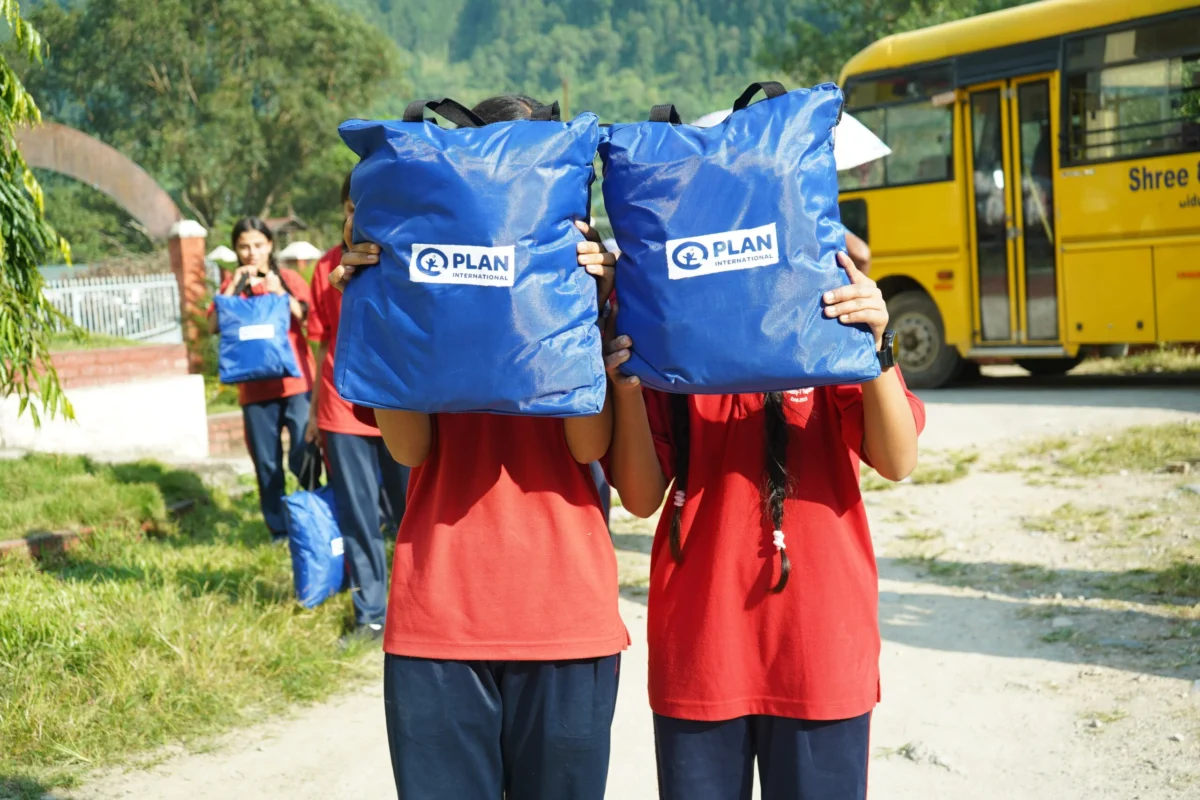
By early September, the UNFPA and international nonprofits such as Plan International began a targeted response. While initial aid focused on caloric intake and potable water, these organizations identified a critical gap in the "dignity" of the survivors. Approximately 160,000 women and girls were impacted by the floods across Nepal. Of these, UNFPA estimates that 98,500 are of reproductive age, requiring consistent access to menstrual health products and sanitation facilities.
In response, "dignity kits" were deployed to the worst-hit regions, including Nuwakot and Rasuwa. These kits typically contain sanitary pads, soap, towels, new undergarments, and flashlights to ensure safety when using communal latrines at night. However, the distribution of supplies is only a temporary fix for a systemic problem exacerbated by the climate crisis.
Statistical Overview: The Scale of Menstrual Health Vulnerability
The World Bank estimates that more than 300 million people worldwide menstruate on any given day. Effective management of this natural process requires a four-pillar framework: access to affordable hygiene materials, private facilities for washing and disposal, accurate information, and a social environment free from stigma.
In the context of the Nepal floods, all four pillars collapsed simultaneously. Data from humanitarian assessments in the region revealed:
- Infrastructure Deficit: In one school shelter in Nuwakot, over 400 people were found sharing only three toilets, none of which had running water.
- Product Scarcity: Disruptions to supply chains meant that local markets were depleted of sanitary products, making survivors entirely dependent on aid.
- Demographic Impact: Nearly 62 percent of the affected female population in the flood zones were of reproductive age, highlighting the massive scale of the need for menstrual hygiene management (MHM).
The Scientific Link Between Climate Change and Menstrual Health
The crisis in Nepal is part of a broader, global trend where human-caused climate change disproportionately affects the health of women and girls. A comprehensive review published in October 2024 by researchers at the London School of Hygiene and Tropical Medicine (LSHTM) synthesized evidence from studies spanning 1947 to 2025. The review established a definitive association between climate hazards—including floods, cyclones, droughts, and salinity intrusion—and the erosion of menstrual health.
Lauren D’Mello-Guyett, an assistant professor at LSHTM and lead author of the review, noted that climate hazards create a "cascade of harm." For instance, in areas suffering from salinity intrusion—where rising sea levels push saltwater into freshwater sources—menstruating individuals are often forced to wash their reusable cloths in brackish water. This leads to increased rates of urogenital infections and skin irritation. In Nepal, the primary hazard was flood-induced water scarcity and the destruction of private bathing areas, which led to reported cases of urinary tract infections (UTIs) and bacterial vaginosis among the displaced.
Health, Safety, and the "Privacy Gap"
The implications of inadequate menstrual support extend beyond physical pathology into the realm of protection and safety. Meghna Ranganathan, co-director of the Gender Violence and Health Centre at LSHTM, pointed out that the loss of private spaces forces women to seek out secluded areas to manage their hygiene, often under the cover of darkness.
"Several studies have documented increased risks of harassment and sexual violence when women are forced to find secluded spaces to wash or change," Ranganathan stated. This vulnerability is compounded by the general increase in gender-based violence (GBV) that typically follows natural disasters, as social safety nets fray and household stress levels peak.
Furthermore, the anthropological perspective provided by Madhusudan Subedi of the Patan Academy of Health Sciences suggests that the psychological toll is immense. The inability to maintain hygiene in a culture that already harbors significant menstrual taboos leads to deep-seated shame, anxiety, and a loss of mobility. "When a girl cannot manage her period safely, she withdraws from the limited community life available in a relief setting. She stops seeking aid, stops participating in informal education, and becomes invisible," Subedi explained.
Fragmented Responsibility: Why Menstruation is Sidelined
Despite the clear evidence of need, menstrual health remains a peripheral concern in most disaster preparedness frameworks. Sriram Haridass of the UNFPA attributed this to "fragmented responsibility." In the hierarchy of humanitarian response, menstrual health often falls into a gap between sectors:
- Health sectors may view it as a sanitation issue.
- Water, Sanitation, and Hygiene (WASH) sectors may focus on bulk water supply rather than the specifics of menstrual disposal.
- Shelter planners may prioritize floor space over the provision of private, gender-segregated changing areas.
"There is a tendency to dismiss menstrual health as ‘not lifesaving’ when funding is tight," Haridass said. "But that is a narrow and dangerous perspective. If a lack of hygiene leads to systemic infections or exposes a girl to sexual violence, it is absolutely a life-and-death issue."
This lack of coordination was vividly illustrated in Nuwakot, where some survivors received sanitary pads but no undergarments to secure them, rendering the pads useless. Others received products but had no way to dispose of them, leading to the clogging of limited drainage systems and further environmental health risks.
Strategies for Climate-Resilient Menstrual Health
As extreme weather events become more frequent and severe due to global warming, experts argue that menstrual health must be integrated into national climate adaptation policies. This involves moving beyond the emergency distribution of kits toward building resilient infrastructure.
Marni Sommer, a professor at Columbia University’s Mailman School of Public Health, has led the development of the "Menstrual Hygiene Management in Emergencies Toolkit." The toolkit, co-published with 29 humanitarian agencies, emphasizes the need for "menstrual-conscious" engineering. This includes the construction of latrines with internal water sources, disposal bins, and privacy screens as a standard feature of disaster-resilient schools and community centers.
Furthermore, there is a pressing need for more diverse scientific research. The LSHTM review found that while data from South Asia is growing, there is a near-total absence of studies on how extreme heat—another byproduct of climate change—affects menstrual cycles and hygiene in sub-Saharan Africa and Latin America.
Conclusion: Restoring Dignity in the Face of Disaster
The story of Juna Maya, a 25-year-old survivor from the Aamachhodingmo community in Rasuwa, serves as a poignant reminder of the human cost of policy gaps. After the floods destroyed the bridges connecting her village to the nearest town, she was cut off from all basic supplies. Her struggle to find a private place to wash and a clean cloth to use was a daily battle for dignity amidst the wreckage of her home.
The Nepal floods have demonstrated that climate change is not just an environmental or economic threat; it is a direct threat to the bodily autonomy and health of half the population. Srijana Gurung, acting country director for Plan International in Nepal, summarized the mandate for the future: "Menstruation does not stop during a flood. No woman should have to worry about where she will find a pad or a private place to bleed while her family is struggling to survive. Inclusion is not an add-on; it is a requirement."
For menstrual health to be protected in a warming world, it must be explicitly written into disaster preparedness plans, humanitarian budgets, and climate adaptation strategies. Until then, the "silent crisis" will continue to follow every flood, cyclone, and drought, leaving the most vulnerable to manage a universal biological process in the most undignified of conditions.