Candice Horbacz
The question of whether an individual should be compelled to file a tax return in a state where they performed as little as one hour of work, such as babysitting, highlights a growing fiscal and administrative dilemma in the United States. Technically, in 22 states, the answer to this seemingly trivial scenario is yes, presenting a complex and often burdensome challenge exacerbated by the widespread adoption of remote work. This intricate issue was recently brought to the forefront in an episode of The Deduction, a podcast from the Tax Foundation, where host Kyle Hulehan and co-host Erica York engaged with Katherine Loughead, the Director of State Tax Projects at the Tax Foundation, to dissect the convoluted landscape of state nonresident income tax laws and their escalating problems in the contemporary work environment.
The Antiquated System: A Deep Dive into Nonresident Taxation
State income taxation, at its core, is founded on the principle that states have the right to tax income earned within their geographical borders. Historically, this principle was straightforward: if an individual physically worked in a state, they earned income there, and that state had a claim to a portion of it. This framework predates the digital age, a time when professional work was almost exclusively tied to a physical location. Most state tax systems were designed in an era where commuting across state lines for work was common, but prolonged, distributed remote work was an anomaly. The rationale was simple: states provide infrastructure, public services, and a stable environment that enable economic activity, and therefore, they are entitled to tax the income generated from that activity.
However, the application of these rules varies significantly across states. Some states establish a "physical presence" threshold, requiring a certain number of days worked within their borders before a filing obligation is triggered. Others maintain extremely low or non-existent thresholds, meaning even a single day, or in some extreme interpretations, a single hour of work, could technically create a tax liability and a corresponding filing requirement. This disparity leads to a patchwork of regulations that is difficult for both individuals and businesses to navigate.
To mitigate some of this complexity, many states have entered into "reciprocity agreements." These agreements allow residents of one state who work in an adjacent state to pay income taxes only to their state of residence, avoiding the need to file in both. For instance, a resident of Ohio working in Kentucky, both of which have a reciprocity agreement, would typically only pay Ohio state income tax. While these agreements simplify matters for many cross-border commuters, they are far from universal. Not all states participate, and the agreements often apply only to residents of specific neighboring states, leaving a vast number of interstate workers, especially remote ones, outside their protective scope. Furthermore, reciprocity agreements primarily address situations where a worker regularly commutes to one specific state, not the transient, often incidental, work performed in multiple states characteristic of modern remote work.
The Remote Work Revolution: A Catalyst for Complexity
The global shift towards remote work, dramatically accelerated by the COVID-19 pandemic, has thrust these long-standing, often arcane, nonresident tax laws into unprecedented scrutiny.
Pre-Pandemic Landscape
Prior to 2020, nonresident income tax issues primarily affected a niche segment of the workforce: business travelers, consultants, performing artists, and professional athletes. These individuals might spend varying amounts of time in different states, triggering filing obligations based on the days worked in each jurisdiction. While complex, the number of individuals affected was relatively small, and businesses typically had specialized payroll and tax departments equipped to handle such multi-state compliance. The concept of "physical presence" for tax nexus was generally well-understood, if sometimes challenging to track for mobile employees.
COVID-19’s Unforeseen Impact
The sudden onset of the COVID-19 pandemic in early 2020 forced millions of employees to transition from traditional offices to working from home. This instantaneous and massive shift created an immediate tax conundrum. Employees who previously worked in one state were now performing their duties from their homes in another, often different, state. States, grappling with public health crises and economic uncertainty, initially responded with a variety of temporary measures. Many issued waivers or temporary guidance stating that an employee’s temporary relocation for remote work during the pandemic would not create a new tax nexus for either the employee or the employer in the new state. This provided a crucial, albeit temporary, reprieve from the looming administrative nightmare.
For example, states like New Jersey, Massachusetts, and Pennsylvania issued guidance to prevent employers from having to withhold taxes for employees temporarily working remotely from those states due to the pandemic, if their usual work location was elsewhere. This was a pragmatic response to an unprecedented situation, designed to prevent immediate and widespread tax non-compliance.
The New Normal: Remote Work as a Permanent Fixture
As the immediate crisis subsided, remote and hybrid work models became permanent fixtures for a significant portion of the workforce. By late 2022 and early 2023, surveys consistently showed that a substantial percentage of employees, ranging from 25% to 50% depending on the industry, continued to work remotely either full-time or part-time. This "new normal" meant that the temporary pandemic-era tax guidance largely expired, leaving individuals and businesses once again subject to the full weight of existing, often outdated, nonresident tax laws.
The "22 states" mentioned by the Tax Foundation represent jurisdictions that either have no explicit de minimis threshold for triggering an income tax filing obligation or have thresholds so low as to be practically negligible. This means that if an employee attends a single meeting, performs a brief task, or, as the illustrative example suggests, babysits for a single hour while visiting family in one of these states, they could technically be required to file a nonresident tax return for that minimal activity. The sheer volume of potential individual filings, each for a minuscule amount of income and tax liability, underscores the absurdity and impracticality of the current system.
The "Convenience of the Employer" Rule: A Persistent Thorn
Adding another layer of complexity and contention is the "convenience of the employer" rule, adopted by a handful of states, most notably New York, but also Delaware, Nebraska, and Pennsylvania (though Pennsylvania’s application is slightly different). Under this rule, if an employee’s primary office is located in one of these states, but they choose to work remotely from another state for their own convenience (rather than for a necessity imposed by the employer), their income is still considered earned in the employer’s state.
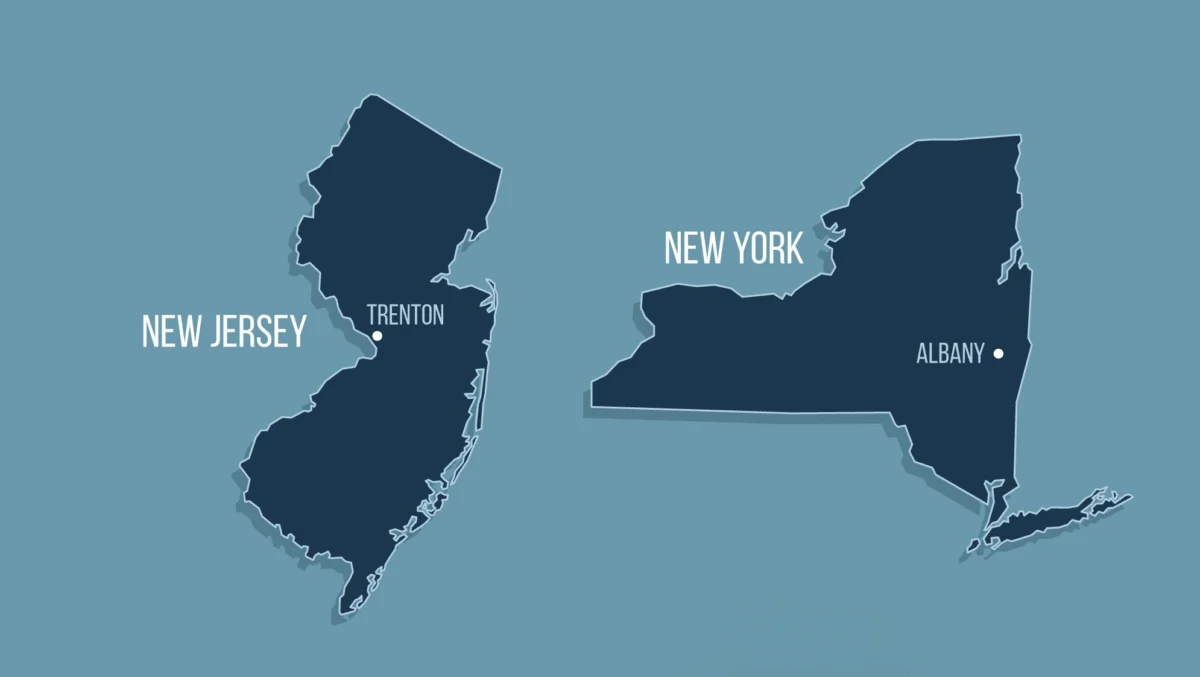
This rule has become a significant point of contention for remote workers and employers alike. For example, a software engineer living in Connecticut but working remotely for a New York City-based company might still be subject to New York state income tax, even if they never physically set foot in New York during the tax year. The rationale behind this rule is that the job itself is tied to the New York employer, and the remote arrangement is a benefit to the employee, not a requirement of the job.
The convenience rule has faced numerous legal challenges, with taxpayers arguing it unfairly extends a state’s taxing authority beyond its physical borders. One prominent case involved a New Jersey resident working remotely for a New York company, where the New York Tax Appeals Tribunal upheld the state’s right to tax the individual’s income. These rulings reinforce the difficulty remote workers face in navigating these specific state regulations, often leading to potential double taxation if their state of residence also taxes their full income, despite credits for taxes paid to other states.
The Burden on Individuals and Businesses
The current fragmented system places an immense administrative and financial burden on both individuals and businesses.
Individual Compliance Nightmare
For individuals, especially those with flexible work arrangements, the prospect of tracking every day, or even every hour, spent working in different states is daunting. Tax preparation software, while advanced, is not always equipped to handle such granular, multi-state nonresident filings, often requiring manual calculations or the assistance of a tax professional. This adds significant cost and complexity for what might amount to a few dollars in tax liability to a secondary state. Many remote workers are simply unaware of these obligations, leading to potential non-compliance and future penalties. Even if aware, the effort involved in preparing multiple state returns for minimal income can far outweigh the actual tax owed, making the system inefficient and frustrating. The theoretical example of babysitting for one hour clearly illustrates how disproportionate the compliance burden can be compared to the income earned.
Employer Administrative Headaches
Businesses, particularly those with a distributed workforce, face an even more significant compliance challenge. They must determine where each employee is physically located, understand the tax nexus rules of those states, register for withholding in each applicable state, and accurately withhold and remit taxes. This requires sophisticated payroll systems and a deep understanding of multi-state tax law, which can be particularly onerous for small and medium-sized enterprises (SMEs) that lack dedicated multi-state tax departments. The risk of misclassification, under-withholding, or non-compliance can lead to substantial penalties and audits. Furthermore, an employee working from a new state can inadvertently create "nexus" for their employer in that state, potentially subjecting the employer to other state taxes, such as corporate income tax or sales tax, even if they have no other physical presence there. This complexity can deter companies from hiring remote workers in certain states or limit their geographic reach.
Supporting data from various studies highlights the scale of this issue. Before the pandemic, only about 5% of the U.S. workforce worked remotely full-time. By early 2023, this number had soared, with estimates suggesting that 25-30% of the workforce worked remotely at least part of the week. This exponential growth in remote work means that the administrative burden previously faced by a niche group is now impacting tens of millions of Americans and hundreds of thousands of businesses. The Tax Foundation’s research consistently points to the inefficiencies and inequities of these outdated laws in the face of modern work patterns.
Expert Perspectives and Calls for Reform
Tax policy experts, including Katherine Loughead from the Tax Foundation, are vocal about the urgent need for comprehensive reform. They argue that the current system is an antiquated mess, ill-suited for the realities of the 21st-century economy.
Loughead and her colleagues emphasize that states need to modernize their definitions of "nexus" – the legal connection between a taxing jurisdiction and a taxpayer that allows the jurisdiction to impose a tax. For income tax, this traditionally meant physical presence. However, in a digital and remote work world, physical presence for a single day or hour becomes an arbitrary and impractical trigger. Experts advocate for clear, predictable, and uniform rules that reduce compliance costs without unduly impacting state revenues.
The primary calls for reform center on the implementation of "de minimis" thresholds. A de minimis rule would establish a minimum number of days or a minimum income amount that an individual must work in a state before an income tax filing obligation is triggered. For example, a state might decide that an individual must work more than 30 days or earn more than $5,000 in income within its borders before they are considered a nonresident taxpayer. This would significantly reduce the administrative burden for individuals and employers, focusing state resources on collecting substantial revenue rather than chasing minor liabilities.
While states acknowledge the complexity, they also face legitimate concerns about protecting their tax bases. Income tax is a significant revenue source for many states, and they are wary of changes that could lead to substantial revenue losses. This creates a balancing act: states want to simplify compliance, but not at the expense of fiscal stability. However, many experts contend that the administrative cost of enforcing these ultra-low thresholds often outweighs the actual revenue collected, making the current system inefficient for states as well.
Potential Solutions and Policy Pathways
Addressing the tangled mess of nonresident income tax laws requires a multi-faceted approach, involving both state-level reforms and potentially federal intervention.
De Minimis Thresholds and Expanded Reciprocity
The most immediate and practical solution involves states adopting uniform de minimis thresholds for nonresident income tax obligations. A consensus among tax policy experts suggests a threshold of 30 days of physical presence as a reasonable starting point, striking a balance between protecting state revenue and easing compliance. Furthermore, expanding and standardizing reciprocity agreements across more states would significantly simplify matters for many interstate workers. This would require states to collaborate and agree on common principles, moving beyond the current bilateral, often geographically limited, agreements.
Uniformity and Simplification
The ultimate goal should be greater uniformity in state tax laws. This could be achieved through interstate compacts, where states voluntarily agree to abide by a common set of rules, similar to the Streamlined Sales and Use Tax Agreement. Such agreements would provide much-needed clarity and consistency. Another, more ambitious, pathway could involve federal legislation. While politically challenging, federal intervention could establish a baseline for interstate income taxation, particularly concerning remote work, leveraging Congress’s power under the Commerce Clause to regulate interstate commerce. This would pre-empt state-specific, conflicting rules and provide a singular framework for businesses and individuals alike.
Technological Solutions
While technology can’t fix fundamentally flawed laws, simpler and more uniform rules would allow tax software and payroll systems to become far more effective. Imagine a system where an app could track your work location, and based on clear, consistent state rules, automatically determine your tax obligations without manual input or expert interpretation. This vision, however, hinges on legislative reform that simplifies the underlying legal framework.
Looking Ahead: The Future of Interstate Taxation
The issue of nonresident income taxation in the era of remote work is not merely a technical tax problem; it has broader economic and social implications. Without meaningful reform, the current system will continue to stifle labor mobility, impose unnecessary costs on businesses, and create confusion and anxiety for individuals. It could also lead to states engaging in "tax wars," trying to aggressively assert taxing authority over remote workers to protect their revenue bases, further complicating the landscape.
The discussions initiated by organizations like the Tax Foundation, through platforms like "The Deduction," are crucial in raising awareness and fostering dialogue among policymakers, businesses, and the public. As remote work continues to evolve and become an integral part of the global economy, the urgency to modernize these antiquated tax laws will only intensify. The challenge lies in crafting solutions that are equitable, administratively feasible, and fiscally responsible, ensuring that the benefits of a flexible, distributed workforce are not overshadowed by an outdated and overly burdensome tax system. The goal should be to move beyond a system where a single hour of work triggers a complex tax obligation, towards one that reflects the realities of how and where people work today.