Lana Rhoades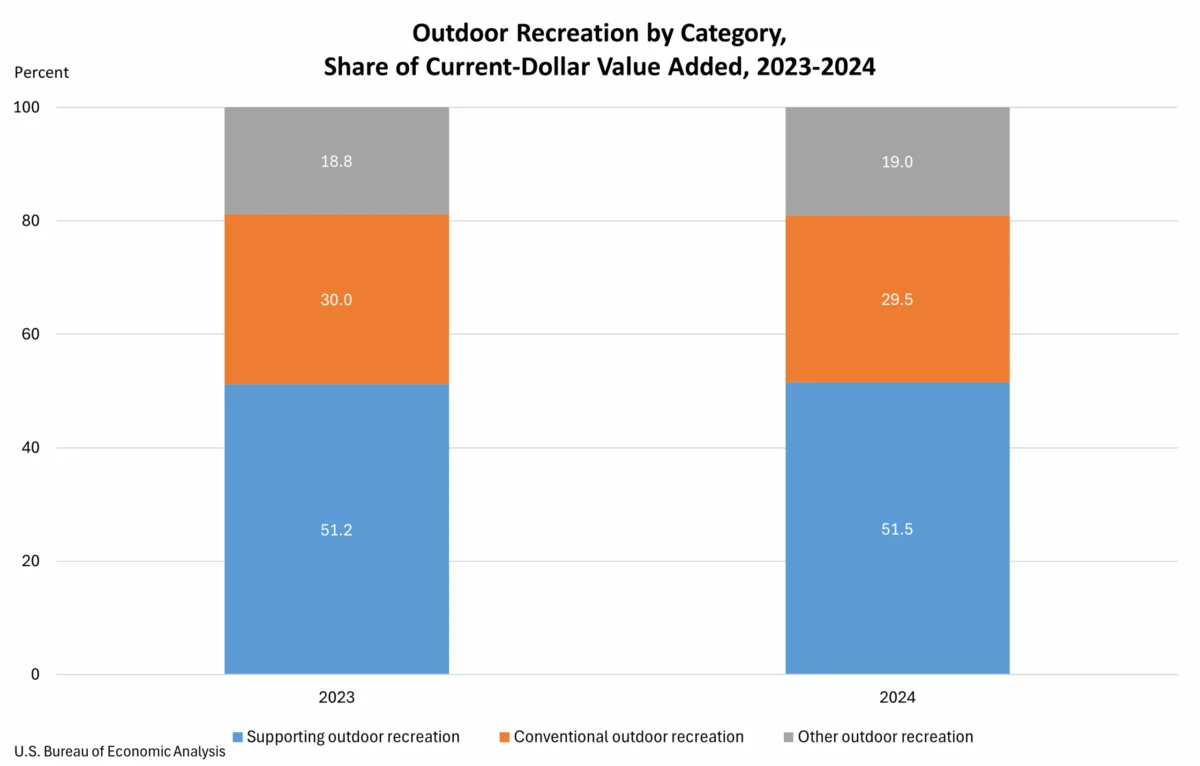
The U.S. Bureau of Economic Analysis (BEA) has unveiled its latest comprehensive report on the nation’s outdoor recreation economy, revealing a significant economic powerhouse that contributed $696.7 billion to the current-dollar Gross Domestic Product (GDP) in 2024. This figure represents 2.4 percent of the total U.S. GDP, underscoring the vital role of outdoor activities in the American economic landscape. The newly released data, encompassing all 50 states and the District of Columbia, offers a detailed look at the economic impact, employment figures, and sectoral contributions of this dynamic industry.
A Robust and Expanding Economic Sector
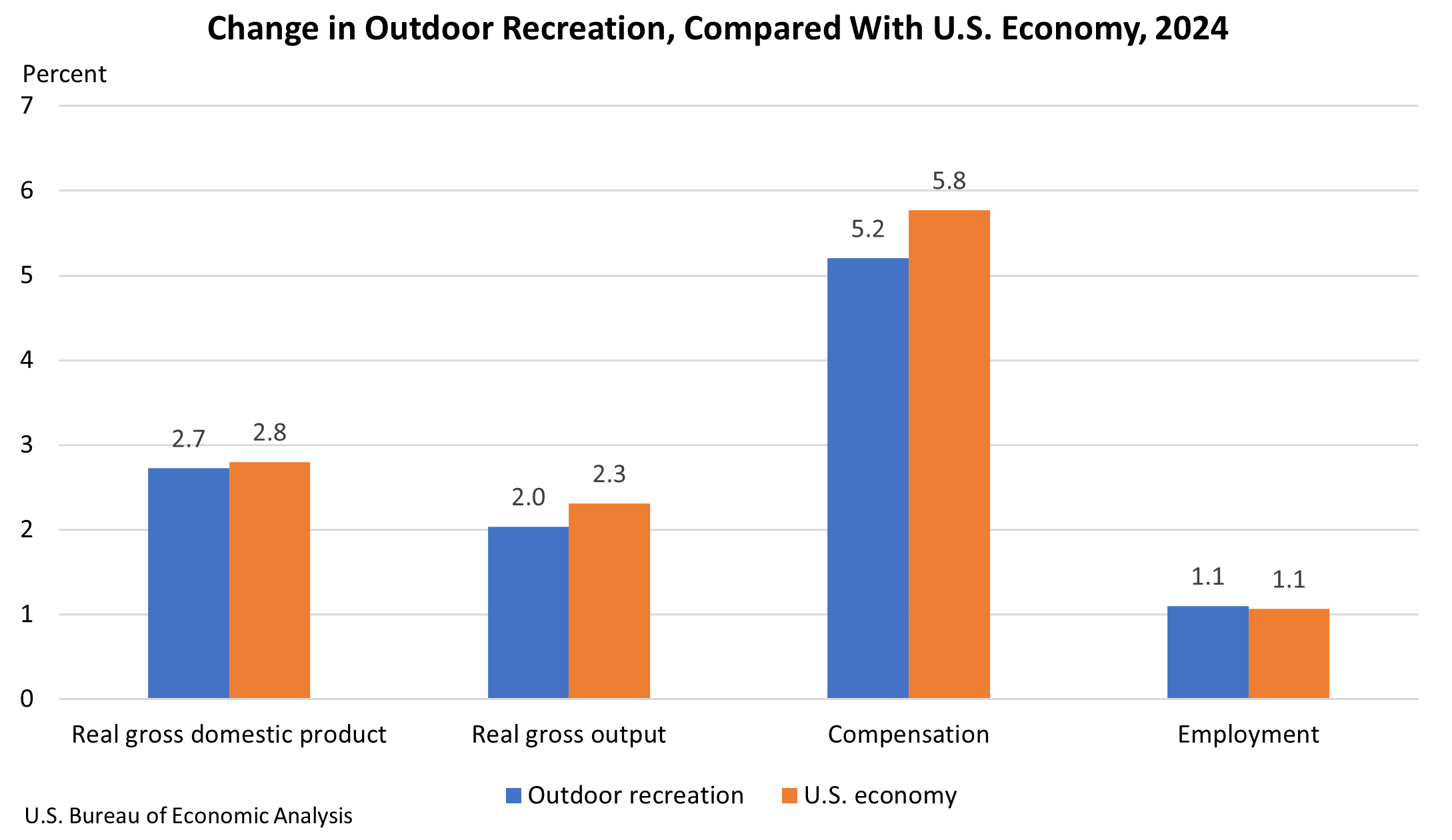
The BEA’s findings indicate that the outdoor recreation economy continues to be a strong performer, with inflation-adjusted (real) GDP experiencing a 2.7 percent increase in 2024. While this represents a slight deceleration from the robust 5.3 percent growth seen in 2023, it still outpaces the 2.8 percent increase in the overall U.S. economy for 2024. This sustained growth highlights the resilience and enduring appeal of outdoor pursuits for American consumers and businesses alike.
Beyond GDP, other key economic indicators also paint a positive picture. Real gross output for the outdoor recreation economy rose by 2.0 percent, demonstrating a healthy expansion in the total value of goods and services produced. Compensation within the sector saw a substantial increase of 5.2 percent, signaling improved earnings for workers engaged in outdoor recreation-related jobs. Employment in the sector also continued its upward trajectory, with a 1.1 percent increase nationwide.
Geographic Distribution and State-Level Variations
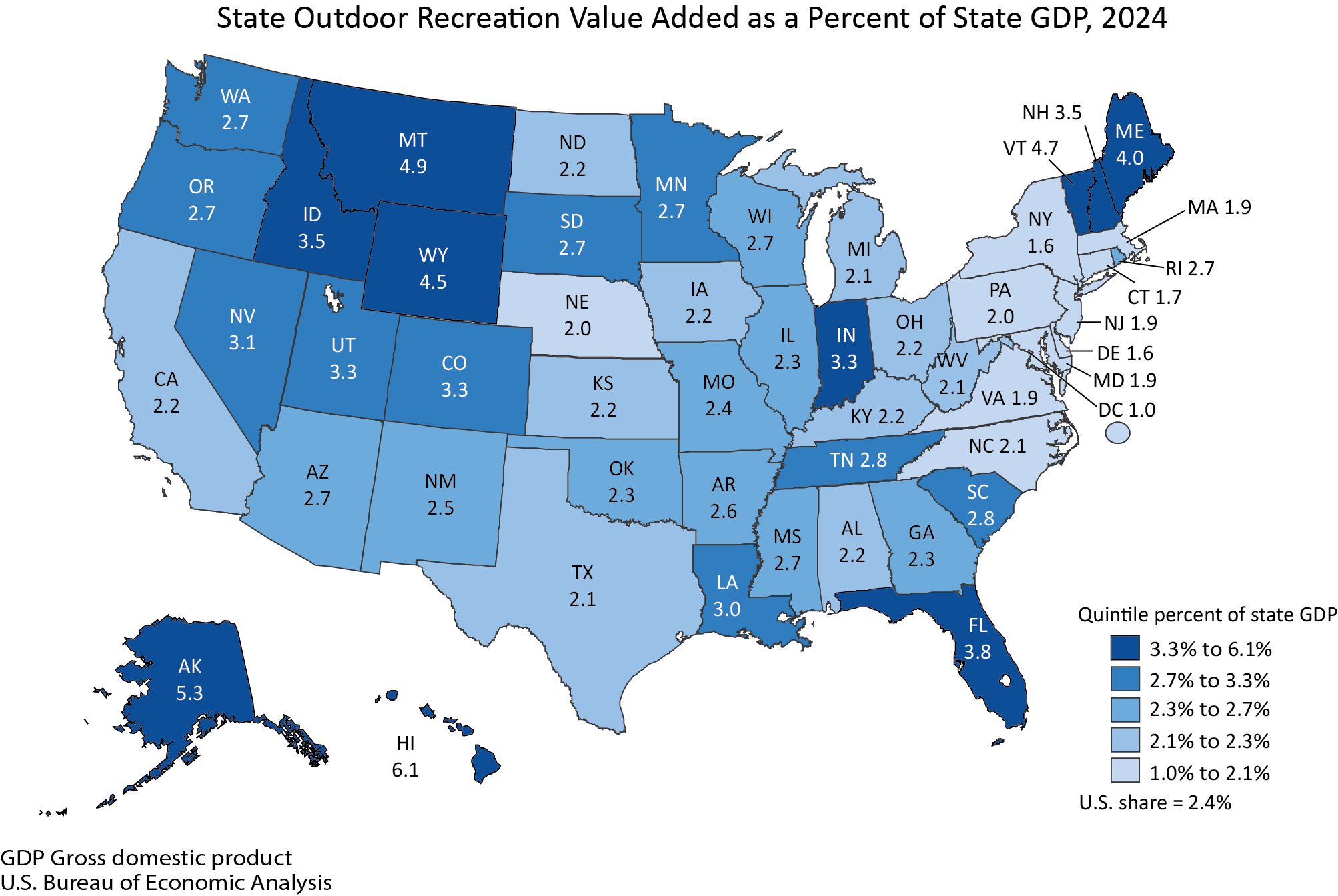
The economic impact of outdoor recreation is not uniform across the nation, with significant variations in its contribution to state GDPs. Hawaii leads the pack, with its outdoor recreation economy accounting for an impressive 6.1 percent of its state GDP. This is likely driven by the state’s unique natural attractions, including its beaches, volcanic landscapes, and opportunities for water sports. In contrast, the District of Columbia’s outdoor recreation sector represented a smaller, though still notable, 1.0 percent of its GDP, reflecting its distinct urban economic structure.
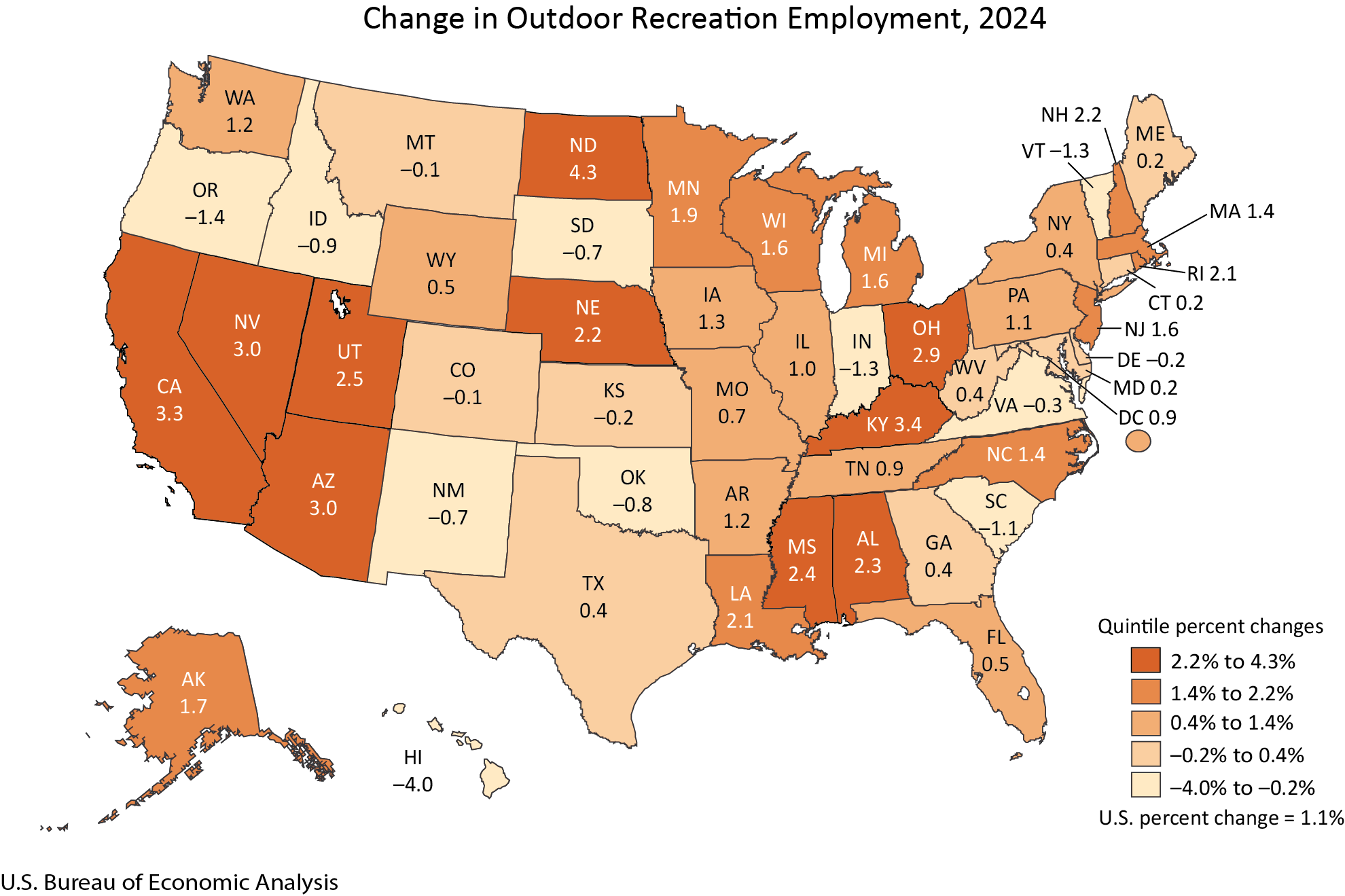
Employment figures also reveal a dynamic landscape. Outdoor recreation employment saw an increase in 36 states and the District of Columbia in 2024. North Dakota experienced the most significant percentage growth in outdoor recreation employment, with a 4.3 percent increase. This surge could be attributed to various factors, including investments in state parks, growth in outdoor sporting events, or increased demand for services related to hunting, fishing, and camping in the region. Conversely, Hawaii saw a decline of 4.0 percent in outdoor recreation employment, a notable outlier that may warrant further investigation into specific local economic conditions or shifts in visitor patterns.
Understanding the Components of Outdoor Recreation
The BEA categorizes outdoor recreation activities into three broad segments to better understand their economic contributions:
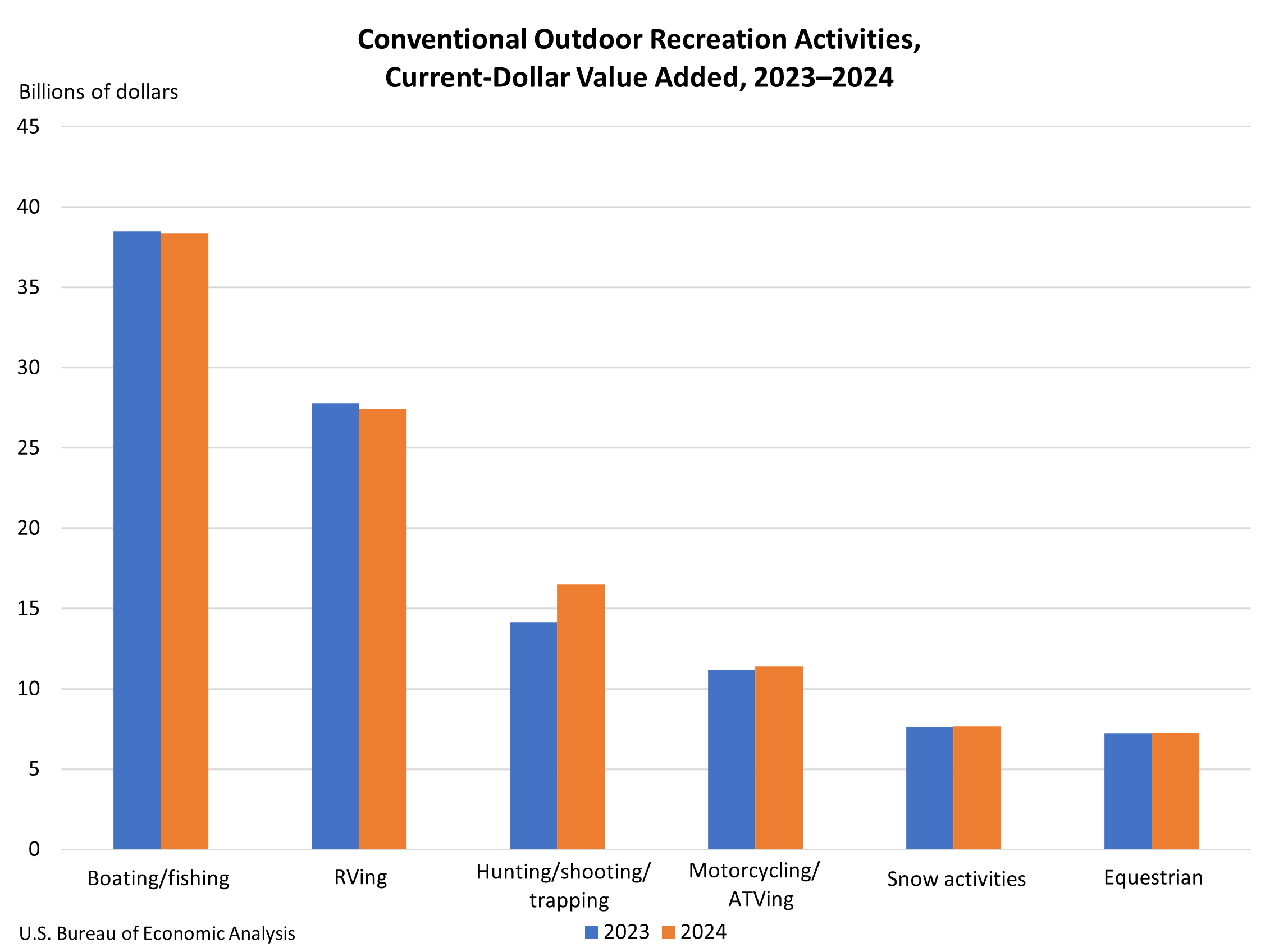
- Conventional Activities: This encompasses traditional outdoor pursuits such as bicycling, boating, hiking, hunting, fishing, camping, and wildlife viewing. These activities form the bedrock of the outdoor recreation experience for many Americans.
- Other Activities: This category includes a broader range of outdoor pursuits, such as gardening, outdoor concerts, festivals, and other recreational events that take place primarily outdoors.
- Supporting Activities: This crucial segment includes the infrastructure and services that enable outdoor recreation. It encompasses construction of outdoor recreation facilities, travel and tourism services (including transportation, accommodation, and food services), local trips taken for outdoor recreation, and government expenditures on public lands and recreation programs.
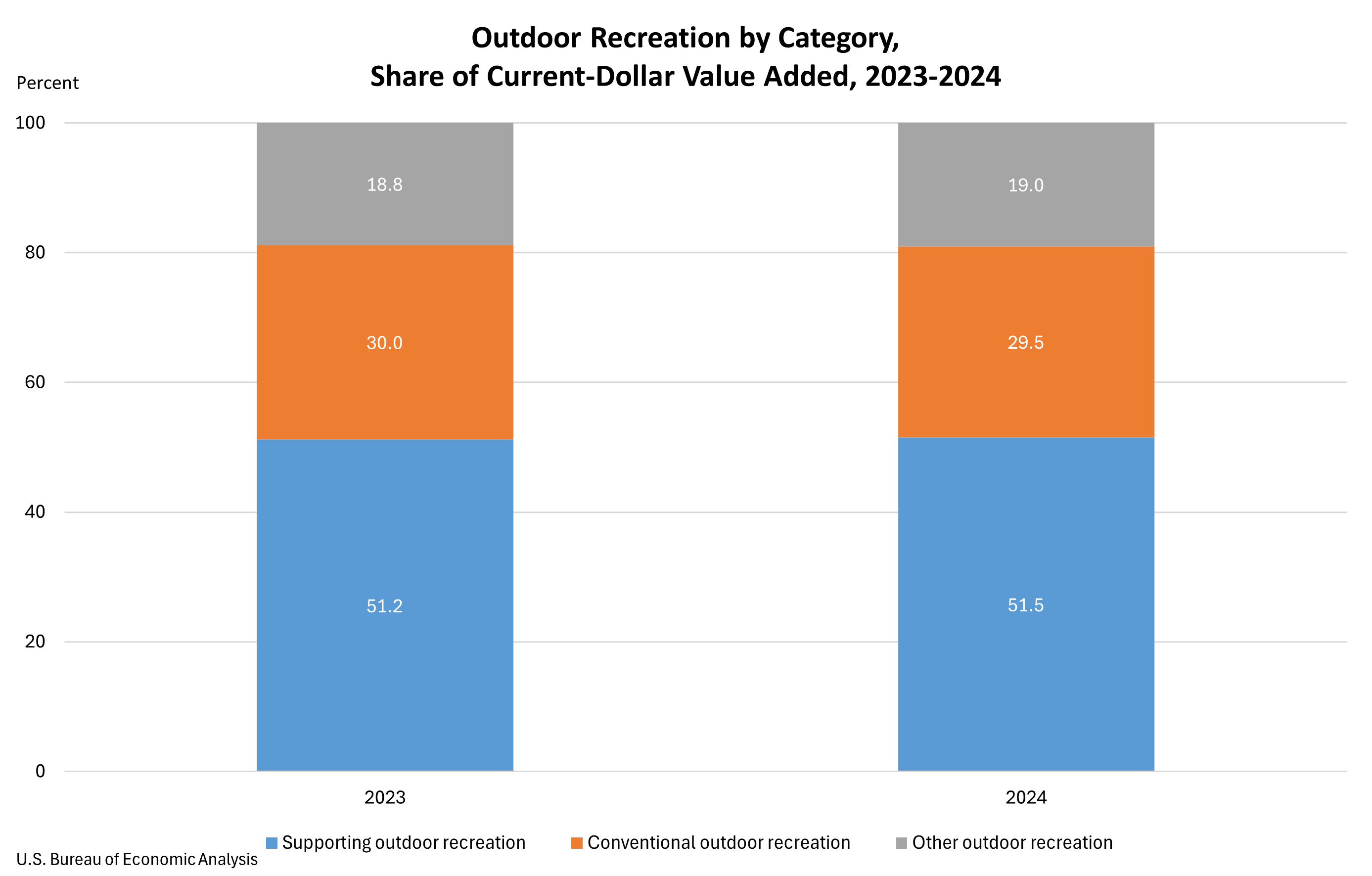
In 2024, supporting activities continued to be the largest contributor to the outdoor recreation economy, accounting for 51.5 percent of the total value added. This highlights the significant economic ripple effect that outdoor recreation has, extending beyond direct participation to encompass a vast array of related industries. Travel and tourism, a key component of supporting activities, saw particular strength, driven by increased spending on transportation, hotels, and restaurants. This suggests that people are not only engaging in outdoor activities but also traveling to do so, boosting broader economic sectors.
Conventional outdoor recreation activities accounted for 29.5 percent of the value added, a slight decrease from 30.0 percent in 2023, while "other outdoor recreation" saw a marginal increase, representing 19.0 percent of value added compared to 18.8 percent in the previous year. While conventional activities remain a substantial part of the economy, the growing importance of supporting activities underscores the interconnectedness of outdoor recreation with other major economic sectors.
Industry-Specific Contributions to the Outdoor Recreation Economy
The BEA’s analysis also breaks down the outdoor recreation economy by industry, providing insight into which sectors are most heavily involved.
The arts, entertainment, recreation, accommodation, and food services industry group emerged as the largest contributor to the U.S. outdoor recreation value added in 2024, generating $174.4 billion, or 25.0 percent of the total. This sector is directly involved in providing experiences, amenities, and hospitality to outdoor enthusiasts. At the state level, this industry group was the dominant force in 23 states and the District of Columbia. California ($24.1 billion), Florida ($22.7 billion), and New York ($11.8 billion) reported the highest contributions from this sector, reflecting their status as major tourist destinations and hubs for recreational activities.
The retail trade sector followed closely as the second-largest contributor nationwide, accounting for $169.1 billion, or 24.3 percent of the value added. This sector is crucial for providing gear, equipment, apparel, and other goods essential for outdoor pursuits. Retail trade was the leading industry contributor in 24 states. California ($19.3 billion), Texas ($14.4 billion), and Florida ($13.4 billion) again demonstrated significant economic activity within this segment, highlighting the vast consumer base for outdoor recreation products in these populous states.
Manufacturing secured the third-largest share of the nation’s outdoor recreation value added, contributing $91.3 billion, or 13.1 percent. This industry is responsible for producing a wide range of outdoor equipment, from sporting goods and recreational vehicles to boats and camping gear. Manufacturing was the primary industry for outdoor recreation in Indiana and Louisiana. Texas ($13.1 billion), California ($11.6 billion), and Indiana ($9.1 billion) recorded the highest value added from manufacturing within the outdoor recreation context. This indicates that while some states are primary consumers of outdoor recreation goods, others play a critical role in their production.
A Look at the Data Updates and Future Outlook
This release represents the annual update of the BEA’s outdoor recreation economic statistics, incorporating revised data for the years 2020 through 2023. These updates reflect the latest information from the National Income and Product Accounts and Industry Economic Accounts, as well as newly available and revised source data. The state-level statistics have also been updated to align with these national revisions and incorporate the 2025 annual update of the Regional Economic Accounts and revised regional source data. This commitment to regular data refinement ensures that policymakers, businesses, and researchers have access to the most accurate and up-to-date information on this vital sector.
The BEA has indicated that its next release of Outdoor Recreation Economic Statistics for the U.S. and States, covering the year 2025, is scheduled for the Fall of 2026. This consistent schedule allows for ongoing monitoring and analysis of trends within the outdoor recreation economy.
Broader Implications and Economic Significance
The consistent growth and substantial contribution of the outdoor recreation economy to the U.S. GDP have several important implications. Firstly, it highlights the economic diversification potential for states and communities, particularly those rich in natural resources. Investing in and promoting outdoor recreation can serve as a powerful engine for job creation, business development, and revenue generation.
Secondly, the data underscores the importance of public land management and conservation. As supporting activities, particularly travel and tourism, continue to drive growth, the preservation and accessibility of parks, forests, waterways, and other natural landscapes become even more critical for sustained economic benefit. Government investments in these areas can yield significant returns through increased recreational activity and related economic output.
Furthermore, the significant employment figures within the sector suggest that outdoor recreation offers a diverse range of career opportunities, from highly skilled manufacturing and service roles to entry-level positions in hospitality and park maintenance. This can be particularly important for rural communities that may have fewer diversified employment options.
The BEA’s detailed breakdown by activity and industry also provides valuable insights for businesses looking to invest or expand within the outdoor recreation sector. Understanding which activities are growing and which industries are most closely tied to outdoor recreation can inform strategic decision-making, product development, and marketing efforts.
As the nation continues to prioritize health, wellness, and experiences, the outdoor recreation economy is poised for continued relevance and growth. The BEA’s comprehensive data provides a crucial foundation for understanding this dynamic sector and for informing policies and investments that will shape its future economic contributions. The ongoing annual updates ensure that this critical economic narrative remains current, allowing for informed responses to emerging trends and challenges.