admin
admin
The practice of meticulously recording transactions and maintaining precise financial records is not merely a bureaucratic chore but the bedrock of sound business management. For centuries, one method has stood as the undisputed standard for financial accountability, offering unparalleled clarity and robustness: double-entry accounting. This sophisticated yet fundamentally logical system provides businesses with a comprehensive, self-balancing framework for tracking every financial movement, ensuring accuracy, transparency, and the generation of invaluable insights into an entity’s economic health.
Historical Roots and Evolution of Double-Entry Bookkeeping
The concept of double-entry bookkeeping, while seemingly intricate, is rooted in a fundamental truth: every financial transaction has two sides. This principle, essential to the system, wasn’t an overnight invention but evolved over centuries. Early forms of record-keeping can be traced back to ancient civilizations in Mesopotamia, Egypt, and Rome, where scribes painstakingly documented agricultural yields, taxes, and trade. However, these early methods were primarily single-entry, focusing on one aspect of a transaction without a corresponding offset, making it difficult to detect errors or grasp a holistic financial picture.
The true genesis of modern double-entry bookkeeping is widely attributed to the Italian merchants of the medieval period, particularly in the bustling trading cities of Florence, Venice, and Genoa during the 13th to 15th centuries. These burgeoning commercial hubs, with their complex international trade networks, demanded a more rigorous and reliable accounting system. Merchants needed to track not only cash but also credits, debits, inventory, and capital across multiple ventures and partners.
The formal codification of double-entry principles is often credited to Luca Pacioli, a Franciscan friar and mathematician, who published "Summa de arithmetica, geometria, proportioni et proportionalita" (Everything About Arithmetic, Geometry, and Proportion) in Venice in 1494. Within this seminal work, Pacioli included a treatise titled "Particularis de Computis et Scripturis" (Details of Calculation and Recording), which meticulously described the double-entry system as it was practiced by Venetian merchants. He outlined the use of journals, ledgers, debits, and credits, emphasizing the fundamental accounting equation (Assets = Liabilities + Equity) that ensures the books always balance.

Pacioli’s work was not an invention but rather the first published comprehensive description of a system already in use, effectively standardizing and disseminating a powerful tool across Europe. This publication played a crucial role in the development of modern commerce and capitalism, providing the analytical framework necessary for large-scale enterprises, joint-stock companies, and eventually, multinational corporations. The system’s logical consistency and self-checking nature quickly made it the preferred method, laying the groundwork for financial reporting practices that endure to this day. Its adoption marked a pivotal moment, transforming accounting from a mere record-keeping exercise into a sophisticated instrument for financial management and analysis.
The Core Principle: Debits, Credits, and Balance
At its heart, double-entry bookkeeping operates on a deceptively simple yet profoundly powerful premise: for every financial transaction, there must be an equal and opposite effect on at least two different accounts. This core principle ensures that the accounting equation, Assets = Liabilities + Equity, always remains in balance.
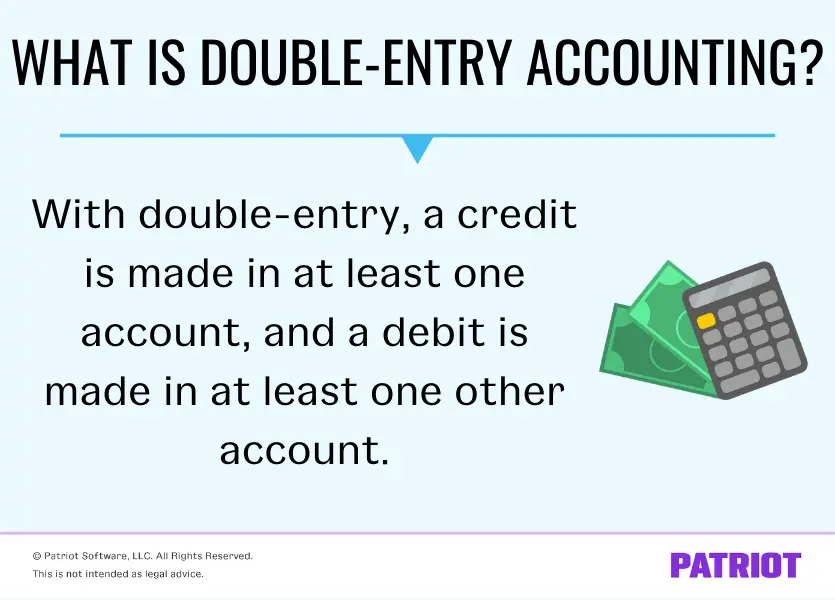
A transaction is recorded using at least one debit and one credit of equal value. A debit (Dr) is an entry typically made on the left side of an account, while a credit (Cr) is an entry made on the right side. The impact of a debit or credit depends on the type of account involved. For instance:
- Assets: Increased by debits, decreased by credits. (e.g., Cash, Accounts Receivable, Inventory, Equipment)
- Expenses: Increased by debits, decreased by credits. (e.g., Rent Expense, Salaries Expense, Utilities Expense)
- Liabilities: Increased by credits, decreased by debits. (e.g., Accounts Payable, Loans Payable)
- Equity: Increased by credits, decreased by debits. (e.g., Owner’s Capital, Retained Earnings)
- Revenue: Increased by credits, decreased by debits. (e.g., Sales Revenue, Service Revenue)
Consider a business purchasing office supplies for $100 cash. This single transaction affects two accounts: "Office Supplies" (an asset) and "Cash" (also an asset). To record this, the "Office Supplies" account would be debited by $100 (increasing an asset), and the "Cash" account would be credited by $100 (decreasing an asset). The total debits ($100) equal the total credits ($100), maintaining the balance. This meticulous recording of debits and credits for every single financial event is what makes the system self-balancing and incredibly robust.
Distinguishing Double-Entry from Single-Entry Systems
While double-entry bookkeeping is the prevailing method for most businesses, particularly those of moderate to large size, it’s important to understand its counterpart: single-entry bookkeeping. As its name suggests, single-entry accounting records only one entry for each transaction, primarily focusing on cash inflows and outflows.
Single-entry systems are simpler and less complex. They are often used by very small businesses, freelancers, or sole proprietorships that operate predominantly on a cash basis and have minimal inventory or accounts receivable/payable. With single-entry, businesses typically track cash receipts and cash disbursements, often using a basic cash book or check register. This method aligns with cash-basis accounting, where transactions are recorded only when cash changes hands.
However, the simplicity of single-entry comes with significant limitations. It does not provide a complete financial picture because it lacks the dual-effect recording. This means:
- No Balance Sheet: It cannot easily generate a balance sheet, which shows a company’s assets, liabilities, and equity at a specific point in time. Without this, understanding a business’s net worth or debt position is challenging.
- Limited Error Detection: Errors are harder to identify because there’s no inherent self-checking mechanism. An imbalance in total debits and credits simply doesn’t exist to flag a mistake.
- Incomplete Financial Reporting: It struggles to provide comprehensive reports like an income statement that accurately matches revenues and expenses (accrual basis), or a statement of cash flows that categorizes operating, investing, and financing activities.
- Not Suitable for Accrual Accounting: Modified cash-basis and accrual accounting, which are often required for larger businesses and offer a more accurate picture of financial performance over time, inherently rely on the double-entry method. Accrual accounting recognizes revenues when earned and expenses when incurred, regardless of when cash is exchanged, requiring the precise tracking capabilities of double-entry.
For any business aiming for growth, seeking external financing, needing to comply with audits, or