Nila Kartika Wati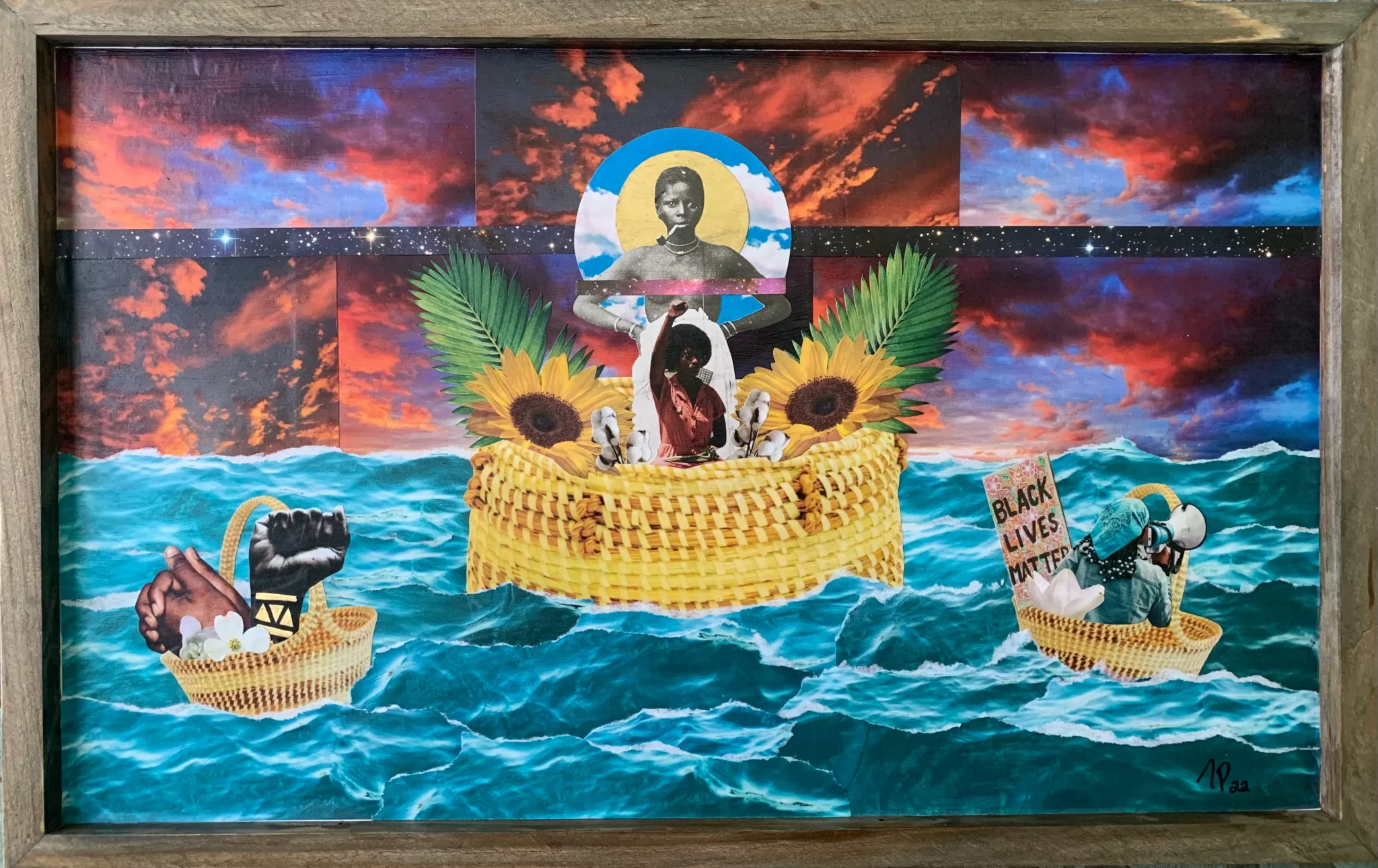
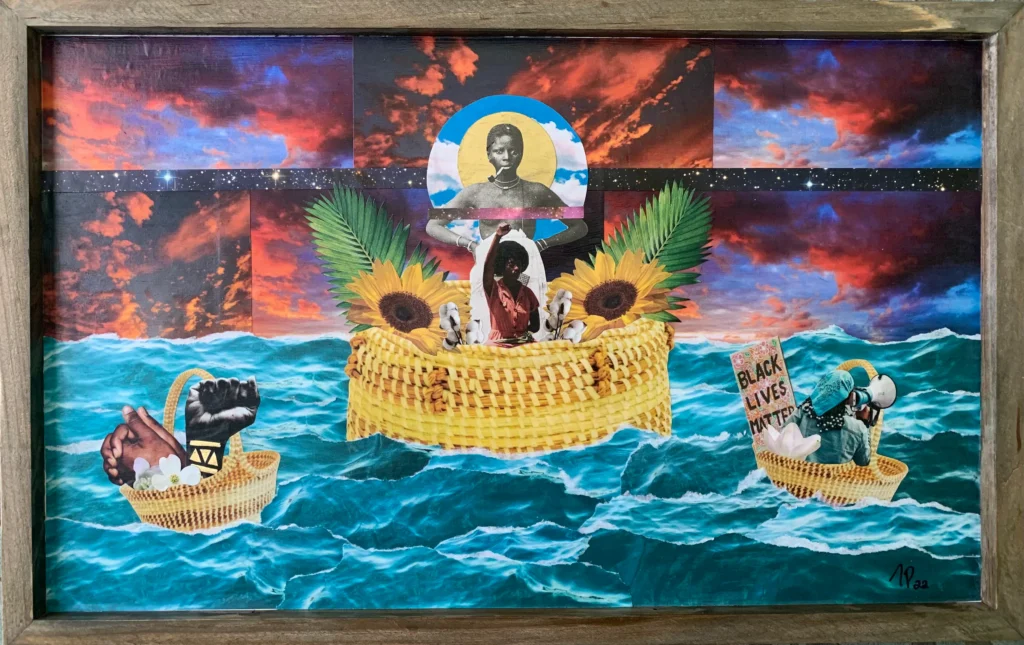
The visual narrative titled Things We Carried, authored and created by analog collage artist Nancey B. Price, serves as a contemporary meditation on the enduring legacy of the African diaspora, centering on the themes of resistance, resilience, and cultural continuity. The work, recently highlighted by the Nonprofit Quarterly, utilizes the medium of collage to bridge the historical chasm between the arrival of enslaved Africans in the Americas and the modern movements for social justice. By layering historical imagery with symbols of contemporary activism, Price explores the concept of intangible heritage—the ideas, spiritualities, and skills that survived the Middle Passage despite the brutal conditions of chattel slavery.
The Genesis of a Visual Narrative
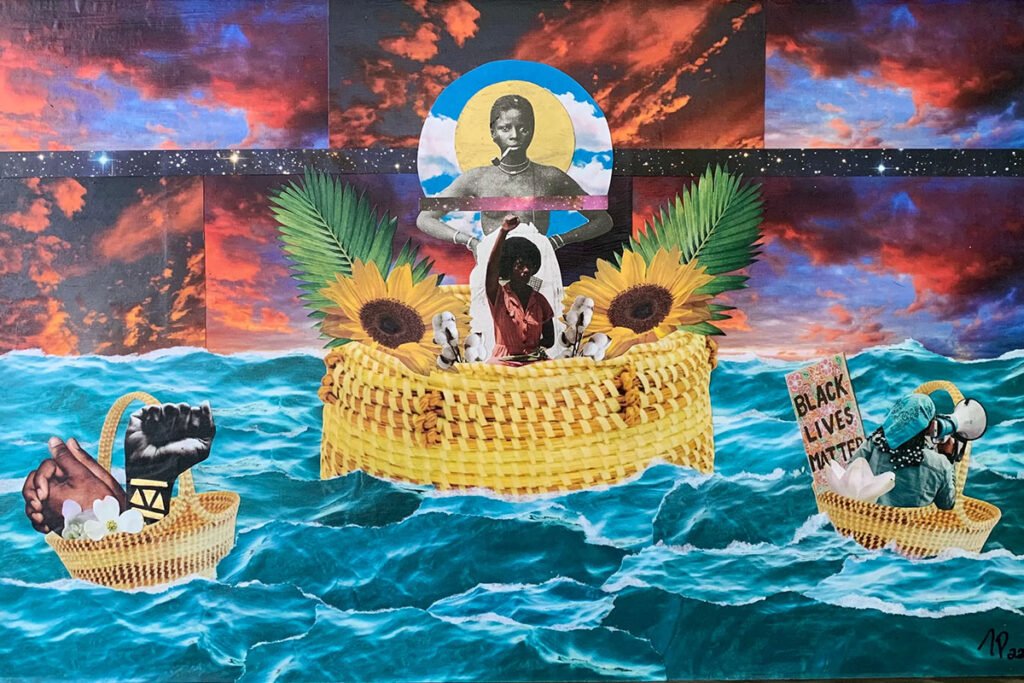
Nancey B. Price, a storyteller and artist hailing from rural Georgia, has built a body of work that investigates the intersections of memory, land, and Black Southern life. Things We Carried is a hallmark of her practice, which is deeply rooted in Southern Gothic traditions and oral histories. The collage depicts a central figure—a Black woman—floating in a basket upon the ocean, flanked by other vessels containing symbols of resistance: clenched black fists and a protester holding a "Black Lives Matter" sign.
The piece operates as a reclamation of history. According to Price, when enslaved Africans were forcibly transported across the Atlantic, they carried with them an "unextinguishable flame." This flame manifests in modern society through various channels, including agricultural techniques, spiritual practices, and communal structures. The artist’s use of analog collage—a process of cutting, layering, and pasting physical materials—mirrors the way history is reconstructed from fragments of the past.
Historical Context: The Middle Passage and Cultural Retention
To understand the weight of Things We Carried, one must examine the historical data surrounding the Transatlantic Slave Trade. According to the Trans-Atlantic Slave Trade Database (Voyages), between 1525 and 1866, an estimated 12.5 million Africans were forcibly embarked on ships headed for the New World. Approximately 10.7 million survived the harrowing journey known as the Middle Passage.
While the legal and social systems of the Americas attempted to strip these individuals of their identities—a process sociologists often refer to as "social death"—the historical record proves that cultural retention was a primary form of resistance. The "things carried" were not physical possessions, as enslaved individuals were permitted almost nothing, but were instead cognitive and spiritual assets.
- Agricultural Expertise: Enslaved people from the Windward Coast brought sophisticated knowledge of rice cultivation, which became the backbone of the economy in South Carolina and Georgia.
- Spiritual Traditions: The synthesis of West African belief systems with Christianity led to the birth of the Black Church, as well as syncretic religions like Santería, Candomblé, and Voodoo.
- Linguistic Foundations: The development of Gullah Geechee and other creole languages served as a method of communication and cultural preservation.
Price’s work posits that these retentions are not merely historical artifacts but are active, living components of the modern Black experience.
Chronology of Resistance: From the 17th Century to the Present
The spirit of resistance depicted in Price’s collage follows a clear historical timeline, evolving from individual acts of defiance to global movements.
- 1619–1865: Resistance during the era of chattel slavery included the establishment of Maroon communities, the Stono Rebellion of 1739, and the sophisticated network of the Underground Railroad.
- 1865–1960s: During the Reconstruction and Jim Crow eras, resistance shifted toward institution-building, the founding of Historically Black Colleges and Universities (HBCUs), and the intellectual activism of figures like W.E.B. Du Bois and Ida B. Wells.
- 1950s–1970s: The Civil Rights Movement and the Black Power Movement introduced the "clenched fist" symbol seen in Price’s collage, representing solidarity and the struggle for political and economic self-determination.
- 2013–Present: The Black Lives Matter movement represents the contemporary iteration of this lineage, focusing on systemic police violence and the broader valuation of Black life in a democratic society.
By placing a Black Lives Matter sign in a basket floating on the same ocean that saw the Middle Passage, Price creates a temporal loop, suggesting that the current struggle is an extension of the resilience first displayed on the slave ships.
Supporting Data: The Role of Art in Social Justice
Research indicates that visual storytelling and art are critical components of social movements. A study by the Center for Artistic Activism suggests that "artistic activism" is more effective than traditional advocacy alone because it engages the emotions and the imagination, making complex historical issues more accessible to the public.
Furthermore, the nonprofit sector has seen a growing trend in supporting artists who focus on racial equity. Data from the Grantmakers in the Arts (GIA) indicates that while funding for arts organizations has historically been skewed toward Eurocentric institutions, there has been a 15 percent increase in "equity-focused" grants since 2020. Organizations like the Nonprofit Quarterly (NPQ) play a pivotal role in this ecosystem by providing a platform for artists like Price to share their narratives with a broader audience of nonprofit leaders and policymakers.
Analysis of Implications: Art as a Repository of Memory
Price’s work carries significant implications for how history is taught and remembered. In a contemporary political climate where the teaching of Black history is under scrutiny in several U.S. states, art serves as an alternative archive. Things We Carried functions as a visual primary source that documents the psychological state of a diaspora.
The use of the "basket" in the collage is particularly symbolic. In many African cultures, baskets represent the gathering of resources and the preservation of food. In the context of Price’s work, the basket becomes a vessel for the preservation of the soul. This metaphor aligns with the artist’s focus on rural Georgia, where basket-weaving traditions (particularly Gullah Geechee sweetgrass baskets) have been passed down through generations since the 1700s.
The "spirit" Price describes is what scholars call "cultural memory." By visualizing this memory, Price ensures that the narrative of Black life is defined not just by the trauma of slavery, but by the creativity and agency of those who survived it.
Institutional and Public Responses
The reception of Nancey B. Price’s work has been marked by its inclusion in high-profile publications and academic settings. Her work has appeared in O, The Oprah Magazine and Southern Cultures, and she has been commissioned for major projects such as the album artwork for the Cincinnati Symphony Orchestra’s Harlem Renaissance project.
Nonprofit leaders and educators have noted that Price’s approach to storytelling is a vital tool for community engagement. As a facilitator, Price has led workshops at the University of Rhode Island and the Savannah Black Art Expo, where she uses collage to help participants explore their own personal and ancestral stories. These workshops highlight the "democratization of art," suggesting that anyone can use the fragments of their lives to build a narrative of resilience.
In a statement regarding the importance of such voices, the Nonprofit Quarterly emphasized that "journalism, nonprofits, and multiracial democracy are under attack," and that sharing stories from contributors like Price is an essential act of "fighting back." This sentiment underscores the broader societal role of the artist as a guardian of truth and a catalyst for democratic participation.
Broader Impact and Future Outlook
Things We Carried is more than a single piece of art; it is a representative fragment of a larger movement toward "Afrofuturism" and "Black Atlantic" studies, which seek to redefine the future by deeply understanding the past. As Price continues her work through her podcast, Dreaming in Color, and her various commissions, she reinforces the idea that the "things carried" are the very tools needed to build a more equitable future.
The enduring legacy of the African diaspora, as visualized in Price’s collage, suggests that as long as the "flame" of the spirit remains, the capacity for resistance and creativity will persist. For the nonprofit sector and the public at large, the work serves as a reminder that the history of the United States is inextricably linked to the resilience of those who were once considered property, but who carried within them the blueprints for a new culture.
As the discourse around racial justice continues to evolve, the visual language provided by artists like Nancey B. Price will remain essential. By documenting the "things we carried," these artists ensure that the spirit of resistance is never forgotten, but is instead used as a foundation for the ongoing pursuit of a truly multiracial democracy.