Dwi Wanna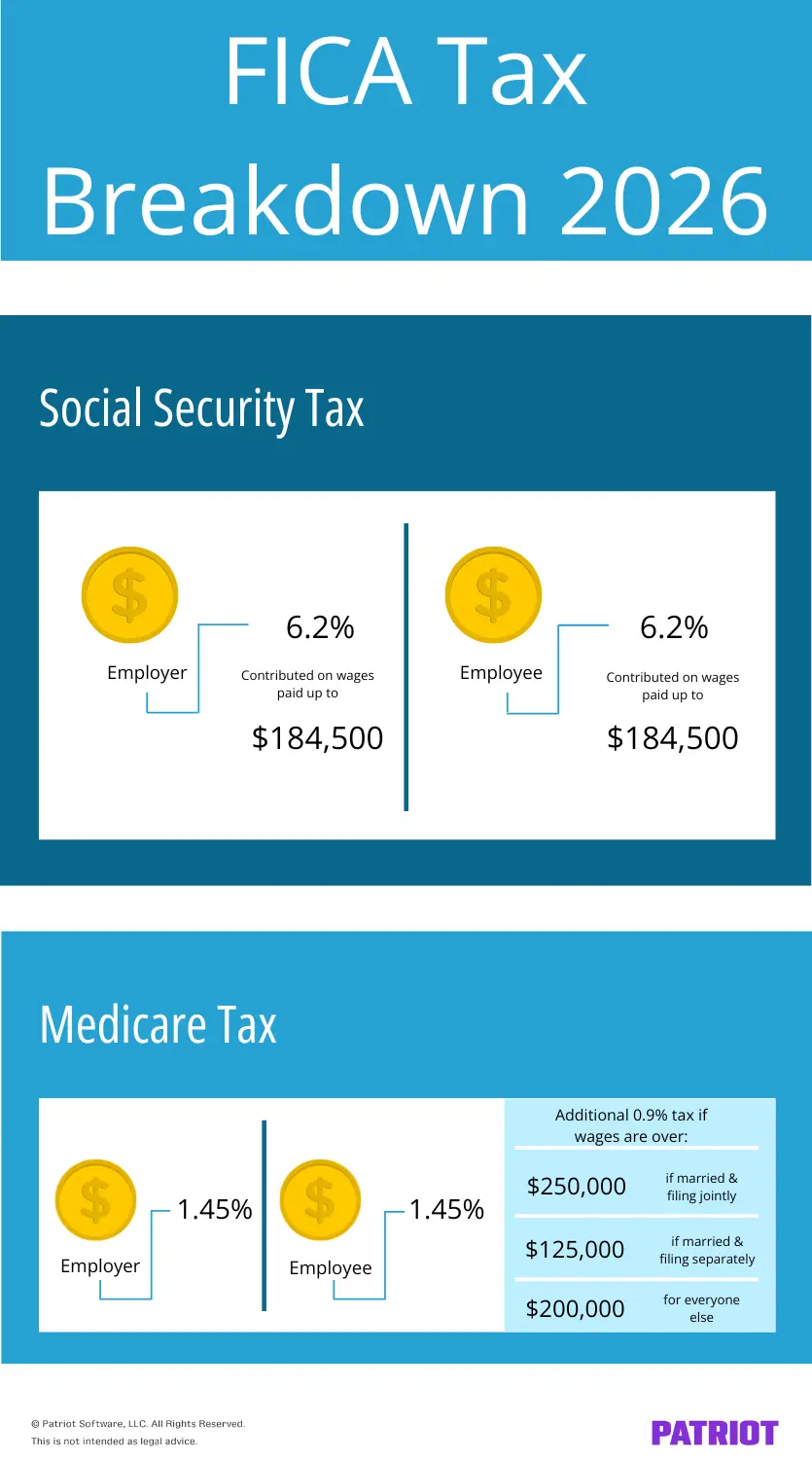
The administration of payroll taxes remains one of the most critical and complex regulatory obligations for American business owners. As the fiscal landscape shifts toward 2026, employers are navigating a sophisticated environment of withholding requirements, evolving wage bases, and specific statutory definitions that distinguish "payroll taxes" from the broader category of "employment taxes." At its core, the federal payroll tax system is governed by the Federal Insurance Contributions Act (FICA), a dual-purpose levy designed to fund the nation’s social safety nets: Social Security and Medicare. While the terminology is often used interchangeably in casual conversation, the Internal Revenue Service (IRS) and the Department of Labor maintain strict distinctions that carry significant legal and financial implications for businesses of all sizes.
The Foundational Framework of FICA
To understand the current state of payroll taxation, one must analyze the components of FICA. Established to ensure the long-term viability of the Social Security Administration’s retirement and disability programs, as well as the Centers for Medicare & Medicaid Services’ healthcare initiatives, FICA is a shared responsibility. Unlike federal income tax, which is borne solely by the employee, or federal unemployment tax, which is paid exclusively by the employer, FICA requires a matching contribution from both parties.
The Social Security component is historically the larger of the two, functioning at a flat rate of 12.4% of an employee’s gross wages. This is split evenly, with 6.2% withheld from the employee’s pay and 6.2% contributed by the employer. However, this tax is subject to a "wage base," a statutory cap beyond which no further Social Security taxes are levied for the remainder of the calendar year. For the 2026 tax year, the Social Security wage base has been set at $184,500. This represents a significant increase from previous years, reflecting inflationary adjustments and the rising cost of living, which in turn increases the maximum tax burden for high-earning employees and their employers.
The Medicare component, conversely, does not have a wage cap. It is levied at a total rate of 2.9%, with 1.45% paid by each party. Every dollar earned by an employee is subject to this tax, ensuring a continuous flow of funding for the Medicare program regardless of the individual’s total annual compensation.
The 2026 Regulatory Environment and the Additional Medicare Tax
As part of the evolving tax code, high-income earners are subject to the Additional Medicare Tax. Introduced as part of the Affordable Care Act, this 0.9% tax applies once an employee’s wages exceed specific thresholds based on their filing status. For single filers, the threshold is $200,000; for married couples filing jointly, it is $250,000.
A critical distinction for 2026 compliance is that the Additional Medicare Tax is an employee-only responsibility. Employers are legally mandated to begin withholding the extra 0.9% as soon as an employee’s year-to-date wages exceed $200,000, regardless of the employee’s actual filing status or total household income. The employer does not match this 0.9% increase, meaning the total Medicare withholding for these high earners becomes 2.35%, while the employer’s contribution remains fixed at 1.45%.
A Chronology of Compliance: The Payroll Tax Lifecycle
Managing payroll taxes is not a one-time annual event but a continuous cycle of calculation, withholding, and remittance. The process follows a strict chronological order each pay period:
- Gross Wage Calculation: Employers must first determine the total compensation earned, including hourly wages, salaries, bonuses, and commissions.
- Statutory Deductions: Using the 2026 rates, the employer calculates the 6.2% Social Security and 1.45% Medicare amounts.
- Threshold Monitoring: Throughout the year, payroll systems must track cumulative earnings to identify when an employee hits the $184,500 Social Security cap or the $200,000 Additional Medicare Tax threshold.
- Tax Remittance: Once withheld, these funds are not the property of the business; they are held in trust. Depending on the size of the business’s tax liability, these funds must be deposited with the IRS on a semi-weekly or monthly basis.
- Quarterly Reporting: Employers must file Form 941, the Employer’s Quarterly Federal Tax Return, to report total wages paid and the amount of taxes withheld.
- Annual Reconciliation: At the close of the fiscal year, Form 940 is filed to report federal unemployment taxes, and W-2 forms are issued to employees and the Social Security Administration.
Distinguishing Payroll Taxes from General Employment Taxes
A common point of confusion for new entrepreneurs is the distinction between FICA and other employment-related taxes. While "payroll taxes" specifically refers to Social Security and Medicare, "employment taxes" is an umbrella term that includes:

- Federal Income Tax Withholding: Calculated based on the employee’s Form W-4, this is an employee-only tax that the employer is responsible for deducting and remitting.
- Federal Unemployment Tax (FUTA): A 6% tax on the first $7,000 of each employee’s wages, paid entirely by the employer. Most employers receive a credit of up to 5.4% for paying state unemployment taxes, resulting in an effective FUTA rate of 0.6%.
- State Unemployment Tax (SUTA): Varying by state, this is typically an employer-only tax, though Alaska, New Jersey, and Pennsylvania are notable exceptions where employees also contribute.
- State and Local Income Taxes: Depending on the jurisdiction, these are withheld from employee wages at varying rates.
The Self-Employment Contribution Act (SECA)
The landscape changes significantly for independent contractors and sole proprietors. Under the Self-Employment Contributions Act (SECA), individuals who work for themselves must pay both the employer and employee portions of FICA. This results in a total self-employment tax rate of 15.3% (12.4% for Social Security and 2.9% for Medicare).
For 2026, self-employed individuals must remain vigilant regarding the $184,500 Social Security cap and the Additional Medicare Tax. To mitigate the burden of paying "both sides" of the tax, the IRS allows self-employed taxpayers to deduct 50% of their self-employment tax from their gross income on Form 1040. This "above-the-line" deduction recognizes the employer-equivalent portion of the tax as a business expense.
Significant Changes for Independent Contractors in 2026
A major shift in reporting requirements is set to take effect in the 2026 tax year regarding non-employee compensation. Historically, businesses were required to issue Form 1099-NEC to any independent contractor paid $600 or more during the year. Under the new guidelines, this reporting threshold has been raised to $2,000.
Industry analysts suggest this move is intended to reduce the administrative burden on small businesses and the IRS alike, focusing enforcement efforts on larger service contracts. However, tax experts warn that while the reporting threshold has increased, the obligation for the contractor to report all income—regardless of whether they receive a 1099-NEC—remains unchanged.
Broader Economic Implications and Analysis
The steady increase in the Social Security wage base—from $168,600 in 2024 to $184,500 in 2026—reflects a broader fiscal strategy to address the projected funding gaps in the Social Security Trust Fund. For employers, this increase represents a direct rise in the cost of labor for high-skilled positions. For an employee earning at or above the 2026 cap, the employer’s Social Security contribution will be $11,439, compared to approximately $10,453 in 2024.
Furthermore, the complexity of these calculations has led to a surge in the adoption of automated payroll software. Manual calculation is increasingly viewed as a high-risk activity; the IRS imposes significant penalties for underpayment, late deposits, or incorrect filings. In many cases, "trust fund recovery penalties" can be assessed personally against business owners or responsible officers if payroll taxes are not properly remitted, making compliance a matter of personal financial safety for executives.
Official Responses and Expert Perspectives
While the IRS has not issued a formal "reaction" to the 2026 adjustments—as these are statutory changes dictated by existing law and inflationary formulas—the Small Business Administration (SBA) continues to emphasize the importance of education. In recent webinars, SBA advisors have noted that "payroll tax errors are among the leading causes of small business audits."
Financial analysts suggest that the 2026 threshold increases may prompt some corporations to reassess compensation structures, perhaps leaning more heavily on non-taxable benefits or deferred compensation to manage the rising FICA burden. For the average worker, however, the payroll tax remains a consistent, predictable deduction that serves as the entry price for participation in the national social insurance system.
As the 2026 fiscal year approaches, the mandate for employers is clear: maintain rigorous record-keeping, stay abreast of jurisdictional variations in SUTA and local income taxes, and ensure that the distinction between employees and independent contractors is legally defensible. In an era of increasing digital scrutiny, the margin for error in payroll tax administration continues to narrow.