admin
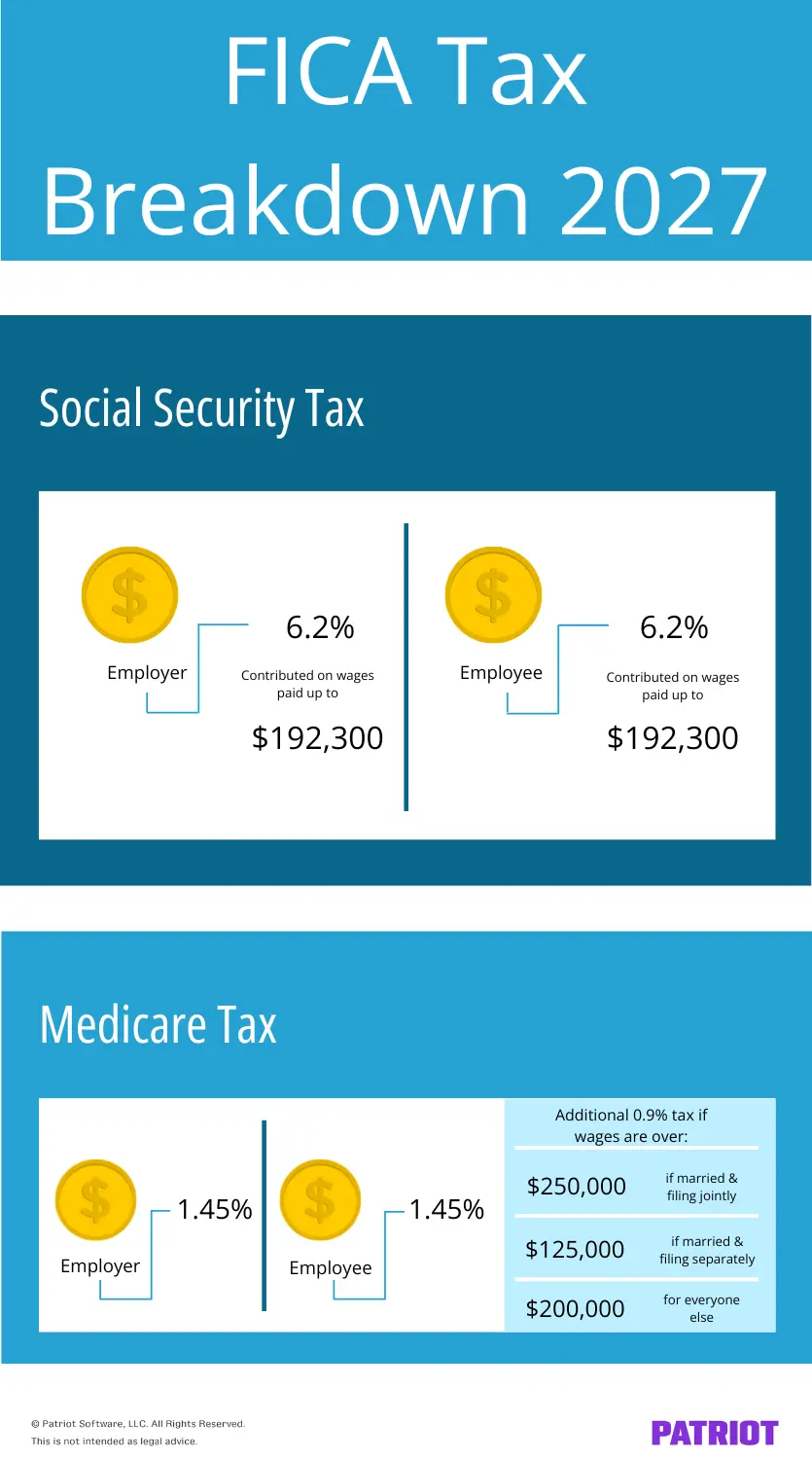
Employers bear a fundamental responsibility in the intricate tapestry of federal taxation, specifically concerning payroll taxes. This includes the meticulous tasks of withholding, remitting, and accurately filing these taxes on behalf of their employees. Among these critical levies, Social Security tax stands out as an essential contribution, impacting both the employer’s operational costs and an employee’s take-home pay, while simultaneously funding a vital national social insurance program. It is a mandatory payroll tax, an indispensable component of the Federal Insurance Contributions Act (FICA), designed to provide financial security for millions of Americans.
The Bedrock of Social Security: Defining the Payroll Tax
At its core, Social Security tax is a shared financial obligation, with both employees and employers contributing to its fund based on an employee’s wages. This collected revenue forms the financial bedrock of Social Security benefits, officially known as Old-Age, Survivors, and Disability Insurance (OASDI). Employers are tasked with withholding the employee’s portion directly from their wages. The current Social Security tax rate for employees is 6.2%. Concurrently, employers are obligated to pay a matching Social Security tax rate, also at 6.2%, bringing the total contribution to 12.4% of an employee’s taxable wages. These funds are then remitted to the Internal Revenue Service (IRS) on a semi-weekly or monthly schedule, predominantly through the Electronic Federal Tax Payment System (EFTPS). The reporting of these tax deposits typically occurs on Form 941, the Employer’s Quarterly Federal Tax Return, or, for certain smaller entities, annually on Form 944, the Employer’s Annual Federal Tax Return. This system ensures a continuous flow of funds to support the nation’s social safety net.
A Historical Perspective: The Genesis of Social Security
The creation of Social Security was a monumental legislative achievement, born out of the profound economic hardship of the Great Depression. Before the 1930s, old age, disability, and the death of a breadwinner often plunged families into destitution, with little to no formal support system. The Social Security Act of 1935 marked a paradigm shift, establishing a federal program to provide social insurance. President Franklin D. Roosevelt signed the Act into law on August 14, 1935, initially providing benefits to retired workers over age 65. The first Social Security taxes were collected in 1937, and the first monthly benefits began in January 1940.
Over the decades, the program expanded significantly to address broader societal needs. The 1939 amendments extended coverage to spouses and minor children of retired workers, as well as to survivors of deceased workers, thus introducing the "Survivors" component. The 1956 amendments added "Disability" insurance, providing income to workers with severe disabilities. Subsequent legislative changes refined eligibility, benefit calculation methods, and introduced features like cost-of-living adjustments (COLAs). The 1983 amendments, in particular, were crucial for the program’s long-term solvency, implementing measures such as increasing the full retirement age incrementally and making a portion of Social Security benefits taxable for higher-income beneficiaries. This chronology underscores Social Security’s evolution from a basic retirement plan into a comprehensive social insurance system, adapting to the changing demographic and economic landscape of the United States.
The Dual Pillars of FICA: Social Security and Medicare
Social Security tax is one of the two foundational components of the Federal Insurance Contributions Act (FICA). The other critical element is Medicare tax. Both are mandatory payroll deductions, collectively forming a substantial portion of the federal government’s revenue from labor. While both contribute to vital social safety nets, they serve distinct purposes and operate with different rules.
Medicare tax funds Medicare, the federal health insurance program primarily for individuals aged 65 or older, and younger people with certain disabilities. Unlike Social Security, the Medicare tax rate is 1.45% for employees and a matching 1.45% for employers, totaling 2.9%. A crucial distinction lies in the application of a wage base. The wage base for Social Security limits the amount of earnings subject to the tax, whereas for Medicare tax, there is no wage base limit; all earned wages are subject to Medicare tax. Furthermore, an additional Medicare tax of 0.9% applies to individual wages exceeding $200,000, but this additional tax is solely the employee’s responsibility and is not matched by the employer. Understanding these differences is vital for accurate payroll processing and for appreciating the multi-faceted nature of FICA contributions.
Understanding the Wage Base: A Cap on Contributions
A defining characteristic of the Social Security tax is its annual wage base. This mechanism dictates that only a certain amount of an employee’s gross taxable wages are subject to Social Security tax within a given calendar year. For instance, the Social Security tax limit for 2027 is set at $192,300, a modest increase from the 2026 limit of $184,500. This means that once an employee’s cumulative earnings for the year reach this threshold, both the employer and employee cease contributing to Social Security tax on any earnings above that amount for the remainder of the calendar year.
The rationale behind the wage base is rooted in the program’s design, aiming to balance progressivity with the earnings-related nature of benefits. Historically, the wage base has been adjusted annually to account for changes in the national average wage index, ensuring the program’s financial stability while reflecting economic growth. This adjustment process often results in yearly increases to accommodate the rising cost of living and average incomes. The existence of a wage base makes the Social Security tax somewhat regressive in its application, as higher-income earners pay a smaller percentage of their total income into the system compared to lower and middle-income earners whose entire taxable income falls below the cap. However, it also means that benefits are capped, as they are based on earnings up to the wage base. This contrasts sharply with Medicare tax, which, as noted, applies to all earnings without any upper limit.
Who Pays and How: Employer, Employee, and the Self-Employed
The mechanics of Social Security tax involve distinct responsibilities for employers, employees, and self-employed individuals. For traditional employees, the process is straightforward: the employer withholds the 6.2% employee portion from each paycheck and then contributes their matching 6.2% on top of that. To illustrate, if an employee earns $1,000 in gross wages, the calculation for the employee’s Social Security tax withholding is $1,000 multiplied by 0.062, which equals $62. The employer then contributes an additional $62, making the total Social Security tax for that pay period $124. This process continues until the employee’s year-to-date wages reach the annual wage base.
Self-employed individuals operate under a different framework, paying what is known as self-employment tax, mandated by the Self-Employed Contributions Act (SECA). This tax is essentially equivalent to paying both the employer and employee portions of FICA taxes. Therefore, self-employed workers pay the full 12.4% for Social Security and the full 2.9% for Medicare, totaling 15.3% on their net earnings from self-employment. However, a significant provision allows self-employed individuals to deduct one-half of their self-employment tax from their gross income when calculating their adjusted gross income, effectively acknowledging the employer’s share. It’s also important to note that certain types of wages, such as employee expense reimbursements or specific fringe benefits, may be exempt from Social Security tax. Employers can refer to IRS Publication 15, "Employer’s Tax Guide," for a comprehensive list of exempt wages and further guidance.

The Purpose and Promise: Funding Old-Age, Survivors, and Disability Insurance (OASDI)
The fundamental purpose of Social Security taxes is to fund the comprehensive benefits provided under the Old-Age, Survivors, and Disability Insurance (OASDI) program. Administered by the Social Security Administration (SSA), this program serves as a critical financial safety net, providing economic security to millions of Americans across various life stages.
- Old-Age Benefits: These are the most widely recognized benefits, primarily supporting individuals aged 65 or older who have worked and contributed to the system for a sufficient number of years. Eligibility is based on earning "credits" through work; most people need 40 credits (10 years of work) to qualify. The amount of the benefit is determined by a worker’s lifetime earnings, adjusted for inflation.
- Survivors Benefits: This component provides financial assistance to the surviving spouses or children of deceased workers who were insured under Social Security. Eligibility extends to widows, widowers, divorced spouses, and unmarried children under age 18 (or 19 if still in high school, or at any age if disabled before age 22). This provision offers crucial support during times of loss, helping families maintain financial stability.
- Disability Benefits: Social Security also provides income replacement for workers who become severely disabled and are unable to engage in substantial gainful activity. The criteria for disability benefits are stringent, requiring a medical condition that is expected to last at least 12 months or result in death. Like retirement benefits, disability payments are based on the worker’s past earnings.
The OASDI program plays a vital role in poverty reduction, particularly among the elderly. Before Social Security, poverty rates among seniors were significantly higher. Today, Social Security is the primary source of income for many retirees and a crucial supplement for many more, demonstrably lifting millions out of poverty and ensuring a baseline level of financial dignity for vulnerable populations.
Navigating Compliance: Reporting and Remitting Social Security Taxes
Strict adherence to IRS regulations for reporting and remitting Social Security taxes is paramount for all employers. Most employers are required to report FICA taxes (Social Security and Medicare) along with federal income tax withholding on a quarterly basis using Form 941, Employer’s Quarterly Federal Tax Return. This form consolidates the total amounts withheld from employees and contributed by the employer for all FICA taxes during the quarter.
For a select group of very small employers, the IRS may grant permission to file Form 944, Employer’s Annual Federal Tax Return, which reports Social Security, Medicare, and federal income taxes annually. This option is typically reserved for businesses with an annual federal tax liability (including income, Social Security, and Medicare taxes) of less than $1,000, and employers must be specifically notified by the IRS to use this form. Incorrectly using Form 944 without IRS authorization can lead to penalties.
Tax deposits must be made electronically via the Electronic Federal Tax Payment System (EFTPS). The frequency of these deposits—either monthly or semi-weekly—is determined by a "lookback period," which assesses the total tax liability reported on Form 941 or Form 944 during a specific prior period. Employers must verify their lookback period annually as it can change, potentially altering their deposit schedule. Failure to make timely and accurate deposits can result in substantial penalties from the IRS.
Beyond quarterly or annual reporting, employers have year-end obligations. By January 31st each year, employers must provide each employee with a Form W-2, Wage and Tax Statement, detailing all wages paid and taxes withheld (including Social Security) for the preceding calendar year. Concurrently, employers must submit copies of all W-2 forms, along with Form W-3, Transmittal of Wage and Tax Statements, to the Social Security Administration. This ensures that the SSA has a comprehensive record of individual earnings and contributions, which is crucial for determining future benefits. Some states also require the submission of these forms to state tax agencies. Meticulous record-keeping and timely compliance are essential to avoid penalties and ensure the smooth functioning of both the employer’s business operations and the federal tax system.
Challenges and Future Outlook: Sustaining the Social Security System
Despite its enduring success, the Social Security system faces significant long-term challenges, primarily driven by demographic shifts. The most prominent concern is the aging of the U.S. population, characterized by lower birth rates and increased life expectancies. This trend translates into a rising dependency ratio – fewer active workers contributing taxes for each retiree or beneficiary drawing benefits.
According to the 2023 Trustees’ Report, the Social Security trust funds are projected to be able to pay 100% of scheduled benefits until the mid-2030s. At that point, if Congress does not act, the program would only be able to pay about 80% of promised benefits from ongoing tax revenues. This looming shortfall has spurred extensive policy debates and proposals. Potential solutions often include:
- Raising the full retirement age: Gradually increasing the age at which individuals can receive full benefits, reflecting increased longevity.
- Adjusting the Cost-of-Living Adjustment (COLA) formula: Modifying how benefits are indexed to inflation, potentially using a different measure of inflation.
- Increasing the Social Security tax rate: Raising the 6.2% contribution for both employees and employers.
- Increasing the wage base: Raising or eliminating the cap on earnings subject to Social Security tax, which would primarily affect higher-income earners.
- Means-testing benefits: Introducing income or wealth thresholds to reduce benefits for wealthier retirees.
- Investing trust fund assets differently: Allowing a portion of the trust funds to be invested in equities, though this carries greater risk.
Economists and policy analysts from organizations like the Congressional Budget Office (CBO) and the SSA itself consistently highlight the need for legislative action to ensure the program’s long-term solvency. The political challenge lies in finding a bipartisan consensus on reforms that are equitable, politically feasible, and sufficient to secure the program for future generations without unduly burdening current workers or retirees. The ongoing dialogue underscores the critical importance of Social Security not just as a tax, but as a dynamic and indispensable component of America’s social and economic fabric.
Social Security tax, therefore, is far more than a simple payroll deduction. It is a cornerstone of American social welfare, a historical response to economic insecurity, and a complex system with ongoing financial and demographic considerations. For employers, understanding their precise obligations for withholding, remitting, and reporting is essential for legal compliance and operational efficiency. For employees, recognizing the purpose and function of these contributions provides insight into the vital safety net that underpins retirement, survivor, and disability benefits for millions nationwide.
This is not intended as legal advice; for more information, please consult a qualified professional.