Lana Rhoades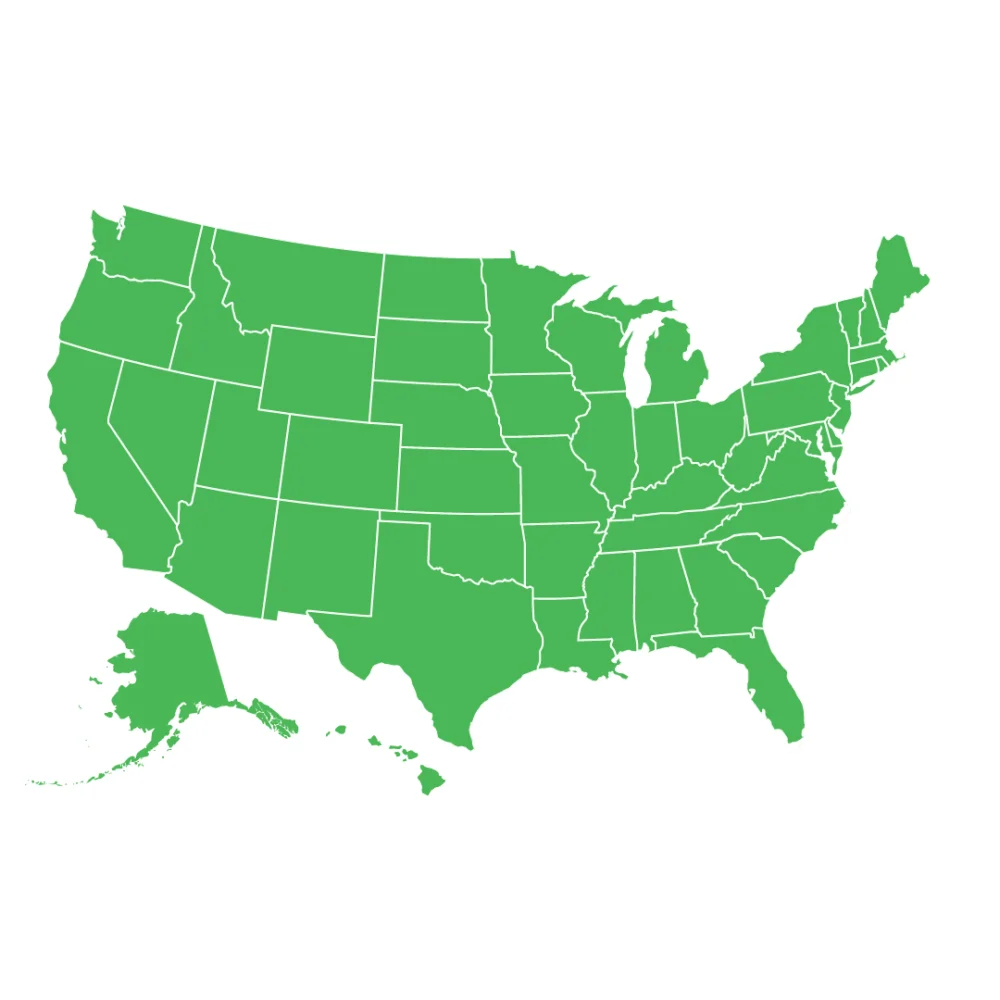
The American fiscal landscape remains a labyrinth of overlapping jurisdictions, with the total number of sales tax districts in the United States now exceeding 14,000 as of early 2026. For businesses and consumers alike, the complexity of the "combined sales tax rate"—the sum of state, county, municipal, and special district levies—presents a significant administrative and financial challenge. While state-level rates provide a baseline, the granular application of local taxes means that two households separated by a single street can face entirely different tax burdens on the same purchase. This report examines the current state of sales tax across the country, the historical factors driving these discrepancies, and the technological shifts necessitated by a decentralized tax system.
The Anatomy of a Combined Sales Tax Rate
To understand why a consumer in one city might pay 10.5% in tax while a neighbor in a bordering town pays 8%, one must deconstruct the components of the combined rate. Most states with a sales tax mandate a flat statewide rate, which typically ranges between 4% and 7.25%. However, the authority to levy taxes does not stop at the state capitol. Counties, cities, and "special jurisdictions" possess the legal right to add their own percentages to the state baseline.
Special jurisdictions are often the most overlooked component of this calculation. These are specific taxing authorities created to fund localized projects, such as regional transit authorities (RTAs), school district improvements, or the construction of public stadiums and hospitals. In many instances, these rates are approved directly by voters via local ballot initiatives. When a consumer makes a purchase, they are effectively paying a tiered bill: the state’s share, the county’s share, the city’s share, and any relevant special district shares. This "stacking" effect is what creates the high combined rates seen in major metropolitan hubs.
A Statistical Overview: The Highest and Lowest Rates in 2026
As of February 2026, California maintains its position as the state with the highest base sales tax rate at 7.25%. When local jurisdictions are factored in, several California cities, including Long Beach and Los Angeles, see combined rates that frequently exceed 10%. Following closely behind California are four states tied for the second-highest base rate of 7%: Indiana, Mississippi, Rhode Island, and Tennessee. In Tennessee, the lack of a state income tax creates a heavy reliance on sales tax revenue, often leading to combined local rates that are among the highest in the nation.
Conversely, the search for the lowest sales tax rates leads to a small group of states often referred to by the acronym NOMAD: New Hampshire, Oregon, Montana, Alaska, and Delaware. These five states do not impose a general state-level sales tax, though it is a common misconception that they are entirely "tax-free." For instance, Alaska allows local municipalities to levy their own sales taxes, meaning a purchase in Juneau may still carry a tax burden despite the 0% state rate.
Among states that do charge a sales tax, Colorado offers the lowest base rate at 2.9%. This is followed by a group of states—Alabama, Georgia, Hawaii, New York, and Wyoming—that maintain a 4% state rate. However, tax experts caution that these low percentages are often balanced by higher levies in other areas. States with low sales taxes frequently offset their budgets with higher property taxes or more aggressive corporate and personal income tax brackets.
The Historical Evolution of Sales Tax in America
The current complexity of the U.S. sales tax system is rooted in the economic desperation of the Great Depression. Prior to the 1930s, states relied primarily on property taxes to fund their operations. However, as property values plummeted and defaults soared during the economic collapse, state governments found themselves insolvent.
Mississippi was the first to implement a modern, permanent sales tax in 1932 as a "temporary" emergency measure to stabilize its treasury. The model was quickly adopted by other states looking for a consistent revenue stream that could be collected in small increments from a wide base of consumers. Over the following decades, the system shifted from a simple state-level levy to the multi-jurisdictional web seen today. The 1960s and 70s saw a massive expansion of local taxing authority as federal funding for infrastructure began to decentralize, forcing cities and counties to find independent ways to fund local transit and public works.
The most significant modern shift occurred in June 2018 with the U.S. Supreme Court’s decision in South Dakota v. Wayfair, Inc. This landmark ruling overturned the "physical presence" rule, allowing states to require out-of-state sellers to collect and remit sales tax based on economic activity (nexus) rather than just physical locations like warehouses or offices. This decision effectively ended the "tax-free" era of internet shopping and forced nearly every e-commerce business in the country to track over 14,000 different taxing jurisdictions.
Economic Implications and Expert Analysis
Tax policy analysts suggest that the reliance on sales tax is a "double-edged sword" for state economies. On one hand, sales taxes are a reliable source of liquidity. On the other hand, they are inherently regressive, meaning they take a larger percentage of income from low-income earners than from high-income earners, as the former must spend a greater portion of their earnings on taxable goods.
"The challenge for 2026 is not just the rate itself, but the compliance burden," says Michael Arrington, a senior tax consultant. "When you have 14,000 districts, a small business in Ohio selling a widget to a customer in a specific zip code in Colorado has to know not just the state rate, but whether that specific address falls within a special transportation district. The margin for error is razor-thin, and the cost of an audit can be catastrophic for a mid-sized enterprise."
Furthermore, state revenue departments are increasingly looking toward "tax base broadening." As the economy shifts from goods to services—such as streaming subscriptions, software-as-a-service (SaaS), and digital consulting—states are rewriting their definitions of what is taxable. This transition has led to a flurry of legislative updates in early 2026, as states attempt to capture revenue from the digital economy to fund aging physical infrastructure.
The Role of Technology in Modern Compliance
Given the volatility of these rates—which can change quarterly based on local elections—manual tracking has become virtually impossible for modern retailers. This has given rise to a specialized sector of the fintech industry focused on "rooftop-accurate" reporting. Unlike zip-code-based calculations, which can be inaccurate because zip codes often cross multiple taxing jurisdictions, rooftop reporting uses exact GPS coordinates and physical addresses to pinpoint the precise tax obligation.
Automation platforms like TaxJar have become essential infrastructure for the e-commerce era. By integrating directly with point-of-sale systems, these tools apply real-time updates to tax rates, manage the filing of returns, and track "economic nexus" thresholds to alert businesses when they have reached a legal obligation to start paying taxes in a new state. This technological layer acts as a buffer between the archaic complexity of state tax laws and the high-speed demands of global commerce.
Future Outlook and Broader Impacts
Looking ahead through the remainder of 2026 and into 2027, the trend toward localized taxation shows no signs of slowing. As federal gridlock often limits the flow of national funds to local projects, municipal governments are increasingly likely to turn to "targeted" sales taxes to fund specific community needs. We are likely to see more "Green Taxes" or "Infrastructure Surcharges" added to the combined rates in progressive urban centers.
For the consumer, the impact is felt most acutely during periods of inflation. When the price of goods rises, the total tax paid also rises, creating a compounding effect on the cost of living. For the business owner, the priority remains the mitigation of risk. In an environment where tax authorities are more digitally savvy than ever, the ability to accurately calculate, collect, and remit every penny of the 14,000+ potential rates is no longer a luxury—it is a requirement for survival in the modern marketplace.
In summary, the United States’ approach to sales tax is a reflection of its federalist structure: a messy, localized, and constantly evolving system that prioritizes regional autonomy over national simplicity. While this allows for local control over funding, it demands a high level of vigilance and technological sophistication from anyone doing business across state lines. As 2026 progresses, the gap between high-tax urban centers and low-tax rural states is expected to widen, further complicating the map of American commerce.