Lina Irawan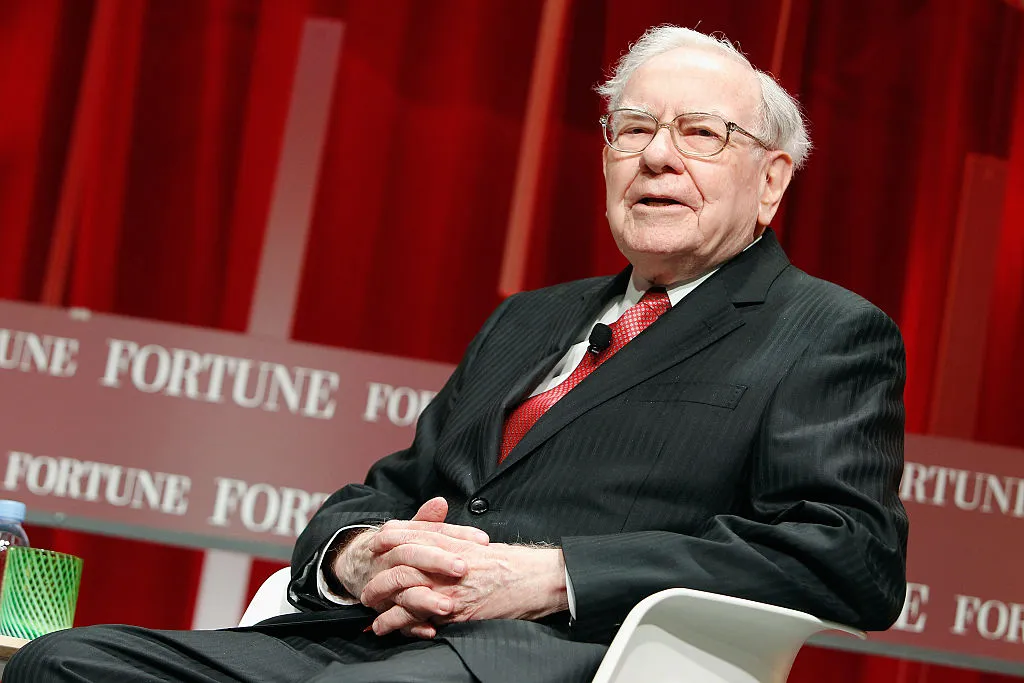
Billionaire investor Warren Buffett, renowned as the "Oracle of Omaha" and the long-serving CEO of Berkshire Hathaway, has consistently outperformed the broader S&P 500 index for decades, establishing a legendary track record in the financial world. His investment philosophy, a blend of deep fundamental analysis and a steadfast aversion to speculative fads, has served as a bedrock for generating substantial long-term wealth. While his stock selections may often appear conventional or even "boring" to those chasing rapid growth in volatile markets, it is precisely this disciplined, value-oriented approach that has proven to be an exceptionally potent engine for compounding capital over time. This article delves into three core investment principles championed by Buffett, examining their practical application, historical context, and enduring relevance for investors seeking to emulate his success.
The Genesis of a Legendary Investment Philosophy
Warren Buffett’s investment journey began under the profound influence of Benjamin Graham, widely considered the father of value investing and Buffett’s professor at Columbia Business School. Graham’s seminal works, "Security Analysis" and "The Intelligent Investor," laid the groundwork for Buffett’s early approach, emphasizing meticulous balance sheet analysis, a focus on "margin of safety," and the concept of stocks representing fractional ownership in actual businesses rather than mere speculative paper. Buffett initially sought out "cigar butt" companies – deeply undervalued assets that could be bought cheaply and sold for a quick profit, even if their underlying business prospects were mediocre.
However, a pivotal shift occurred in Buffett’s strategy, significantly influenced by his long-time business partner, Charlie Munger. Munger advocated for moving beyond merely cheap assets to investing in "wonderful businesses at fair prices." This evolution marked a crucial turning point, leading Berkshire Hathaway to acquire and hold companies with durable competitive advantages, even if their initial purchase price wasn’t a deep discount. The transformation of Berkshire Hathaway itself from a struggling textile mill in the 1960s into a sprawling conglomerate with holdings across diverse sectors – including insurance, energy, railroads, and consumer goods – serves as a testament to this evolving philosophy. From 1965 to 2022, Berkshire Hathaway’s per-share market value achieved a remarkable compound annual gain of 19.8%, significantly outperforming the S&P 500’s 9.9% gain over the same period, illustrating the power of this long-term, fundamentals-driven approach.
1. The Enduring Power of "Economic Moats"
At the heart of Buffett’s investment strategy is the relentless pursuit of companies possessing what he famously terms "economic moats." Drawing an analogy from medieval castles, a moat represents a company’s structural, unassailable competitive advantage that protects its profits and market share from rivals. A wider, deeper moat provides greater insulation, allowing a business to generate above-average returns on capital for an extended period. Identifying these durable competitive advantages is critical for long-term compounding.
Buffett and Munger have identified several distinct types of economic moats:
- Brand Power: This is perhaps one of the most visible moats. Companies like Coca-Cola, American Express, and notably, Apple – Berkshire Hathaway’s largest holding – leverage strong brand recognition and consumer loyalty. Apple, for instance, has cultivated a perception as a premium, innovative technology brand, enabling it to command higher prices and maintain robust profit margins despite intense competition in the smartphone, computer, and software markets. Its ecosystem of integrated hardware, software, and services creates significant switching costs for users, further reinforcing its moat.
- Network Effects: While Buffett traditionally shied away from pure technology plays, the principle of network effects is evident in some of his financial holdings. Companies like Visa and Mastercard benefit immensely as the value of their service increases exponentially with the number of users. The more people and merchants use a payment network, the more valuable and indispensable it becomes, creating a powerful barrier to entry for new competitors.
- Cost Advantages: Businesses that can produce goods or services at a lower cost than their competitors possess a formidable moat. This can stem from economies of scale (e.g., Walmart’s massive purchasing power), proprietary processes, or advantageous access to raw materials. Such companies can either undercut competitors on price to gain market share or maintain competitive pricing while enjoying superior profit margins.
- Switching Costs: When it is difficult, time-consuming, or expensive for customers to switch from one product or service to another, the incumbent enjoys a significant advantage. This is often seen in enterprise software, specialized industrial equipment, or banking services. Once a business integrates a particular software system, the cost and disruption of migrating to an alternative can be prohibitive, locking in customers.
- Patents and Intellectual Property: While less frequently cited by Buffett for his core holdings, proprietary technology protected by patents or copyrights can create a temporary but powerful moat, particularly in pharmaceuticals or specialized manufacturing.
Companies with strong economic moats consistently demonstrate higher returns on invested capital (ROIC) and exhibit more stable, predictable earnings growth over time. For investors, these moats translate into reliable long-term performance, making them attractive targets for a buy-and-hold strategy. Analysis from Morningstar, a prominent investment research firm, indicates that companies with wide moats tend to outperform the broader market over extended periods, validating Buffett’s emphasis on this critical factor.
2. The Imperative of Predictable Cash Flow
In an investment landscape often captivated by rapidly rising revenues and aspirational growth stories, Warren Buffett maintains a disciplined focus on a less glamorous but fundamentally crucial metric: predictable cash flow. Unlike speculative companies that might boast impressive top-line growth while simultaneously incurring substantial net losses and burning through capital, Buffett seeks established businesses that are already profitable and consistently generate strong, free cash flow. This focus underscores his commitment to intrinsic value and financial health.
Predictable cash flow is the lifeblood of a healthy business, providing the flexibility and resources for various value-enhancing activities:
- Funding Dividends: Consistent and growing cash flow allows companies to distribute a portion of their earnings directly to shareholders through dividends. Many of Berkshire Hathaway’s long-term holdings, such as Coca-Cola, are renowned for their decades-long track record of increasing dividend payments, providing a steady stream of income for investors.
- Share Buybacks: When a company generates excess cash flow and its stock is deemed undervalued by management, it can use this capital to repurchase its own shares. Share buybacks reduce the number of outstanding shares, thereby increasing earnings per share (EPS) and often boosting the stock price, benefiting remaining shareholders. Berkshire Hathaway itself has engaged in significant share buybacks, as has Apple, a prime example within Berkshire’s portfolio.
- Reinvestment in Growth: Perhaps most importantly, robust cash flow enables a company to reinvest in its own growth opportunities – funding research and development, capital expenditures for expansion, or strategic acquisitions – without having to rely heavily on external debt or diluting existing shareholders through new equity issuance. This self-funding capability signifies financial strength and operational efficiency.
Investors aiming to invest like Buffett should diligently monitor a company’s cash flow statement over time, specifically focusing on operating cash flow and free cash flow (operating cash flow minus capital expenditures). An upward trend in these metrics signals that a company has increasing capital at its disposal, empowering it to pursue growth initiatives, strengthen its balance sheet, and enhance shareholder returns. Furthermore, a company with consistently rising cash flow often possesses the financial resilience to navigate economic downturns more effectively than highly leveraged or cash-strapped competitors, giving it a distinct competitive advantage in challenging times. Investment analysts frequently use metrics like Free Cash Flow Yield (FCF/Market Cap) to assess how much cash a company generates relative to its market valuation, providing insight into its financial attractiveness.
3. The Unsung Value of Investing in Oneself
Beyond the meticulous analysis of balance sheets and competitive landscapes, Warren Buffett often emphasizes an investment principle that transcends financial markets: the profound importance of investing in oneself. While judicious stock selections can certainly accelerate the journey toward long-term financial objectives, Buffett argues that the most valuable asset an individual possesses is their own human capital.
Investing in oneself encompasses several critical dimensions:
- Continuous Learning and Financial Literacy: A cornerstone of Buffett’s personal ethos is an insatiable appetite for reading and learning. He famously dedicates significant portions of his day to reading annual reports, industry journals, and books. For individual investors, this translates to educating oneself on fundamental investment principles, understanding different asset classes, and developing the critical thinking skills necessary to identify opportunities and manage risks. This self-education enables investors to align their financial goals with appropriate strategies, risk tolerance, and time horizons, fostering informed decision-making rather than impulsive reactions to market noise.
- Skill Development and Career Advancement: Investing in one’s career through skill development, professional training, and continuous improvement is a direct pathway to increasing earning potential. Acquiring new, in-demand skills or refining existing ones can lead to promotions, higher salaries, or new entrepreneurial opportunities. This boost in income is a critical component of achieving financial freedom, as it directly contributes to one’s capacity to save and invest.
- Networking and Mentorship: Building a robust professional network and seeking out mentors can provide invaluable insights, open doors to new opportunities, and offer guidance through career challenges. Buffett himself credits mentors like Benjamin Graham and has built an extensive network of business leaders and partners, demonstrating the power of collaborative learning and shared wisdom.
- Health and Well-being: Often overlooked, investing in one’s physical and mental health is foundational. A healthy individual is more productive, capable of sustained focus, and better equipped to make sound decisions, both professionally and financially. Prioritizing health ensures the longevity and effectiveness of one’s most valuable asset: oneself.
Buffett’s advice on investing in oneself highlights a holistic approach to wealth creation. By enhancing one’s knowledge, skills, and overall well-being, an individual not only increases their earning capacity but also improves their ability to navigate complex financial decisions, thereby optimizing their long-term financial trajectory. This "meta-investment" yields returns that far exceed those of any single stock, impacting every aspect of life.
Berkshire Hathaway’s Portfolio: A Practical Manifestation
A glance at Berkshire Hathaway’s diverse portfolio offers a practical illustration of these principles in action. Apple, as previously noted, exemplifies a company with a powerful brand moat and robust cash flow. Coca-Cola, a long-held stake, is a classic example of a company with an enduring brand moat and highly predictable, global cash flows that support consistent dividends. Bank of America and American Express represent financial institutions with strong brand recognition, significant network effects, and stable revenue streams. More recently, stakes in energy giants like Chevron and Occidental Petroleum reflect an investment in essential industries with substantial tangible assets and predictable commodity-driven cash flows, albeit with some cyclicality.
Berkshire Hathaway itself, under Buffett’s stewardship, operates as a diversified conglomerate, where profits from one segment can be strategically redeployed into others, providing immense financial flexibility and a wide array of stable cash-generating businesses. This structure inherently embodies the principle of finding predictable cash flow across varied economic sectors.
Enduring Relevance in Modern Markets
In an era characterized by rapid technological change, unprecedented market volatility, and the emergence of new asset classes, Warren Buffett’s time-tested investment principles retain remarkable relevance. While speculative bubbles, from the dot-com era to recent phenomena like meme stocks and cryptocurrencies, have captivated investors, Buffett’s disciplined, long-term approach offers a stable and rational alternative. His focus on intrinsic value, durable competitive advantages, and robust cash flow serves as a powerful antidote to market exuberance and short-term thinking.
Investment strategists and financial academics frequently cite Berkshire Hathaway’s multi-decade outperformance as compelling evidence that a fundamental, patient approach can consistently deliver superior results. While value investing may face periods where growth stocks temporarily outperform, the historical record indicates its resilience and efficacy over complete market cycles. Buffett’s philosophy encourages investors to view stocks as ownership stakes in real businesses, fostering a long-term perspective that filters out daily market noise and emotional trading.
In conclusion, Warren Buffett’s investment legacy is built upon a bedrock of fundamental principles that, while seemingly straightforward, require immense discipline and patience to execute. By prioritizing companies with unassailable economic moats, seeking out businesses that generate predictable and growing cash flow, and understanding the paramount importance of continuous personal development, investors can borrow from the playbook of one of history’s greatest wealth creators. These principles, far from being arcane, offer a clear, actionable framework for building enduring wealth, proving that in the complex world of finance, often the most "boring" strategies yield the most extraordinary long-term returns.