Candice Horbacz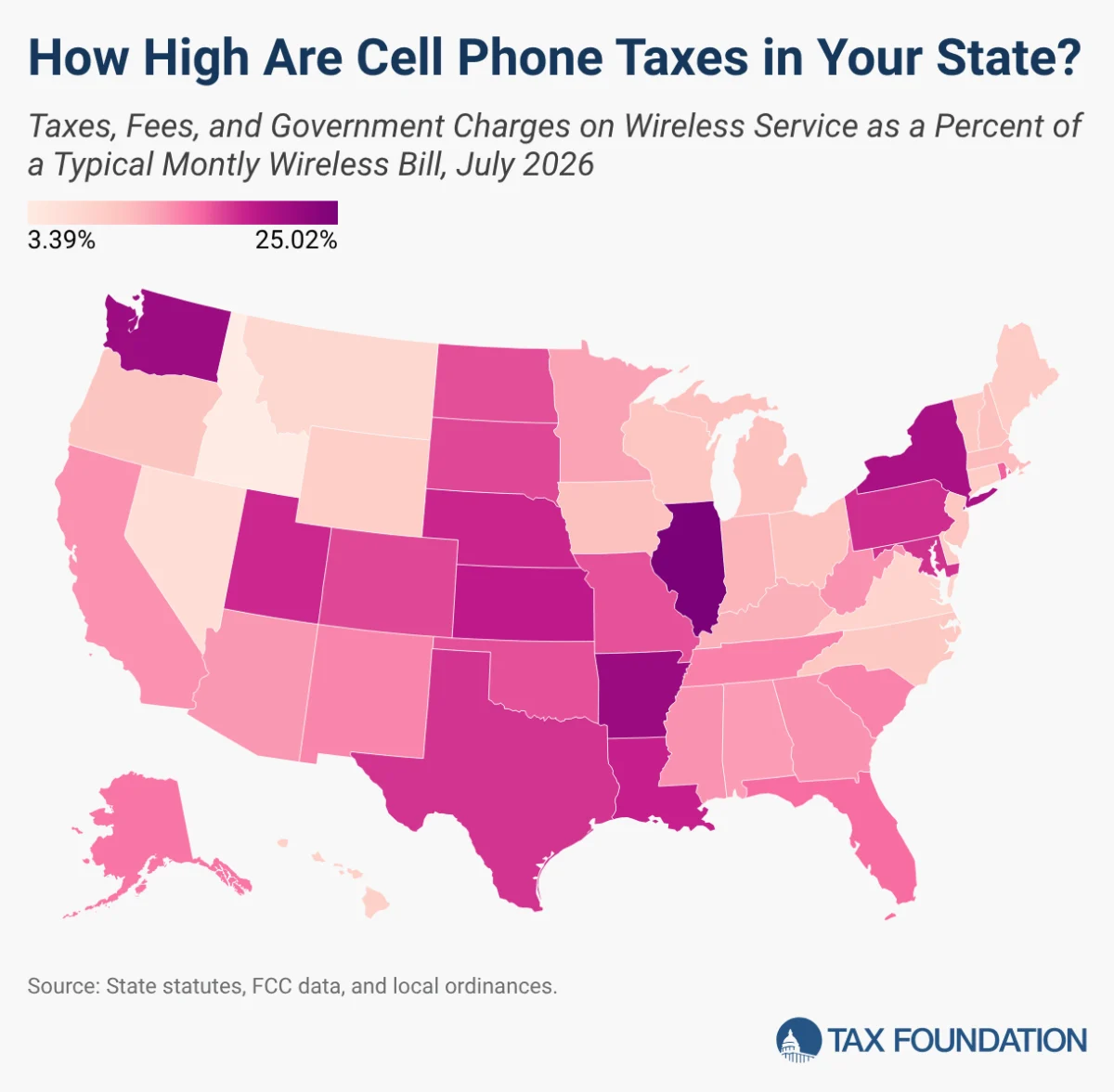
Wireless services, increasingly serving as the primary, and often sole, conduit for communication and internet connectivity for millions of Americans, particularly among younger demographics and low-income households, are facing an escalating burden of government taxes and fees. Projections indicate that by 2026, a typical American household subscribing to a shared plan with four mobile phones, incurring a monthly taxable service charge of $100, will pay approximately $345 annually in various government-imposed levies. This figure represents an increase from $330 in 2025, continuing a persistent upward trajectory of costs that directly contribute to higher consumer bills, despite a highly competitive market driving down baseline service prices.
The Paradox of Wireless Pricing: Falling Service Costs vs. Soaring Taxes
The telecommunications sector has undergone a profound transformation over the past two decades, characterized by fierce competition among carriers, rapid technological advancements, and innovative service offerings. This dynamic environment has demonstrably benefited consumers through a steady decline in the average price of wireless services. Industry data reveals a significant drop in the average monthly revenue per wireless line, plummeting from $50.64 to $33.14 over this period. This remarkable reduction in the core cost of wireless access underscores the efficiency and competitiveness of the market.
However, this consumer-friendly trend has been significantly counteracted by an unchecked proliferation of taxes, fees, and government surcharges. Over the same two decades that service prices have fallen, the proportion of a monthly wireless bill dedicated to taxes has surged dramatically, escalating from 16.2 percent to a staggering 28.8 percent. This creates a challenging paradox for consumers: while the underlying cost of their wireless service is decreasing, the total amount they pay is increasingly inflated by government mandates, often eroding the financial benefits of market competition.
Record Tax Levels Driven by Federal and State Surcharges
The recent escalation in wireless taxes to their highest levels ever is primarily attributable to two key factors: a further increase in the federal Universal Service Fund (FUSF) surcharge rate and a modest but consistent rise in state and local taxes. The FUSF surcharge, a mandatory contribution intended to subsidize telecommunications services in rural and high-cost areas, as well as for schools, libraries, and low-income consumers, saw its rate climb from 13.26 percent to 14.39 percent. Concurrently, the average state and local tax burden on wireless services edged up from 14.25 percent to 14.42 percent, reflecting a patchwork of diverse state and municipal impositions.
The FUSF, established under the Telecommunications Act of 1996, aims to ensure "affordable telecommunications services for all Americans." While its objective is broadly supported, its funding mechanism, which relies on a percentage of interstate and international telecommunications revenues, has seen its contribution factor fluctuate significantly. As traditional landline revenues decline and the definition of "telecommunications services" evolves, the burden increasingly falls on wireless subscribers. Industry experts and consumer advocacy groups have frequently voiced concerns about the transparency and efficiency of FUSF disbursements, alongside the regressive nature of its collection.
A Patchwork of State and Local Levies: From 911 to 988 Fees
With nearly 600 million wireless subscriber connections across the United States, the collective financial impact of these taxes is substantial. Wireless subscribers are projected to contribute approximately $11.4 billion to state and local governments in 2026 through these various charges. These levies extend beyond traditional sales taxes to include a range of specific fees, each with its own designated purpose.
One of the most common impositions is the 911 fee, a flat, per-line tax levied by most states and localities to fund the capital and operational expenses of emergency dispatch systems. These fees exhibit considerable variability, ranging from no charge in many Missouri counties to a hefty $5.00 per line per month in cities like Chicago. This disparity highlights the localized nature of emergency service funding and the differing approaches taken by jurisdictions.
A more recent addition to consumer bills is the 988 tax. Mandated by the FCC in 2021, the three-digit number 988 was designated nationally for suicide prevention hotlines. Federal legislation subsequently authorized states to impose specific 988 taxes to cover the costs associated with establishing and operating these crucial crisis hotline centers. Virginia led the way in 2021, implementing a $0.12 per line per month charge. Since then, at least ten additional states have followed suit, adding another layer of taxation onto wireless consumers, underscoring a trend where critical public services are increasingly funded through targeted levies on telecommunications.
Beyond these specific charges, nearly half of all states impose their own State Universal Service Fund (SUSF) charges, mirroring the federal FUSF in their aim to provide subsidies for similar purposes within state borders. Historically, both FUSF and SUSF charges were percentage-based on interstate and intrastate revenues, respectively. However, a notable shift has occurred, with some states transitioning to a per-line SUSF imposition. This change has had significant implications, particularly for multi-line wireless plans, where the per-line structure can result in a disproportionately higher burden compared to a percentage-based charge on the total bill.
Furthermore, 13 states impose additional wireless taxes that either supplement existing sales taxes or act as a substitute, often at a higher rate. This complex array of charges contributes to the overall opacity of wireless bills for consumers. In a rare reversal of this trend, the Maine legislature voted in 2025 to repeal its Service Provider Tax, which had previously imposed a higher state tax rate on wireless services, signaling a potential shift in some states towards alleviating consumer burdens.
Geographic Disparities: Highest and Lowest Tax Burdens
The combined impact of state and local tax burdens on wireless services varies dramatically across the United States, creating significant geographic disparities for consumers. Data indicates that Illinois carries the highest wireless tax burden in the nation, with state and local rates exceeding 25.0 percent. This makes wireless services notably more expensive for residents of Illinois compared to other states. Following Illinois, Arkansas ranks second with a 22.0 percent tax rate, and Washington state is close behind at 21.9 percent. These states exemplify jurisdictions where a combination of general sales taxes, specific excise taxes, and various fees coalesce to create a substantial cumulative burden.
Conversely, Idaho enjoys the distinction of having the lowest wireless taxes and fees, levying a mere 3.4 percent. This significantly lower rate provides a substantial financial advantage to Idaho residents for their wireless services. Nevada follows as the second lowest at 6.1 percent, with Montana close behind at 7.1 percent. These states often benefit from either lower general sales tax rates, fewer specific wireless-targeted fees, or a more consolidated approach to telecommunications taxation. The stark contrast between these high and low tax states underscores the significant policy choices made at the state and local levels regarding how essential services are funded and how those costs are distributed among consumers.
Methodology and the Permanent Internet Tax Freedom Act
The calculation of these tax rates involves converting flat-rate impositions, such as a fixed per-line 911 fee, into a percentage. This is achieved by using the average monthly industry revenue per line, as tracked by the Cellular Telecommunications and Internet Association (CTIA), a leading industry trade group. This standardized methodology allows for an apples-to-apples comparison of the total tax burden across different states and types of charges.
A critical federal safeguard in the telecommunications landscape is the Permanent Internet Tax Freedom Act (PITFA). This landmark legislation prohibits state and local governments from imposing taxes on internet access services, including wireless internet access. Without PITFA, the high excise tax rates currently applied to traditional taxable wireless services could potentially be extended to internet access, leading to significantly higher consumer tax burdens and potentially widening the digital divide. PITFA’s existence is a testament to the recognition that internet access is a fundamental enabler of modern life and commerce, and should not be subject to the same targeted, often regressive, taxation as other telecommunications services.
Economic and Social Implications: A Call for Prudent Policymaking
Policymakers face a delicate balancing act when considering the expansion of wireless taxes, fees, and government surcharges. The arguments against such expansion are compelling and multifaceted, touching upon issues of equity, economic growth, and essential service access.
Firstly, wireless taxes are inherently regressive, meaning they consume a larger proportion of income from low-income consumers compared to high-income consumers. This disproportionate impact is particularly concerning given that wireless services often represent the sole means of communication and internet access for many low-income households, effectively replacing traditional landlines and often serving as the primary internet connection. Excessive taxes and fees elevate the cost of this essential service, potentially exacerbating the digital divide and limiting access to critical information, education, employment opportunities, and healthcare services. Consumer advocacy groups, such as the National Consumer Law Center, frequently highlight how these taxes disproportionately burden those who can least afford them, urging policymakers to consider alternative, more equitable funding mechanisms for public services.
Secondly, discriminatory taxes on wireless services can impede crucial investment in wireless infrastructure. Robust and expanding wireless networks are not merely conveniences; they are foundational pillars of the modern economy. Ample evidence demonstrates that investments in wireless networks yield substantial economic benefits across a vast array of sectors, including transportation, healthcare, energy, education, and even government operations. These networks boost productivity, enhance efficiency, and foster innovation. The economic resilience demonstrated during the COVID-19 pandemic, where wireless networks enabled remote work, virtual education, and telehealth services, underscored their indispensable role. These trends have continued in the post-pandemic era, with network investment remaining critical not only for direct users but for the entire American economy’s competitiveness and growth. Industry leaders, including representatives from CTIA, consistently advocate for tax policies that encourage, rather than hinder, the continuous investment required to build out 5G and future-generation networks.
The debate centers on the appropriate method for funding public services. While applying a broad-based consumption tax, such as a sales tax, to wireless services is generally considered appropriate, the imposition of excessive targeted excise taxes on wireless services lacks the traditional justifications often associated with such levies. Excise taxes are typically applied to goods or activities that either generate social costs (e.g., tobacco, alcohol) or adhere to a "user-pays" principle (e.g., gasoline taxes for road maintenance). Wireless services, while essential, do not inherently fit these traditional justifications in a way that warrants the current level of targeted taxation. The Tax Foundation, a leading independent tax policy research organization and the source of much of this analysis, consistently argues that such targeted taxation raises consumer costs, discourages vital investment, and often lacks a clear policy rationale beyond revenue generation.
The ongoing trend of increasing wireless taxes and fees presents a significant challenge for policymakers. Striking a balance between funding essential public services—from emergency response to mental health support and universal connectivity—and ensuring that wireless services remain affordable and accessible for all Americans, while also fostering an environment conducive to continued infrastructure investment, will require thoughtful and comprehensive policy solutions that move beyond the current reliance on an escalating and often regressive tax burden on wireless consumers.