Layla Zulfa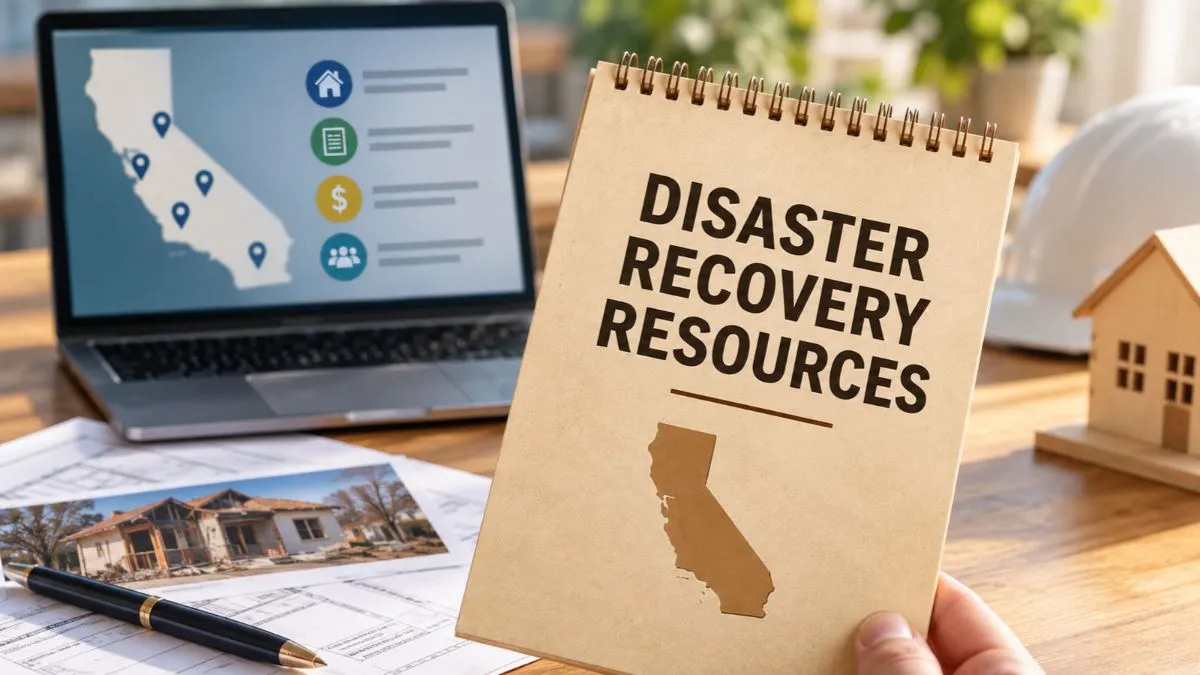
The aftermath of a natural disaster presents a complex and often overwhelming challenge for affected homeowners. While government agencies, financial institutions, and construction professionals may diligently work behind the scenes, the fractured nature of disaster recovery systems can leave individuals adrift, struggling to navigate a labyrinth of processes and requirements. The core issue, as highlighted by Paul Gigliotti, CEO of the California Mortgage Bankers Association (CMBA), is that even the most well-intentioned programs and policies can falter if the end recipient, the disaster-affected homeowner, cannot effectively access or understand them. This fundamental disconnect underscores a critical gap in disaster recovery efforts: the translation of policy into tangible, actionable assistance for those who need it most.
The inherent complexity of disaster recovery stems from the multitude of stakeholders involved and the disparate systems they operate within. A homeowner, reeling from the loss of their home, is suddenly thrust into the role of an unwilling project manager. They must contend with an insurance claim, an existing mortgage, potential forbearance agreements, the intricate requirements of loss-draft disbursements for rebuilding, securing construction financing, obtaining necessary permits from local governments, and navigating applications for public assistance programs. This multifaceted burden, often compounded by the emotional and financial toll of the disaster itself, is an unreasonable expectation for any family. The system, though populated with dedicated individuals and organizations, often fails due to a lack of cohesive coordination and a clear, accessible pathway for the homeowner.
Gigliotti’s tenure at the CMBA has been marked by a commitment to advocacy rooted in collaboration and education. He posits that effective advocacy transcends mere lobbying at the state Capitol; it requires a deep understanding of how policies will perform in the real world and a commitment to ensuring those policies are not only well-designed but also practically implementable for the intended beneficiaries. This principle has become increasingly vital in the wake of escalating natural disasters, such as the devastating wildfires that have repeatedly ravaged California.
The California Disaster Rebuilding Assistance Program, a $100 million initiative administered by the California Housing Finance Agency (CalHFA), exemplifies a significant public investment aimed at bridging the financial gap in rebuilding efforts. The program utilizes strategies such as construction-loan interest-rate buydowns and loan-loss guarantees to assist eligible homeowners whose insurance payouts fall short of the actual costs of reconstruction. This program represents a substantial commitment of state resources and a crucial response to a pressing need. However, the efficacy of such a program is ultimately measured not by its line item in the state budget, but by its tangible impact on the ground for individual families.
For a homeowner facing the daunting task of rebuilding, a program’s existence is not immediately apparent. Instead, their experience is filtered through a series of practical, often urgent, questions: "Do I qualify for this assistance?" "Which lenders are participating in this program?" "What specific documentation do I need to provide?" "How does this program interact with my existing insurance settlement?" "What happens if my situation doesn’t perfectly fit the program’s criteria?" and most critically, "Who will guide me through this process and help me understand the next steps?" These questions are not peripheral concerns; they are the very determinants of whether a policy translates into actual recovery or remains an abstract piece of legislation.
Recognizing this critical chasm between policy and practical application, the CMBA, in collaboration with Prudent AI and a consortium of participating lenders and public-sector partners, has spearheaded the development of the California Disaster Rebuilding Portal. Accessible at HomeRebuildNetwork.org, this digital platform aims to provide disaster-affected residents with a consolidated and transparent starting point. Its objective is to simplify the process of identifying potential rebuilding finance options and to directly connect individuals with relevant lenders and recovery resources. While technology is not a panacea for all disaster recovery challenges, it can serve as a powerful tool to transform a fragmented and confusing information landscape into a single, accessible entry point.
This collaborative, user-centric approach will be further amplified at the upcoming California Natural Disaster Recovery and Rebuild Forum in Los Angeles on October 5th. This event will feature a public Recovery Resource Exchange designed to bring affected residents into direct contact with the array of agencies and professionals involved in every facet of the rebuilding process. Attendees will have the opportunity to engage with representatives from city and county permitting and planning offices, mortgage lenders and servicers, insurance adjusters, construction companies, and other disaster recovery specialists. The forum aims to empower families by enabling them to ask specific questions about their individual circumstances, establish direct connections with the appropriate resources, and leave with a clearer understanding of their path forward. The underlying principle is not merely to host another event, but to significantly reduce the time and effort required for a homeowner to obtain a practical and helpful answer to their recovery needs.
This initiative represents a tangible manifestation of "innovating advocacy through collaboration." It signifies a shift for industry associations from solely acting as a voice for their members in legislative arenas to actively convening diverse stakeholders and fostering sustained engagement to identify and address systemic gaps. This collaborative model is powered by the willingness of CMBA members and partner organizations to contribute their expertise, technological capabilities, time, and established relationships. The financial contributions of association members, therefore, extend beyond simply funding a lobbying presence in Sacramento; they are instrumental in building the necessary infrastructure, ensuring access to critical resources, and facilitating concrete action for the communities that the industry serves.
The relevance of this collaborative model extends far beyond a single forum or a specific state. While each state possesses unique legal frameworks, administrative agencies, disaster risks, and community needs, necessitating localized leadership, the underlying principle of connecting public policy with industry execution and providing consumers with a clear point of access is universally applicable. Building these crucial relationships before the next disaster strikes is paramount to ensuring a more resilient and effective recovery process.
Industry associations, according to this perspective, do not need to directly administer every program or originate every loan. Their crucial role lies in their ability to convene the entities that can perform these functions. Furthermore, they must be adept at identifying where handoffs between different stages of the recovery process fail, bringing these systemic issues back to policymakers, and actively contributing to the translation of complex solutions into actionable steps that families can readily utilize.
Ultimately, the true measure of successful advocacy is not the number of bills passed, budget allocations secured, or press releases issued. It is the tangible impact on the lives of individuals and families. The ultimate test of advocacy lies in whether a disaster-affected homeowner can confidently answer the question, "What do I do next?" on a Monday morning. This is the benchmark for effective recovery efforts, and it is upon this standard that the work of organizations like the CMBA truly begins.
The increasing frequency and intensity of natural disasters in recent years, from the devastating California wildfires of 2017, 2018, and 2020, which impacted millions of acres and displaced thousands, to the widespread flooding and hurricanes on the East Coast, have underscored the urgent need for more robust and accessible recovery systems. For instance, following the 2017 Northern California wildfires, which destroyed over 8,900 structures, many residents faced a protracted recovery process, with challenges in accessing insurance funds and navigating rebuilding permits. Similarly, communities affected by the 2018 Camp Fire, the deadliest and most destructive in California history, experienced significant delays in debris removal and rebuilding efforts, highlighting the need for streamlined processes and better coordination. The current approach, by focusing on connecting disparate elements of the recovery ecosystem, aims to prevent such prolonged suffering and uncertainty for future victims. The development of the HomeRebuildNetwork.org portal is a direct response to these observed inefficiencies. This initiative, built upon the lessons learned from past disaster recovery efforts, seeks to provide a more proactive and centralized resource for homeowners facing the daunting task of rebuilding their lives and communities. The proactive nature of this approach, engaging stakeholders before a disaster strikes and building the infrastructure for a coordinated response, represents a significant evolution in disaster recovery advocacy.