Nila Kartika Wati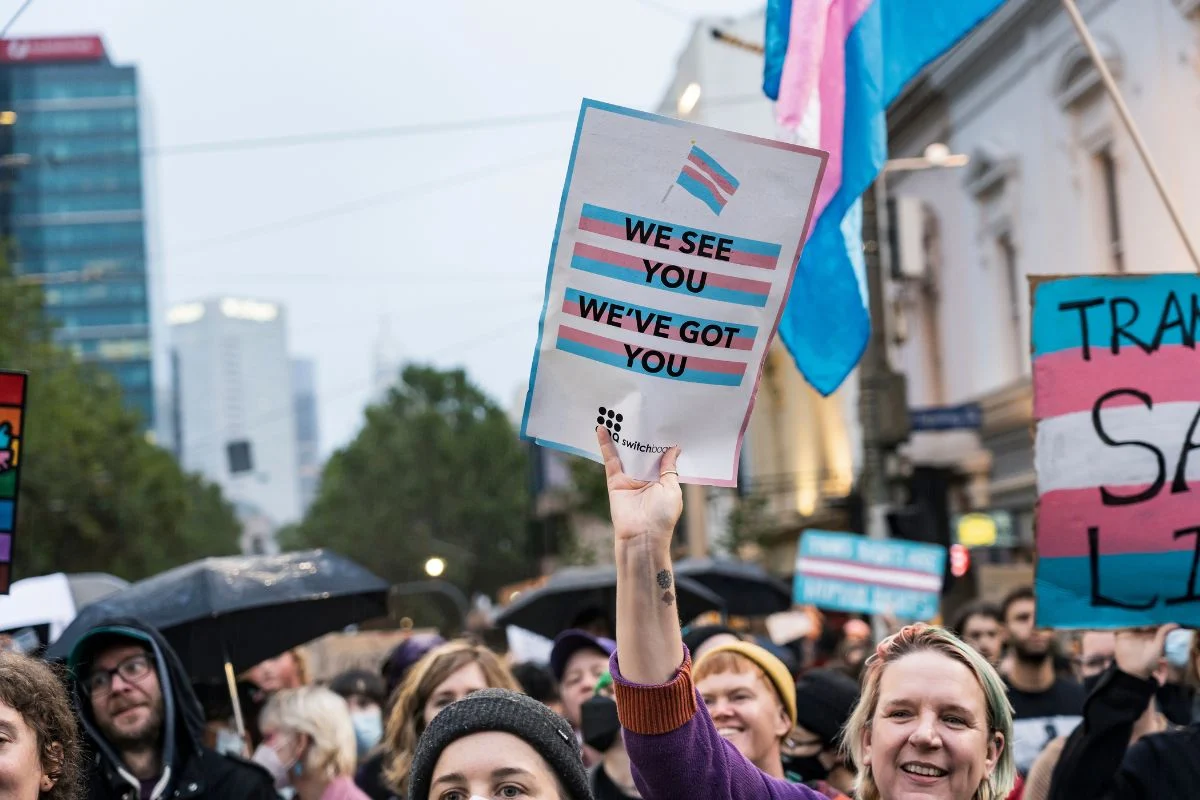
In a significant shift from the political landscape of the late 20th century, disability rights organizations and LGBTQ+ advocacy groups have formed a unified front to challenge a proposed federal rule that would strip transgender individuals of protections under the Americans with Disabilities Act. This burgeoning alliance marks a historic departure from 1989, when the foundational civil rights law was negotiated through a compromise that explicitly excluded transgender people to secure conservative support. Today, as the Trump administration moves to formalize these exclusions through executive regulation, the advocates who once felt forced to compromise are standing alongside a new generation of legal scholars to argue that such rollbacks are not only discriminatory but also unconstitutional.
The conflict centers on the interpretation of the Americans with Disabilities Act (ADA), the landmark 1990 legislation designed to prevent discrimination against individuals with physical and mental impairments in all areas of public life, including jobs, schools, and transportation. While the original text of the law contained specific exclusions for "transsexualism" and "gender identity disorders," recent federal court rulings and guidance from the Biden administration had established that gender dysphoria—a clinically significant distress resulting from a mismatch between one’s gender identity and assigned sex—qualifies as a protected disability. The Trump administration’s new proposal seeks to reverse this progress, prompting a fierce legal and social debate over the definition of disability and the limits of executive power.
The 1989 Compromise: A History of Political Expediency
To understand the current tension, one must look back to the high-stakes negotiations on the U.S. Senate floor in 1989. At the time, the ADA was a revolutionary concept, but its passage was far from guaranteed. Conservative lawmakers, wary of the law’s scope, demanded the exclusion of various conditions they deemed morally or socially unacceptable.
Chai Feldblum, a lead negotiator for disability advocates at the time and a former commissioner of the Equal Employment Opportunity Commission (EEOC), recalls the atmosphere as one of intense pressure. Republican senators initially circulated an amendment that would have excluded nearly 50 psychiatric conditions, along with homosexuality. As a lesbian and a civil rights attorney for the ACLU, Feldblum fought to remove homosexuality from the list, arguing that it was not a disability and should never have been characterized as such.
However, the "political reality," as Feldblum describes it, required a bitter trade-off. To prevent a much longer list of exclusions that would have gutted the act’s protections for mental health, advocates agreed to the inclusion of eight specific exceptions. These included "transsexualism," "transvestism," and "gender identity disorders not resulting from physical impairments." Feldblum noted that the decision, which took only minutes to finalize in a side room of the Senate, left many in the LGBTQ+ community feeling betrayed. Senator Ted Kennedy, a primary co-author of the ADA, expressed at the time that while he did not support the exclusions, they were a compromise the movement "could live with" to ensure the broader bill’s passage.
Evolution of the Law: The 2008 Amendments and Judicial Shifts
The legal landscape remained relatively stagnant for two decades until the passage of the ADA Amendments Act (ADAAA) of 2008. This legislation, negotiated by a coalition of disability groups and employer organizations, was intended to correct a series of Supreme Court decisions that had narrowly interpreted the definition of disability. The 2008 Act explicitly stated that the definition of disability should be construed broadly in favor of expansive coverage.
This shift in legislative intent provided the groundwork for modern litigation. Furthermore, the medical community’s understanding of gender identity evolved significantly. In 2013, the American Psychiatric Association replaced "Gender Identity Disorder" with "Gender Dysphoria" in the Diagnostic and Statistical Manual of Mental Disorders (DSM-5). This was a crucial distinction; while the former was a diagnostic label for an identity, the latter focused on the clinically significant distress associated with the condition—a nuance that legal scholars argue removes it from the ADA’s original 1990 exclusions.
In 2022, the U.S. Court of Appeals for the Fourth Circuit became the first federal appellate court to rule that gender dysphoria is protected under the ADA. In the case Williams v. Kincaid, the court found that the ADA’s exclusion of "gender identity disorders" did not apply to gender dysphoria because the latter is a distinct medical condition characterized by intense distress and often physical impairments. This ruling was hailed as a landmark victory, effectively bringing transgender people under the umbrella of federal disability protections for the first time.
The Trump Administration’s Regulatory Counter-Offensive
The current administration has moved swiftly to dismantle these protections. Health and Human Services (HHS) Secretary Robert F. Kennedy Jr. recently announced a proposed rule aimed at codifying the exclusion of transgender-related conditions from federal disability laws. During an agency event, Secretary Kennedy framed the move as a measure to "protect children" and combat what he termed "transgender ideology."
Kennedy argued that the inclusion of gender dysphoria under the ADA serves the "commercial interest of a predatory, multibillion-dollar industry." By invoking the name of his uncle, Senator Ted Kennedy, the Secretary suggested that the Biden-era expansions "betrayed the original intention" of the law’s authors. However, legal experts and those present during the 1990 negotiations, like Feldblum, have publicly contested this narrative, noting that the original exclusions were a product of coercion rather than intent.
The administration’s strategy relies on a strict, originalist interpretation of the 1990 text. Kevin Barry, a professor of law at Quinnipiac University who helped negotiate the 2008 ADAAA, argues that the administration is attempting to use terms that are medically obsolete to justify broad discrimination. Barry contends that the 2008 mandate for broad construction supersedes the narrow exceptions carved out in the 1990s.
The Impact on Workplace and Public Accommodations
For transgender individuals, the loss of ADA protections has immediate, practical consequences. Disability protections provide a framework for "reasonable accommodations," which are essential for maintaining employment and accessing public services.
Ezra Young, a legal scholar and litigator, emphasizes that these protections are "opt-in." Not every transgender person identifies as disabled, and not all experience gender dysphoria. However, for those who do, the ADA offers a vital shield. Young cites examples such as workplace dress codes that might trigger intense dysphoria, or the need for medical leave related to gender-affirming care. Under the ADA, an employer would be required to engage in an "interactive process" to find a solution—such as allowing a different cut of a uniform or adjusting a schedule—provided it does not cause "undue hardship."
Without these protections, transgender employees in many states could be fired or denied accommodations with little legal recourse, especially in jurisdictions without explicit state-level LGBTQ+ protections. Currently, only 23 states and the District of Columbia have laws that clearly prohibit discrimination based on gender identity in employment. In the remaining states, the ADA serves as the primary federal safeguard.
A Unified Front: The Strength of Cross-Movement Solidarity
The most notable development in this legal battle is the solidarity between the disability and LGBTQ+ communities. Claudia Center, legal director of the Disability Rights Education and Defense Fund (DREDF), emphasizes that the movement’s core principle is the broad application of civil rights. "We don’t exclude people from protections based on disability… we don’t agree with disabilities that are unpopular not being covered by our laws," Center stated.
This alliance is built on the realization that if the executive branch can successfully "slice out" one group from a civil rights statute through regulation, the integrity of the entire law is at risk. Ma’ayan Anafi, senior counsel at the National Women’s Law Center, noted that there is no evidence the disability community ever sought the 1990 exclusions. Instead, the community now views the inclusion of transgender people as a natural extension of the fight for universal dignity and access.
Legal Prospects and Constitutional Challenges
Legal experts agree that the Trump administration’s proposed rule is likely to face immediate challenges in court. The primary argument against the rule is that an administrative agency cannot override judicial precedent or congressional intent through the rulemaking process.
"The Trump administration cannot make laws through regulation," Ezra Young noted, pointing out that if the administration wishes to permanently exclude gender dysphoria, it would require an act of Congress to amend the ADA—a difficult prospect given the current political divide. Furthermore, legal scholars argue that if the 1990 exclusions are interpreted as broadly as the administration suggests, they may violate the Equal Protection Clause of the Fourteenth Amendment by targeting a specific class of people for disparate treatment without a rational basis.
As the public comment period for the proposed rule nears, advocacy groups are preparing for a protracted legal battle. The outcome will likely determine the scope of federal civil rights for millions of Americans and define the boundaries of executive authority in interpreting long-standing legislative mandates. For the advocates who remember the compromises of 1989, the current fight is not just about a specific regulation; it is about rectifying a decades-old injustice and ensuring that the promise of the ADA applies to all, regardless of the "popularity" of their condition.