Candice Horbacz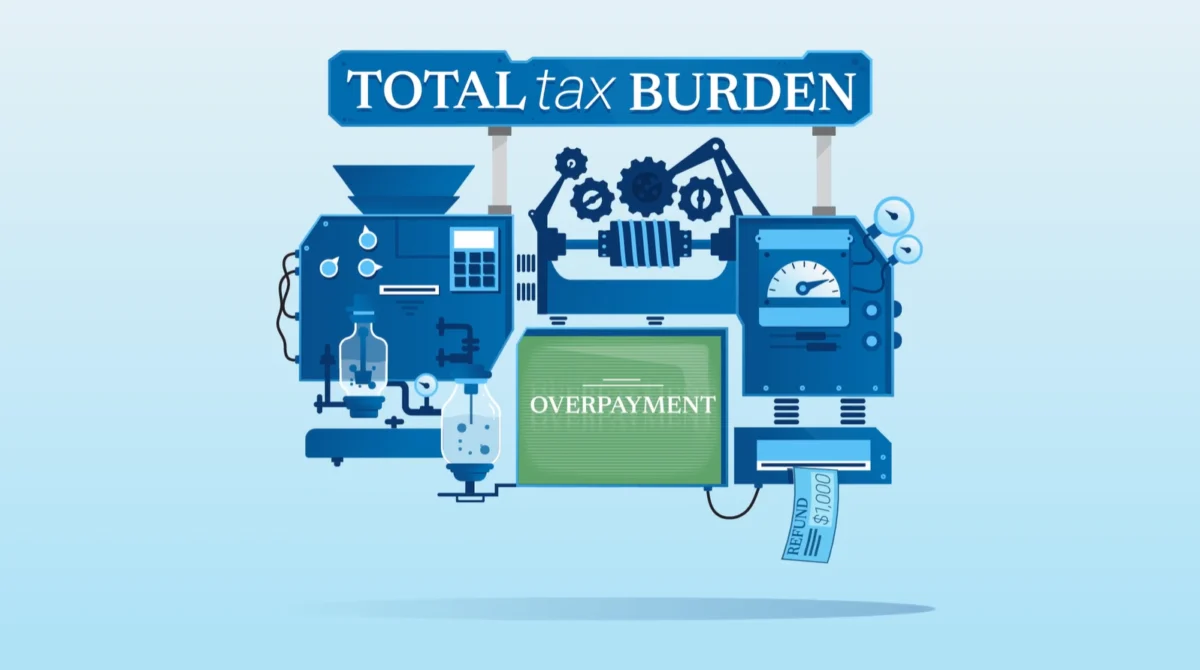
Every tax season, millions of Americans eagerly anticipate a refund or brace themselves for a payment due, often interpreting these outcomes as direct indicators of whether their tax obligations have increased or decreased from the previous year. However, this common perception can be misleading. The actual amount received as a refund or paid as a bill at filing time primarily reflects the accuracy of income tax withholdings throughout the year, rather than a definitive measure of one’s total tax burden. Understanding this crucial distinction is fundamental to grasping personal financial health and the intricate mechanics of the U.S. tax system.
The Core Misconception: Refunds, Bills, and True Tax Liability
The prevailing notion that a tax refund signifies a lower tax burden, or a payment due means higher taxes, is a significant misconception. In reality, the end-of-year adjustment—whether a refund or a balance due—is largely a reconciliation of estimated payments or employer withholdings against the actual tax liability calculated at the close of the tax year. When an individual receives a refund, it typically means they overpaid their taxes throughout the year, essentially providing an interest-free loan to the government. Conversely, owing taxes indicates that insufficient funds were remitted over the preceding twelve months. Neither scenario inherently dictates whether the total amount of taxes for which one is responsible—the "tax burden"—has intrinsically shifted upwards or downwards.
The true tax burden is a far more complex calculation, encompassing gross income, various deductions, exemptions (historically, though largely eliminated for individuals by the Tax Cuts and Jobs Act of 2017), exclusions, and credits. It represents the total amount of tax liability an individual incurs based on their specific financial circumstances for that particular year, regardless of when or how those taxes were paid.
The Mechanics of Tax Withholding and Estimated Payments
The U.S. federal income tax system operates largely on a "pay-as-you-go" principle. For most wage earners, this involves employer withholding, where a portion of each paycheck is sent directly to the Internal Revenue Service (IRS). The amount withheld is determined by the information provided on Form W-4, Employee’s Withholding Certificate. This form allows employees to adjust their withholding based on their expected deductions, credits, and other income sources. An accurate W-4 helps ensure that the amount withheld closely matches the actual tax liability. If too much is withheld, a refund results; if too little, a payment is due.
For self-employed individuals, freelancers, and those with significant income not subject to withholding (e.g., interest, dividends, capital gains), the "pay-as-you-go" system mandates making quarterly estimated tax payments using Form 1040-ES. Similar to withholding, the accuracy of these estimated payments directly influences the outcome at tax filing time. Underpayment can lead to penalties, underscoring the importance of precise estimations.
The Nuances of Tax Refunds: Beyond Simple Overpayment
While over-withholding is the most common reason for a tax refund, refundable tax credits play an equally significant, and often more impactful, role for many taxpayers. Unlike non-refundable credits, which can only reduce a tax liability to zero, refundable credits can result in a payment from the government even if the taxpayer’s tax liability is already zero or negative.
Key refundable tax credits include:
- Earned Income Tax Credit (EITC): A benefit for low-to moderate-income working individuals and families, particularly those with children. Its amount varies significantly based on income, marital status, and number of qualifying children, potentially providing thousands of dollars in refunds.
- Child Tax Credit (CTC): While primarily non-refundable, a portion of the CTC has historically been refundable (the Additional Child Tax Credit, or ACTC), and its refundable component was significantly expanded in certain periods, such as during the COVID-19 pandemic.
- Premium Tax Credit (PTC): Helps eligible individuals and families afford health insurance purchased through the Health Insurance Marketplace. This credit can be paid in advance to the insurer or claimed when filing taxes, often leading to a refund if less was paid in advance than the taxpayer qualified for.
The existence of these refundable credits means that a refund check does not necessarily imply that the taxpayer’s overall income tax burden was positive before the credit was applied. For instance, a taxpayer with a calculated tax liability of $500 who qualifies for a $1,000 refundable credit would not only owe nothing but would receive a $500 refund. This mechanism highlights how a refund can be a deliberate policy tool to provide financial support to specific demographics, rather than just a simple return of overpaid taxes.
Why You Might Owe Taxes: Factors Beyond Rising Rates
When a taxpayer finds themselves owing money to the IRS at filing time, it’s natural to assume their taxes have gone up. However, this is often a consequence of several factors related to insufficient payments throughout the year:
- Inaccurate W-4 Form: Many taxpayers fail to update their W-4 after significant life changes (marriage, divorce, new child, second job) or incorrectly estimate deductions, leading to insufficient withholding.
- Multiple Jobs or Households with Two Incomes: The withholding system, particularly before recent W-4 revisions, could struggle to accurately account for combined incomes from multiple jobs or spouses, often leading to under-withholding if not carefully adjusted.
- Unexpected Income: Bonuses, stock options, capital gains from investments, or a sudden increase in freelance income may not be adequately covered by regular withholding or estimated payments.
- Changes in Deductions or Credits: A reduction in eligible deductions (e.g., no longer paying student loan interest, lower medical expenses) or the loss of certain credits can increase tax liability without a corresponding adjustment in withholding.
- Insufficient Estimated Payments: Self-employed individuals or those with substantial investment income might underestimate their earnings or forget to make timely quarterly payments.
Calculating Your True Tax Burden: A Deeper Dive
To truly understand whether one’s tax burden has increased or decreased, taxpayers must look beyond the refund or payment figure and calculate their total tax liability. This involves several steps:
- Gross Income: All income from wages, salaries, tips, interest, dividends, capital gains, business income, retirement distributions, and other sources.
- Adjusted Gross Income (AGI): Gross income minus certain "above-the-line" deductions, such as contributions to traditional IRAs, student loan interest, and self-employment tax deductions. AGI is a critical figure as it often determines eligibility for various credits and deductions.
- Deductions: Taxpayers can choose between the standard deduction (a fixed amount based on filing status, adjusted for inflation annually) or itemized deductions (specific expenses like state and local taxes, mortgage interest, charitable contributions, and medical expenses exceeding a certain threshold). The Tax Cuts and Jobs Act of 2017 significantly increased the standard deduction, leading fewer taxpayers to itemize.
- Taxable Income: AGI minus deductions. This is the amount subject to federal income tax rates.
- Tax Liability: Calculated by applying the progressive federal income tax rates to taxable income. This figure represents the amount owed before any credits.
- Tax Credits: These directly reduce the tax liability dollar-for-dollar. Non-refundable credits (e.g., child and dependent care credit, education credits) can reduce the tax liability to zero but cannot result in a refund. Refundable credits, as discussed, can generate a refund.
After accounting for all these factors, the resulting figure is the total tax burden for the year. Comparing this figure year-over-year provides an accurate assessment of whether one’s tax obligations have truly changed, independent of withholding adjustments.
Historical Context and Policy Implications
The "pay-as-you-go" system of income tax withholding was largely institutionalized in the United States during World War II, initially as a temporary measure to fund the war effort. It proved so effective in ensuring consistent revenue flow and simplifying tax collection for the vast majority of citizens that it became a permanent fixture.
Major tax reforms throughout history have often impacted withholding tables and, consequently, refund/payment patterns. For example, the Tax Reform Act of 1986 simplified the tax code by reducing the number of tax brackets and lowering the top marginal rate, which influenced how employers withheld taxes. More recently, the Tax Cuts and Jobs Act (TCJA) of 2017 brought about sweeping changes, including lower individual income tax rates, an increased standard deduction, and the elimination of personal exemptions. These changes necessitated revisions to the W-4 form and withholding tables. In the immediate aftermath of the TCJA, many taxpayers saw their take-home pay increase due to reduced withholding, but some were surprised to find they owed taxes at the end of the year because their withholding adjustments didn’t fully account for all the changes, particularly the loss of certain itemized deductions or the increased standard deduction. This further cemented the disconnect between payroll withholding and final tax liability in the public consciousness.
The IRS continually works to refine its withholding guidelines and tools. The IRS Tax Withholding Estimator (formerly the W-4 Calculator) is a crucial online resource designed to help taxpayers accurately adjust their withholding, especially after life changes or significant tax law modifications.
Expert Perspectives and Proactive Tax Planning
Financial advisors and tax professionals consistently emphasize the importance of proactive tax planning. "The goal should always be accuracy, not necessarily a large refund or owing nothing," states Sarah Jenkins, a certified financial planner. "A significant refund means you’ve essentially given the government an interest-free loan throughout the year, money that could have been earning interest for you or used to pay down debt. Conversely, owing a substantial amount can strain personal finances and potentially incur penalties."
Tax experts recommend reviewing W-4 forms annually, particularly after any major life events like marriage, divorce, the birth or adoption of a child, a new job, or a significant change in income. For self-employed individuals, regular monitoring of income and expenses, along with timely estimated tax payments, is paramount to avoid underpayment penalties. Utilizing tools like the IRS Tax Withholding Estimator can provide personalized guidance.
Broader Economic Implications
The phenomenon of tax refunds has broader economic implications. Annually, billions of dollars are returned to taxpayers in the form of refunds. This influx of cash can stimulate consumer spending, providing a temporary boost to retail sales, home improvements, and other sectors of the economy. Surveys often show that taxpayers use refunds for a variety of purposes, including savings, debt reduction, or major purchases. From a governmental perspective, while refunds represent a temporary overcollection of revenue, the "pay-as-you-go" system ensures a steady stream of funds throughout the year, crucial for government operations and budgeting.
Conclusion
In conclusion, the outcome of tax filing—whether a refund is received or a payment is due—is primarily a reflection of how effectively taxes were prepaid throughout the year. It serves as a reconciliation of accounts, not an inherent indicator of a changing tax burden. To accurately assess one’s true tax liability, individuals must consider their total income, deductions, and credits. A proactive approach to tax planning, including regular review of withholding settings and making timely estimated payments, is essential for financial well-being and for ensuring that the annual tax season brings clarity rather than confusion or unwelcome surprises. Understanding these fundamental principles empowers taxpayers to manage their finances more effectively and navigate the complexities of the tax system with greater confidence.