Nila Kartika Wati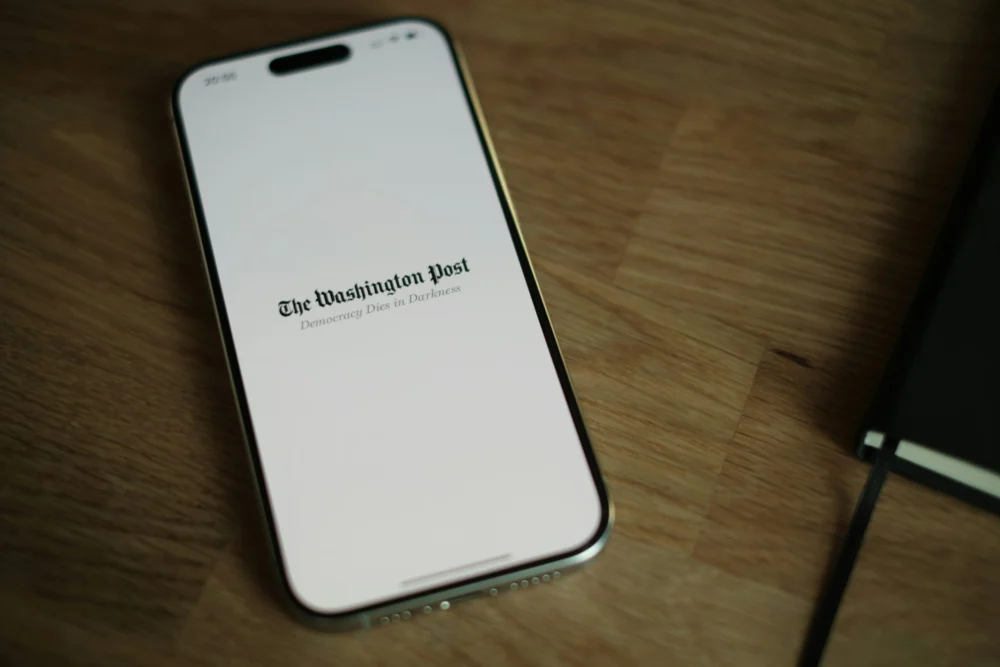
The restructuring of The Washington Post under the ownership of Amazon founder Jeff Bezos reached a critical inflection point on February 4, 2026, when the organization executed a reduction in force that eliminated at least 300 of its 800 journalistic positions. This substantial contraction represented a nearly 40 percent decrease in the newsroom’s workforce, signaling a fundamental shift in the operational philosophy of one of the United States’ most prominent "papers of record." The layoffs hit hardest in the international, local, and sports departments, while also resulting in the total dissolution of the standalone photo department and the dedicated book review section.
This institutional downsizing followed a series of controversial editorial and business decisions that analysts suggest fundamentally altered the paper’s relationship with its readership. Most notably, the decision to withhold an endorsement for the Democratic presidential nominee in 2024—a move attributed directly to Bezos—reportedly led to the cancellation of hundreds of thousands of digital subscriptions. Furthermore, Bezos’s subsequent announcement that the editorial board would pivot its focus toward "personal liberties and free markets" has been interpreted by media observers as a departure from the "Democracy Dies in Darkness" ethos that defined the paper’s brand during the first Trump administration.
A Chronology of Ownership and Strategy Shift
The trajectory of The Washington Post under Jeff Bezos began with significant optimism. Purchased in 2013 for $250 million, the paper initially benefited from Bezos’s technological expertise and willingness to invest in long-term growth. By 2017, the paper had returned to profitability, driven largely by a surge in digital subscriptions during a period of intense national political interest.
However, the period following the 2020 election saw a stagnation in growth that contrasted sharply with the performance of its primary competitor, The New York Times. While The Times successfully diversified its revenue streams through ancillary digital products—including the acquisition of Wordle, the growth of NYT Cooking, and the expansion of the Wirecutter consumer guide—The Post remained heavily tethered to political news cycles.
The timeline of the current crisis accelerated in late 2024. Following the endorsement controversy, internal morale plummeted, and the paper struggled to stem the tide of subscriber churn. By the time the February 2026 layoffs were announced, the organization was facing significant financial headwinds, leading to the decision to drastically narrow its editorial scope. Critics and former staffers have voiced concerns that the reduction in local and international coverage diminishes the paper’s ability to serve as a comprehensive watchdog, potentially leaving significant gaps in public accountability.
Comparative Performance and the Pivot to Diversification
The divergence between The Washington Post and The New York Times provides a case study in modern media economics. According to industry data, The New York Times reached over 10 million subscribers by mid-2024, with a significant portion of those users engaging with non-news products. This "bundle" strategy created a "sticky" ecosystem that insulated the company from the volatility of the political news cycle.
In contrast, The Washington Post’s strategy remained focused on its core news product. When political engagement waned among the general public, the lack of a diversified digital portfolio left the organization vulnerable. Analysis of the 2026 layoffs suggests that the cutting of the photo and book departments reflects a move toward a leaner, more text-centric digital model, though media experts warn this may further erode the "premium" feel that justifies high subscription costs.
The Resilience of Regional Journalism Models
While national outlets grapple with the pressures of billionaire ownership and global branding, a handful of large regional newspapers have established sustainable paths forward. These organizations offer alternative blueprints for the industry, emphasizing community-rooted stewardship over the pursuit of massive scale or high-margin corporate returns.
The Boston Globe: Regional Expansion and Niche Success
Owned by John and Linda Henry since 2013, The Boston Globe has pursued a strategy of geographic expansion and vertical diversification. The Globe has extended its coverage footprint into Rhode Island and New Hampshire, aiming to become a regional powerhouse for all of New England.
Beyond its core newsroom, the Globe’s investment in Stat, a digital publication focused on health and life sciences, has proven highly successful. Launched as a startup within the Globe’s ecosystem, Stat achieved profitability and national acclaim, particularly during the COVID-19 pandemic. By charging a premium for its digital journalism—with subscriptions reaching as high as $36 per month—the Globe has maintained one of the highest digital-to-print conversion rates in the regional market.
The Minnesota Star Tribune: The Statewide Pivot
Under the ownership of Glen Taylor, the Minnesota Star Tribune has rebranded to reflect a broader mission. Moving beyond its Twin Cities base, the "Strib" now positions itself as a statewide news source. This expansion is supported by a multi-pronged revenue model that includes a paywall-free breaking news blog, a family subscription plan, and a nonprofit arm that allows for tax-deductible contributions to support specific investigative projects. This hybrid approach allows the paper to balance commercial viability with public service journalism.
The Seattle Times: The Power of Independent Family Ownership
The Seattle Times remains a rarity in the modern media landscape: a family-owned metropolitan daily that has resisted the trend of consolidation. In 2024, the Blethen family, now in its fifth generation of leadership, bought out the 49.5 percent stake held by Chatham Asset Management, a private equity firm. By removing hedge fund influence, the paper has been able to prioritize long-term stability over short-term dividends. The Seattle Times also pioneered the use of community-funded investigative teams, utilizing philanthropic support to bolster its newsgathering capabilities.
Innovation Through Nonprofit and Hybrid Structures
The decline of traditional advertising has forced many outlets to reconsider the for-profit corporate model entirely. Two notable examples in Philadelphia and Salt Lake City demonstrate how nonprofit structures can provide a "third way" for legacy media.
The Philadelphia Inquirer: The Public Benefit Model
In 2016, the late Gerry Lenfest donated The Philadelphia Inquirer to the Lenfest Institute for Journalism. Today, the Inquirer operates as a for-profit Public Benefit Corporation (PBC) owned by a nonprofit. This legal structure allows the management to prioritize the paper’s social mission—providing news to the citizens of Philadelphia—alongside its financial goals. The model has been so effective that leaders at the Inquirer have suggested it as a potential solution for other struggling legacy papers, such as the Pittsburgh Post-Gazette, which is slated for closure in mid-2026.
The Salt Lake Tribune: The Pure Nonprofit Transition
In 2019, The Salt Lake Tribune became the first major U.S. daily to transition to a 501(c)(3) nonprofit status. Under this model, the paper has moved away from a traditional paywall in favor of a membership-driven system similar to public radio. This shift has allowed the Tribune to expand its news staff and increase its coverage of the surrounding region, as it is no longer beholden to the profit expectations of a hedge fund or private owner.
Broader Industry Implications and the Future of Local News
The restructuring of The Washington Post occurs against a backdrop of systemic decline in the American newspaper industry. According to the 2025 State of Local News report from Northwestern University’s Medill School, more than 3,500 U.S. newspapers have closed over the past two decades. This has resulted in vast "news deserts" where citizens have no reliable source of local information, a trend that researchers link to increased political polarization and decreased civic engagement.
The 2026 "bloodbath" at The Post highlights the risks inherent in the "billionaire savior" model of journalism. While wealthy owners can provide a temporary lifeline, their personal interests or shifting priorities can lead to sudden institutional instability. The success of the regional models mentioned above suggests that sustainability may instead lie in:
- Community Connection: Prioritizing local and regional relevance over national political commentary.
- Revenue Diversification: Utilizing a mix of subscriptions, philanthropy, events, and niche digital products.
- Governance Reform: Adopting nonprofit or public benefit structures that protect the editorial mission from market volatility.
As The Washington Post moves forward with a diminished staff and a revised editorial mandate, the broader journalism industry continues to watch closely. The contrast between the Post’s contraction and the innovation seen in regional markets underscores a pivotal moment for the fourth estate: the survival of democracy-focused journalism may depend less on the benevolence of tech moguls and more on the ability of newsrooms to reinvent their relationship with the communities they serve.