Lana Rhoades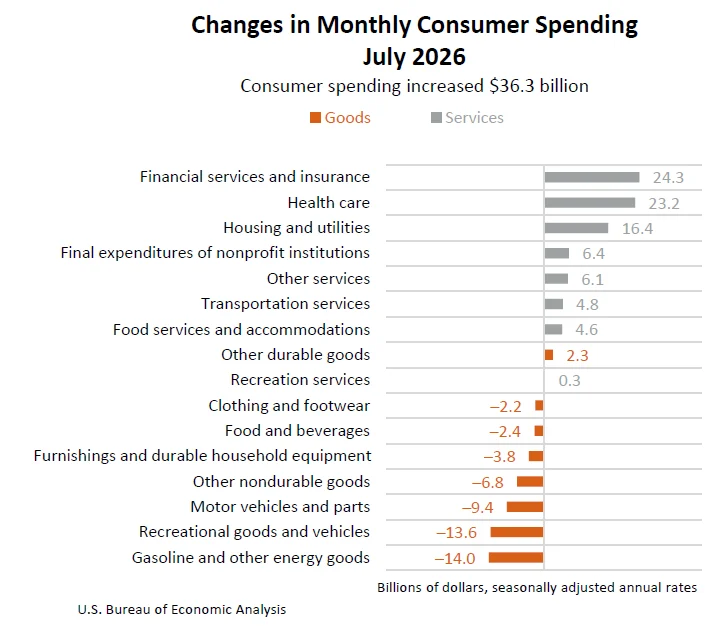
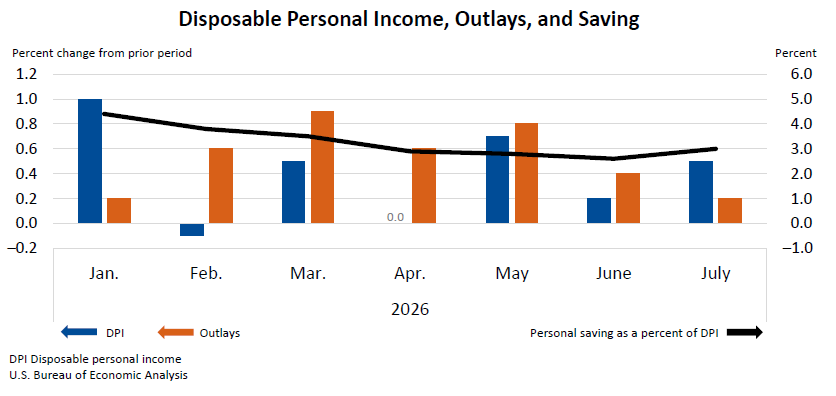
Washington D.C. – Personal income in the United States experienced a notable uptick in July, expanding by $115.1 billion, or 0.4 percent on a monthly basis, according to the latest estimates from the U.S. Bureau of Economic Analysis (BEA). This growth signals a steady, albeit not explosive, expansion in the financial resources available to American households. Disposable personal income (DPI), the amount of income left after taxes, saw a more pronounced increase of $125.9 billion, representing a 0.5 percent rise, indicating that a larger portion of income is remaining in consumers’ hands. Concurrently, personal consumption expenditures (PCE), a key measure of consumer spending, rose by $36.3 billion, or 0.2 percent, suggesting a cautious but present willingness among consumers to engage in the marketplace.
The BEA’s detailed report highlights that the overall increase in current-dollar personal income during July was primarily fueled by advancements in compensation, a substantial rise in government social benefits, and increased personal income receipts on assets. These factors collectively contributed to the positive momentum in household finances. Personal outlays, which encompass consumer spending on goods and services, as well as personal interest payments and transfer payments, increased by $36.6 billion in July. This figure closely tracks the rise in PCE, underscoring the dominant role of consumer spending in overall outlays.
Key Figures and Trends in July’s Economic Landscape
The personal saving rate, a crucial indicator of household financial health and future spending potential, stood at 3.0 percent in July. This means that for every dollar of disposable personal income, Americans saved $0.03. While this rate reflects a modest increase from previous months, it remains at levels that suggest a cautious approach to saving among households, potentially influenced by ongoing economic uncertainties and inflation concerns. The total amount of personal saving in July was recorded at $712.0 billion.
The composition of the rise in personal income reveals important insights into the underlying economic drivers. Increases in compensation, which includes wages, salaries, and benefits, suggest a strengthening labor market or an improvement in the compensation packages offered to workers. The growth in government social benefits indicates a potential expansion of social safety nets or increased payouts to beneficiaries, which can provide a crucial buffer for many households. Furthermore, personal income receipts on assets, such as dividends and interest, point to a potentially more robust performance in financial markets or an increase in asset holdings by individuals.
Consumer Spending Patterns: A Closer Look
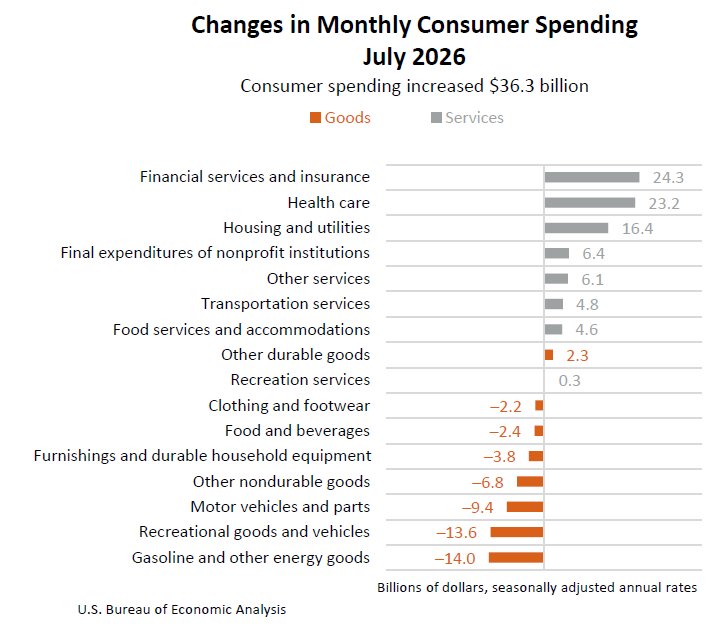
The modest 0.2 percent increase in current-dollar personal consumption expenditures (PCE) in July was a result of diverging trends between spending on services and goods. A significant increase of $86.2 billion in spending on services was the primary driver of this growth. This surge in services spending could be attributed to various factors, including continued recovery in sectors like travel, entertainment, and dining out, as consumers increasingly prioritize experiences. However, this positive momentum was partially tempered by a decrease of $49.9 billion in spending on goods. This decline in goods spending might reflect a shift in consumer preferences back towards services or a response to persistent inflation impacting the affordability of certain goods.
When adjusted for inflation, real PCE, which provides a clearer picture of the volume of goods and services consumed, showed a more subdued increase of $1.3 billion, translating to less than 0.1 percent on a monthly rate. This suggests that while nominal spending increased, the real purchasing power of consumers was relatively stable, with inflation playing a significant role in the observed nominal gains.
Inflationary Pressures Remain a Key Consideration
The Personal Consumption Expenditures (PCE) price index, a key inflation gauge closely watched by the Federal Reserve, increased by 0.2 percent in July. This indicates a persistent, albeit moderate, upward trend in the cost of goods and services. Even when excluding the more volatile categories of food and energy, the core PCE price index also rose by 0.2 percent. This persistent core inflation suggests that underlying price pressures remain in the economy, which could influence future monetary policy decisions.
On a year-over-year basis, the PCE price index for July increased by 3.7 percent. The core PCE price index, excluding food and energy, saw a 3.3 percent increase from the same month in the previous year. These year-over-year figures highlight that while monthly inflation has moderated, the cumulative impact of price increases over the past twelve months remains a significant concern for consumers and policymakers alike, impacting purchasing power and the cost of living.
Background and Context: The BEA’s Role in Economic Monitoring
The U.S. Bureau of Economic Analysis (BEA) is a federal agency that plays a critical role in providing the most comprehensive and up-to-date economic statistics for the United States. Its data on personal income and consumption expenditures are fundamental to understanding the health and trajectory of the American economy. These statistics are meticulously compiled through a variety of sources, including tax data, survey information from businesses, and administrative records from government agencies. The BEA’s commitment to regular updates and revisions ensures that policymakers, businesses, and the public have access to the most accurate economic picture possible.
The release of monthly personal income and outlays data is a cornerstone of economic analysis, offering a timely glimpse into the financial well-being of households and their spending habits. This data informs a wide array of economic forecasts, business investment decisions, and government policy formulation. The consistent reporting of these figures allows for the tracking of trends over time, providing a valuable historical context for current economic performance.
Analysis and Implications: Navigating a Shifting Economic Landscape
The July data presents a mixed but generally stable picture of the U.S. economy. The growth in personal income, particularly the stronger rise in disposable income, provides a positive signal for consumer confidence and future spending. The increase in compensation suggests that the labor market remains a supportive element, contributing to household financial stability. However, the relatively low personal saving rate and the persistent, albeit moderate, inflation at 0.2% month-over-month indicate that households are likely still managing their budgets carefully. The increase in services spending, while positive for that sector, coupled with a dip in goods spending, could suggest a recalibration of consumer priorities, potentially influenced by the higher cost of living and a desire for experiences.
The continued upward trend in the PCE price index, particularly the core index, will undoubtedly remain a focal point for the Federal Reserve. While the pace of inflation has slowed from its peak, the persistence of these price pressures could influence the Fed’s decisions regarding interest rates. A sustained period of moderate inflation might necessitate a more cautious approach to monetary policy easing, aiming to ensure that inflation returns to the Fed’s target of 2 percent.
The BEA’s upcoming annual updates to national and regional economic accounts, scheduled for September 30, 2026, will provide a more comprehensive and refined view of the economic landscape. These updates incorporate more complete data, leading to revisions in previously released figures, offering a deeper understanding of economic performance over extended periods.
Future Outlook and Upcoming Releases
The next release of Personal Income and Outlays data is scheduled for September 30, 2026, at 8:30 a.m. EDT, covering the month of August 2026. This upcoming report will provide further insights into whether the trends observed in July persist or evolve, offering a more immediate update on the nation’s economic momentum. Investors, economists, and policymakers will be closely monitoring these releases for any shifts in income growth, consumer spending patterns, and inflationary pressures, all of which are critical determinants of the broader economic trajectory. The BEA’s ongoing commitment to providing timely and accurate economic data remains indispensable for navigating the complexities of the modern economy.