Candice Horbacz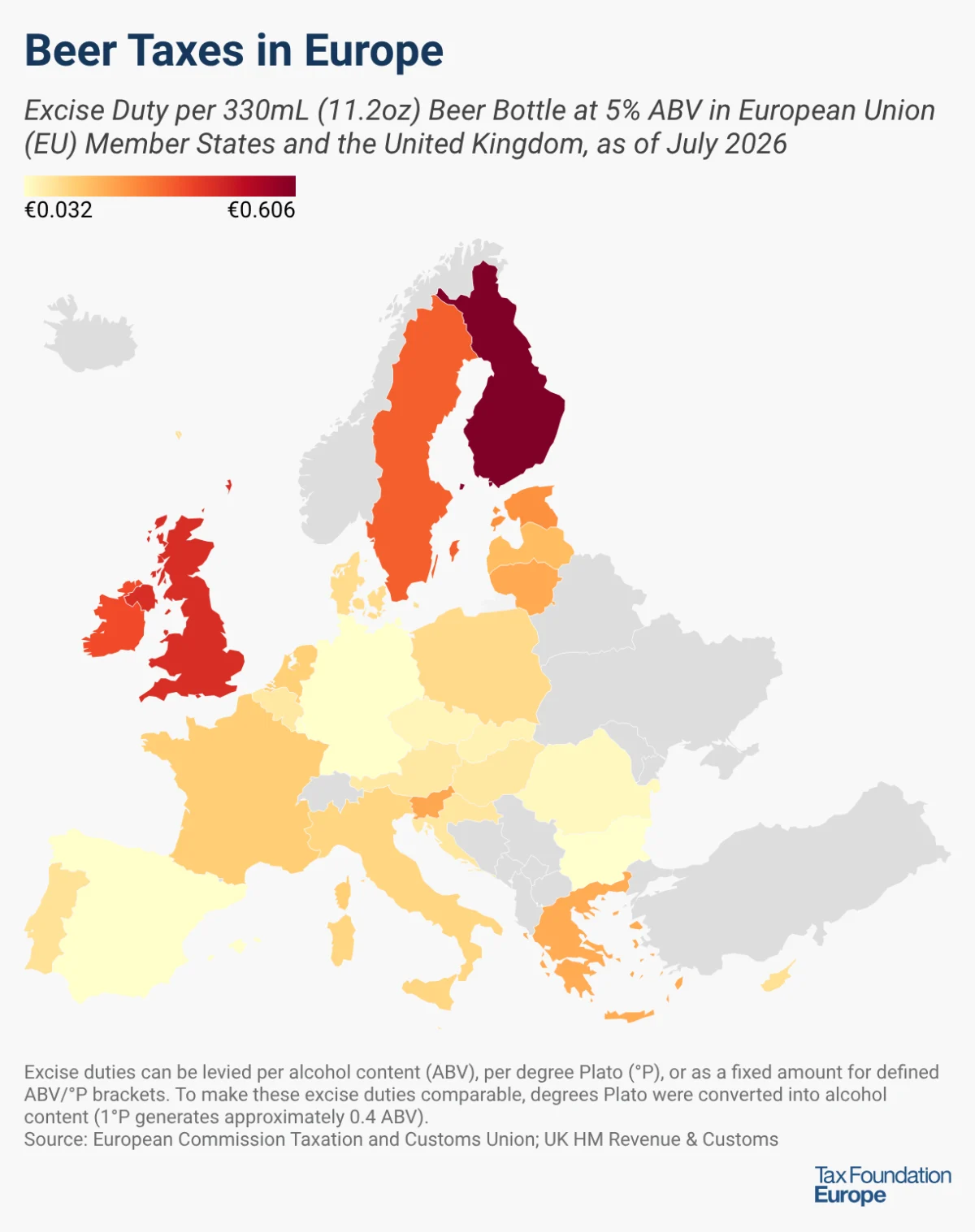
The European alcohol industry and consumers are anticipating substantial shifts in excise taxation as early as 2026, driven by a growing consensus among policymakers to modernize outdated systems. The core of these proposed reforms centers on moving away from traditional categorical taxation—which distinguishes heavily between beer, wine, and spirits—towards a more unified system based primarily on the alcohol content of the beverage. This impending transformation aims to address the inefficiencies, complexities, and inherent biases of current tax structures, while simultaneously pursuing public health objectives and ensuring stable revenue generation.
The Historical Rationale and Current Disparities in European Alcohol Taxation
For centuries, governments across Europe have leveraged excise taxes on alcoholic beverages for two primary reasons: to discourage excessive consumption and to generate significant revenue from products that, despite widespread consumption, have often been viewed with a degree of social disapproval. This dual mandate has shaped a complex patchwork of tax regimes that vary dramatically from one nation to another, and even more so across different categories of alcohol.
Historically, the taxation of beer, wine, and spirits developed independently, often reflecting local production traditions, cultural consumption patterns, and lobbying efforts. Wine, for instance, in many traditional wine-producing European nations, enjoys preferential tax treatment, with several countries imposing no excise tax whatsoever. This stands in stark contrast to beer, which is generally taxed more heavily than wine, though typically lighter than distilled spirits. The existing framework creates a disparate landscape where the tax burden on a unit of pure alcohol can vary wildly depending on whether it is consumed in beer, wine, or spirits, and furthermore, where in Europe it is purchased. For example, a standard pint of beer might incur a significantly different tax in Germany compared to Finland, even before considering differences in Value Added Tax (VAT). These variations not only distort competition within the single market but also complicate cross-border trade and consumer choices.
The Blurring Lines: Innovation Challenges Traditional Categories
The alcohol industry has experienced a period of unprecedented innovation over the last two decades, fundamentally challenging the rigid categorical distinctions upon which existing tax systems are built. The craft brewing revolution stands as a prime example. Once dominated by a few large producers offering a limited range of lagers, the beer market has exploded with a diverse array of styles, flavors, and, critically, alcohol by volume (ABV) percentages. From sessionable IPAs at 4% ABV to imperial stouts reaching 12% or even higher, craft beers have pushed the boundaries of what constitutes "beer," often blurring the line with wine or even some lower-strength spirits in terms of alcohol content and price point.
Beyond craft beer, other innovations have further complicated the tax landscape. Malt liquor, a higher-alcohol-content beer brewed with extra malt, explicitly highlights this category stratification by its very name. More recently, the proliferation of ready-to-drink (RTD) cocktails and hard seltzers has presented a significant challenge. Many of these products are distilled spirits-based but, after mixing with various flavors and diluents, result in a final product with an alcohol content closer to that of beer than a bottle of liquor. This presents a conundrum for tax authorities: should these products be taxed at the higher spirits rate, the lower beer rate, or a new, blended rate? The current system often struggles to classify these hybrid products consistently, leading to market distortions, administrative inefficiencies, and potential loopholes.
The UK’s Precedent: A Model for Alcohol Content-Based Duties
As the European Union grapples with these challenges, the United Kingdom has already embarked on a significant overhaul of its alcohol duty system, implementing reforms that came into effect in August 2023. The UK’s new system largely discards the clunky categorical approach in favor of a tax levied primarily on alcohol content, regardless of the product type (beer, wine, spirits, or cider). Under this new structure, products with higher alcohol content generally incur higher duties, while lower-strength products are taxed less. For instance, a common rate is applied per litre of pure alcohol above a certain ABV threshold, with specific relief for very low-alcohol products.
This shift in the UK was motivated by similar desires: to simplify a historically complex system, to encourage the production and consumption of lower-strength products for public health reasons, and to create a more level playing field across different alcohol categories. While the implementation has presented some initial adjustments for producers and consumers, the UK’s experience offers a tangible case study for the EU. It demonstrates that a move towards alcohol content-based taxation is not only feasible but can also achieve stated policy goals of modernization and public health improvement. The UK’s journey serves as a potential blueprint, highlighting both the benefits of such a system and the practical challenges of transitioning from deeply entrenched historical categories.
The Proposed Shift: Modernizing for Efficiency and Transparency
The fundamental proposal for European alcohol tax reform by 2026 is to adopt a system where excise duties are primarily levied per degree of alcohol content. This means that, instead of applying different rates to "beer," "wine," or "spirits," a consistent tax rate would be applied per unit of pure alcohol (e.g., per percentage point of ABV per litre). This approach promises several key advantages:
- Enhanced Efficiency: For tax authorities, administering a single, content-based rate across all alcoholic beverages would be significantly simpler than managing multiple rates for numerous categories and sub-categories. This would reduce the administrative burden and potential for errors. For businesses, compliance would become more straightforward, as they would primarily need to accurately measure and report alcohol content, rather than navigating complex categorical definitions that can vary by jurisdiction.
- Increased Transparency: Consumers would gain a clearer understanding of how alcohol is taxed. The link between alcohol strength and tax burden would be explicit, making pricing structures more transparent and easier to comprehend.
- Level Playing Field: Perhaps most importantly, a content-based tax would create a truly level playing field across all alcoholic beverage types. The historical biases that favor certain categories (like wine in some regions) or disadvantage others would be eliminated. A unit of alcohol in a craft beer would be taxed the same as a unit of alcohol in a spirit-based RTD or a bottle of wine, assuming similar ABV. This would foster genuine competition based on product quality and consumer preference rather than arbitrary tax distinctions.
- Public Health Alignment: This reform aligns strongly with public health objectives. By taxing alcohol content directly, the system inherently incentivizes producers to develop, and consumers to choose, lower-strength products. This could contribute to reducing overall alcohol consumption and related harms.
Stakeholder Perspectives and Potential Impacts
The transition to an alcohol content-based taxation system is expected to elicit varied responses from different stakeholders:
- Governments and Tax Authorities: Generally, governments are expected to welcome the simplification and increased transparency, which could lead to more stable and predictable revenue streams. The alignment with public health goals also provides a strong political justification. However, individual member states might face challenges in adjusting their national budgets if the new system significantly alters their current revenue mix from alcohol taxes.
- Brewing Industry: The impact on brewers would be mixed. Producers of higher-ABV craft beers might face increased tax burdens, potentially leading to higher prices for consumers. Conversely, brewers focusing on lower-ABV options could see their products become more competitively priced. Industry associations may lobby for specific exemptions or phased introductions to mitigate sudden market shocks.
- Wine Industry: This sector is likely to express the most significant concerns, particularly in countries where wine currently enjoys zero excise tax. The introduction of new taxes, even at a lower rate per unit of alcohol than spirits, could substantially increase the price of wine, potentially affecting both producers and consumers. The wine industry often argues for its distinct cultural and agricultural significance, which they believe warrants differentiated tax treatment.
- Spirits Industry: The impact on spirits could be less dramatic in some instances, as spirits are already heavily taxed. However, lower-strength spirit-based RTDs might see their tax burden adjusted, potentially making them more competitive against higher-ABV beers. The industry’s primary focus would likely be on ensuring a fair and consistent application of the new rules.
- Public Health Advocates: These groups are largely supportive of such reforms, viewing them as a critical step towards a more rational and effective public health policy for alcohol. They would likely champion the system’s ability to incentivize lower-strength products and potentially reduce alcohol-related harm.
- Consumers: The primary impact for consumers would be price adjustments. Higher-ABV products across all categories would likely become more expensive, while lower-ABV options might become cheaper. This could influence purchasing decisions, encouraging a shift towards lighter beverages. However, some consumers might view new taxes on previously untaxed products (like wine in certain countries) as an unwelcome additional cost.
Challenges and Implementation Complexities
While the benefits of a modernized, content-based alcohol tax system are clear, the transition will not be without its challenges:
- Harmonization Across the EU: Achieving full harmonization of rates across all 27 EU member states is a formidable task, given the diverse national interests, existing tax structures, and cultural sensitivities. While a common methodology might be adopted, individual countries may retain some flexibility in setting their specific rates per unit of alcohol, leading to continued, albeit simplified, variations.
- Defining and Measuring Alcohol Content: While seemingly straightforward, precise and consistent measurement of alcohol content across all product types (especially for fermented beverages with residual sugars or complex ingredients) will be crucial for fair taxation. Standardized testing protocols and robust regulatory oversight will be essential.
- Transitional Provisions: A sudden shift could severely disrupt markets. Implementing a phased approach, perhaps over several years, with clear guidance and support for businesses, particularly small and medium-sized enterprises (SMEs), will be critical to ensure a smooth transition.
- Impact on Small Producers: Small craft breweries, wineries, and distilleries, which often operate on tighter margins and produce unique, sometimes higher-ABV products, might face disproportionate compliance costs or competitive disadvantages if not adequately supported during the transition.
- Addressing Market Distortions: Even with a content-based system, careful monitoring will be needed to prevent new forms of market distortion or opportunities for tax evasion, particularly in cross-border trade.
Broader Implications: Reshaping the European Alcohol Landscape
The impending alcohol tax reforms by 2026 represent more than just a change in tax rates; they signify a fundamental reshaping of the European alcohol landscape. By aligning taxation with actual alcohol content, Europe is poised to create a more coherent, transparent, and equitable system that better reflects the realities of a dynamic and innovative industry. This shift has the potential to influence consumer behavior, encourage product innovation towards lower-strength alternatives, and streamline administrative processes for both governments and businesses.
The move is a recognition that the "blunt tool" of traditional beer taxes, and indeed all categorical alcohol taxes, has become increasingly ineffective and inefficient in a modern market. The UK’s experience provides a valuable, albeit imperfect, roadmap. As European policymakers work towards the 2026 deadline, the delicate balance between revenue generation, public health objectives, and fostering a competitive and innovative industry will remain at the forefront of their considerations. The ultimate outcome will define the future of alcohol taxation in Europe for decades to come, promising a more logical and adaptable framework for an ever-evolving market.