Nila Kartika Wati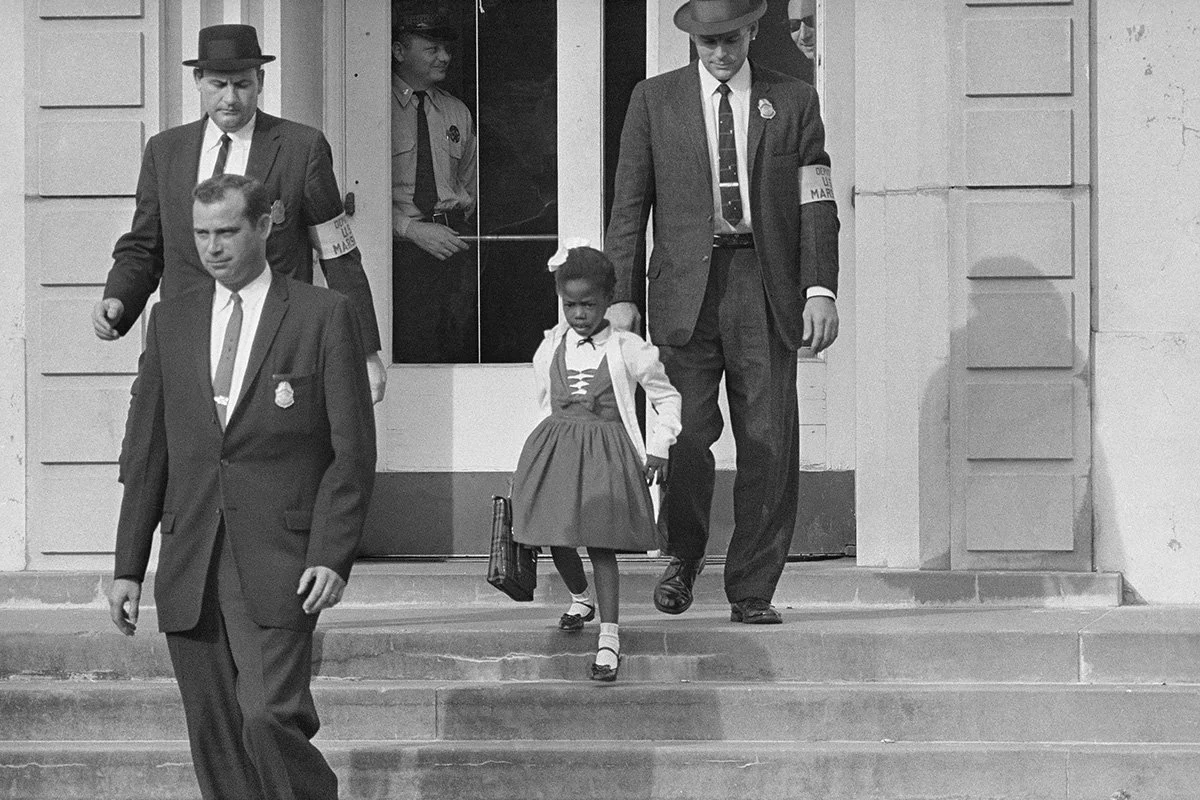
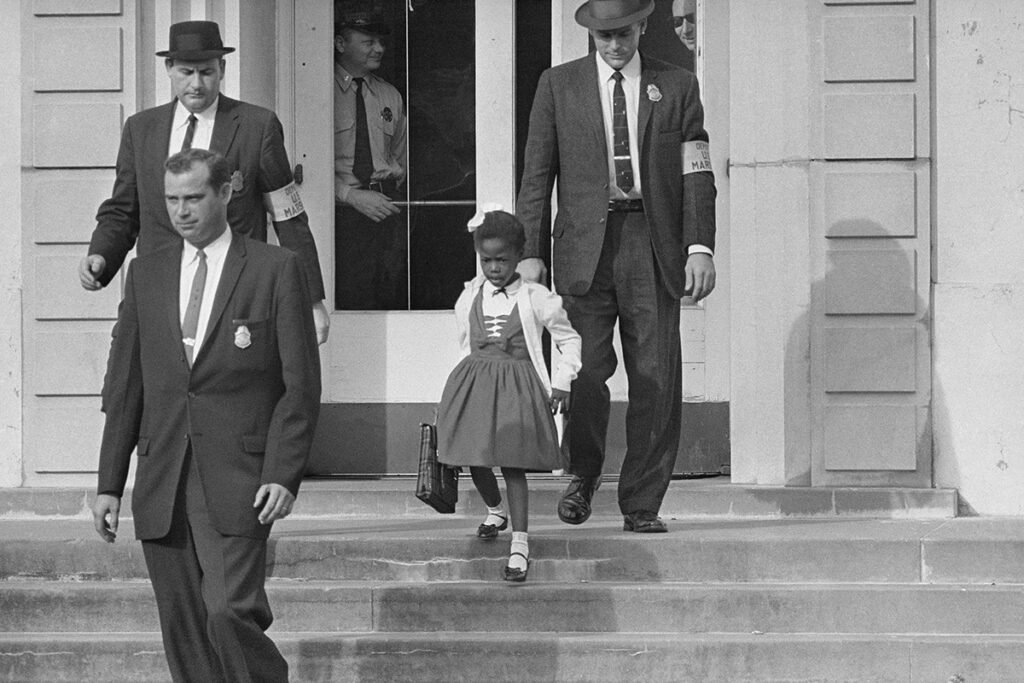
The integration of William Frantz Elementary School in New Orleans in 1960 remains one of the most enduring symbols of the American Civil Rights Movement. While the image of six-year-old Ruby Bridges being escorted by four federal marshals is etched into the national consciousness, the underlying narrative of leadership, systemic resistance, and the human cost of social change is far more complex than the popularized fables often suggest. By examining the experiences of Ruby Bridges and her teacher, Barbara Henry, through a modern lens, historians and leadership strategists are uncovering a more nuanced reality that challenges traditional Western archetypes of the "lone hero."
The Historical Context of the New Orleans School Crisis
The events of November 14, 1960, were the culmination of years of legal battles following the landmark 1954 Supreme Court decision in Brown v. Board of Education, which declared state laws establishing separate public schools for Black and white students to be unconstitutional. Despite the federal ruling, Southern states engaged in "massive resistance." In New Orleans, the process was stalled for six years until U.S. District Judge J. Skelly Wright issued a series of orders forcing the New Orleans Parish School Board to begin desegregation.
The plan was modest: only five Black first-grade girls were selected to integrate two all-white schools. Three girls—Leona Tate, Gail Etienne, and Tessie Prevost—were sent to McDonogh No. 19. Ruby Bridges was assigned to William Frantz Elementary alone. This isolation was a strategic move by segregationists to minimize the impact of the court order, but it also placed an immense psychological burden on a six-year-old child.
Barbara Henry: From Boston to the Ninth Ward
The teacher who would spend the next year instructing Bridges in an empty classroom was Barbara Henry, a 28-year-old educator from Boston. Henry’s path to New Orleans was unconventional for the era. A graduate of Boston’s Girls’ Latin School and Boston College, Henry had spent several years teaching the children of U.S. Air Force personnel at desegregated base schools in France and Germany.
When Henry moved to New Orleans with her husband, an Air Force officer, she applied for a teaching position within the city’s school district. During the interview process, the superintendent disclosed that the position was at a school slated for desegregation and asked if that would affect her decision to accept. Having already taught in integrated environments abroad, Henry accepted the post, unaware of the level of hostility she would soon encounter.
On her first day, Henry was forced to navigate an irate mob of white parents gathered outside the school. Inside, she found a faculty "frozen with fear and anger." While the public narrative often suggests the school was empty because of a total white boycott, internal records and Henry’s later accounts reveal a more insidious form of segregation occurring within the building itself.
The Myth of the Empty School: Segregation in the Basement
A significant but often omitted detail of the William Frantz story is that the school was not entirely vacant. While the vast majority of white parents withdrew their children in protest, a small number of white families initially attempted to keep their children enrolled. However, the school administration, led by a principal who opposed integration, refused to allow these students to be in the same classroom as Bridges.
Henry later discovered that several white students were being taught in a hidden room in the basement of the school. The teacher assigned to them had refused to instruct a Black child. When Henry confronted the principal about the situation, she demanded that the students be integrated into her classroom. The administration eventually reached a compromise: the white students would remain with their original teacher in the mornings but would join Henry and Bridges for afternoon activities such as social studies and science. This "partial integration" was a localized victory against the administrative effort to maintain racial partitioning within the school’s walls.
The Economic and Personal Toll on the Bridges Family
The courage of Ruby Bridges and Barbara Henry did not occur in a vacuum; it was supported by the resilience of the Bridges family, who faced severe socio-economic retaliation for their participation in the integration process. The popular "fable" of the event often focuses on the triumph of the first day, but the months that followed were characterized by systemic harassment.
Ruby’s father, Abon Bridges, was fired from his job at a gas station. Her mother, Lucille, was barred from shopping at local grocery stores. More devastatingly, Ruby’s grandparents, who were sharecroppers in Mississippi, were evicted from the farm where they had lived and worked for 25 years.
The psychological impact on Ruby was equally profound. While she famously appeared stoic in front of the cameras, she suffered from nightmares and required the support of child psychologist Robert Coles, who volunteered to counsel her throughout the school year. The isolation was total; for most of the year, Henry and Bridges were the only two people in their classroom, with federal marshals stationed outside the door for protection.
Deconstructing Leadership Archetypes
The story of Henry and Bridges serves as a critical case study for modern leadership theory. Traditional Western leadership models often emphasize the "fearless individualist" or the "hero’s journey," archetypes that scholars like bell hooks and Patricia Hill Collins argue are rooted in Eurocentric and patriarchal norms. These models prioritize absolute certainty and solitary authority.
However, Barbara Henry’s own reflection on her role challenges these definitions. In retrospective interviews, Henry has expressed reluctance to label herself a "leader," instead describing her actions as a series of risks taken in the service of professional and moral duty. This perspective aligns with "decentralized" or "relational" leadership, where progress is driven not by a single charismatic figure, but by the strength of the connections between individuals.
The relationship between Henry and Bridges—which has evolved into a lifelong friendship spanning over six decades—illustrates that effective leadership in times of crisis is often about providing safety, building trust, and maintaining focus on a singular objective (in this case, Ruby’s education) despite a lack of institutional support.
Timeline of Key Events: 1954–1962
- May 17, 1954: The U.S. Supreme Court rules in Brown v. Board of Education that segregated schools are unconstitutional.
- 1956–1959: The New Orleans School Board utilizes various legal maneuvers to delay integration.
- May 16, 1960: Judge J. Skelly Wright orders the New Orleans school system to desegregate, beginning with the first grade.
- November 14, 1960: Ruby Bridges integrates William Frantz Elementary. White parents begin a massive boycott.
- Late 1960: Barbara Henry discovers white students hidden in the basement; she successfully lobbies for afternoon integration.
- 1961: The boycott slowly begins to break as a few white families return their children to the school.
- June 1961: Ruby Bridges completes the first grade. Barbara Henry’s contract is not renewed by the school board, and she returns to Boston.
- 1962: William Frantz Elementary becomes more broadly integrated as more Black students enroll.
Broader Impact and Modern Implications
The integration of New Orleans schools sparked a wave of "segregation academies"—private schools established specifically to avoid integration. This movement significantly altered the educational landscape of the American South, leading to a long-term disinvestment in public education that persists in some regions today.
In the 21st century, the story of Henry and Bridges is being re-evaluated not just as a civil rights milestone, but as a lesson in organizational change. The lack of support from the school’s superintendent and principal highlights the difficulties of "leading from the middle"—where individuals must implement social change without the backing of their superiors.
Furthermore, the "unredacted" history of the event serves as a template for modern diversity, equity, and inclusion (DEI) efforts. It confirms that progress is rarely linear and is often met with partial successes and significant personal costs. The fact that Ruby Bridges (now 71) and Barbara Henry (now 94) remain close friends underscores the enduring power of human connection as a catalyst for systemic change.
As current leaders navigate the complexities of a polarized social climate, the Henry-Bridges narrative offers a more honest template than the simplified fables of the past. It suggests that leadership is not found in the absence of fear or the presence of a title, but in the willingness to admit mistakes, build trust, and remain present in the face of daunting uncertainty. The true legacy of William Frantz Elementary is found in the "human experience" of two individuals who, despite being isolated by a system designed to fail them, chose to create a space of learning and mutual respect.