Nila Kartika Wati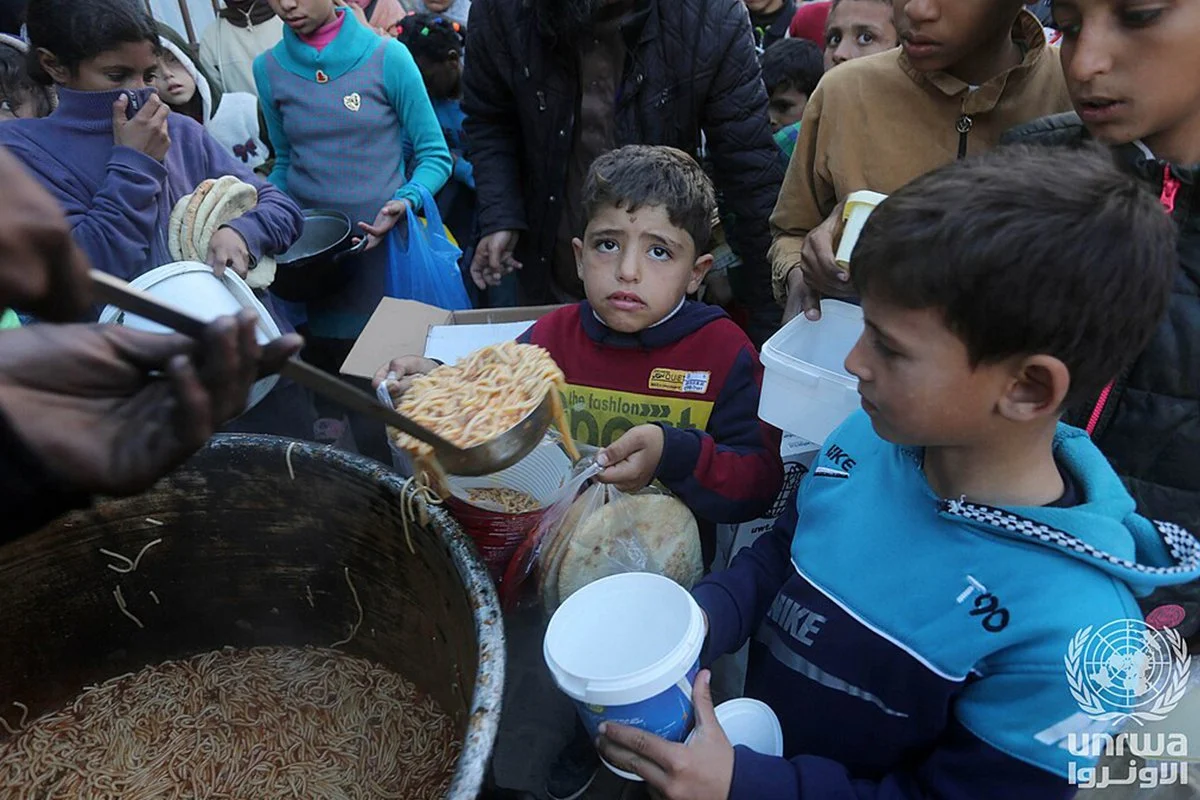
Nearly twelve months after the declaration of a ceasefire intended to bring stability to the Gaza Strip, the humanitarian landscape remains defined by a profound disconnect between the cessation of major military operations and the restoration of a functional, dignified life for its two million inhabitants. While the sounds of active bombardment have largely subsided, a silent war of attrition continues against the basic requirements of human survival. For the hundreds of thousands of Palestinians displaced in makeshift camps such as Al-Mawasi, daily existence is not measured by progress or recovery, but by the grueling, hours-long pursuit of potable water, edible food, and functional shelter. The transition from emergency response to sustainable recovery has been stalled by a combination of destroyed infrastructure, restrictive border policies, and a critical shortfall in international funding, leaving a population in a state of permanent emergency.
The Chronology of a Protracted Crisis
The current humanitarian situation is the culmination of years of blockade exacerbated by the intense military campaign that preceded the 2025-2026 ceasefire. Following the cessation of hostilities, international observers hoped for a rapid influx of reconstruction materials and a revitalization of Gaza’s decimated economy. However, the timeline of the past year reveals a stagnant recovery process. By late 2025, while some commercial goods began to trickle back into the markets, the core infrastructure required for water, sanitation, and hygiene (WASH) remained largely in ruins.
By mid-2026, the United Nations Office for the Coordination of Humanitarian Affairs (OCHA) reported that the majority of the population remained dependent on intermittent aid. The promised transition to "early recovery" phases—which include the rebuilding of permanent housing and the restoration of the power grid—has been hampered by what humanitarian agencies describe as systemic bottlenecks. For residents like Yousef, a 26-year-old living in the Al-Mawasi camps near Khan Younis, the "ceasefire era" has not meant a return to his previous life, but rather a solidification of displacement. For nearly two years, he has resided in a tent, his life dictated by the arrival schedules of water trucks and the availability of community kitchens.
The Infrastructure of Scarcity: Water and Sanitation
The most acute manifestation of Gaza’s humanitarian crisis is the collapse of the water infrastructure. Prior to the recent conflict, Gaza already faced a water crisis due to over-extraction from the coastal aquifer. Today, the situation has moved from critical to catastrophic. According to recent UN assessments, approximately 74 percent of surveyed households are now entirely dependent on water trucking for their daily needs.
The data highlights a grim reality: 63 percent of the population receives less than six liters of drinking water per person per day. To put this in perspective, the World Health Organization (WHO) identifies 15 liters as the absolute minimum required for basic survival in emergency conditions, while 50 to 100 liters are needed to ensure comprehensive health and hygiene. The shortage is not merely a matter of supply but of distribution. In the sprawling Al-Mawasi camps, the geography of aid is uneven. Yousef reports that water trucks often fail to reach his specific camp, forcing him to manually transport heavy jerrycans over hundreds of meters—a task that must often be repeated twice daily to sustain his family.
The destruction of Gaza’s water desalination plants and the continued Israeli restrictions on the entry of "dual-use" materials—such as pipes, pumps, and specialized chemicals—mean that repairs to the municipal water network are progressing at a negligible pace. Without these materials, humanitarian organizations are forced to rely on expensive and inefficient trucking methods, which are themselves subject to fuel shortages and road access issues.
Food Insecurity and the Erosion of the Safety Net
While the total volume of food aid entering Gaza has increased since the height of the conflict, food security remains incredibly fragile. Projections from the Integrated Food Security Phase Classification (IPC) suggest that between July and December 2026, more than 1.4 million people in Gaza—over half the population—will face "crisis" levels of food insecurity or worse.
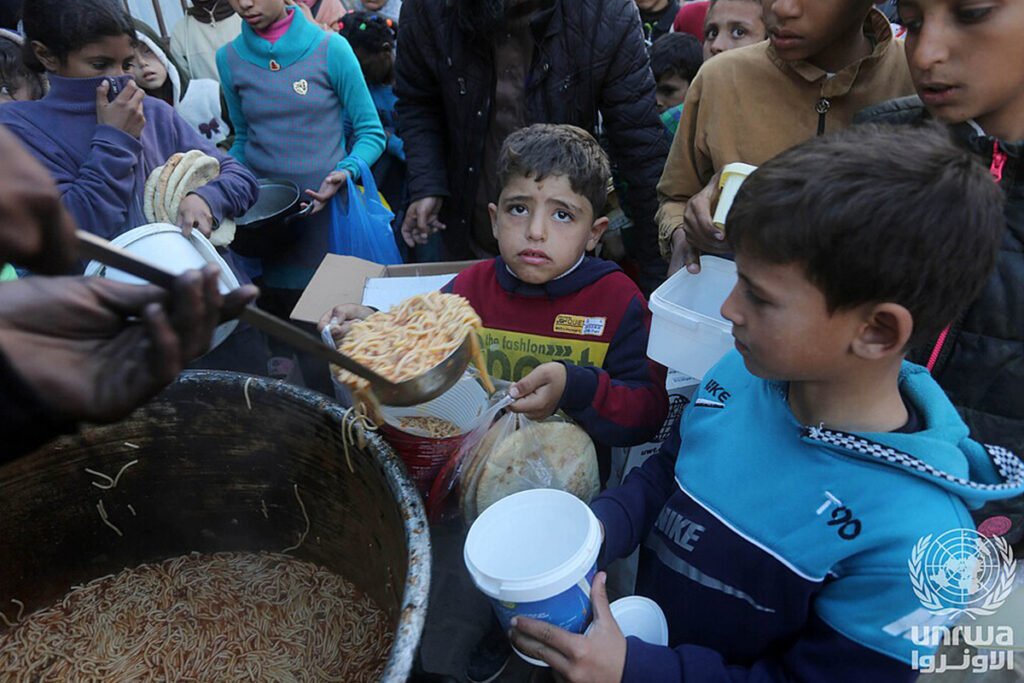
The "takiya," or community kitchen, has historically been a vital safety net in Palestinian society, providing free hot meals to those in need. However, in the displacement camps of the south, these kitchens are increasingly unable to meet demand. Many camps lack a regular takiya entirely, leaving families to rely on dry rations or expensive market goods they cannot afford. Yousef notes that when residents petition humanitarian organizations for inclusion in food programs, they are frequently told that quotas have been reached or that funding has been exhausted.
The economic dimension of food insecurity is equally pressing. With unemployment rates hovering near record highs and the agricultural sector largely decimated by land leveling and restricted access to fields, the population has little purchasing power. Consequently, even when food is available in local markets, it remains out of reach for the majority of displaced families who have exhausted their savings over two years of conflict and displacement.
Living in the Margins: The Reality of Tent Life
For many Gazans, the tent has transitioned from a temporary emergency shelter to a semi-permanent home. Ahmed Asfour, a resident of southern Gaza, has lived in a tent in Al-Mawasi for ten months following the ceasefire, with no immediate prospect of returning to a permanent structure. The physical toll of tent life is exacerbated by the extreme climate of the region. During the summer months, temperatures inside synthetic tents can reach dangerous levels, forcing families to spend their days outdoors in search of shade.
Beyond the temperature, the lack of privacy and the prevalence of pests—including insects and rodents—contribute to a decline in public health and psychological well-being. OCHA reports that shelter assistance is currently meeting less than seven percent of the actual need. The primary obstacle is the restricted entry of timber, cement, and metal sheeting, which are classified by Israeli authorities as materials that could be diverted for military use. This classification has effectively paralyzed the reconstruction of the housing sector, leaving hundreds of thousands in a state of "shelter poverty."
The Healthcare Vacuum and Chronic Disease Management
The collapse of the healthcare system is perhaps the most life-threatening aspect of the ongoing crisis. Only a fraction of Gaza’s primary health service points are currently operational, and those that remain open are plagued by chronic shortages of essential medicines. For individuals with chronic conditions, the "ceasefire" has brought little relief.
Ahmed Asfour’s mother, who suffers from a condition requiring consistent specialized care, represents a growing demographic of Gazans for whom medical treatment has become a series of temporary fixes. Medical facilities often provide "anesthetic" care—medications that mask symptoms or ease pain—because the diagnostic equipment or surgical supplies needed for a permanent cure are unavailable. Furthermore, the centralization of remaining health services means that displaced persons must often travel long distances, at great expense, to reach a functioning clinic. The WHO has warned that the lack of consistent treatment for non-communicable diseases (NCDs) like diabetes, hypertension, and cancer will likely result in a secondary wave of mortality long after the active conflict has ended.
Psychological Attrition: Survival as an "Anesthetic"
Khitam, a psychosocial support worker in Gaza, describes a phenomenon where the constant pressure to meet basic needs acts as a barrier to actual psychological healing. In her view, Gaza has not entered a "post-trauma" phase because the traumatic conditions—displacement, hunger, and insecurity—are still present.
Psychosocial programs are currently operating at a fraction of their intended capacity. Facilitators lack basic materials, from art supplies for children to reliable electricity for community centers. More importantly, Khitam argues that humanitarian work has been reduced to a "tool for survival" rather than a path to empowerment. When a woman seeks support for domestic stress or trauma, social workers can offer a listening ear, but they cannot offer the safety of a private home, the security of a job, or the dignity of a stable environment.
"We provide, but in reality, we barely provide enough," Khitam observes. The psychological burden is also heavy on the aid workers themselves, many of whom are displaced and facing the same water and food shortages as the people they serve. This "continuous trauma" model challenges standard humanitarian interventions, which are typically designed for a post-conflict environment that has yet to materialize in Gaza.
Broader Implications and the Path Forward
The situation in Gaza nearly a year after the ceasefire serves as a stark reminder that the absence of war is not synonymous with the presence of peace or recovery. The international community’s response has been criticized by various NGOs for being reactive rather than proactive. While emergency aid prevents total famine, it does little to address the underlying structural collapse of the territory.
The implications of this "permanent emergency" are profound. A generation of children is growing up in tents with interrupted educations and chronic malnutrition. The "de-development" of Gaza—a term used by economists to describe the systematic dismantling of a region’s productive capacity—is reaching a point of no return.
To move beyond mere survival, humanitarian agencies and local stakeholders emphasize the need for three critical shifts:
- Lifting Restrictions on Construction Materials: Without cement, steel, and timber, the reconstruction of homes and water infrastructure remains impossible.
- Sustainable Funding for Public Services: Moving away from ad-hoc aid toward supporting the salaries of healthcare workers and engineers who can maintain what remains of the public grid.
- A Focus on Dignity and Privacy: Recognizing that humanitarian aid must include the restoration of safe, private living spaces to mitigate the psychological and social erosion of the community.
As it stands, the distance between survival and recovery in Gaza remains vast. For Yousef, Ahmed, and Khitam, the ceasefire is not an end to the crisis, but a different, quieter phase of a struggle that continues to demand everything from them just to see the next day.