Lina Irawan

The Internal Revenue Service (IRS) on Thursday announced the finalized federal income tax brackets and standard deduction amounts for the 2027 tax year, bringing welcome news to over 160 million individual taxpayers across the United States. Driven by the sustained climb in consumer prices, these adjustments, primarily an indexing to inflation, are poised to allow a significant majority of Americans to shield a larger portion of their income from higher tax rates, effectively offering a modest tax relief in the coming year.
Effective January 1, 2027, the income thresholds defining each tax bracket will experience an average increase of 3.2%. These revised figures will apply to income earned throughout the 2027 calendar year, with most Americans preparing and filing their corresponding tax returns in early 2028. This annual recalibration is a crucial mechanism designed to prevent "bracket creep," a phenomenon where inflation pushes individuals into higher tax brackets, eroding their purchasing power even if their real income remains stagnant.
The Dynamics of Federal Income Taxation and Inflation Indexing
The U.S. federal income tax system operates on a graduated-rate structure, employing seven distinct tax brackets with statutory rates currently ranging from 10% to 37%. While Congress is responsible for setting these specific tax rates, which generally remain constant year-to-year unless altered by new legislation, it is the underlying income ranges—the brackets themselves—that are subject to annual modification. These adjustments are a direct response to inflationary pressures, ensuring the tax system remains equitable and does not inadvertently penalize taxpayers for cost-of-living increases.
The rationale behind inflation indexing dates back to the Economic Recovery Tax Act of 1981, which mandated annual adjustments to prevent the erosion of real income through higher taxation due to inflation. Prior to this, taxpayers frequently found themselves in higher marginal tax brackets simply because their nominal wages increased to keep pace with rising prices, not because their actual economic standing had improved. This led to a stealthy increase in the effective tax burden, a situation policymakers sought to rectify. Since 2018, the IRS has utilized the chained Consumer Price Index for All Urban Consumers (C-CPI-U) for these calculations, a measure that typically reflects a slightly lower inflation rate than the traditional CPI due to its accounting for consumer substitution to less expensive goods and services.
Current Economic Climate and the Basis for Adjustment
The September inflation rate, as measured by the Consumer Price Index (CPI), stood at 3.7%, largely influenced by persistent increases in energy costs, particularly gas prices, which have continued to elevate overall household expenditures. This consistent upward trend in prices had signaled to economists and tax policy experts that a substantial adjustment to the 2027 tax brackets was imminent. The announced increases are broadly consistent with these forecasts, providing a predictable measure of relief.
This indexing is not merely a technical adjustment; it carries tangible benefits for taxpayers. For instance, a single filer earning $100,000 who claims the standard deduction could anticipate owing approximately $12,890 in federal income taxes for 2027. This represents an estimated decrease of $281 compared to their 2026 tax liability, assuming all other financial circumstances remain unchanged. The primary driver of this saving is the expansion of the income ranges for lower tax brackets, meaning less of an individual’s income is subjected to higher marginal rates. In some instances, these shifts may even result in certain taxpayers falling into a nominally lower tax bracket.
Federal Income Tax Brackets for 2027: A Detailed Look
To illustrate the practical implications of these adjustments, here are the estimated federal income tax brackets for the 2027 tax year, based on the announced 3.2% average increase. These figures are crucial for individuals and families planning their financial strategies for the upcoming year:
Single Filers:
- 10%: Up to $11,900 (up from $11,530 in 2026)
- 12%: $11,901 to $48,425 (up from $46,960)
- 22%: $48,426 to $99,150 (up from $96,075)
- 24%: $99,151 to $190,750 (up from $184,850)
- 32%: $190,751 to $241,100 (up from $233,625)
- 35%: $241,101 to $604,250 (up from $586,125)
- 37%: Over $604,250 (up from $586,125)
Married Filing Jointly:
- 10%: Up to $23,800 (up from $23,060)
- 12%: $23,801 to $96,850 (up from $93,920)
- 22%: $96,851 to $198,300 (up from $192,150)
- 24%: $198,301 to $381,500 (up from $369,700)
- 32%: $381,501 to $482,200 (up from $467,250)
- 35%: $482,201 to $725,150 (up from $699,900)
- 37%: Over $725,150 (up from $699,900)
Head of Household:
- 10%: Up to $17,000 (up from $16,480)
- 12%: $17,001 to $65,050 (up from $63,100)
- 22%: $65,051 to $99,150 (up from $96,075)
- 24%: $99,151 to $190,750 (up from $184,850)
- 32%: $190,751 to $241,100 (up from $233,625)
- 35%: $241,101 to $604,250 (up from $586,125)
- 37%: Over $604,250 (up from $586,125)
Married Filing Separately:
- 10%: Up to $11,900 (up from $11,530)
- 12%: $11,901 to $48,425 (up from $46,960)
- 22%: $48,426 to $99,150 (up from $96,075)
- 24%: $99,151 to $190,750 (up from $184,850)
- 32%: $190,751 to $241,100 (up from $233,625)
- 35%: $241,101 to $362,575 (up from $349,950)
- 37%: Over $362,575 (up from $349,950)
Note: These estimated 2027 bracket thresholds are derived by applying the announced average 3.2% increase to the publicly available 2026 tax bracket figures. Minor rounding differences may occur in the official IRS publication.
The Standard Deduction: A Cornerstone of Tax Simplification
In tandem with the tax bracket adjustments, the IRS also announced significant increases to the standard deduction amounts for 2027. This key provision simplifies tax preparation for millions of Americans by providing a fixed amount of income that can be deducted without the need to itemize individual expenses.
For single filers, the standard deduction will rise to $16,600 in 2027, representing a $500 increase from the 2026 amount of $16,100. Married couples filing jointly will see their standard deduction climb by $1,000, reaching $33,200, up from $32,200 in 2026. For heads of household, the deduction will increase to $24,925.
The appeal of the standard deduction has grown considerably since the enactment of the 2017 Tax Cuts and Jobs Act (TCJA), which significantly increased its value. As a result, nearly 86% of taxpayers are projected to opt for the standard deduction in 2026, a trend expected to continue into 2027. This simplifies the tax filing process for the vast majority, eliminating the need to meticulously track and document various expenses. However, itemizing deductions can still offer greater tax savings for a minority of taxpayers who qualify for substantial deductions, such as significant state and local tax (SALT) payments (subject to the current $10,000 cap), substantial mortgage interest, or large unreimbursed medical expenses.
Broader Inflation Adjustments and Their Impact
The IRS announcement detailed that almost 70 different tax provisions are subject to inflation adjustments for the 2027 tax year. Beyond the brackets and standard deduction, several other key credits and thresholds will also see increases, directly benefiting families and lower-income earners.
Notably, the Child Tax Credit (CTC) will increase from $2,200 to $2,300 per qualifying child. Furthermore, the maximum refundable portion of this credit, known as the Additional Child Tax Credit (ACTC), which provides financial assistance even if a taxpayer owes no income tax, will rise from $1,700 to $1,800. These adjustments are critical for supporting families with children, particularly those in lower-income brackets who rely on the refundable portion.
The maximum Earned Income Tax Credit (EITC), a refundable credit designed to support low-to-moderate income working individuals and families, will also see an increase. For taxpayers with three or more qualifying children, the maximum EITC will climb from $8,231 to $8,496. The EITC is widely recognized as one of the most effective anti-poverty programs in the United States, encouraging work and providing a crucial financial boost to millions.
Other adjustments, though not explicitly detailed in the provided announcement but typically part of the annual IRS updates, often include:
- Alternative Minimum Tax (AMT) Exemption Amounts: These typically increase to ensure the AMT, designed to prevent high-income individuals from avoiding taxes, continues to target its intended demographic.
- Gift Tax Annual Exclusion: The amount an individual can give to another person without incurring gift tax implications typically sees a modest increase.
- Health Savings Account (HSA) Contribution Limits: These are also regularly adjusted to account for healthcare cost inflation.
These comprehensive adjustments underscore the IRS’s ongoing commitment to maintain a tax system that responds to economic realities, preventing inflation from stealthily increasing the tax burden on American households.
Implications for Taxpayers and Economic Outlook
The 2027 tax adjustments carry significant implications for taxpayers and the broader economy. For individuals, understanding these changes is paramount for effective financial planning. Taxpayers should consider reviewing their W-4 forms with their employers to adjust income tax withholdings, ensuring they are not over- or under-withholding throughout 2027. This can prevent unexpected tax bills or needlessly tying up funds that could be earning interest or used for other financial goals.
Moreover, these adjustments can influence decisions related to retirement planning. Contributions to tax-advantaged accounts like 401(k)s and IRAs often have limits that are also indexed to inflation, providing opportunities for increased tax-deferred savings. Capital gains planning may also be affected, as the income thresholds for different long-term capital gains rates shift.
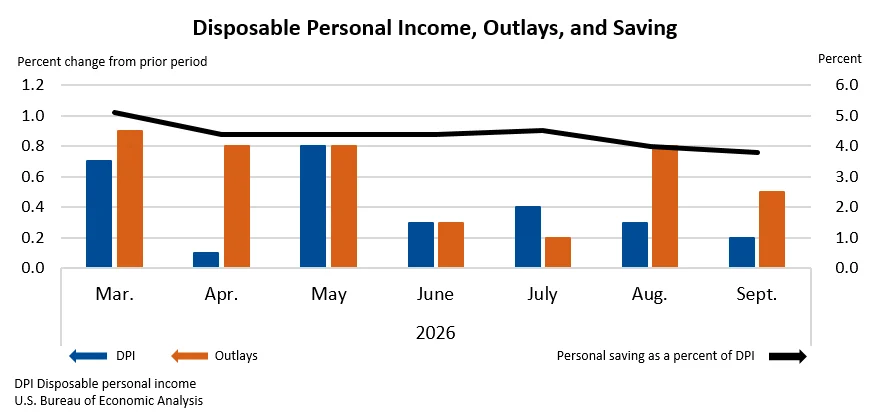
From an economic perspective, these inflation-indexed adjustments provide a form of fiscal stimulus, albeit a modest one, by allowing households to retain more of their income. This can bolster consumer spending, a key driver of economic growth, or enable greater savings, contributing to overall financial stability. While these adjustments inherently mean a slight reduction in projected government revenue compared to a scenario without indexing, this is generally accepted as a necessary trade-off to maintain fairness and prevent a regressive impact on lower and middle-income families during periods of inflation.
Tax policy experts, such as those from the Tax Foundation and the American Enterprise Institute, consistently emphasize the importance of these annual adjustments. They argue that without them, the progressive nature of the U.S. tax system would be undermined by inflation, leading to disproportionately higher tax burdens on those least able to afford it. The adjustments ensure that real tax burdens remain relatively stable, fostering greater predictability and transparency in the tax code.
In conclusion, the IRS’s announcement of the 2027 federal income tax brackets and associated adjustments is a routine yet profoundly impactful event. It reflects the ongoing commitment to adapt the nation’s tax system to prevailing economic conditions, particularly the persistent challenge of inflation. For millions of Americans, these changes translate into tangible financial relief, allowing them to retain a larger share of their hard-earned income and providing a vital mechanism to navigate the evolving economic landscape. As taxpayers look ahead to 2027, staying informed about these critical updates will be essential for prudent financial management and maximizing their after-tax income.