Nila Kartika Wati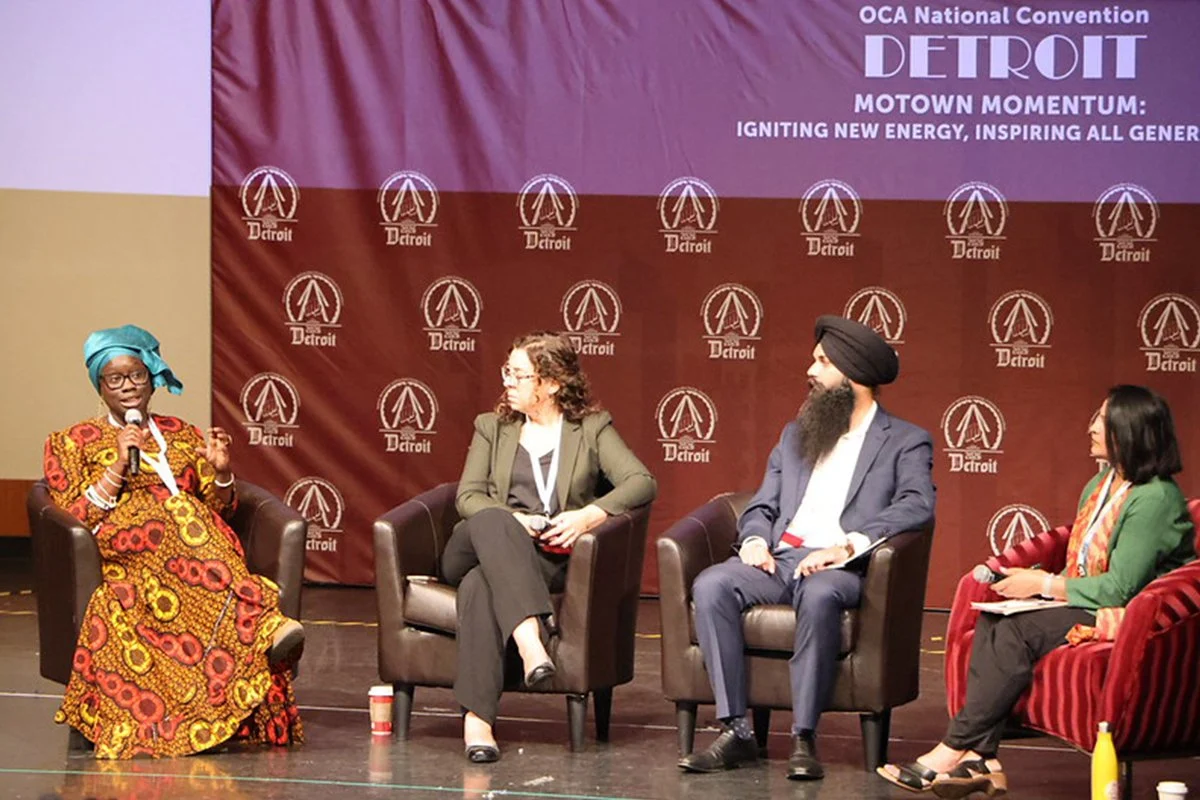
As the United States approaches the 25th anniversary of the September 11 terrorist attacks, the landscape for Black, Arab, Muslim, Middle Eastern, and South Asian (BAMEMSA) communities remains defined by a paradox of institutional growth and perpetual crisis. During the recent OCA National Convention in Detroit, a panel of prominent community leaders gathered to reflect on the legacies of the War on Terror, revealing a sobering reality: organizations founded to provide temporary emergency relief in 2001 have been forced to operate in a state of high-alert triage for nearly a generation. This enduring "emergency mode" has highlighted a critical disconnect between the evolving needs of these communities and the episodic nature of American philanthropy.
The organizations that mobilized in the immediate aftermath of 9/11 were often envisioned as short-term interventions designed to protect civil liberties and provide social services during a period of heightened xenophobia. However, two and a half decades later, the "temporary" threats of 2001 have mutated into systemic features of the American political and social fabric. From the expansion of surveillance technologies to the normalization of transnational repression, BAMEMSA leaders report that their missions have grown more complex even as their operational stability remains precarious.
A Chronology of Exclusion and Resistance (2001–2026)
The trajectory of BAMEMSA organizing over the last quarter century is marked by a series of pivotal moments that shifted the focus from domestic civil rights to a broader struggle against globalized Islamophobia and state-sponsored exclusion.
In the immediate wake of 9/11, the Sikh Coalition was formed to address a surge in hate crimes, including the murder of Balbir Singh Sodhi. By 2002, the implementation of the National Security Entry-Exit Registration System (NSEERS) forced BAMEMSA organizations to pivot toward massive legal defense efforts for thousands of men from predominantly Muslim-majority countries. This era established a precedent for "rapid response" that would come to define the sector.
The decade that followed saw the hardening of these policies. In 2012, the mass shooting at the Sikh Temple in Oak Creek, Wisconsin, served as a grim reminder that the rhetoric of the War on Terror continued to fuel domestic white nationalist violence. The 2017 "Muslim Ban" executive order represented another inflection point, mobilizing a new generation of activists but once again forcing organizations to abandon long-term strategic planning in favor of airport protests and emergency litigation.
By the mid-2020s, the challenges had evolved further. Leaders now point to the rise of transnational repression—where foreign governments target dissidents residing in the U.S.—and the weaponization of national security policies to investigate civil society groups advocating for Palestinian human rights. Most recently, in early 2026, a tragic shooting at the Islamic Center of San Diego underscored that the cycle of hate violence remains unbroken, occurring just months before the 25th anniversary of the event that initially triggered this era of suspicion.
The Data of Disparity: Philanthropy’s Episodic Approach
Despite the critical role these organizations play in safeguarding democracy, data suggests they are significantly under-resourced. According to research from the Building Movement Project and Muslims for Just Futures, BAMEMSA organizations frequently suffer from a "funding cliff." Philanthropic interest tends to spike following high-profile tragedies or controversial policy shifts—such as the 2017 travel ban—only to dissipate once the news cycle moves on.
Statistics from the "100 Days Report" indicate that while rapid response grants are essential for immediate survival, they rarely cover the "indirect costs" of organizational health. Many BAMEMSA groups operate without dedicated funds for human resources, strategic planning, or individual donor cultivation. This lack of "back-office" infrastructure means that when a new crisis hits, staff are already at the point of burnout, and organizations must spend valuable time reinventing administrative wheels rather than executing their missions.
Furthermore, a 2023 analysis of philanthropic giving found that organizations serving Muslim and Arab American communities receive a disproportionately small fraction of total civil rights funding. This disparity is often attributed to a "risk-averse" culture within large foundations, where national security narratives and political sensitivities can lead to the marginalization of BAMEMSA-led initiatives.

The Burden of Constant Emergency
At the Detroit convention, Dr. Seydi Sarr of the African Bureau for Immigration and Social Affairs (ABISA) articulated the human cost of this funding model. Her staff and volunteers are frequently pushed to the brink of exhaustion, managing the survival needs of community members facing deportation and discriminatory travel restrictions. Because the funding is project-based, there is little room to invest in staff wellness or long-term leadership pipelines.
Similarly, Harman Singh of the Sikh Coalition noted that the issues facing his community have expanded into complex legal territories, such as unfair licensing requirements for Sikh truck drivers and the denial of asylum claims for those fleeing religious persecution abroad. These are not "emergencies" in the traditional sense; they are systemic legal hurdles that require sustained, multi-year advocacy efforts.
Rima Meroueh, director of the National Network of Arab American Communities (NNAAC), highlighted a growing concern regarding the chilling effect on constitutional activities. As community members face backlash for participating in protests or engaging in policy advocacy, organizations must provide not only legal support but also psychological safety—a role for which many are not fully funded.
Shifting the Paradigm: From Triage to Transformation
To break the cycle of crisis and response, experts argue that the philanthropic ecosystem must shift toward a "long-term infrastructure strategy." This involves moving away from restricted, short-term grants and toward general operating support that allows organizations to build "imagination and experimentation" into their work.
Several Detroit-based models offer a blueprint for this shift:
- Dream of Detroit: This organization leverages community organizing and housing development to revitalize neighborhoods. By rooting its work in Black Muslim history and neighborhood access, it moves beyond reactionary politics toward proactive community building.
- The Center for Arab Narratives (CAN): Operating out of the Arab American National Museum, CAN focuses on research and data collection to better understand the MENA (Middle East and North Africa) community’s needs. This intellectual infrastructure is vital for shaping policy rather than just reacting to it.
Investing in these types of initiatives ensures that when the next crisis occurs, the community already has the relationships, data, and institutional strength to respond without collapsing.
The Role of Solidarity and Future Implications
A recurring theme among the Detroit leadership was the necessity of inter-movement solidarity. The collaboration between the South Asian Coalition and the National Council of Asian Pacific Americans (NCAPA) demonstrates how sharing information and resources across ethnic lines can create a more formidable front against systemic exclusion. However, as Meroueh cautioned, solidarity is not an automatic byproduct of shared oppression; it requires the "slow and intentional" work of building trust—work that is rarely funded by traditional grants.
The implications of failing to support this infrastructure are profound. If BAMEMSA organizations remain locked in a cycle of survival, the broader American democratic project suffers. These groups serve as the "canaries in the coal mine" for civil liberties; the policies tested on these communities often expand to the general population. Strengthening the capacity of BAMEMSA groups to engage in legal advocacy, narrative strategy, and community healing is, therefore, an investment in the constitutional protections of all Americans.
As the nation reflects on the 25 years since 9/11, the narrative must move beyond remembrance of the past and toward a commitment to the future. The next quarter-century requires a philanthropic and political commitment that recognizes BAMEMSA organizations not as emergency responders, but as permanent and essential pillars of a multiracial democracy. Only by providing the space to imagine new futures—free from the constant shadow of the "War on Terror"—can these communities truly move from the frontlines of crisis to the center of social progress.