Nila Kartika Wati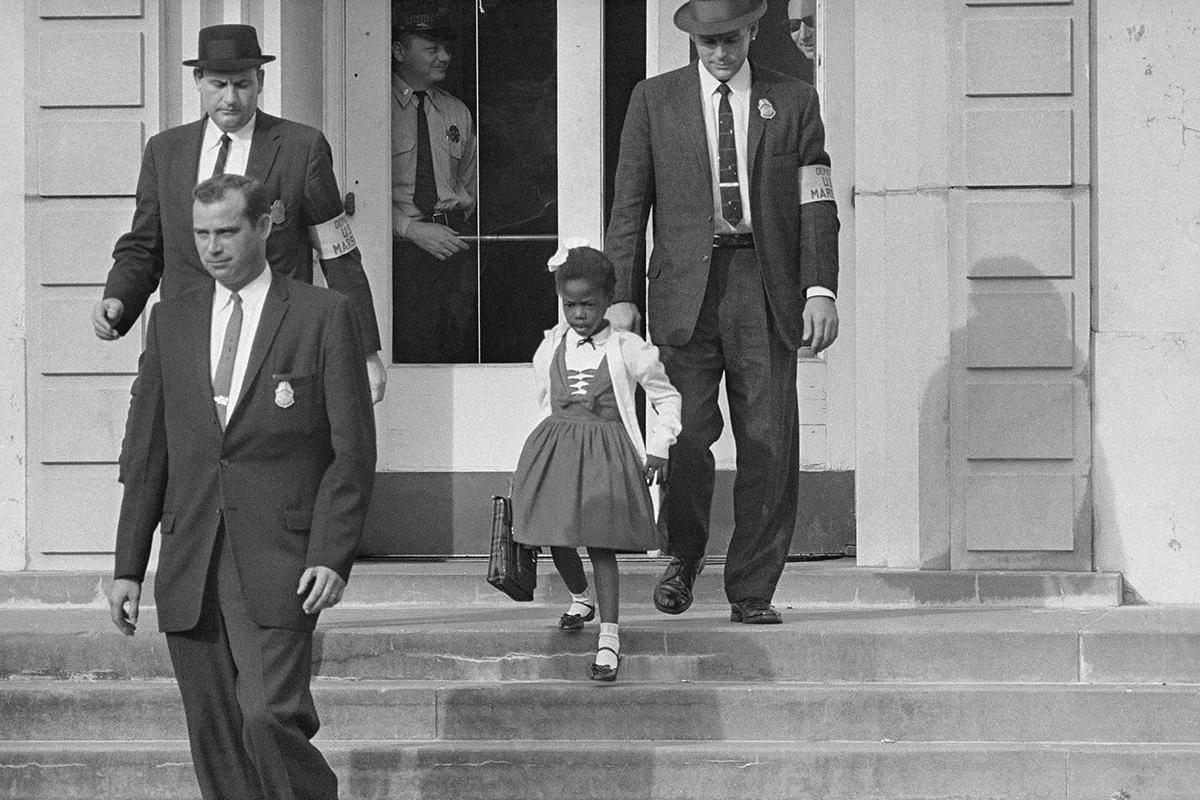
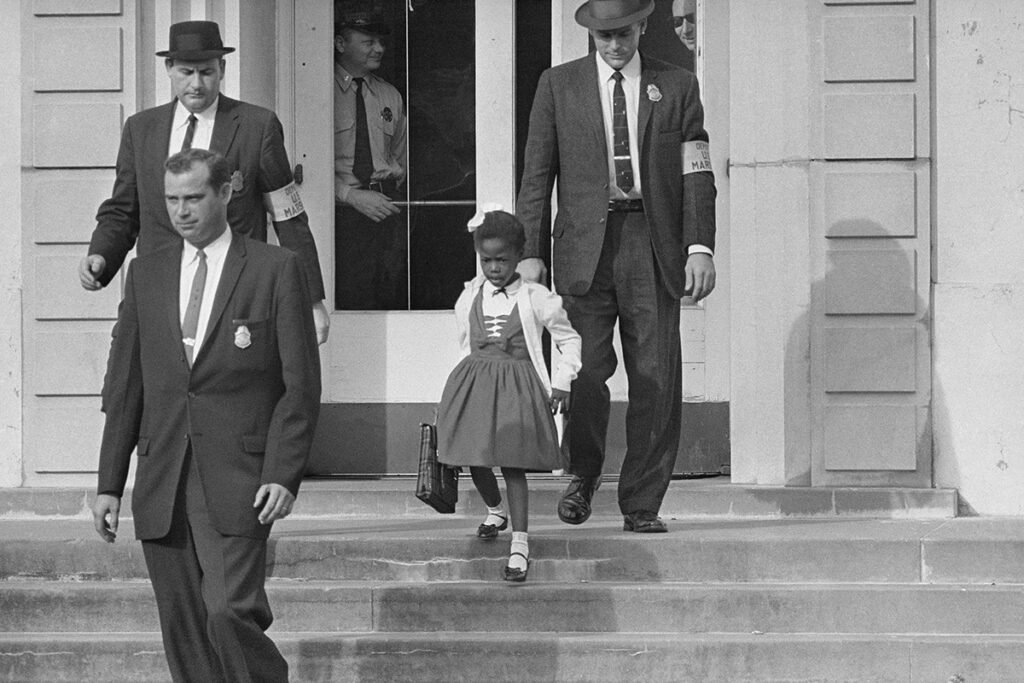
The 1960 integration of William Frantz Elementary School in New Orleans remains one of the most enduring symbols of the American Civil Rights Movement. While the image of six-year-old Ruby Bridges being escorted by four federal marshals is etched into the national consciousness, the internal dynamics of that period and the specific leadership roles played by those within the school walls offer a more complex narrative than the popularized version suggests. Central to this history is Barbara Henry, the young teacher from Boston who taught Bridges in a classroom of one for an entire year, and whose experiences challenge traditional Western archetypes of leadership.
By examining the historical context, the sequence of events during the New Orleans school crisis, and the long-term sociological implications of school desegregation, a clearer picture emerges of the risks and systemic pressures faced by those on the front lines of institutional change.
The Legal and Social Landscape of 1960 New Orleans
The integration of New Orleans public schools did not occur in a vacuum but was the result of a protracted legal battle following the 1954 Supreme Court decision in Brown v. Board of Education. Despite the federal mandate, Louisiana’s political leadership, led by figures such as Leander Perez and the White Citizens’ Council, mounted a campaign of "massive resistance."
In early 1960, Federal District Court Judge J. Skelly Wright issued an order for the Orleans Parish School Board to begin desegregating its schools. The board attempted various delay tactics, but by November 14, 1960, the court mandated the enrollment of Black students in previously all-white schools. Ruby Bridges was one of six Black children in New Orleans selected to integrate the system; she was the only one assigned to William Frantz Elementary in the Ninth Ward, while three others—Leona Tate, Tessie Prevost, and Gaile Etienne—were assigned to McDonogh No. 19.
The atmosphere in New Orleans was volatile. Upon the arrival of the students, white parents initiated a massive boycott. At William Frantz, the crowd of protesters, famously known as the "Cheerleaders," gathered daily to shout racial slurs and threats at the six-year-old girl.
The Appointment of Barbara Henry
Barbara Henry, then 28 years old, arrived in New Orleans under circumstances that were both accidental and providential. A native of Boston and a graduate of the academically rigorous Girls’ Latin School, Henry had been exposed to a diverse and respectful educational environment from a young age. Her professional background included teaching at desegregated U.S. Air Force base schools in France and Germany, experiences that solidified her belief in the necessity and feasibility of integrated education.
When Henry applied for a teaching position in New Orleans, the superintendent informed her of a vacancy at a school that was about to be desegregated. Unlike many of her peers in the local school system, Henry did not view the prospect of an integrated classroom as a deterrent. She accepted the position, unaware that she would soon become the only teacher at the school willing to instruct a Black student.
On her first day, Henry had to navigate a mob of angry protesters to enter the building. Inside, she found a faculty paralyzed by fear and resentment. While the popularized narrative often focuses on the external threat of the mob, the internal environment of the school was equally hostile. The principal and other teachers largely isolated Henry and Bridges, creating a microcosm of the segregated society they were attempting to reform.
The Reality of the "Classroom of One"
For the duration of the 1960-1961 school year, Barbara Henry taught Ruby Bridges in an empty classroom. Because of the white boycott, Bridges was the only student in her grade level for months. However, historical records and personal accounts reveal a startling detail often omitted from standard history books: the school was not entirely empty.
During the year, a small number of white families defied the boycott and sent their children to school. Rather than integrating these students into Henry’s classroom, the administration kept them in a separate room, often hidden in the basement or other secluded areas of the building. When Henry discovered this arrangement, she confronted the principal, demanding that the students be allowed to learn together.
The administration’s refusal to integrate the white students with Bridges led to a compromise where the children would occasionally interact for social studies or music in the afternoons, but remained segregated for core subjects like reading. This internal segregation highlights the immense administrative and social pressure exerted on educators to maintain the status quo, even when legally mandated to change.
The Socioeconomic Toll on the Bridges Family
The leadership shown by the Bridges family involved significant personal and economic sacrifice. The decision to send Ruby to William Frantz was not merely an educational choice but a political act that drew immediate retaliation from the white power structure of New Orleans.
- Employment Loss: Ruby’s father, Abon Bridges, was fired from his job at a gas station shortly after the integration began.
- Economic Displacement: Ruby’s grandparents, who had been sharecroppers in Mississippi for 25 years, were evicted from their land as a direct result of the family’s involvement in the New Orleans school crisis.
- Psychological Impact: The daily trauma of facing a mob took a toll on the young child. Ruby reportedly suffered from nightmares and was unable to eat the food her mother prepared, fearing it might be poisoned, as protesters had threatened.
Despite these pressures, the Bridges family remained committed to the school, supported by a network of neighbors and civil rights activists who provided security and financial assistance. This collective support system underscores the reality that leadership in the Civil Rights Movement was rarely a solitary endeavor but rather a decentralized network of courageous individuals.
Chronology of the New Orleans School Crisis
- May 17, 1954: Brown v. Board of Education declares state laws establishing separate public schools for Black and white students to be unconstitutional.
- May 1960: Judge J. Skelly Wright orders the desegregation of New Orleans schools to begin in September.
- November 14, 1960: Ruby Bridges enrolls at William Frantz Elementary; Leona Tate, Tessie Prevost, and Gaile Etienne enroll at McDonogh No. 19.
- Winter 1960-1961: The white boycott of William Frantz continues; Barbara Henry teaches Bridges in isolation.
- 1961: Slowly, a few white students begin to return to the school, though integration remains limited within the building.
- 1962: Desegregation expands to other grades and schools in New Orleans, though "white flight" begins to accelerate.
Analysis: Redefining Leadership Archetypes
The story of Barbara Henry and Ruby Bridges serves as a critique of Western, Eurocentric leadership models. Traditional leadership theory often emphasizes the "Great Man" or the "heroic individual" who acts with absolute certainty and commands authority through a hierarchy.
In contrast, Barbara Henry’s leadership was characterized by:
- Relational Connection: Her effectiveness was rooted in the bond she formed with a six-year-old child. This connection provided the emotional safety necessary for learning to occur in a high-stress environment.
- Risk-Taking without Self-Promotion: Henry did not view herself as a "leader" in the traditional sense. She viewed her actions as a fulfillment of her professional and moral duty as an educator.
- Persistence in Ambiguity: Navigating a school system that was actively working against her required a level of resilience that does not fit the "fearless hero" mold but rather the "steady practitioner" model.
Scholars like bell hooks and Patricia Hill Collins have argued that such "quiet" forms of leadership are often overlooked because they do not align with patriarchal or individualistic norms. Yet, it was this specific form of leadership that allowed the integration of William Frantz to succeed in its primary mission: the education of a child.
Broader Implications and the State of Education Today
The legacy of the 1960 New Orleans school crisis is a mixture of triumph and ongoing struggle. While the legal barriers to integration were dismantled, the sociological phenomenon of "white flight" led to the rapid re-segregation of urban school districts across the United States.
Data from the Civil Rights Project at UCLA indicates that as of the early 21st century, many American public schools are as segregated as they were in the late 1960s. In New Orleans, the aftermath of Hurricane Katrina in 2005 further transformed the educational landscape, moving the city toward an almost entirely charter-based system. While this has introduced new variables, the underlying issues of racial and socioeconomic equity remain.
The relationship between Barbara Henry and Ruby Bridges, which has lasted over six decades, stands as a testament to the power of individual agency within systemic change. Henry, now in her 90s, and Bridges, in her 70s, continue to advocate for educational equity. Their story suggests that true leadership is not found in the absence of fear or the presence of total authority, but in the willingness to remain present and committed to human dignity in the face of institutional opposition.
In the final analysis, the integration of William Frantz Elementary was not a finished event in 1960 but the beginning of a long-term process of transformation. The "complex truths" of this period offer a more honest template for contemporary leaders who must navigate their own eras of ambiguity and social friction.