Julia Chirkova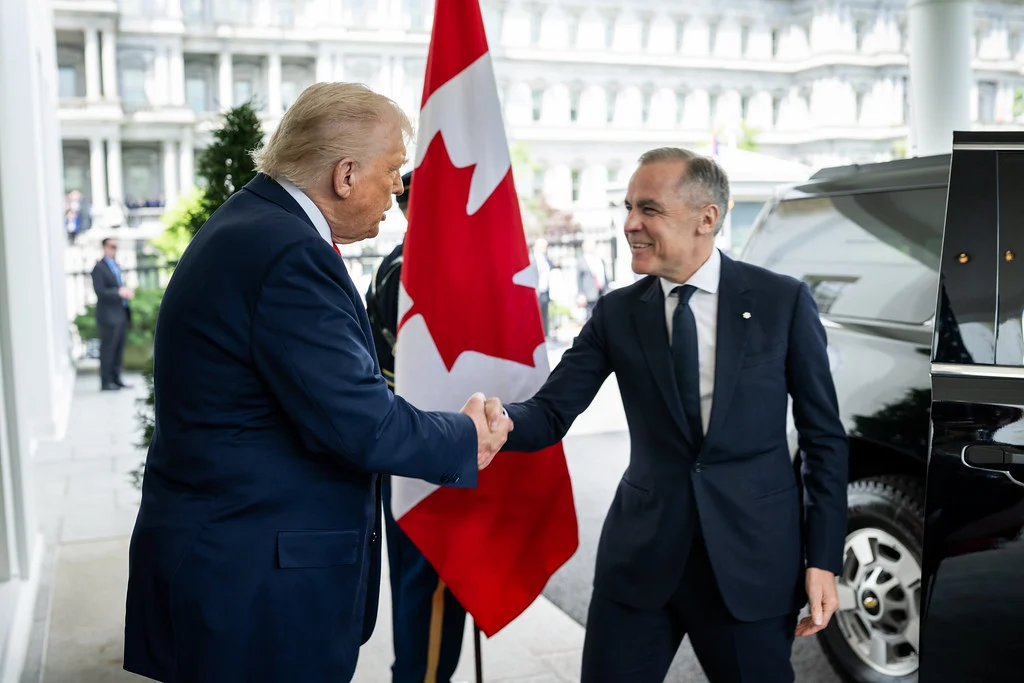
For Mark Carney, Canada’s leader, the decision to disengage from contentious trade negotiations with U.S. President Donald Trump resonated with public approval. However, this political victory now presents a formidable economic challenge. The imposition of new 50% tariffs on approximately $20 billion worth of Canadian goods is poised to significantly impact numerous small and medium-sized enterprises, including long-standing family businesses that have largely been insulated from the ongoing trade war thus far. Recent employment data from the world’s tenth-largest economy signals distress in key sectors such as automotive parts and forestry, underscoring the urgency of the situation.
Carney faces a critical mandate: to fundamentally reorient the Canadian economy to navigate a more adversarial relationship with the United States. Leveraging the current political capital, he aims to champion initiatives that might otherwise encounter broad opposition. These proposed measures include significant pro-business reforms in taxation and regulation, the privatization of public assets like airports, and substantial government investment to accelerate the export of Canada’s natural resources to international markets.
The linchpin of this economic transition strategy is the ability to attract substantial investment. Carney’s plan hinges on convincing deep-pocketed global investors that Canada offers a compelling landscape for attractive financial returns.
A pivotal step in this endeavor is the inaugural Canada Investment Summit, scheduled for Monday and Tuesday in Toronto. This landmark event, conceived by Carney himself, is set to convene money managers collectively overseeing more than $70 trillion in assets. The Prime Minister, alongside other senior government officials and prominent business leaders, will present investment opportunities to major players such as Blackstone Inc., Singapore’s Temasek Holdings Pte, and Apollo Global Management, urging them to channel capital into the Canadian economy.
"Canada is one of the most connected economies in the world. We have trade deals covering 1.5 billion consumers," Carney stated in an interview with Bloomberg News. "We also have been making some big changes over the course of the last year-and-a-half. Now’s the time to look at Canada afresh."
Executives from global investment funds, as well as Canadian investors and pension plans, will have access to a comprehensive prospectus detailing over 160 projects requiring hundreds of billions of dollars in funding. These projects span a diverse range of sectors, including data centers, advanced manufacturing facilities, liquefied natural gas terminals, ports, and numerous mining operations.
"We have a super-cycle of investment opportunity that I just have not seen in my career," remarked Raymond Chun, Chief Executive Officer of Toronto-Dominion Bank, in a separate interview. He added that he could not recall a previous instance where such a concentrated group of the world’s leading asset managers convened to discuss investment prospects in Canada.
Carney’s ambitious goal is to mobilize C$1 trillion (approximately $720 billion) in investment over the next five years, a figure intended to be a synergistic blend of government funding and private capital. He acknowledges the inherent difficulty of this undertaking, having previously stated, "There are very few people who get up in the morning and think about Canada."
To shift this perception, at least temporarily, Carney is leveraging a Rolodex built through an illustrious career. This includes his tenures at Goldman Sachs Group Inc., his leadership of the central banks of Canada and the United Kingdom, and his chairmanship of Brookfield Asset Management Ltd. He also served as chair of Bloomberg Inc. Carney entered the political arena just last year, capitalizing on anti-Trump sentiment to secure a surprise fourth consecutive election victory for the Liberal Party.
Carney inherited an economy facing challenges that extended beyond the nation’s trade disputes. In recent years, per capita gross domestic product growth had lagged behind that of other major economies, characterized by subdued business investment and persistently low productivity gains. Furthermore, some investors had begun to view Canada as an increasingly challenging and unpredictable environment for capital deployment, particularly in light of significant resource projects experiencing delays, rejections, or outright abandonment.
Heather Exner-Pirot, director of natural resources at the Macdonald-Laurier Institute, a think tank, observed that the country’s "investability reputation was severely harmed" during the tenure of Prime Minister Justin Trudeau, which spanned from 2015 to 2025. She recalled instances where New York investors derisively referred to the Impact Assessment Act—a 2019 federal law governing reviews of major resource projects—as the "Don’t Invest in Canada Act."
Carney himself has conceded that Canada faces structural economic hurdles. "We’ve been slow on moving on a series of areas with respect to regulatory approvals and other factors," he admitted in the interview. However, he indicated that his government is committed to accelerating these processes. "We’re going to double down on that strategy, you’ll see in the coming weeks, with additional measures that spread that across the economy."
Exner-Pirot believes Carney now possesses a unique opportunity "to change some minds." Evidence of this potential is emerging in recent foreign investment data, which shows early signs of positive movement. The trade war and President Trump’s rhetoric regarding potential annexation have, paradoxically, provided Carney with the political leverage to address long-standing investor concerns. He can frame initiatives such as tax adjustments and expedited project approvals as matters of national sovereignty. His administration is also pursuing a significant expansion of defense spending and has established a dedicated office to streamline the approval process for major projects.
In preparation for the summit, Carney’s office has compiled a portfolio of investment opportunities. This list includes a proposed crude oil pipeline to Canada’s west coast, the Ksi Lisims LNG export facility in British Columbia, and a C$14.5 billion data center campus planned for Alberta.
Carney has strategically invoked historical parallels to bolster his infrastructure development agenda, drawing a spiritual connection to the legacy of Canada’s first Prime Minister, Sir John A. Macdonald, who served for approximately 19 years until his death in 1891. During a public address earlier in the week, Carney referenced the imposition of 50% tariffs on Canadian exports by the United States in 1890, a period he characterized as a precursor to potential annexation. "Sound familiar?" the current Prime Minister quipped, drawing a parallel to contemporary trade tensions.
Carney explained that Macdonald "recognized the threat of an expansionist United States for what it was and raced to unite this land" economically, notably through the construction of a transcontinental railway. He added, "Now we’re developing around that line, north and south, and connecting with new partners in Asia and Europe." The investment summit, he suggested, could be an integral part of this broader strategy.
John Aiken, director of Canada research at Jefferies Financial Group Inc., noted in a report that "the event serves as a practical mechanism to reverse a decade of flat business investment." However, he also raised a critical question: whether Canada can successfully convert "ambition, capital availability, and policy support into executable projects that generate durable private-sector returns."
Carney’s Political Capital and Public Support
Carney’s approval ratings have surged to near-record highs following his decision to suspend trade talks with the U.S. in late August, with a reported 60% approval rating, nearly double that of his primary opposition rival. This heightened public support could prove instrumental in rallying backing for potentially controversial projects, such as the proposed new crude oil pipeline to the British Columbia coast.
The mining and minerals sector features prominently in the summit’s prospectus, accounting for over a third of the listed projects. Troilus Mining Corp., for instance, requires $1.1 billion in capital to develop a gold and copper project in Quebec. Another significant undertaking seeking investors is a nuclear fuel services project described as "Canada’s first uranium refining and conversion facility in more than 40 years."
Greg McNab, co-chair for the mining practice at law firm Dentons, expressed optimism about the current climate, stating, "We’ve got so much coordination and enthusiasm across the country. It’s hard not to get swept up in it."
Beyond domestic initiatives, the Prime Minister is actively cultivating new and strengthened international partnerships. Immediately following the investment summit, Carney is scheduled to travel to France for an anticipated announcement regarding a closer trade and security alliance between Canada and the European Union.
The current Canadian government exhibits a decidedly pro-business orientation. Carney has strategically appointed allies from his Goldman Sachs and Royal Bank of Canada backgrounds to key positions and has placed former bankers and chief executives in charge of various segments of Canada’s civil service. Furthermore, he has appointed Dominic Barton, chairman of the global mining company Rio Tinto Plc and former ambassador to China, as the chair of Invest in Canada, an agency tasked with attracting foreign direct investment.
Discussions are also underway regarding the potential for private sector investment in Canada’s largest airports. While this prospect has already drawn criticism from labor groups, Carney’s administration may possess the political flexibility to navigate these objections.
Navigating Bureaucracy and Economic Realities
The reliance on government bureaucrats and officials to guide the nation’s economic trajectory presents its own set of challenges. Some executives and investors privately express concerns that Canada’s bureaucracy is inherently risk-averse and lacks sufficient experience in connecting Canadian companies with global investment opportunities.
Although Carney has implemented measures to expedite project approvals, and has signaled a potential rollback of certain climate policies enacted during the Trudeau era, energy executives remain cautious. Their wariness stems from past experiences with rejected projects, such as Enbridge Inc.’s proposed northwest oil pipeline and TC Energy Corp.’s decision to abandon a C$15.7 billion pipeline to the Atlantic Coast. Derek Burleton, deputy chief economist at TD Bank, suggests that Canada could further incentivize investors by offering direct project backing.
Carney and Finance Minister François-Philippe Champagne have consistently highlighted Canada’s fiscal flexibility, a notable advantage compared to other developed nations whose bond markets have experienced recent volatility due to deficit concerns. This fiscal room has enabled the government to allocate C$7.5 billion in support for workers and businesses affected by tariffs this month, in addition to billions in aid provided last year. There is speculation that this fiscal strength could also pave the way for a more favorable tax regime, potentially including accelerated capital spending write-offs and other investor-friendly measures.
However, Carney’s government is projecting federal deficits totaling C$242 billion over the next four years. Burleton cautions that market jitters could constrain any further expansion of government borrowing. "The bond market vigilantes are starting to punish governments for running high deficits," he warned. "Canada has an advantage on this front, but we need to maintain it and if anything improve it."
A significant obstacle to the successful execution of large-scale projects could be a potential labor shortage. Immigration restrictions have led to a near-zero population growth rate in Canada over the past year. Securing an adequate supply of skilled workers for the construction of infrastructure such as ports, roads, and complex energy facilities in remote and challenging regions of the world’s second-largest country will undoubtedly be a formidable task.
While Canada possesses numerous inherent strengths, many of the projects currently under consideration are long-term ventures, potentially requiring a decade or more to come to fruition, even under optimal conditions. Furthermore, Canada’s enduring economic reality will always be its close proximity to the United States market; a complete severance of these ties is not a feasible outcome.
"There isn’t any easy button one can push, there’s no real switch," Burleton concluded. "We would have done it by now."
With assistance from Derek Decloet.
Photo caption: President Donald Trump meets with Canadian Prime Minister Mark Carney on May 6, 2025. (The White House/Flickr)
©2026 Bloomberg L.P. Visit bloomberg.com. Distributed by Tribune Content Agency LLC.