Layla Zulfa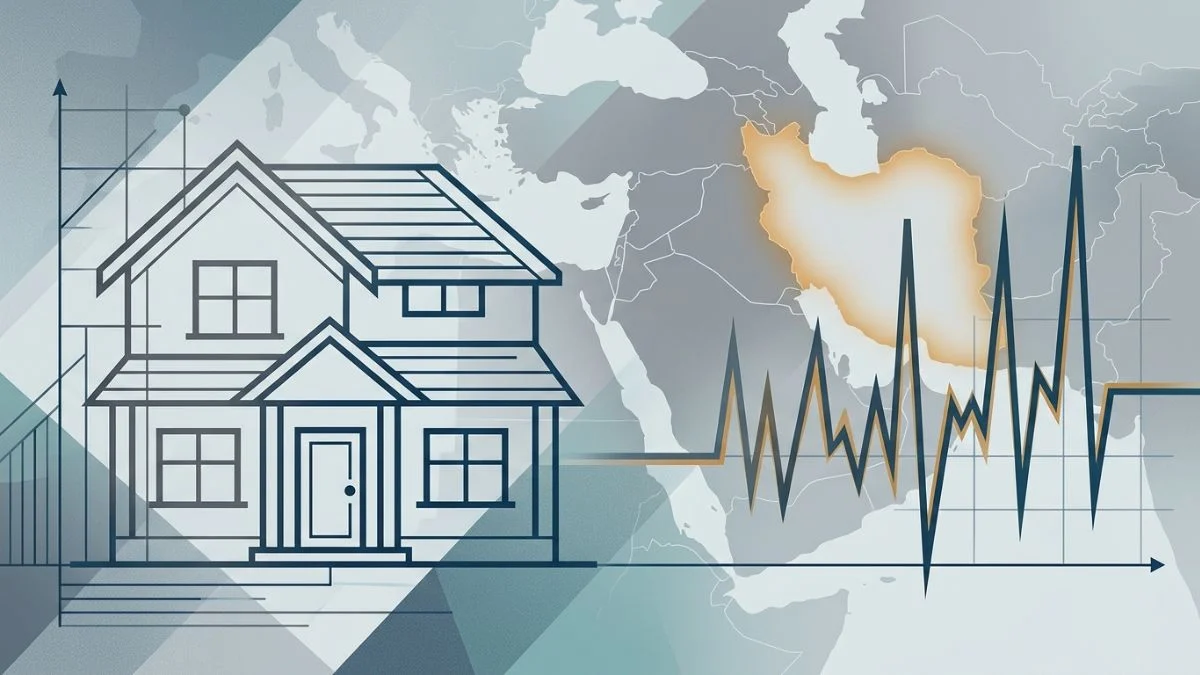
The specter of 9% mortgage rates has resurfaced in financial discussions, prompting scrutiny of economic forecasts and potential market catalysts. This concern was amplified by a recent CNBC segment featuring Selma Hepp, Chief Economist at Cotality, who outlined a "worst-case scenario" that could propel mortgage rates to such a level within the next twelve months. While this projection represents an extreme possibility, a deeper examination of the underlying economic and geopolitical factors is necessary to understand its plausibility and potential implications for the housing market and broader economy.
Hepp’s analysis, initially presented on the HousingWire Daily podcast, hinges on a confluence of significant economic and geopolitical shifts. The core of her argument revolves around the potential for a substantially overheated economy, persistent geopolitical instability impacting energy prices, and a stubbornly hawkish stance from the Federal Reserve. These factors, she posits, could collectively push mortgage rates to unprecedented heights, significantly exceeding current levels and causing considerable disruption.
Understanding the "Worst-Case Scenario" for Mortgage Rates
To comprehend the trajectory towards 9% mortgage rates, it is crucial to dissect the individual components of Hepp’s worst-case scenario. Each element represents a significant deviation from current economic trends and market expectations, highlighting the conditional nature of such a forecast.
1. A Supercharged Economy: Fueling Inflationary Pressures
The primary driver in Hepp’s scenario is an economy that experiences a prolonged and robust expansion, exhibiting sustained growth between 5% and 7% in nominal terms (unadjusted for inflation) over the next twelve months. This would necessitate a continued surge in consumer spending and a labor market that remains exceptionally strong, showing no signs of deceleration or weakness.
Supporting Data and Context: Such an economic trajectory would imply a significant departure from current projections. For instance, in the latter half of 2023, while the U.S. economy demonstrated resilience, nominal GDP growth was considerably lower than the 5-7% range. A sustained period of such rapid expansion would likely translate into escalating demand across all sectors, putting upward pressure on prices and wages. This would create a fertile ground for inflation to re-emerge or persist, compelling the Federal Reserve to maintain a restrictive monetary policy. The Federal Reserve’s dual mandate includes maintaining price stability and maximizing employment. An economy running "hot" would directly challenge the price stability objective, forcing the central bank’s hand.
Implications: If the economy were to perform at this accelerated pace, it would signal a significant shift in inflationary dynamics. Businesses would likely face higher input costs, and wage pressures could intensify as employers compete for a limited pool of labor. This environment would make it exceedingly difficult for the Federal Reserve to consider interest rate cuts, as their primary focus would be on taming any resurgent inflationary pressures.
2. Persistent Geopolitical Instability and Elevated Oil Prices
A second critical factor in Hepp’s worst-case scenario involves the continuation of geopolitical conflicts, specifically referencing the Iran conflict, and its direct impact on global oil prices. For mortgage rates to reach 9%, oil prices would need to remain elevated, trading significantly above the $67-$82 per barrel range, which is generally considered acceptable by the Federal Reserve and financial markets. This implies that the conflict would need to persist, and market sentiment would need to solidify around the belief that a diplomatic resolution is unlikely in the near future.
Supporting Data and Context: Global oil prices are a significant determinant of inflation. Fluctuations in crude oil prices directly impact transportation costs, manufacturing expenses, and consumer energy bills, all of which contribute to the overall inflation rate. Historically, sharp increases in oil prices have often been accompanied by broader inflationary surges. For example, the oil price shocks of the 1970s were a major contributor to stagflation in developed economies. In the current geopolitical climate, any escalation or prolonged tension in major oil-producing regions can lead to significant price volatility. The assumption here is that the market would price in a sustained period of supply disruption or uncertainty, leading to persistently high oil prices.
Implications: Elevated oil prices would act as a direct inflationary accelerant, feeding into the broader economic picture. This would create a challenging environment for policymakers, as they would be forced to combat inflation stemming from both robust domestic demand and external supply-side shocks. This dual pressure would likely reinforce the need for higher interest rates to cool the economy and stabilize prices.
3. The Federal Reserve’s Hawkish Stance
The third pillar of Hepp’s projection is the Federal Reserve’s continued commitment to a hawkish monetary policy, potentially hiking interest rates beyond current market expectations. The historical relationship between Fed rate hike cycles and mortgage rates has consistently shown a negative correlation, meaning that as the Fed raises its benchmark interest rate, mortgage rates tend to follow suit, albeit with a lag and influenced by other factors.
Supporting Data and Context: The Federal Reserve has been engaged in an aggressive monetary tightening cycle since early 2022, raising the federal funds rate multiple times in an effort to curb inflation. This tightening cycle has already led to a substantial increase in mortgage rates from their historic lows. However, Hepp’s scenario suggests a scenario where the Fed not only maintains its restrictive policy but potentially increases rates further, or keeps them at elevated levels for a prolonged period, in response to the aforementioned economic and geopolitical pressures. The current market pricing for future Fed actions generally anticipates a pause or even gradual cuts in the medium term, depending on inflation data. A sustained hawkish stance would mean the market needs to recalibrate its expectations significantly.
Implications: A persistently hawkish Federal Reserve would directly impact the cost of borrowing across the economy. Higher short-term rates set by the Fed would translate into higher yields on Treasury bonds, which serve as a benchmark for long-term interest rates, including mortgage rates. Furthermore, if the Fed signals a willingness to keep rates higher for longer, it would reinforce investor expectations of continued tight monetary conditions, pushing bond yields higher and, consequently, mortgage rates upward.
The Mathematical Realities: Spreads and Yields
Beyond these three broad categories, Hepp’s analysis also touches upon the critical interplay between Treasury yields and mortgage spreads. For mortgage rates to reach 9%, the 10-year Treasury yield would need to surpass 6%, and mortgage spreads—the difference between mortgage rates and Treasury yields—would need to widen significantly beyond their current levels.
Supporting Data and Context: The 10-year Treasury yield is a key indicator of long-term borrowing costs and is highly sensitive to inflation expectations and monetary policy. Mortgage rates are typically priced as a spread over this benchmark yield, accounting for factors such as the risk of prepayment, servicing costs, and market liquidity. Current 10-year Treasury yields have been fluctuating, but a sustained move above 6% would represent a notable increase. Simultaneously, mortgage spreads have also experienced volatility. A widening of these spreads would mean lenders are demanding a higher premium to originate mortgages, further amplifying the increase in borrowing costs for consumers. The math simply does not support 9% mortgage rates if the 10-year yield remains below 6% and mortgage spreads are at their present levels.
Implications: The widening of mortgage spreads can be a signal of increased risk perception in the mortgage market or reduced liquidity. In a stressed economic environment, lenders might become more risk-averse, demanding higher compensation for originating mortgages. This could be driven by concerns about potential defaults or a general tightening of credit conditions.
Conclusion: A Contingent Possibility, Not a Base Case
It is important to reiterate that Selma Hepp’s projection of 9% mortgage rates represents a "worst-case scenario," not her base case expectation. This distinction is crucial for framing the discussion and avoiding undue alarm within the real estate and financial sectors. The prospect of significantly higher mortgage rates is undoubtedly a concern for many, particularly in an environment where affordability is already a challenge.
The three core conditions—a hyperactive economy, sustained geopolitical conflict driving oil prices, and a persistently hawkish Fed—are interconnected but also individually represent significant hurdles to overcome. The likelihood of all three occurring simultaneously and to the degree necessary to push rates to 9% is, by most analyses, considered low.
Analysis of Probability: Considering the political landscape, for instance, the duration of potential geopolitical conflicts like the one involving Iran could be influenced by electoral outcomes and international diplomacy. Following the midterm elections, the political feasibility of sustaining prolonged international conflicts for an extended period, especially without bipartisan support, becomes a more complex calculus. Moreover, the Federal Reserve’s decision-making process is data-dependent, and while inflation remains a concern, other economic indicators will be closely monitored. A significant economic slowdown, for example, could compel a shift in monetary policy.
Even achieving 8% mortgage rates, as previously discussed in other analyses, presents considerable challenges. The current economic environment, while showing resilience, is also subject to various headwinds, including persistent inflation, geopolitical uncertainties, and the lagged effects of monetary tightening.
Therefore, while the possibility of 9% mortgage rates cannot be entirely dismissed under a specific confluence of adverse events, it remains a highly contingent outcome. The current economic trajectory and the inherent complexities of geopolitical and monetary policy suggest that while mortgage rates may remain elevated, a sustained move to 9% would require a dramatic and sustained escalation of the factors outlined in Hepp’s extreme scenario. Market participants and policymakers will continue to monitor economic data, geopolitical developments, and the Federal Reserve’s actions closely for any signals that might indicate such a shift.