Nila Kartika Wati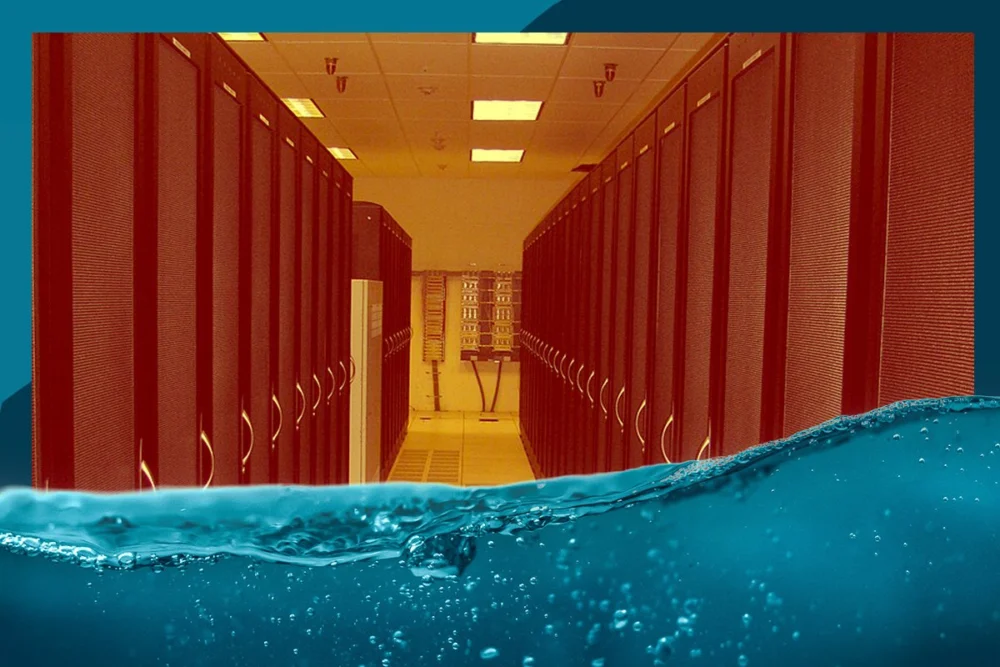
In October 2025, the national environmental advocacy group Food & Water Watch issued a formal demand for a nationwide moratorium on the approval and construction of new large-scale data centers. This move signaled a significant escalation in the growing tension between the rapid expansion of the artificial intelligence (AI) sector and the finite natural resources of the United States. The organization argued that the pace of development has far outstripped the ability of regulators to assess the long-term impacts on local water tables, electrical grids, and public health. This call for a halt in construction was catalyzed by two primary factors: the federal government’s aggressive "AI Action Plan," which seeks to deregulate and accelerate infrastructure development, and a perceived lack of transparency from major technology firms regarding the true environmental footprint of their "hyperscale" facilities.
The Shift from Traditional Computing to Generative AI Infrastructure
To understand the current crisis, it is necessary to distinguish between traditional data centers and the new generation of AI-optimized facilities. For decades, data centers were designed to handle general computational tasks such as website hosting, email services, and cloud storage. These facilities primarily utilized Central Processing Units (CPUs), which, while energy-intensive, operated at thermal levels that could often be managed through conventional industrial air conditioning and ventilation systems.
However, the advent of generative AI—powered by Large Language Models (LLMs) like those developed by OpenAI, Google, and Meta—has necessitated a fundamental shift in hardware. AI training and inference require specialized AI accelerators and Graphics Processing Units (GPUs). Unlike CPUs, GPUs are designed to process massive datasets in parallel, a task that requires significantly more electrical power and generates extreme levels of concentrated heat. A single high-end AI chip can reach operating temperatures of up to 194 degrees Fahrenheit. When hundreds of thousands of these chips are clustered into server racks within a hyperscale data center, the resulting thermal load creates an environment that traditional air-cooling methods can no longer stabilize. Industry data suggests that these AI-centric facilities require nearly double the power of traditional data centers, often pulling more resources than local municipal infrastructures were ever designed to provide.
The Thermodynamics of Cooling: Air, Water, and Chemical Risks
As the heat density of server racks increases, technology companies have shifted toward liquid cooling solutions, which are more efficient at heat transfer than air but come with significant environmental trade-offs. Traditional air-cooling systems use a "hot aisle/cold aisle" configuration, where chilled air is pushed through the front of the racks and hot air is vented out. While this method consumes less water directly, it is increasingly insufficient for AI workloads.
Modern AI facilities have turned to more aggressive methods, including evaporative cooling and closed-loop systems. In evaporative cooling, water is applied to a heat-exchange surface; as the water evaporates into steam, it carries the heat away from the system. This process is highly effective but results in the permanent loss of water to the atmosphere, meaning the water cannot be recovered or reused by the local community.
Closed-loop systems are often marketed as a "green" or "sustainable" alternative. These systems involve two interconnected piping loops: one that circulates cool water directly through the server racks to absorb heat, and a second loop that carries that heat to an external exchange unit. However, AI ethicists and environmental researchers, such as Masheika Allgood of AllAI, point out that the term "closed-loop" can be misleading. The second loop almost always relies on evaporative cooling to release the heat into the environment, meaning water loss is still an inherent part of the process.
Furthermore, the chemicals used in these cooling processes have raised significant public health concerns. Some systems utilize liquid coolants containing Per- and Polyfluoroalkyl Substances (PFAS), commonly known as "forever chemicals." These substances are prized for their heat-resistant properties but are notorious for their inability to break down in the environment and their links to various cancers and developmental issues. There is currently a lack of transparency regarding how much of these chemicals are used, the risk of leakage into local groundwater, and the disposal methods for "blowdown" water—the concentrated wastewater left behind after the cooling process.
Chronology of the AI Infrastructure Surge
The current crisis is the result of a rapid acceleration in infrastructure investment over the past three years:
- 2023: The "AI Gold Rush" begins in earnest, with major tech firms pivoting their entire business models toward generative AI. Data center water consumption in the U.S. is recorded at over 17 billion gallons for the year.
- Early 2024: Microsoft and Google release environmental reports showing a sharp spike in water and energy usage. Microsoft reports a 34 percent increase in water consumption globally, largely attributed to AI research.
- July 2025: The Trump Administration releases "America’s AI Action Plan," which prioritizes the rapid build-out of domestic data centers to maintain a competitive edge over global rivals, specifically China. The plan includes provisions for streamlined permitting processes.
- October 2025: Food & Water Watch, citing a lack of environmental oversight and the potential for "digital colonialism," calls for a national moratorium on new large-scale data centers.
- Late 2025: Local resistance movements gain momentum in regions like the Great Lakes Basin and the American Southeast, focusing on water rights and utility rate hikes.
Supporting Data: The Magnitude of Resource Consumption
A 2024 report from the Lawrence Berkeley National Laboratory provides a stark look at the trajectory of data center resource use. In 2023, hyperscale data centers—those operated by the largest tech companies—accounted for 84 percent of the 17 billion gallons of water used directly for cooling in the U.S. This figure, however, represents only a fraction of the total impact. When "indirect" water use is factored in—referring to the water required by power plants to generate the electricity that data centers consume—the total usage jumps to an estimated 211 billion gallons annually.
By 2028, experts project that direct water consumption for data center cooling could reach 33 billion gallons. This surge is occurring at a time when 40 percent of existing and proposed data centers are located in regions already classified as "water-stressed." In areas like Arizona and Northern Virginia, the competition for water between residents, agriculture, and data centers has already led to legal challenges and emergency conservation measures.
Corporate Responses and the "Greenwashing" Debate
In response to growing criticism, Big Tech companies have touted their commitment to "water positive" goals. In 2024, Microsoft announced a "zero-waste solution" for cooling, claiming that their transition to closed-loop systems would reduce water usage by 39 percent. Similarly, Google’s 2024 Environmental Report highlighted its commitment to "climate-conscious cooling," emphasizing that water-cooled centers are 10 percent more energy-efficient than air-cooled ones.
However, critics argue these claims are a form of "greenwashing." By focusing on energy efficiency, companies may be obscuring the massive volumes of water they continue to extract from local aquifers. Masheika Allgood notes that these corporate reports often omit the details of the heat-exchange loops, creating a "lie by omission" that deceives the public about the actual environmental cost. The reality remains that as long as chips continue to run hotter and deployments continue to scale, there is no existing technology that can eliminate the massive resource requirements of AI.
Broader Implications: The Great Lakes and Indigenous Communities
As traditional tech hubs like Silicon Valley and Northern Virginia become saturated and resource-constrained, the industry is shifting its focus toward the Great Lakes Basin. This region, containing 20 percent of the world’s surface freshwater, is viewed by tech executives as an ideal location due to its cooler climate and perceived water abundance.
This shift has sparked concerns among the 40 million people in the U.S. and Canada who rely on the Great Lakes for drinking water. A report by the Joyce Foundation and the Great Lakes Indian Fish and Wildlife Commission warns that the region’s groundwater aquifers are already struggling to recharge due to climate change. The influx of data centers threatens to strain these resources further. Indigenous communities, who have historical and legal rights to these waters, are expected to bear the brunt of the shortages. Existing water withdrawal policies often favor industrial users over tribal sovereignty and community needs, leading to what advocates call "digital colonialism"—the extraction of local resources for the benefit of global tech corporations at the expense of local populations.
Legal Frontiers and Community Action
The battle over data centers is increasingly moving into the courtroom. Organizations such as the NAACP, the Southern Environmental Law Center (SELC), and Earthjustice have begun threatening or filing lawsuits against tech companies and local municipalities. These legal actions often focus on unpermitted infrastructure, such as gas turbines used for backup power, and the disproportionate impact of data center pollution on marginalized communities.
In Michigan, residents are already facing some of the highest water bills in the country. In early 2025, the Great Lakes Water Authority proposed significant rate hikes, which many residents believe are being driven by the infrastructure upgrades needed to support industrial expansion, including data centers.
The call for a national moratorium by Food & Water Watch serves as a rallying point for these localized struggles. Advocates argue that until there is a comprehensive federal framework to track water usage, mandate transparency, and protect community resources, the "unregulated gold rush" of AI development must be paused. As the technology continues to evolve, the fundamental question remains: at what cost to the physical environment does the digital future come?