Lana Rhoades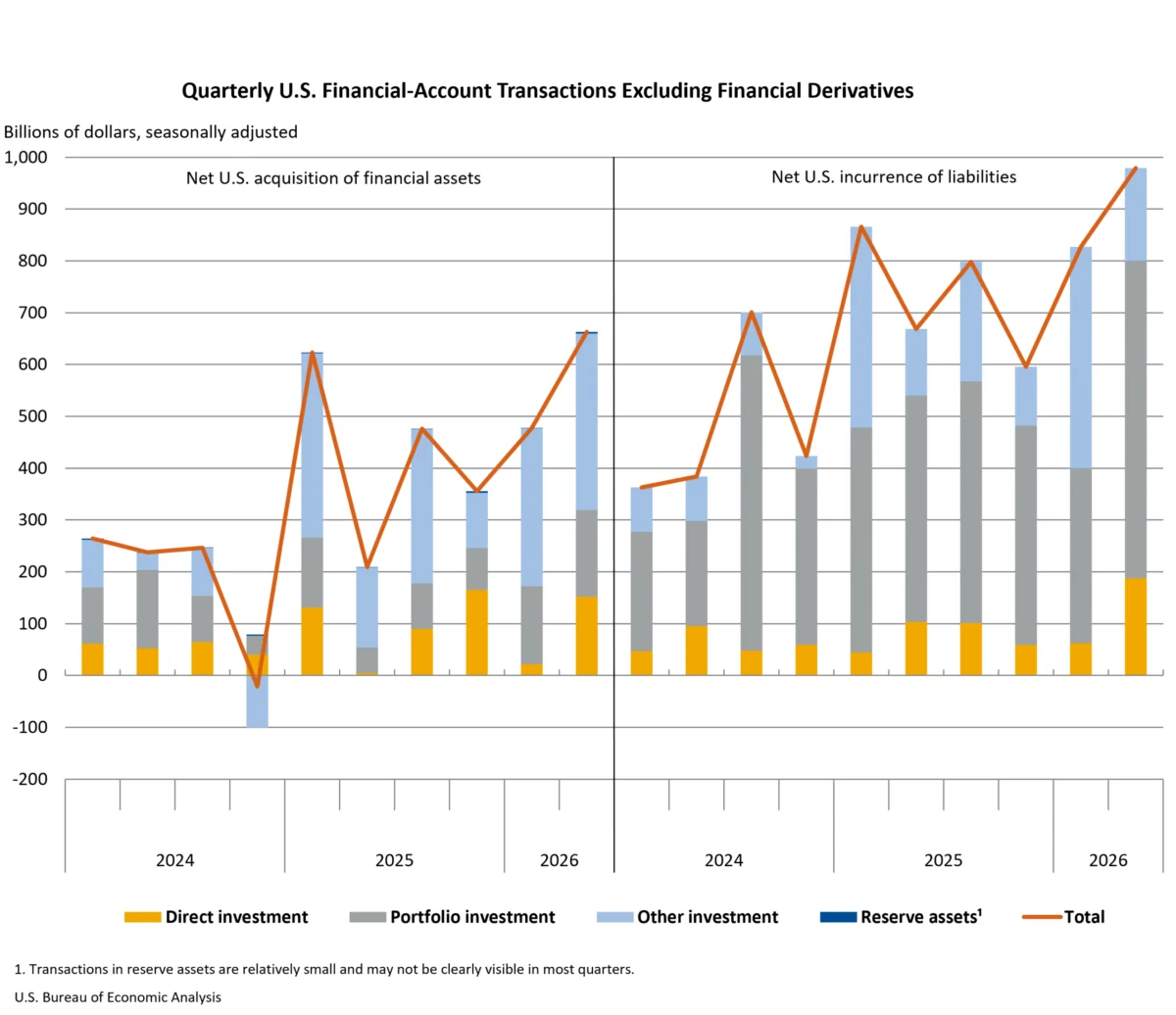
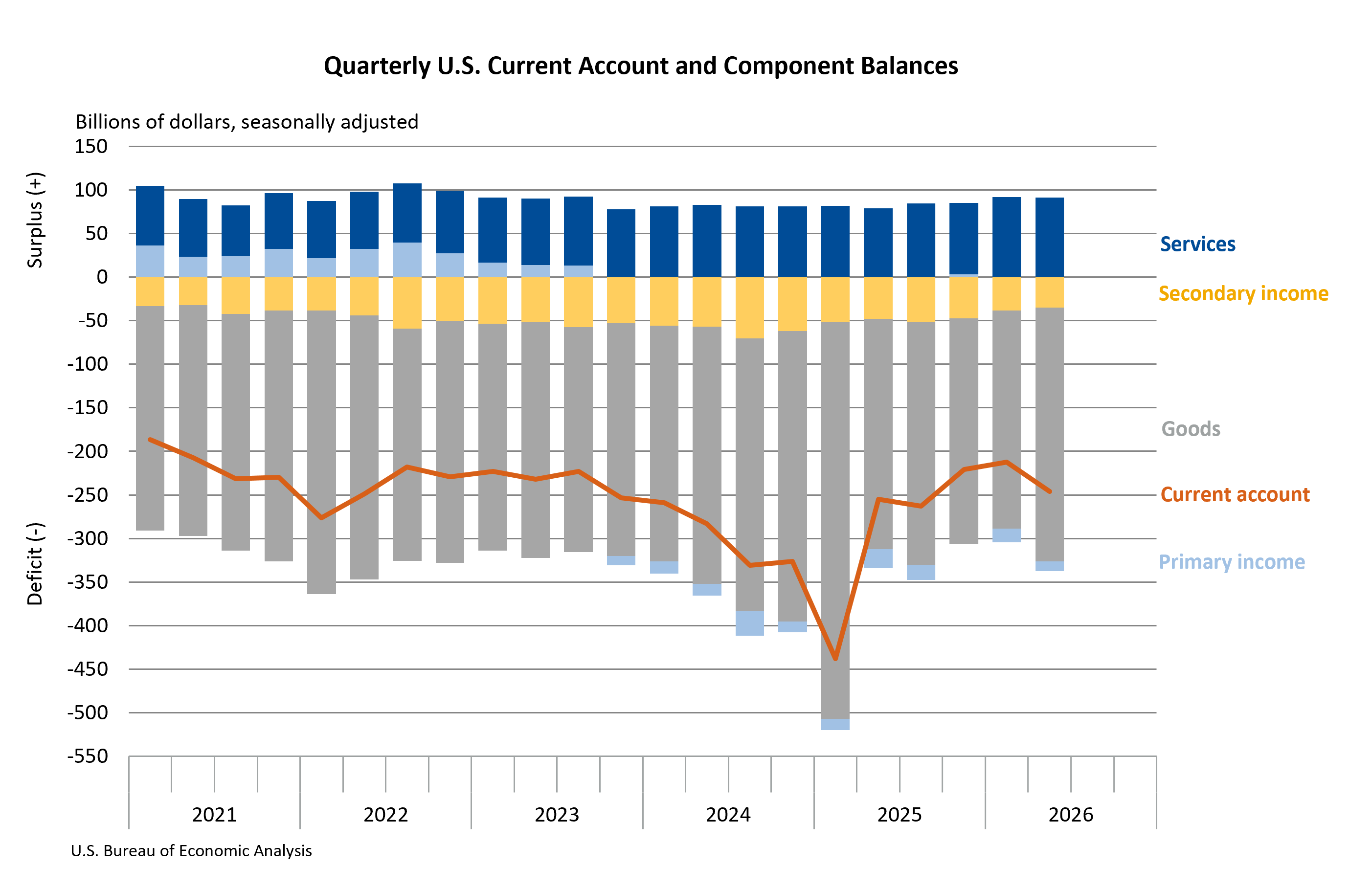
The U.S. current-account deficit, a key measure of a nation’s international economic transactions, expanded by a substantial $33.4 billion, or 15.7 percent, to reach $246.0 billion in the second quarter of 2026. This marks a notable widening from the revised first-quarter deficit of $212.6 billion, according to the latest statistics released by the U.S. Bureau of Economic Analysis (BEA). The deficit’s growing proportion of the national economy, now representing 3.0 percent of current-dollar gross domestic product (GDP) compared to 2.7 percent in the preceding quarter, underscores a developing trend in the United States’ engagement with the global economy.
Deep Dive into the Deficit’s Drivers
The deterioration in the current-account balance during the second quarter was primarily fueled by a larger deficit in goods trade. This shortfall in the balance of trade for physical products was only partially mitigated by a narrowing of deficits in primary (earned) income and secondary income (current transfers). This indicates that the U.S. is importing more goods than it is exporting, a situation that has historically been a significant contributor to the overall current-account deficit.
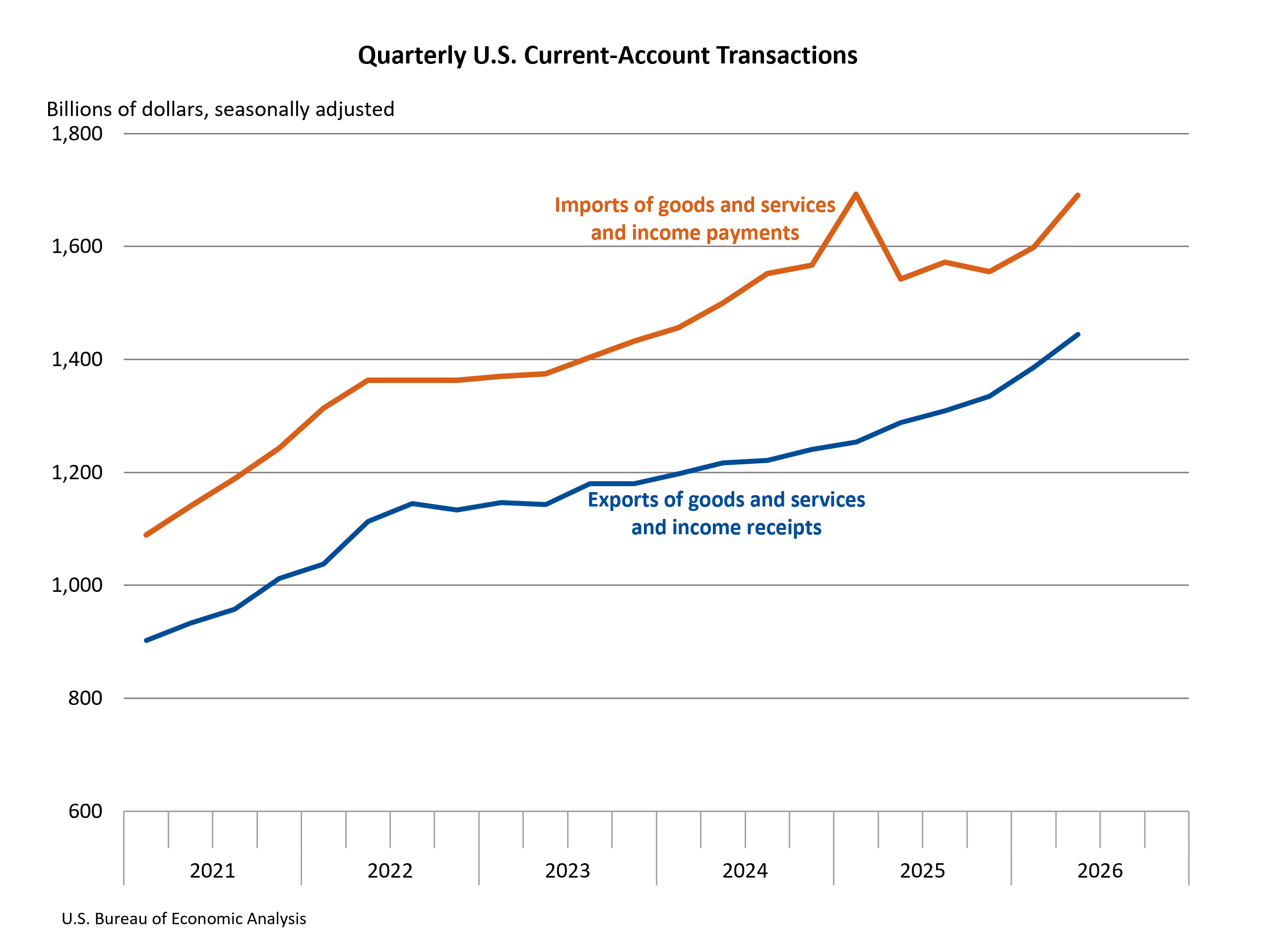
Exports of goods and services to, and income received from, foreign residents saw an increase of $58.8 billion, bringing the total to $1.44 trillion. This growth was attributed to rising goods exports and an uptick in primary income receipts. Primary income encompasses earnings from foreign direct investments, portfolio investments, and other investments.
Conversely, imports of goods and services from, and income paid to, foreign residents experienced a more pronounced increase of $92.2 billion, totaling $1.69 trillion. This surge was driven by higher goods imports and an expansion in primary income payments. The disparity between the growth in imports and exports of goods highlights a widening trade imbalance in physical products.
The secondary income balance, which includes current transfers like remittances and foreign aid, saw its deficit reduce. Similarly, the deficit on primary income, while still negative, also showed a decrease. However, these improvements were insufficient to offset the escalating deficit in the goods balance.
Financial Account Dynamics and Net Investment Position
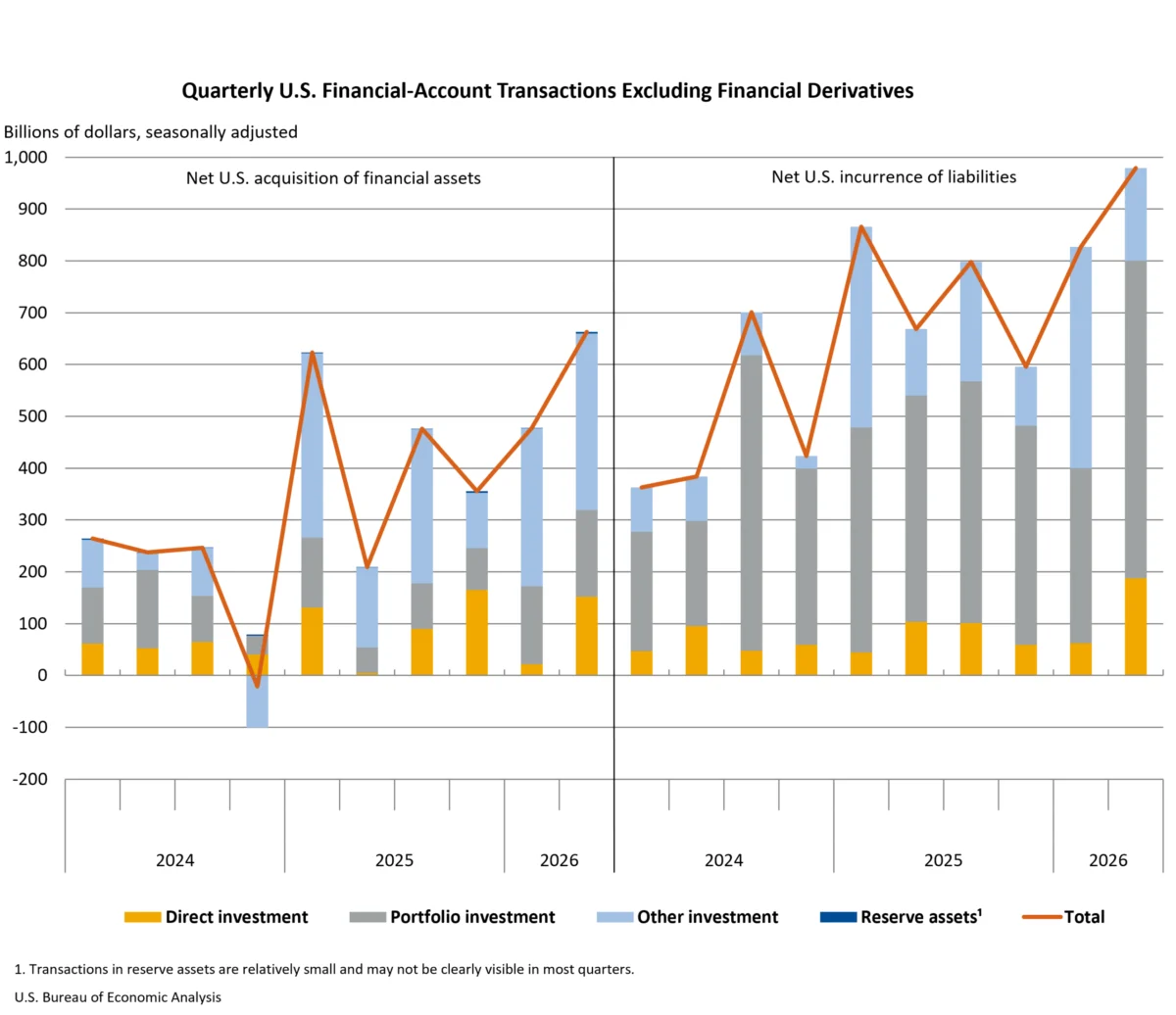
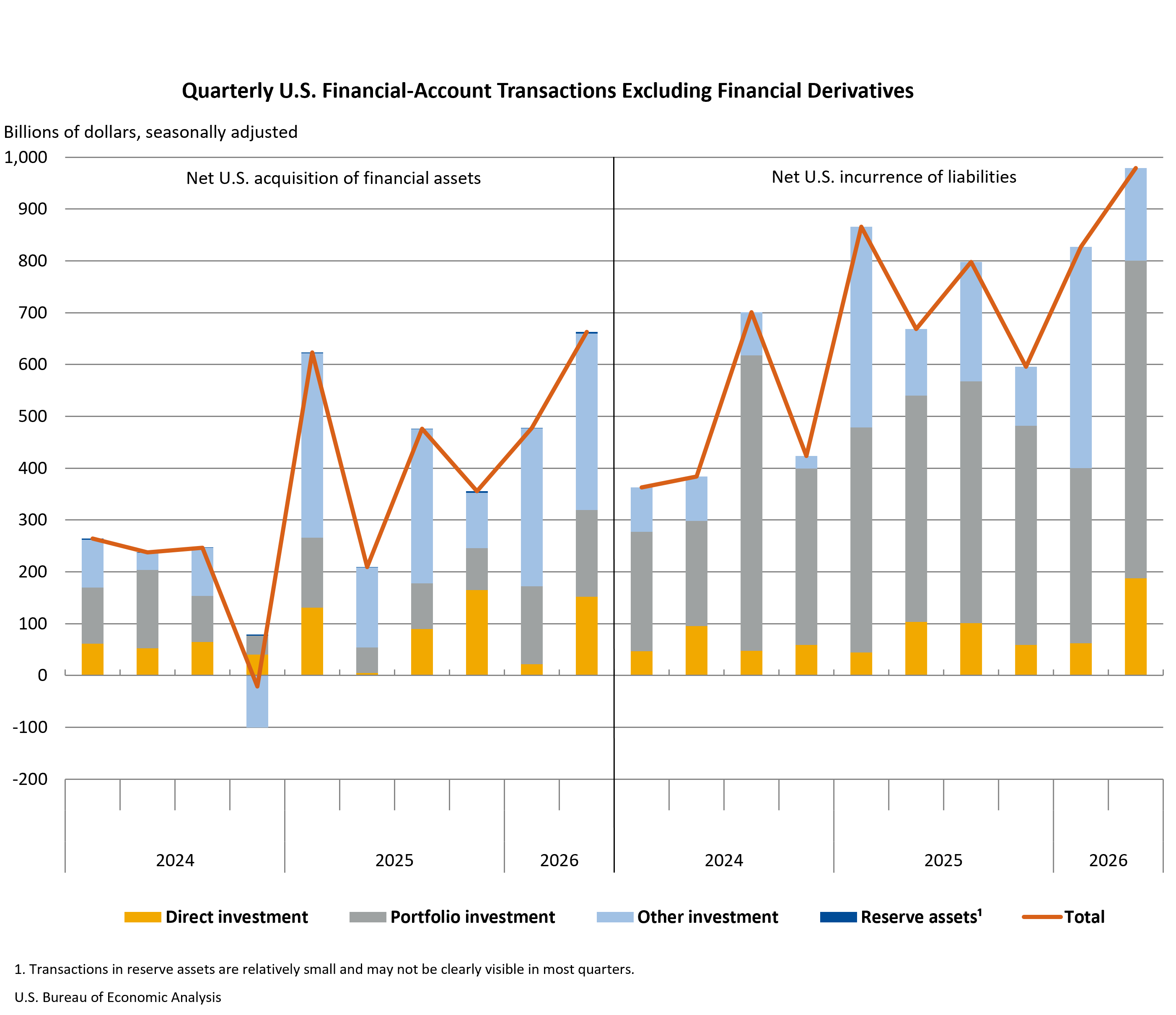
Beyond the current account, the U.S. financial account also provides crucial insights into international economic flows. In the second quarter of 2026, net financial-account transactions registered at -$369.7 billion. This figure signifies net U.S. borrowing from foreign residents. During this period, U.S. residents increased their holdings of foreign financial assets by $663.3 billion, while simultaneously increasing their liabilities to foreign residents by a larger $978.9 billion. This pattern of greater foreign investment inflows than outflows is a key component of the overall balance of payments.
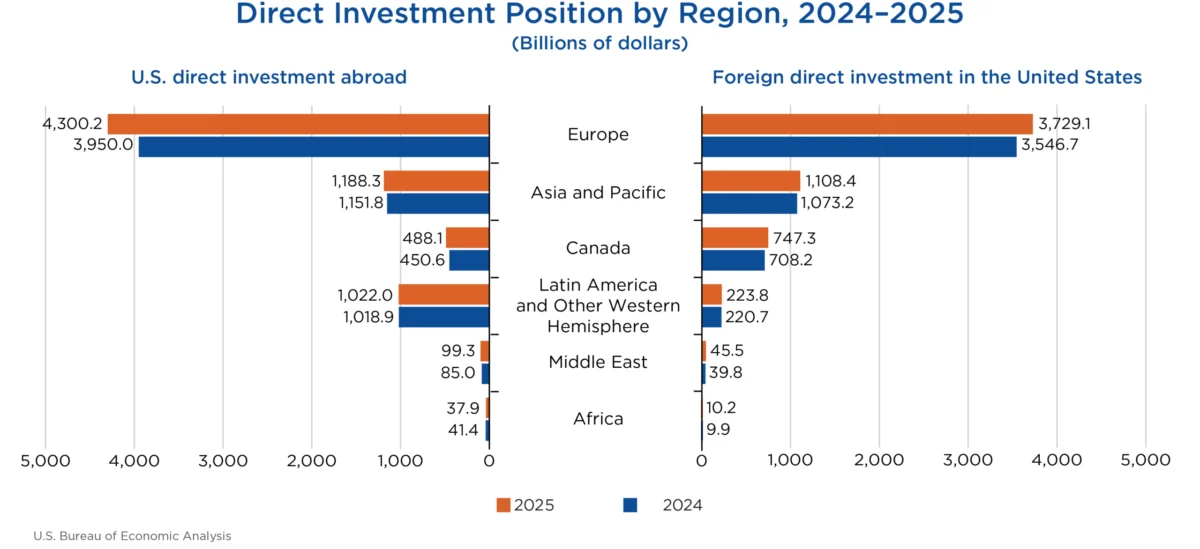
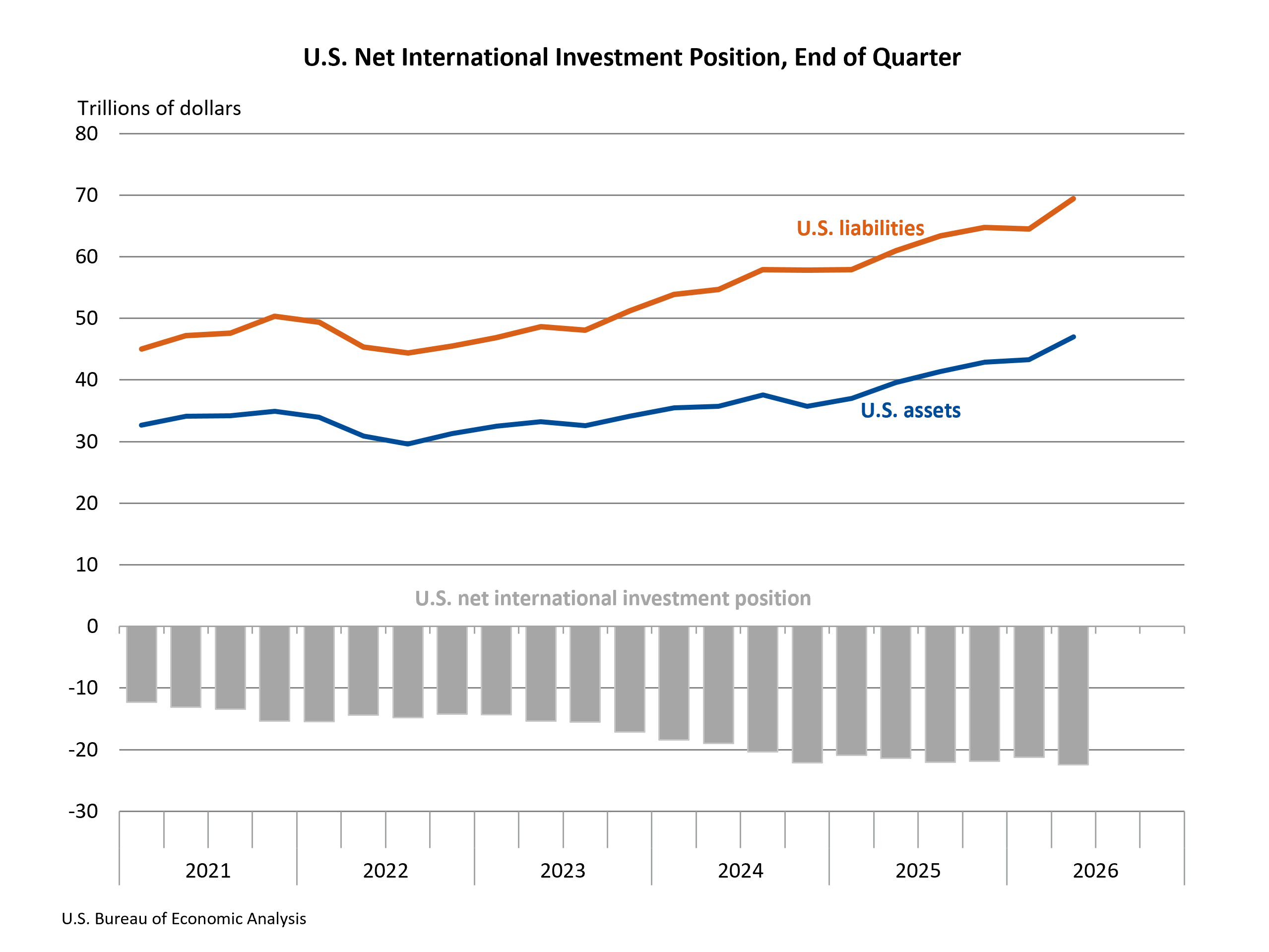
The cumulative impact of these transactions is reflected in the U.S. net international investment position (NIIP), which represents the difference between U.S. residents’ foreign financial assets and liabilities. At the close of the second quarter of 2026, the U.S. NIIP stood at a substantial -$22.42 trillion. U.S. assets abroad were valued at $46.97 trillion, while liabilities to foreign residents amounted to $69.39 trillion. This negative net position indicates that the U.S. owes more to foreigners than foreigners owe to the U.S. This figure was a slight deterioration from the revised preliminary estimate of -$21.27 trillion at the end of the first quarter.
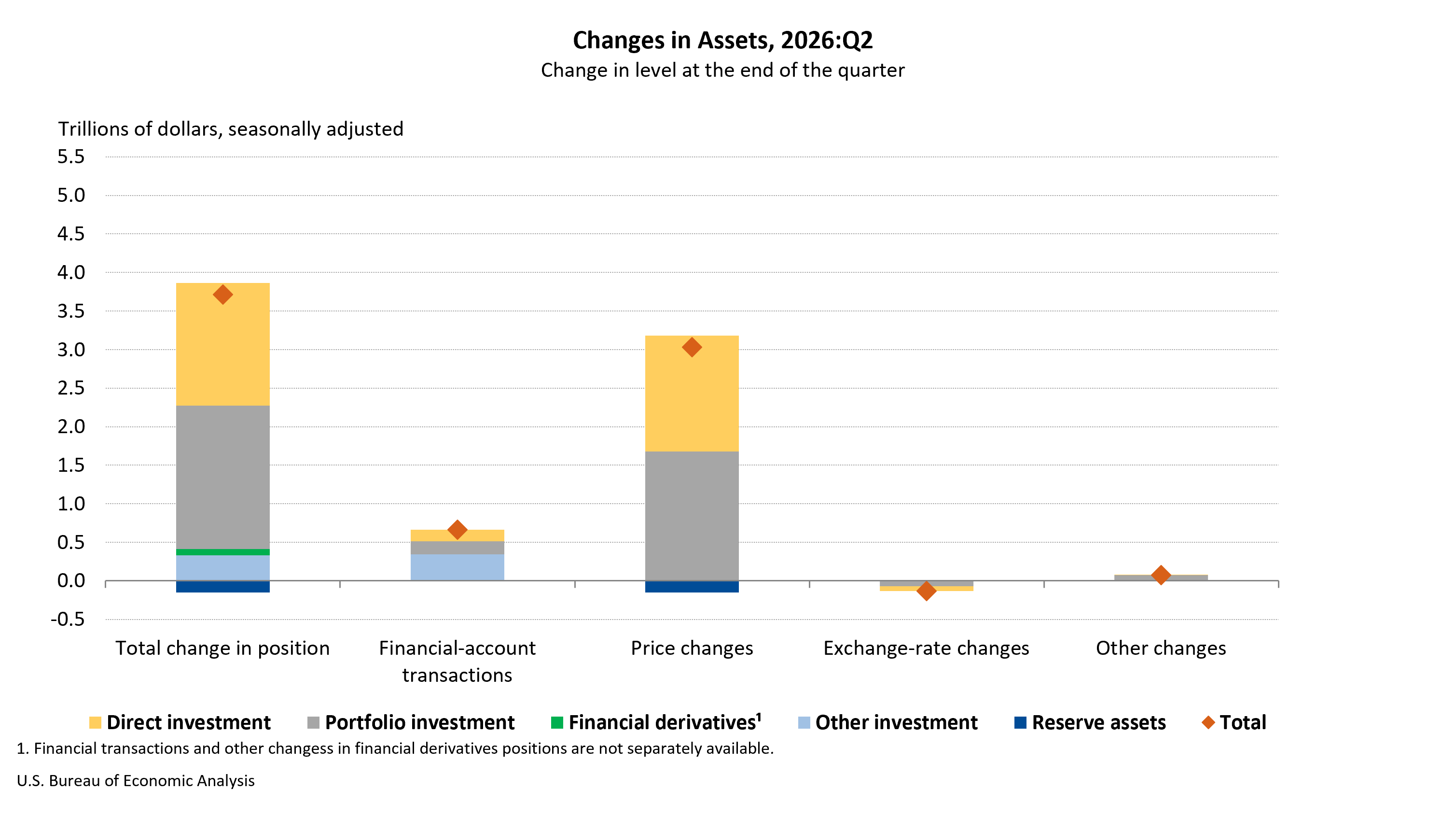
The increase in U.S. assets during the second quarter was $3.72 trillion. This growth was primarily driven by price changes, which contributed $3.03 trillion, with financial transactions adding another $663.3 billion. The increase in assets was broadly distributed across major investment categories, with the exception of reserve assets.
Concurrently, U.S. liabilities saw a significant increase of $4.87 trillion in the second quarter. Price changes accounted for a substantial $3.95 trillion of this increase, with financial transactions contributing $978.9 billion. The growth in liabilities was particularly pronounced in portfolio investment, a category that includes stocks and bonds.
Background and Context: A Persistent Trend
The widening current-account deficit is not an isolated event but rather a continuation of a long-standing trend in the U.S. economy. For decades, the United States has typically run a current-account deficit, financed by capital inflows from abroad. This reflects the U.S. dollar’s status as a global reserve currency and the perceived attractiveness of U.S. assets for international investors.
However, the magnitude and drivers of the deficit can shift, influenced by global economic conditions, trade policies, and domestic consumption and investment patterns. The current acceleration, as indicated by the BEA data, suggests that underlying economic forces are pushing the deficit wider.
Chronology of Recent Data Releases and Revisions
The BEA’s release schedule provides a timeline for tracking these economic indicators. Preliminary estimates for a given quarter are typically released a few months after the period ends, followed by revised estimates. For instance, the first quarter of 2026 saw its current-account balance revised from a preliminary estimate of -$226.8 billion to a revised -$212.6 billion. Similarly, the net financial-account transactions for the first quarter were revised from -$209.0 billion to -$295.2 billion. These revisions underscore the dynamic nature of economic data and the BEA’s commitment to providing the most accurate picture possible. The preliminary estimates for the second quarter are now available, with future revisions expected as more comprehensive data becomes available.
The BEA’s Interactive Data Application serves as a crucial resource for tracking these historical trends and accessing detailed breakdowns of international transactions and investment positions. The release of third-quarter 2026 statistics on December 18, 2026, will supersede the second-quarter data, with older data archived for historical reference.
Broader Implications and Potential Economic Analysis
The widening current-account deficit can have several implications for the U.S. economy. A persistent deficit means the U.S. is consuming more goods and services than it produces, relying on foreign capital to finance this imbalance. While this can fuel domestic investment and consumption in the short term, it also leads to an accumulation of foreign-held debt.
Possible Economic Analysis:
- Impact on the U.S. Dollar: A sustained and widening current-account deficit could, in theory, put downward pressure on the U.S. dollar over the long term, as the country is supplying more of its currency to the rest of the world to pay for imports and service its debts. However, the dollar’s role as a global reserve currency often insulates it from immediate and dramatic depreciation.
- Interest Rate Sensitivity: As foreign liabilities grow, the U.S. economy becomes more sensitive to global interest rate movements and the investment decisions of foreign creditors. Higher interest rates abroad could incentivize capital to flow out of the U.S., potentially impacting domestic borrowing costs.
- Trade Policy Considerations: The increasing deficit in goods trade may renew calls for protectionist trade policies or renegotiation of trade agreements, aimed at reducing imports or boosting exports. However, such policies can also lead to retaliatory measures and disruptions in global supply chains.
- Domestic Savings and Investment: The current-account deficit is intrinsically linked to the balance between domestic savings and investment. A deficit implies that investment exceeds savings, necessitating foreign capital inflows. Policies aimed at boosting domestic savings or encouraging productive investment could help to narrow the deficit over time.
Official Responses and Expert Commentary (Inferred)
While the provided data does not include direct quotes from officials or economists, the BEA’s role is to present factual economic data. The release of such statistics typically prompts analysis from various stakeholders.
- Policymakers: Government bodies like the Treasury Department and the Federal Reserve would closely monitor these figures. They might issue statements emphasizing the importance of fiscal discipline, encouraging domestic investment, or assessing the implications for monetary policy.
- Economists and Analysts: Economists from financial institutions, think tanks, and academic circles would likely dissect the data, offering interpretations of the underlying causes and potential future trajectories. Their analyses would focus on the sustainability of the deficit, its impact on U.S. competitiveness, and its role within the broader global economic landscape.
- Businesses: Businesses involved in international trade would be keenly interested, particularly those in sectors experiencing significant shifts in import or export volumes. They might adjust their supply chain strategies or investment plans in response to evolving trade dynamics.
Conclusion: Navigating a Complex Global Economic Landscape
The widening U.S. current-account deficit in the second quarter of 2026 presents a complex economic picture. The increased reliance on imports, particularly in goods, coupled with rising primary income payments, has contributed to a significant deterioration. While the U.S. continues to attract foreign investment, the growing net international investment position highlights the nation’s increasing indebtedness. As the U.S. navigates the global economic landscape, understanding these intricate flows of goods, services, income, and capital will be crucial for policymakers and businesses alike in shaping sustainable economic growth. The BEA’s ongoing releases of this vital data will continue to serve as a barometer for the health and direction of the U.S. economy in its international dealings.