Layla Zulfa
In an industry increasingly defined by sophisticated systems, meticulously crafted personal brands, and an overwhelming emphasis on scripts, a compelling question emerges: could all this polish be inadvertently hindering the very success it aims to achieve? A recent POWER AGENT® coaching call, centered on a real estate agent’s unexpected triumph with traditional door-knocking, illuminated a profound insight that resonates across the entire profession. In an era where nearly every aspect of consumer experience is meticulously engineered, authenticity has emerged as the rarest and most valuable competitive advantage, a quality often inadvertently stripped away by conventional industry training.
The agent in question, a professional named Brian, articulated the reasons behind his success with door-knocking. As he spoke, it became evident that the true catalyst wasn’t the tactic itself, but Brian’s inherent qualities. His genuine warmth, his playful demeanor, and his unreserved comfort in his own skin were the driving forces. Homeowners, he explained, responded to this authenticity because they could feel its sincerity. This experience underscores a recurring truth within the real estate sector: ultimately, clients do not select a technique or a brand; they choose a person. The business is fundamentally about human connection, yet much of the industry appears to have this inverted, prioritizing actions over the individuals behind them.
The Paradox of the Polished Professional
Consider the typical outcomes of extensive real estate training. Often, these programs are designed to mold agents into a specific archetype: the polished professional, the confident closer, the carefully curated branded persona. Agents diligently embody these roles during appointments, so much so that their genuine selves can become obscured. This disconnect is palpable to clients, who struggle to form a genuine connection with a mere performance. Consequently, trust falters, leading the agent to believe they need a more effective script, when in reality, they might need less script and more self. The very tools and strategies intended to enhance agent effectiveness can, ironically, diminish their human element, thereby eroding client trust.
This dynamic has become particularly pronounced in the current market landscape, a trend that real estate leaders must acknowledge. Consumers are increasingly inundated with highly polished, often artificial, marketing materials and are developing a healthy skepticism towards them. The proliferation of automated messages, meticulously staged property photos, and slickly produced presentations has conditioned the public to discount such overt displays of artifice. Against this backdrop, an individual who is simply and genuinely themselves, operating with an unfeigned comfort, stands out dramatically. Authenticity has transcended being a mere desirable trait; it has become a critical differentiator precisely because it is scarce and cannot be easily replicated at scale. An agent who is perceived as real possesses an inherent advantage that no amount of production expenditure can match.
Furthermore, there is a significant "consistency dividend" that directly impacts production levels. When agents engage in prospecting activities that align with their genuine selves and natural communication styles, they are more likely to do so consistently. This is because these activities do not feel like a chore or an imposition. Conversely, an agent forced to adopt a persona that is not their own often experiences burnout and abandons these crucial outreach efforts.
Authenticity: The Foundation of Sustainable Success
The agent who has discovered and embraced their authentic voice is the one who perseveres. Authenticity, therefore, extends beyond mere client connection; it is the bedrock of sustainable effort, which is the true engine of long-term production in real estate. Assisting an agent in discovering their genuine style is one of the most impactful contributions a leader can make.
This principle was vividly illustrated during the aforementioned coaching call with an agent named Kim, a 63-year-old professional. Kim remarked that at her age, simply being herself felt considerably easier. Her observation points to a developmental truth that leaders can help accelerate for their teams. Younger agents often tend to emulate the successful practices of top producers they admire, adopting their communication styles and approaches, which may not naturally align with their own personalities. With accumulated experience, however, comes the freedom to pause, to accept that not every individual will connect with them, and to find peace with this reality. The most effective leaders empower their agents to reach this stage of self-assurance and authenticity years earlier than they might achieve it independently, as a self-assured and genuine agent consistently outperforms an imitative, anxious one.
The Strategic Imperative of Genuine Connection
When viewed strategically, the path forward becomes clear. Every technological advancement and emerging trend in the real estate industry contributes to the commoditization of the transactional aspects of the job. What remains un-commoditized, however, is the cultivation of trusted human relationships, which can only be built by a real person genuinely engaging with others. Consequently, the authenticity of agents should not be considered a secondary cultural nicety; it is the very element upon which the business will increasingly compete as other facets become automated and easily replicable. Investing in agent authenticity is, in essence, investing in the last durable competitive moat available to them.
For leaders aiming to foster a culture that prioritizes authenticity, the following areas warrant focused attention:
Cultivating a Culture of Authenticity: Key Strategies for Leaders
-
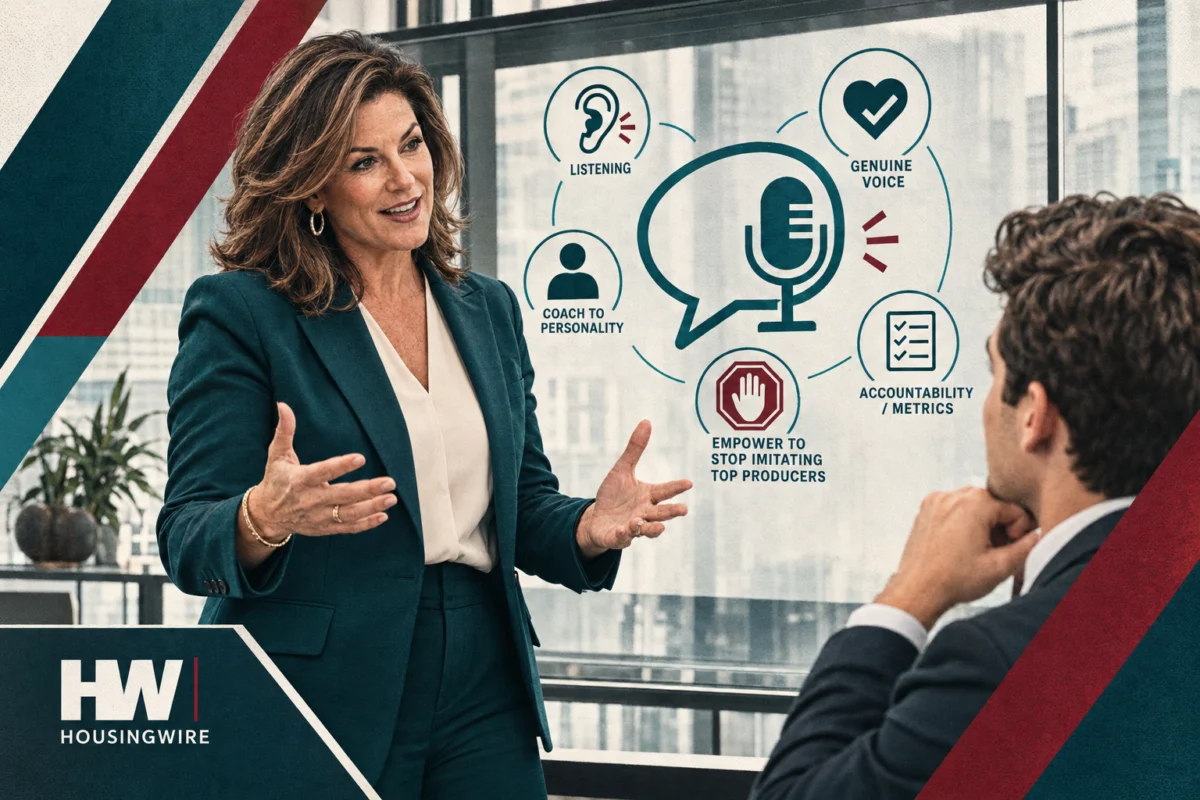
Coach the Person, Not Just the Script: Empower each agent to discover a version of fundamental real estate practices that aligns with their unique personality, rather than imposing a single, uniform style on everyone. This involves understanding individual strengths, communication preferences, and natural inclinations.
-
Reward Authentic Voice: Actively celebrate and acknowledge agents who consistently present themselves authentically. This creates a cultural norm where genuineness is recognized as a valuable asset, not a potential liability, thereby encouraging others to embrace their true selves.
-
Match Activity to Temperament: Allow agents to gravitate towards prospecting and client engagement activities that naturally suit their personalities and skill sets. This alignment fosters enjoyment and reduces the likelihood of burnout, directly contributing to the consistency that drives tangible results.
-
Grant Permission Early: Educate younger agents on the understanding that success in real estate does not necessitate imitation of top performers. Emphasize that their own unique style is their most potent advantage, allowing them to build a career on their own terms from the outset.
-
Model Authenticity from the Top: Leaders who visibly and comfortably embody their authentic selves provide their entire teams with implicit permission to do the same. This top-down modeling creates a ripple effect, fostering a more open and genuine organizational culture.
Power Fact: In a marketplace saturated with artificial polish, the real estate agent who is simply and authentically themselves possesses a distinct advantage. Authenticity is not a superficial quality; it is a scarce and potent competitive differentiator that cannot be manufactured.
This emphasis on authenticity does not diminish the importance of skill or professionalism. Instead, it recontextualizes them. While skill remains paramount, its effectiveness is contingent on its delivery through a genuine human connection, rather than a contrived performance. Agents and teams poised for success in an increasingly challenging and noisy market are those who recognize that the human being is the ultimate product. By fostering a culture that liberates individuals to be themselves, organizations build something that the competition, regardless of its polished veneer, cannot easily replicate. This is a strategic advantage of far greater value than any additional script or marketing gimmick.
The guiding principle for modern real estate professionals should be: Serve, don’t just sell. Coach, don’t solely focus on closing.
Darryl Davis, CSP, a nationally recognized speaker, real estate coach, and bestselling author of "How to Become a Power Agent® in Real Estate," advocates for this approach. His insights underscore the critical role of genuine human connection in a rapidly evolving industry. Further information can be found at darrylspeaks.com.