Nila Kartika Wati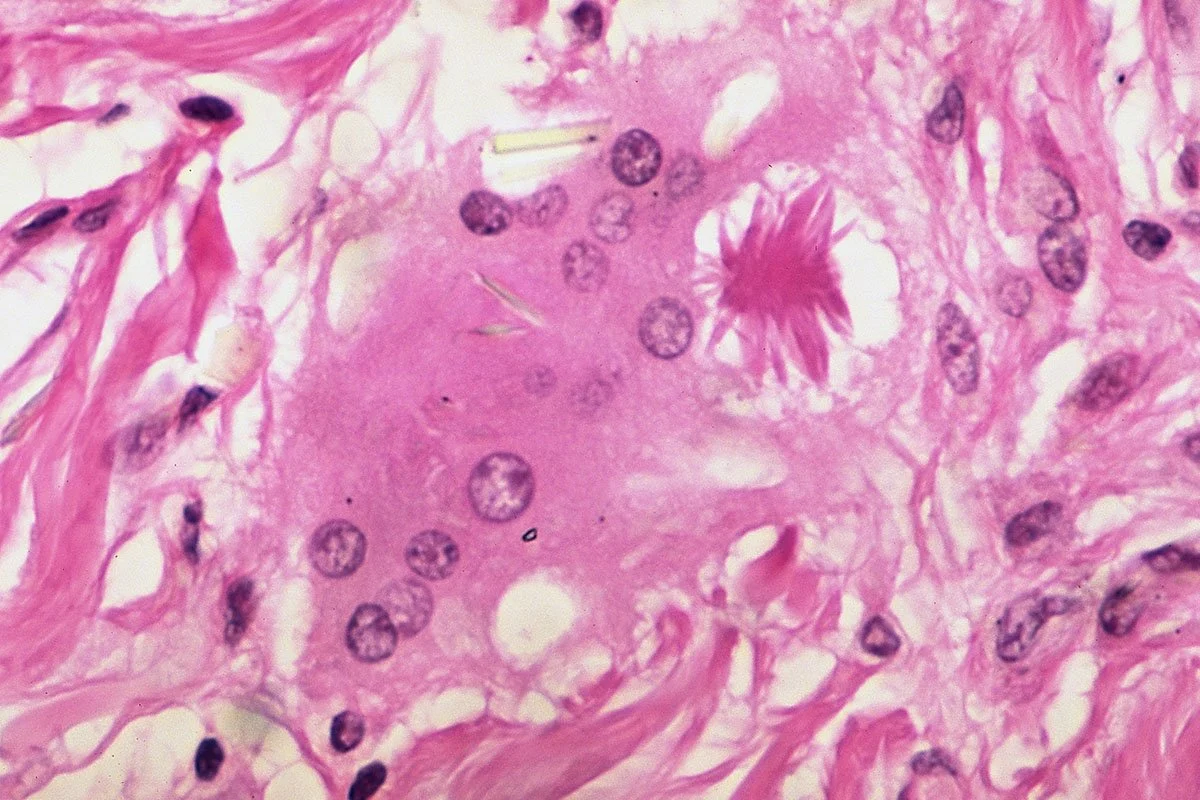
The medical community is increasingly recognizing that the battle against rare diseases cannot be won through laboratory science alone; it requires a direct confrontation with the systemic inequities that dictate who receives a diagnosis, who participates in clinical trials, and who survives. This reality has become the focal point of a new initiative spearheaded by the Milken Institute and the Ann Theodore Foundation. By launching a targeted grant program to fund clinical trials for promising sarcoidosis therapeutics, these organizations are attempting to bridge a chasm in the American healthcare system that has left Black Americans, and particularly Black women, disproportionately vulnerable to a debilitating and often misunderstood inflammatory condition.
Sarcoidosis is a complex multisystem disorder characterized by the growth of small accumulations of inflammatory cells, known as granulomas, in various organs. While the lungs are the most common site of involvement—affecting roughly 90 percent of patients—the disease can manifest in the heart, skin, eyes, and brain. For some, the condition is a temporary inconvenience that resolves spontaneously; for others, it is a chronic, life-altering illness that leads to organ failure and death. In the United States, between 150,000 and 200,000 people are currently living with the diagnosis. However, because the disease frequently mimics other conditions, experts believe the actual number of cases may be significantly higher.
The Diagnostic Odyssey and the Burden of Disease
The "diagnostic odyssey" for a sarcoidosis patient often spans several years. Because symptoms such as extreme fatigue, joint pain, and "brain fog" are non-specific, many patients find their concerns dismissed by primary care physicians. For Black women, who experience the highest prevalence of the disease—roughly three to six times the rate of White, Asian, or Hispanic women—the path to a correct diagnosis is often obstructed by both medical bias and a lack of clinical awareness.
The physical toll of the disease is profound. Depending on the location of the granulomas, patients may experience chest tightness, blurred vision, or heart rhythm disturbances. When the disease impacts vital organs, the resulting scarring, or fibrosis, is often irreversible. Despite the severity of these outcomes, sarcoidosis research has remained historically underfunded. Consequently, the current standard of care relies heavily on corticosteroids and chemotherapeutic agents. While these treatments can mitigate symptoms, they do not cure the disease and carry a heavy burden of side effects, including weight gain, mood swings, bone density loss, and increased susceptibility to infection.
The urgency for new therapeutics is underscored by the demographic data. Black Americans are not only diagnosed with sarcoidosis 2.2 to 5.6 times more frequently than their White counterparts, but they also tend to experience more aggressive forms of the disease. This disparity creates a scientific and moral imperative: any meaningful advancement in sarcoidosis treatment must be centered on the populations most impacted by it.
Barriers to Equity in Clinical Research
Despite the disproportionate impact of sarcoidosis on Black communities, representation in clinical trials remains alarmingly low. Data indicates that Black patients make up as little as 5 percent of participants in trials for interstitial lung diseases, the broad category that includes sarcoidosis. This lack of diversity is not a matter of patient apathy, but rather a reflection of deep-seated structural barriers.
A recent survey conducted by the Foundation for Sarcoidosis Research (FSR) highlighted the obstacles Black patients face when attempting to access cutting-edge care. Many respondents noted that they were simply never informed of trial opportunities by their healthcare providers. Others cited the logistical and financial burdens of participation, such as the inability to take time off work, the cost of transportation to specialized medical centers, and the lack of affordable childcare.
Furthermore, the legacy of medical racism in the United States continues to cast a long shadow over the biomedical ecosystem. From the historical trauma of the Tuskegee Syphilis Study to documented instances of contemporary bias in pain management and maternal care, many Black Americans harbor a justifiable distrust of medical institutions. This distrust is compounded by a lack of representation in the medical workforce. As of 2018, only 5 percent of practicing physicians in the United States were Black, a figure that has remained stagnant for years. Without a diverse pipeline of researchers and clinicians, the conditions that most affect Black communities continue to be treated as peripheral concerns in the broader landscape of medical innovation.
The HBCU Leverage Point: A Strategic Shift in Funding
To address these systemic failures, the Milken Institute and the Ann Theodore Foundation are looking toward a historically underutilized resource: Historically Black Colleges and Universities (HBCUs). These institutions represent one of the most effective leverage points for diversifying the healthcare workforce and improving health outcomes in underserved communities.
HBCUs have a storied history of punching above their weight in medical education. Despite representing only 2.3 percent of U.S. medical schools, they produced nearly 10 percent of all Black physicians in 2019. Historically, HBCUs have been responsible for educating nearly 70 percent of Black doctors and dentists in the United States. Furthermore, graduates of these institutions are significantly more likely to practice in the very communities that suffer from healthcare shortages and high rates of chronic disease.
However, the research infrastructure at HBCUs has been stunted by decades of chronic underfunding. A 2023 analysis revealed that all HBCUs combined received less than one-fifth of the federal research funding allocated to a single institution, Johns Hopkins University. Furthermore, the Biden-Harris administration recently highlighted that 16 states have underfunded their land-grant HBCUs by a staggering $12 billion over the last 30 years. Currently, only Howard University holds the "R1" designation, representing the highest level of research activity.
By investing in the research capabilities of HBCUs, philanthropy can help build a more inclusive biomedical pipeline. This includes not only funding specific studies but also supporting the development of career pathways for Black researchers and investing in community health infrastructure. The recently formed Association of HBCU Research Institutions serves as a vital platform for this work, advocating for stable funding and collaborative opportunities that can bring HBCU-led innovation to the forefront of rare disease research.
Philanthropy as a Catalyst for Change
The collaboration between the Milken Institute and the Ann Theodore Foundation represents a model for high-impact philanthropy. By directing over $500,000 toward a clinical study of an existing therapeutic—one already FDA-approved for other inflammatory conditions—the initiative seeks to fast-track a solution for sarcoidosis patients. This strategy of "drug repurposing" is particularly effective for rare diseases, as it bypasses some of the lengthy early-stage safety testing required for entirely new compounds.
Unlike government funding, which is often tied to rigid bureaucratic cycles and subject to political shifts, philanthropic capital is uniquely flexible. It can be deployed quickly to fill gaps in the research landscape and to support experimental models of care that emphasize equity. However, the leaders of this initiative acknowledge that a single grant is not a panacea.
Transforming the landscape of sarcoidosis care requires a multi-pronged approach:
- Coordinated Investment: Philanthropic and public sectors must work together to build permanent research infrastructure at HBCUs.
- Sustained Advocacy: There must be a push for federal funding agencies, such as the National Institutes of Health (NIH), to prioritize diversity in clinical trial design as a prerequisite for approval.
- Institutional Reckoning: The broader medical establishment must actively work to rebuild trust with Black communities by addressing implicit bias and ensuring that clinical trial opportunities are accessible to all.
Broader Implications for the Future of Science
The lessons learned from sarcoidosis research are applicable across the entire spectrum of medicine. When research excludes the communities most affected by a disease, the resulting science is inherently incomplete. This is not merely a social issue; it is a scientific one. Variations in genetics, environment, and social determinants of health mean that a treatment that works for one population may not be as effective—or may even be harmful—for another.
As the Milken Institute and the Ann Theodore Foundation move forward with their clinical trial funding, the focus remains on the patients who have long been overlooked. The goal is to move beyond the management of symptoms and toward the development of therapies that can truly reverse the course of sarcoidosis. By centering the needs of Black women and leveraging the unique strengths of HBCUs, this initiative aims to create a blueprint for a more equitable and effective biomedical future.
In the long term, the success of these efforts will be measured not just by the approval of a new drug, but by the dismantling of the barriers that have prevented marginalized populations from receiving the care they deserve. The fight against sarcoidosis is, at its heart, a fight for the principle that every patient—regardless of race or socioeconomic status—should have access to the benefits of scientific discovery.