Nila Kartika Wati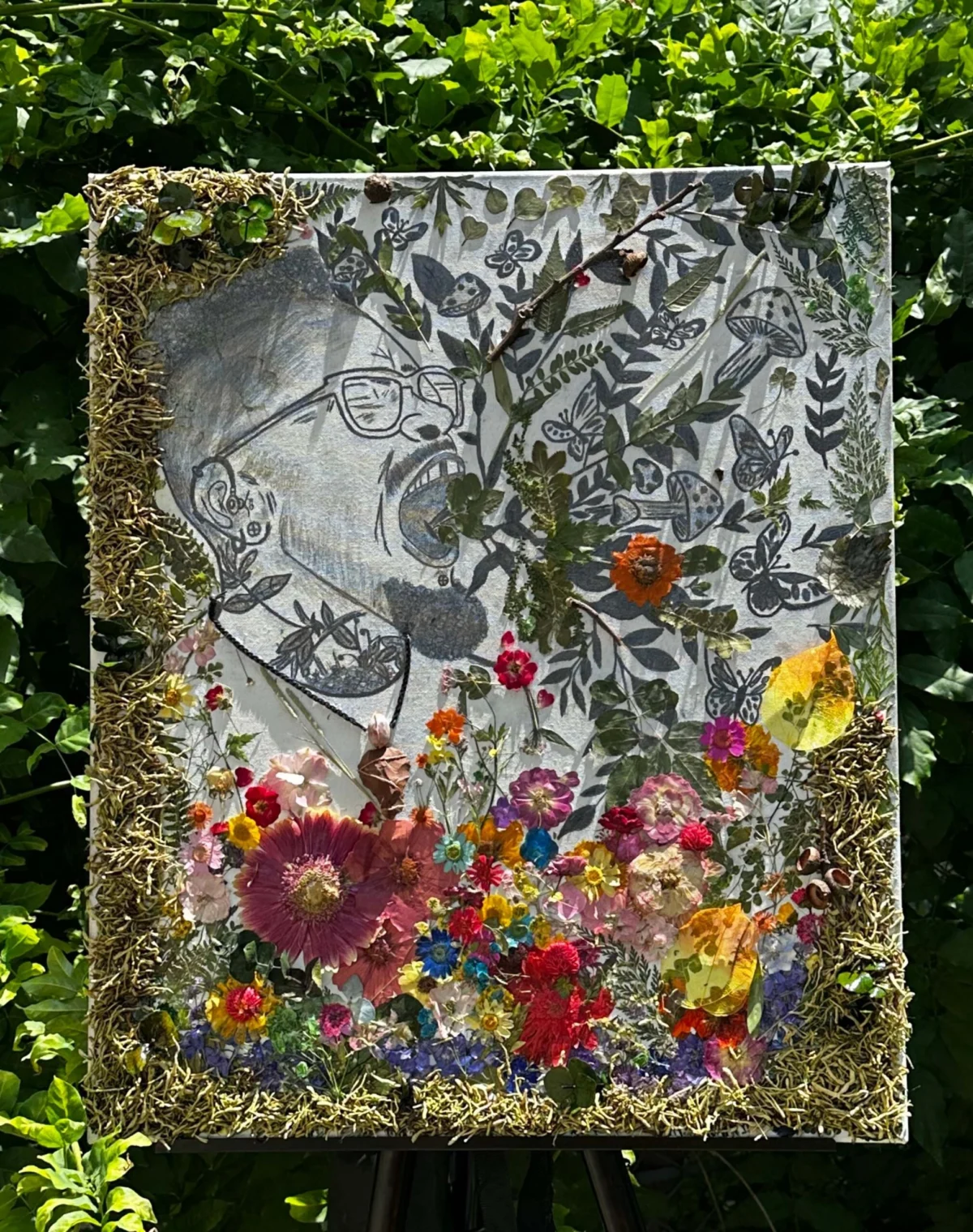
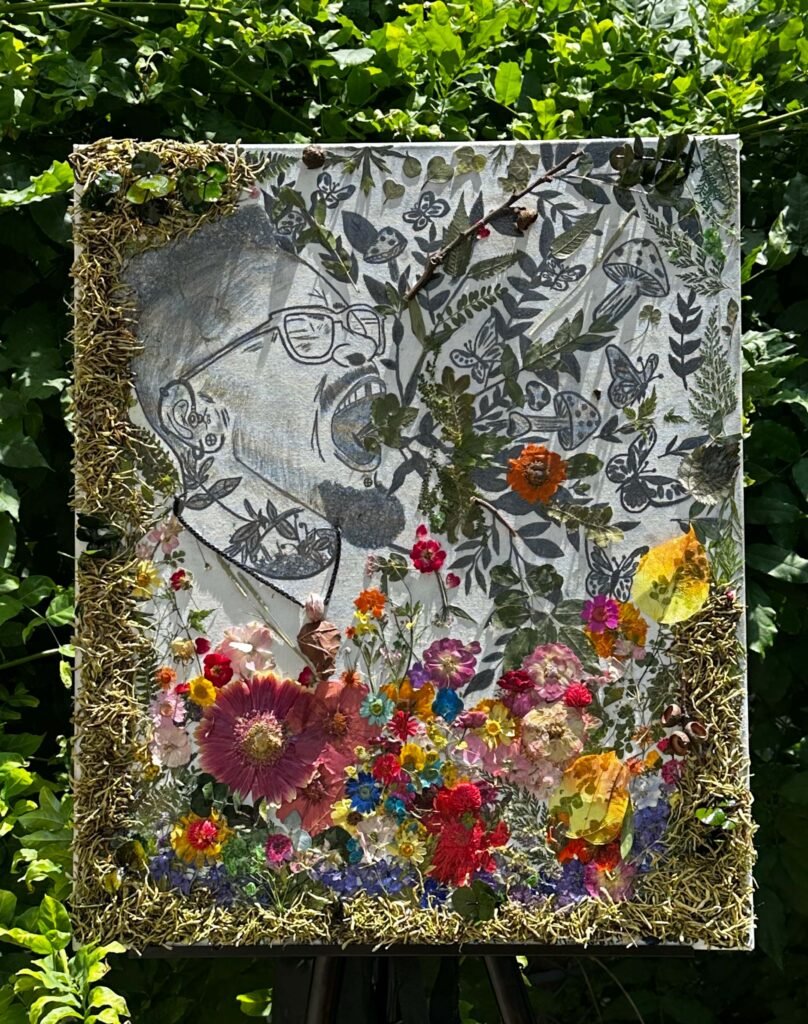
The intersection of disability justice, racial identity, and artistic expression has found a new focal point in the work of nae vallejo, a multidisciplinary artist whose latest piece, Emergence, serves as a profound interrogation of societal norms. Vallejo, who identifies as a Black, Caddo, Mexican, queer, trans, and disabled survivor, utilizes a combination of graphite and the traditional Japanese art of oshibana—pressed flower arrangement—to map the sensory and emotional landscape of marginalized existence. The artwork, a self-portrait depicting the artist in a state of "mid-scream," has sparked a broader conversation within the nonprofit and arts sectors regarding the visibility of neurodivergence and the systemic barriers faced by intersectional creators in the United States.
The Composition and Symbolism of Emergence
Emergence is not merely a visual representation of a physical form; it is an intricate construction of organic materials and graphite that seeks to translate the internal experience of "stimming"—self-stimulatory behavior often associated with neurodivergence—into a tangible medium. The piece utilizes honeysuckle, eucalyptus, and various dried flora to create a "ray of sound" emanating from the subject’s mouth. This floral eruption is interspersed with depictions of mushrooms and butterflies, each carrying specific symbolic weight within Vallejo’s artistic framework.
According to the artist’s description, the mushrooms represent mycelial networks—the underground fungal structures that facilitate nutrient exchange and communication between plants. In the context of disability justice, these networks symbolize the unseen community bonds and mutual aid systems that sustain marginalized individuals when state or institutional support fails. The butterflies, conversely, signify the fluidity of transition and the pursuit of freedom from restrictive social categorizations. By utilizing graphite to ground these ethereal organic elements, Vallejo creates a tension between the permanence of the mark and the fragility of the botanical specimens, mirroring the precarious yet resilient nature of the identities they inhabit.
Biographical Context and the Naeborhood Projects
Nae vallejo (they/he) operates at the nexus of several historically excluded identities. As a Caddo and Mexican artist of Black heritage, their work is deeply rooted in the concept of "rememory"—a term popularized by Toni Morrison to describe the process of remembering a memory, particularly those tied to ancestral trauma and land. Vallejo is the founder of naeborhood projects, an initiative dedicated to weaving disability justice and collective care into the fabric of daily survival.
Vallejo’s background as a hard-of-hearing, neurodivergent service dog guardian informs their role as an "access designer" and "experiential archivist." Their practice moves beyond the creation of static objects, aiming instead to produce community-centered experiences that challenge the "nonprofit industrial complex" to adopt more radical forms of accessibility. Through naeborhood projects, Vallejo advocates for a model of interdependence that rejects the capitalist demand for individualistic "overcoming" of disability, proposing instead that disability is a foundational source of knowledge and connection.

Chronology of Disability Justice and Artistic Evolution
The release of Emergence comes at a critical juncture in the history of the disability justice movement. While disability rights—focused largely on legislative changes like the Americans with Disabilities Act (ADA) of 1990—have existed for decades, the framework of "disability justice" was formalized in 2005 by the Sins Invalid collective. This framework emphasizes that disability cannot be understood in isolation from race, class, gender, and sexuality.
Vallejo’s work follows a timeline of increasing visibility for intersectional disabled artists:
- 2005: Sins Invalid founds the Disability Justice movement, centering queer and trans people of color.
- 2015: The 25th anniversary of the ADA highlights remaining gaps in economic and social equity for disabled BIPOC (Black, Indigenous, and People of Color) individuals.
- 2020-2022: The COVID-19 pandemic disproportionately affects disabled communities, leading to a resurgence in mutual aid and "crip" artistry that explores isolation and survival.
- 2024: Vallejo’s Emergence is highlighted by platforms like the Nonprofit Quarterly (NPQ), signaling a shift in how social justice organizations integrate artistic narrative into their advocacy.
Supporting Data: The Reality of Intersectional Disability
The themes of exclusion and "assimilation" addressed in Emergence are supported by significant demographic data. According to the Centers for Disease Control and Prevention (CDC), approximately one in four U.S. adults lives with a disability. However, the experience of disability is significantly exacerbated by racial and economic factors.
Data from the National Disability Institute reveals that:
- Economic Disparity: Black and Hispanic individuals with disabilities face a poverty rate of roughly 28 percent, compared to 17 percent for white individuals with disabilities.
- Employment Gaps: The employment-to-population ratio for disabled adults remains consistently below 20 percent, with neurodivergent individuals facing some of the highest rates of unemployment or underemployment due to a lack of sensory-friendly workplace accommodations.
- Representation in Arts: A 2019 study of major U.S. museum collections found that while 13 percent of the population is Black and significantly more are disabled, only 1.2 percent of works in major galleries were created by Black artists, with no comprehensive data available for the representation of disabled, trans, or gender-nonconforming creators.
Vallejo’s assertion that society demands "silence, composure, and assimilation" is a direct response to these statistics. The "scream" in Emergence acts as a visceral rejection of the statistical invisibility and the economic pressures that force disabled individuals to "mask" their symptoms to survive in professional environments.
Institutional Responses and the Role of Media
The publication of Vallejo’s work by the Nonprofit Quarterly (NPQ) reflects a growing trend among media outlets to provide platforms for voices that challenge traditional power structures. NPQ’s "Our Voices Are Our Power" initiative specifically targets the intersection of journalism, nonprofits, and multiracial democracy. By paying every contributor, NPQ addresses a common critique in the arts and activism world: the exploitation of marginalized narratives for "awareness" without equitable financial compensation.
Observers in the nonprofit sector have noted that Vallejo’s work serves as a critique of how "America" is often narrated. By centering a Caddo and Mexican perspective, Vallejo reminds the public that the history of the United States includes bodies that have been systematically "hidden, corrected, or excluded." The response from disability advocacy groups has been largely positive, with many praising the piece for its refusal to frame disability as a tragedy or a hurdle. Instead, Emergence frames the disabled experience as an "act of self-determination."
Analysis of Implications: Moving Toward a Sensory-Inclusive Future
The implications of Vallejo’s Emergence extend beyond the art gallery. In the fields of urban planning, education, and workplace design, the concept of "sensory attunement" mentioned by the artist is gaining traction. Vallejo’s work suggests that a truly inclusive society must move beyond the "ramp-and-elevator" model of accessibility to include "sensory maps" and environments that allow for movement, rocking, pacing, and diverse processing styles.
Furthermore, the piece challenges the "recovery" narrative prevalent in medical and psychological discourses. By celebrating the "scream" and the "stimming" as valid forms of expression, Vallejo aligns with the neurodiversity movement, which argues that neurological differences are natural variations of the human genome rather than defects to be cured.
Conclusion: The Call for Full Existence
Emergence stands as an insistence on the right to exist fully. It is a sensory map that directs the viewer away from the sanitized version of "inclusion" and toward a more honest, raw, and organic understanding of human diversity. For the nonprofit sector and the broader public, Vallejo’s work poses a fundamental question: what becomes possible when the conditions of society allow for the "emergence" of all its members, not just those who can conform to a narrow standard of "composure"?
As the United States continues to grapple with its history of exclusion, artists like nae vallejo provide the visual and emotional language necessary for a true multiracial democracy. Through the repetition of graphite lines and the delicate placement of honeysuckle, Emergence archives a moment of profound resistance and beauty, ensuring that the traces left by survivors are no longer hidden, but celebrated as sources of collective possibility.