Candice Horbacz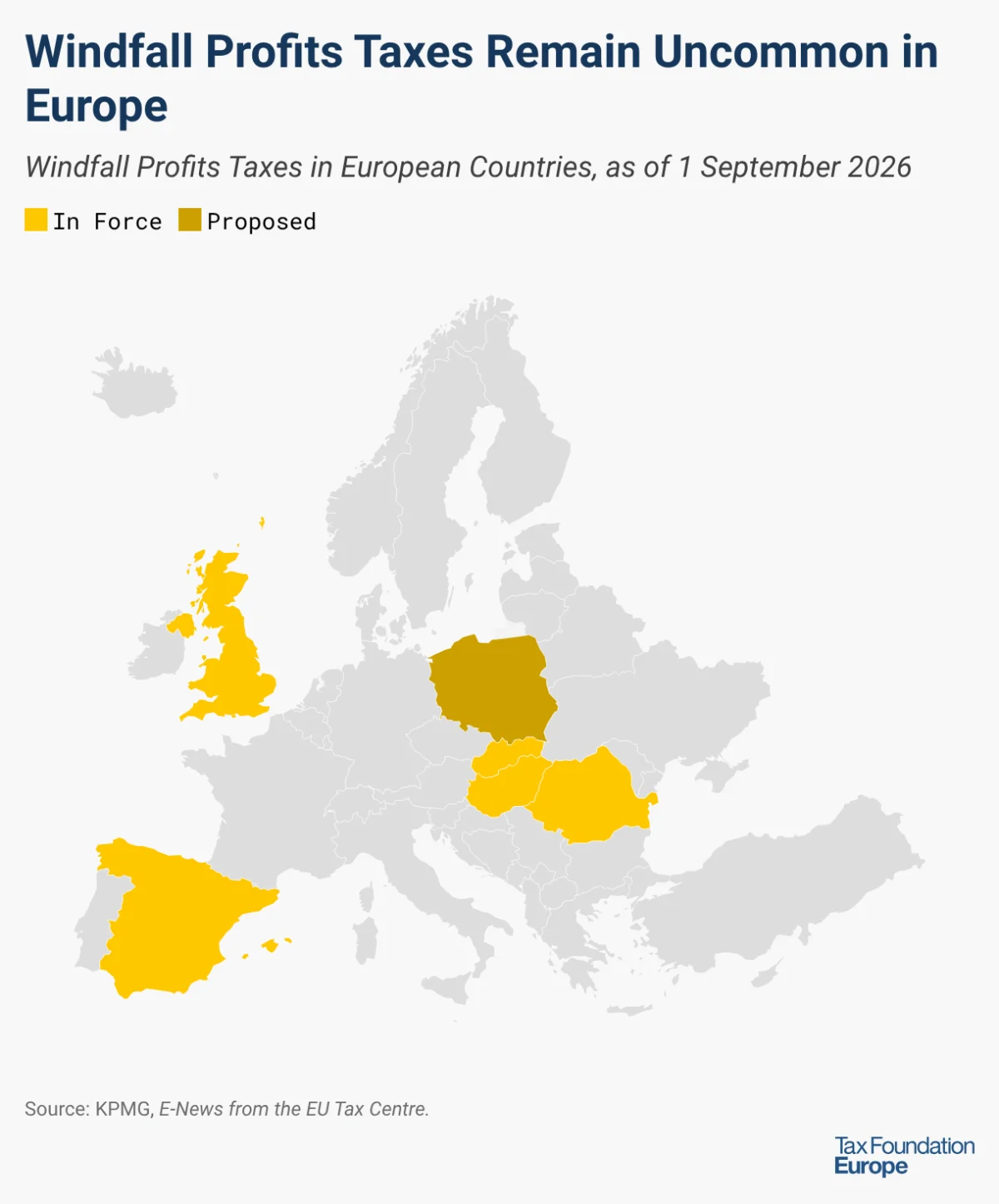
As the European Union’s economy navigates the lingering ripples of the energy price shock triggered by Russia’s full-scale invasion of Ukraine, renewed geopolitical tensions in the Middle East have once again sent tremors through global energy markets. These disruptions are constraining oil and gas supplies, inevitably driving up energy prices across the continent. In response to these volatile conditions, policymakers are revisiting a familiar tool: the windfall profit tax. This one-time levy, designed to capture large, unexpected profits generated by exceptional economic circumstances, has resurfaced as a key consideration for governments seeking to mitigate the impact on consumers and industries. However, the implementation of such taxes across the EU has been fraught with inconsistencies, raising questions about their efficacy, economic implications, and long-term viability.
The Genesis of Europe’s Windfall Tax Push
The initial impetus for an EU-wide windfall tax mechanism emerged in the immediate aftermath of Russia’s invasion of Ukraine in February 2022. The conflict dramatically reshaped Europe’s energy landscape, leading to unprecedented spikes in gas and electricity prices as the continent grappled with reducing its reliance on Russian fossil fuels. By March 2022, the European Commission, recognizing the severity of the crisis and the burden on households and businesses, recommended that Member States temporarily impose windfall profits taxes on all energy providers. This recommendation was articulated in its pivotal REPowerEU communication, a strategic plan aimed at rapidly reducing dependence on Russian fossil fuels and accelerating the green transition. The Commission’s guidance emphasized that any such measures should be technologically neutral, non-retroactive, and carefully designed to avoid distorting wholesale electricity prices or long-term market trends, thereby preserving investment incentives.
EU’s Collective Response: The Solidarity Contribution and Revenue Cap
Building on the Commission’s recommendations, the Council of the European Union reached a significant agreement in October 2022. Member States agreed to impose an EU-wide "solidarity contribution" on fossil fuel companies, specifically targeting the oil, gas, coal, and refining sectors. While broadly aligning with the concept of a windfall tax, the Council’s design diverged somewhat from the Commission’s initial proposals. This solidarity contribution was intended to capture a portion of the exceptional profits made by these companies due to the elevated energy prices.
Concurrently, a cap was introduced on market revenues for electricity generators utilizing "infra-marginal technologies." These technologies, which include renewables (solar, wind), nuclear power, and lignite, have lower operating costs than gas-fired power plants but benefited from electricity prices set by the more expensive gas plants. The revenue cap aimed to redistribute these excess profits, ensuring that electricity generators were not unduly enriched by the crisis while consumers faced soaring bills. The EU projected that these two policies combined—the solidarity contribution and the infra-marginal revenue cap—would jointly generate approximately €140 billion. Of this, an estimated €25 billion was expected to come from the oil and gas sectors via the solidarity contribution. The collected revenues were earmarked for partially offsetting high energy bills for households, with an emphasis on non-selective and transparent support for all final consumers.
Implementation and Discrepancies Across Member States
A 2025 European Commission report on the solidarity contribution offered a comprehensive, albeit complex, picture of its implementation. The report revealed that between 2022 and 2023, 16 of the 27 Member States directly applied the solidarity contribution as stipulated by the EU regulation. A further eight countries opted for an equivalent national measure, tailored to their specific legal and economic frameworks. However, three countries—Luxembourg, Latvia, and Malta—reported that they had no in-scope companies within their borders that met the criteria for the solidarity contribution, thus collecting zero revenue.
While the total revenue collected for fiscal years 2022 and 2023, amounting to €26.15 billion, slightly exceeded the initial €25 billion estimate for oil and gas companies, the figures masked notable discrepancies and challenges in implementation. Beyond the countries reporting no in-scope companies, three others—Finland, Lithuania, and Sweden—reported zero revenues from this policy to the European Commission, with no other public data available to clarify their situations. Cyprus, another Member State, never adopted the EU regulation at all. Furthermore, Croatia implemented a broader windfall tax that applied to all sectors of its economy, making it impossible to specifically disaggregate and report revenues derived solely from the EU’s solidarity contribution on fossil fuel companies.
Consequently, out of the 27 EU Member States, only 19 had discernible revenue data available specifically related to the solidarity contribution or an equivalent measure on fossil fuel companies. This fragmented picture underscores the difficulties in coordinating and enforcing a harmonized tax policy across a diverse economic bloc. More significantly, the Commission’s report highlighted that the revenues generated from the solidarity contribution represented a mere 7 percent of the total cost of energy support measures implemented by Member States, which collectively amounted to a staggering €340 billion. This figure suggests that while the windfall tax provided some relief, it covered only a small fraction of the overall financial burden borne by governments in shielding their citizens and economies from the energy crisis.
The UK’s Parallel Path
Even outside the EU, the United Kingdom, having left the bloc, also moved to implement its own windfall profits tax in 2022. This tax was exclusively targeted at companies engaged in oil and gas extraction within its jurisdiction, mirroring the EU’s focus on the fossil fuel sector but operating independently. The UK’s decision reflected a similar domestic pressure to address high energy prices and perceived excess profits in a period of economic strain.
Expanding Scope: From Energy to Finance
As global energy prices began to stabilize and the exceptional profits of oil, gas, and coal sectors tapered off, some European countries pivoted their approach to windfall taxation. Instead of solely targeting energy producers, they extended the scope to encompass the banking and financial sectors. This shift was driven by a perception that these sectors were also benefiting from rising interest rates or other favorable economic conditions, leading to unexpected profits. Currently, Hungary, Romania, Slovakia, and Spain have broadened their windfall profits taxes to cover these financial institutions.
The specific structures and tax rates of these European windfall taxes vary significantly, reflecting national policy priorities and economic contexts. Rates range from a modest 0.5 percent in Romania to a proposed 60 percent in Poland, showcasing a wide spectrum of ambition and potential impact. These variations highlight the lack of a truly unified approach, even within the broader concept of windfall taxation. For oil and gas companies, many European countries adhered to the EU regulation’s definition of the windfall tax base: the difference between current profits and profits generated over a baseline period. However, critics argue that these "incremental" profits are not necessarily "excess" or "supernormal" returns, and such a tax could inadvertently lead to double taxation of regular, legitimately earned profits.
Structural Flaws and Economic Concerns
A deeper examination reveals that many of the proposed and enacted measures across Europe are not "proper" windfall profits taxes in the strictest economic sense, often extending beyond merely taxing truly unexpected gains. For instance, in some countries, the tax base is not designed to exclusively capture profits generated by sudden spikes in energy and oil prices. A tax on electricity sold above an arbitrarily determined price, as implemented in most European countries for infra-marginal generators, or a tax on total sales, as seen in Spain, more closely resembles an excise tax rather than a targeted windfall levy. This broad application can create unintended consequences, affecting operational stability and investment decisions beyond the intended scope of "windfall" gains.
Central Bank Opposition and Market Impact
The expansion of windfall taxes to the banking sector has drawn particular scrutiny and strong objections from central monetary authorities. The European Central Bank (ECB) has openly expressed its concerns regarding windfall taxes imposed on banks, notably in Spain, as well as earlier measures in Lithuania and Italy. The ECB’s primary apprehension is that such taxes reduce the amount of available capital within the banking system, thereby restricting banks’ capacity to respond effectively to unforeseeable financial crises. Furthermore, these taxes could deter bank investors, leading to an increased cost of capital and potentially hindering long-term economic growth. In the event of an economic recession, a rise in loan defaults would already negatively impact bank profits; adding a windfall tax on top could severely compromise their resilience and ability to extend credit, thereby exacerbating an economic downturn.
The "Temporary" Paradox: Extensions and New Proposals
A fundamental principle underpinning the EU regulation on windfall profits taxes was their temporary nature. The regulation explicitly stated that "the duration of the measure should be limited and tied to a specific crisis situation." However, this principle has been challenged by several Member States. Hungary, Slovakia, and Spain have controversially maintained their windfall taxes into 2026, with some measures even scheduled to remain in force through 2027. The United Kingdom, which initially implemented its windfall profits tax on fossil fuel companies in 2022, has extended its application until 2030, a move that has been met with significant criticism from the energy industry. Adding to this trend, Romania has made its windfall tax on banks permanent, further eroding the notion of these measures as crisis-specific and temporary. While other countries have terminated their taxes as originally planned, new proposals for windfall taxes are currently awaiting parliamentary approval in Poland and Portugal, suggesting that the debate is far from over.
Broader Implications for Investment and Green Transition
The flawed design and prolonged application of these windfall profits taxes have created tangible problems in countries that implemented them. Research conducted by the European Parliament has historically found that windfall taxes tend to negatively affect investment, primarily by creating uncertainty and reducing the expected returns on capital projects. More specifically, both the former Spanish tax and the current British tax have been identified as threatening and continuing to threaten domestic renewable energy investments. By penalizing profitability, even if deemed "excessive," these taxes can deter the very investments in green energy infrastructure that are critical for Europe’s long-term energy security and climate goals. This creates a paradoxical situation where a measure intended to alleviate an energy crisis might inadvertently undermine the transition away from fossil fuels.
Lessons Learned and Future Policy Directions
While some of these windfall taxes have indeed achieved their immediate revenue goals, their broader impact has been problematic. They have distorted markets by penalizing domestic production, reduced crucial investment in green energy, and punitively targeted specific industries often without a sound, economically justifiable tax base. The European experience with windfall taxes since 2022 offers critical lessons. In the face of ongoing supply shortages and the imperative for energy independence, countries should learn from past mistakes. This calls for abandoning windfall tax proposals that target specific industries arbitrarily and for repealing existing ones that have overstayed their crisis-driven mandate.
Temporary crisis measures, by definition, should not be allowed to become the new normal. Instead, policymakers across Europe should redirect their focus towards principled tax reforms that are neutral, predictable, and provide a stable and sustainable source of revenue over the long term. Such reforms would foster a more robust economic environment, encourage necessary investments in critical sectors including green technologies, and enhance overall economic resilience without resorting to ad-hoc, distortive levies that ultimately undermine market confidence and long-term growth prospects. The complexity of the energy transition and economic stability demands a more thoughtful and consistent fiscal strategy.