Nila Kartika Wati

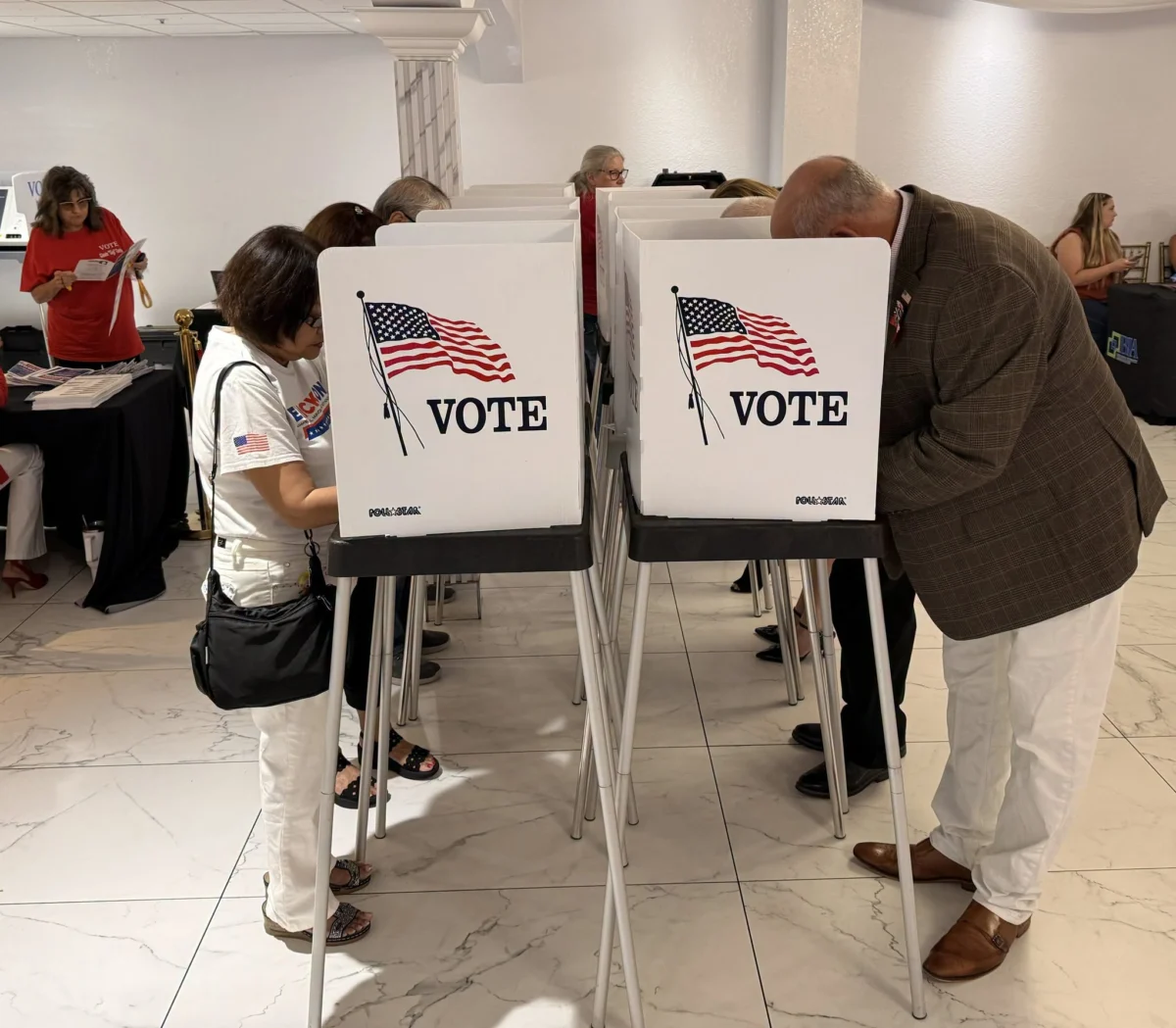
As the November 3 midterm elections approach, a massive mobilization effort is unfolding across Indian Country, driven by a coalition of Native-led organizations and a record-breaking number of Indigenous candidates. This movement comes at a critical juncture for the Yukon-Kuskokwim Delta, one of the world’s largest river deltas located on Alaska’s western coast. Just over a year ago, the remnants of Typhoon Halong devastated the region, displacing more than 1,500 Alaska Native people from villages such as Kipnuk and Kwigillingok. Today, many of these citizens remain displaced in urban hubs like Bethel or Anchorage, hundreds of miles from their registered polling places. This displacement created a significant hurdle during the August 2026 primary, where only about 20 displaced residents managed to cast ballots. In response, organizers like Michelle Sparck, director of the nonprofit Get Out the Native Vote, have launched an intensive campaign to ensure these voters can exercise their rights in November, highlighting a broader national struggle to maintain Native political influence in the face of environmental, economic, and legislative challenges.
The Strategic Importance of the Native Vote
The political weight of Native American voters has become increasingly undeniable in recent election cycles. In 2020, the presidential race in Arizona was decided by a margin of just 10,457 votes; political analysts widely attribute the outcome to the unprecedented turnout in counties overlapping the Navajo Nation and other tribal lands. Similar dynamics are at play in 2026 across Montana, Nevada, Minnesota, Michigan, Wisconsin, and Alaska. In these states, statewide races are often decided by margins that can be bridged by the participation of just a few concentrated tribal communities.
To capitalize on this potential, Native leaders have deployed more than 200 fellows through 24 grassroots organizations. These individuals are tasked with the boots-on-the-ground work of democracy: registering voters at community gatherings, conducting door-to-door outreach on sprawling reservations, and providing essential transportation to polling sites. However, the logistical costs of these operations are soaring. In Alaska, the "gas gap"—the deficit in funding needed just to fuel transport vehicles—exceeded $100,000 this fall. This financial strain has forced organizations to rely on micro-donations and community crowdfunding, a method Judith LeBlanc, executive director of the Native Organizers Alliance, describes as the essential arithmetic of Indigenous civic life when traditional grants are exhausted.
Legislative and Logistical Barriers to Participation
While mobilization efforts reach new heights, they are met with a series of systemic obstacles designed, intentionally or otherwise, to suppress turnout. One of the most prominent threats is the resurgence of proof-of-citizenship proposals, such as the SAVE Act. These measures add layers of bureaucracy that disproportionately affect Native voters, who frequently encounter poll workers unfamiliar with the validity of tribal identification cards.
In South Dakota, a new law enacted in March 2026 has effectively disenfranchised over 6,000 Native voters. The legislation prohibits individuals using P.O. box addresses from voting in state and local contests, reclassifying them as "federal-only" voters. For many residents on reservations where home mail delivery is non-existent, a P.O. box is the only available address, making this law a direct hit on tribal participation. Furthermore, the reliance on mail-in voting in rural Alaska is being undermined by U.S. Postal Service service cuts. Recent reductions in daily mail pickups mean that ballots in remote areas are at high risk of missing postmark deadlines, a factor that can lead to the mass disqualification of legitimate votes.
Economic factors further compound these issues. The national average for a gallon of regular gasoline has climbed to approximately $4.43, up from $3.15 the previous year. In remote Alaska villages, the situation is even more dire; low water levels have prevented fuel barges from reaching certain communities, driving the price of gas as high as $26 per gallon. When a polling place is an hour’s drive away, these costs act as a modern-day poll tax, effectively barring low-income voters from the ballot box unless grassroots groups can provide subsidized transportation.
A Record-Breaking Year for Indigenous Candidacy
Despite these hurdles, the 2026 election cycle represents a historic milestone for Indigenous representation. According to data from Advance Native Political Leadership, 355 Native and Indigenous candidates are currently running for local, state, or federal offices. This surpasses the previous record of 263 candidates set in 2024. This surge in candidacy is particularly notable among Native women, who are not only running for office in record numbers but are also spearheading the national effort to build free civic resources for tribal nations. While a Native woman has yet to serve as a U.S. Senator or a state Governor, the current momentum suggests that these glass ceilings are under significant pressure.
The Philanthropic Funding Gap
A persistent challenge for Native civic organizations is the lack of sustained philanthropic support. Research from the Brookings Institution reveals a startling disparity: in 2024, grants serving Native communities accounted for less than one percent of total foundation and corporate giving. Furthermore, half of the grants specifically earmarked for Native causes were for amounts under $20,000.
This funding drought has worsened in the current cycle. Many civic funders, wary of a volatile political environment where the administration has scrutinized philanthropic activities, have shifted their resources toward election administration and "information integrity" research. Consequently, direct voter-facing work in Indian Country has seen its funding slashed. The Native Civic Power Initiative (NCPI) conducted nearly 170 interviews with tribal nations and Native-led organizations, finding that many are operating on less than one-third of the grant money they received in previous cycles.
The structure of modern philanthropy also contributes to this problem. Foundations often divide their funding into rigid portfolios—such as "democracy," "health," or "youth"—whereas in tribal communities, these issues are inextricably linked. A language revitalization program may also be the primary vehicle for voter registration; a tribal housing authority may be the only entity capable of updating address lists for the Census. When funders fail to recognize this holistic approach, they often overlook the very organizations doing the most effective work on the ground.
The Role of the Native Civic Power Initiative (NCPI)
In response to these challenges, the NCPI has established a "Leadership Table," a collective of Native women leading voting rights, election protection, and census-focused organizations. This group operates on a principle of communal coordination, ensuring that any resources received are distributed to the areas of greatest need. In September, the Leadership Table prioritized the creation of shared national resources over individual state funding, leading to the launch of the Native Power Resources Hub.
This hub provides free voter protection guides, tribal voter packets, and toolkits that any tribal nation can customize. The coordination extends to the field, where over 300 trained volunteers and Native attorneys are stationed across nine states to provide election-day protection. This network also includes 16 state-based organizations that share a "back office" infrastructure, allowing small staffs of one or two people to leverage the power of a much larger administrative machine.
Addressing Voter Skepticism and Misinformation
Beyond logistics and funding, organizers are battling a wave of misinformation aimed at discouraging Native participation. Rumors of federal ICE agents patrolling polling places or the impending declaration of martial law have circulated in various communities. Organizers treat these rumors as a form of voter suppression, countering them with a coordinated plan to educate voters on their rights and the safety of the process.
Prominent voices, such as activist Dallas Goldtooth, have partnered with NCPI to reach younger and more skeptical voters. In a viral video that garnered over a million views, Goldtooth emphasized that voting is not necessarily an endorsement of a colonial system, but a strategic use of the levers of power. "This government still makes decisions about our land, our water, our sovereignty, and our bodies, whether we participate or not," Goldtooth stated. "Voting doesn’t mean you trust the system, it means you refuse to hand every lever of power to the people who use it against us."
Future Implications for Tribal Sovereignty and Federal Funding
The outcome of the 2026 midterms and the subsequent 2030 Census will have profound implications for the next decade of tribal life. The Census Bureau has proposed changes that could eliminate key demographic data, potentially impacting federal funding for tribal roads, clinics, and housing. Native organizers are currently pulling double duty: driving voters to the polls while simultaneously filing tens of thousands of formal comments to the Census Bureau to protect their communities’ data integrity.
The current mobilization is more than a political campaign; it is being described by participants as a spiritual and cultural movement—often referred to as "the Matriarchy"—that seeks to reverse the "divide and conquer" tactics of historical federal policy. By centralizing resources and prioritizing collective success over individual organizational gains, these Native-led networks are creating a new model for civic engagement.
As the election nears, the message from Indian Country is one of resilience. From the Oneida Nation offering free transit to voters, to young women in the Yukon-Kuskokwim Delta recording voting guides in Indigenous languages, the effort to "face the wind" continues. For philanthropy and the broader American political landscape, the lesson is clear: Native American voters and leaders are activated, organized, and increasingly capable of moving the mountains of modern democracy, even with a fraction of the resources afforded to others.