Dwi Wanna
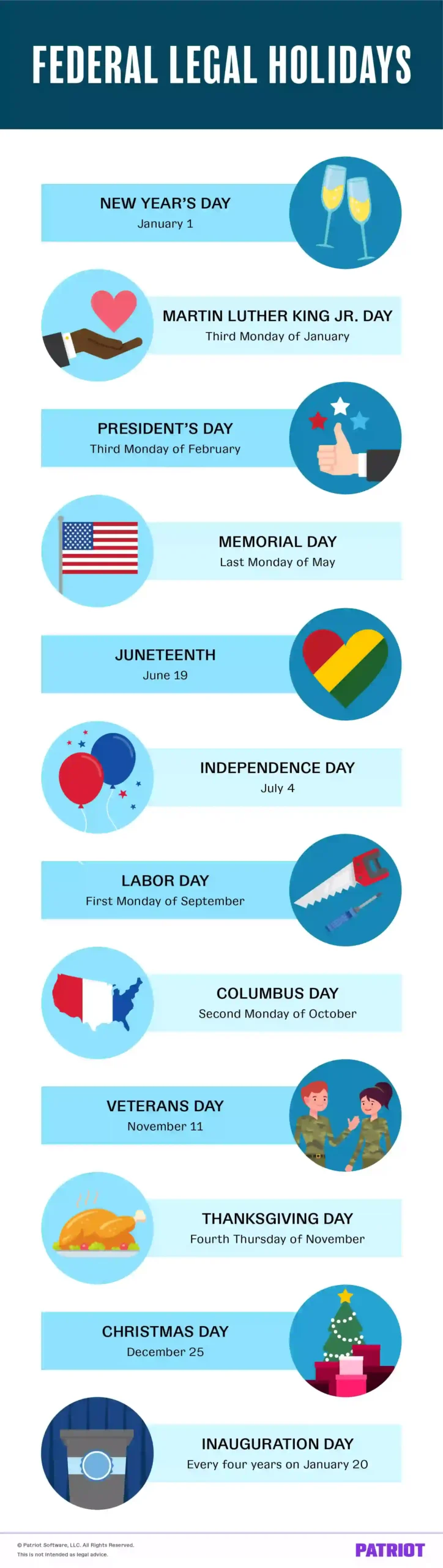
Federal legal holidays serve as the cornerstone of the American civic calendar, dictating the operational rhythm for government offices, financial institutions, and a vast majority of the private sector. While these days are technically mandates only for federal employees, their influence permeates the entire U.S. economy, shaping labor expectations and corporate policy. For the small business owner, navigating the complexities of federal holidays requires a balance between operational necessity, legal compliance, and the competitive demand for employee benefits. According to the Bureau of Labor Statistics (BLS), the average full-time employee in the United States receives approximately 7.6 paid holidays annually, a figure that highlights the standard set by federal designations. Understanding the historical context, legal framework, and economic impact of these 12 recognized holidays is essential for maintaining a modern, compliant, and attractive workplace.
The legal foundation for federal holidays is rooted in Section 6103 of Title 5 of the United States Code. This statute specifies the days on which federal government offices are closed and employees are granted paid leave. However, a common misconception among new entrepreneurs is the belief that federal holidays are mandatory "days off" for all workers. In reality, the U.S. does not have a federal law—including the Fair Labor Standards Act (FLSA)—that requires private employers to provide paid or unpaid time off on these days. Private sector participation in federal holidays is largely a matter of custom, union contract, or state-level regulation. Despite the lack of federal mandate for private firms, the "market rate" for benefits often forces small businesses to align with the federal schedule to retain talent and ensure smooth transactions with banks and government agencies.
A Comprehensive Chronology and Historical Context of Federal Holidays
The evolution of the federal holiday calendar reflects the shifting social and political priorities of the United States. Currently, the government recognizes 11 annual holidays and one quadrennial holiday. Each carries distinct historical significance that often informs how businesses choose to observe them.
1. New Year’s Day (January 1)
As the first holiday of the calendar year, New Year’s Day was one of the original four federal holidays established by Congress in 1870. While New Year’s Eve is widely celebrated and often results in early closures for retail and hospitality, it is not a legal federal holiday. Businesses must decide whether to extend benefits to the eve or strictly follow the January 1 designation.
2. Martin Luther King, Jr. Day (Third Monday in January)
Signed into law by President Ronald Reagan in 1983 and first observed in 1986, this holiday honors the civil rights leader’s legacy. It was the first federal holiday to honor a private citizen who was not a president. For businesses, this day often serves as a focal point for Diversity, Equity, and Inclusion (DEI) initiatives.
3. Washington’s Birthday / Presidents Day (Third Monday in February)
Originally established in 1879 to honor George Washington, the Uniform Monday Holiday Act of 1968 shifted its observation to a Monday to create a three-day weekend. While the federal government still officially refers to it as "Washington’s Birthday," it is popularly known as Presidents Day, honoring all who have served in the office.
4. Memorial Day (Last Monday in May)
Formerly known as Decoration Day, this holiday originated after the American Civil War to commemorate fallen soldiers. It became an official federal holiday in 1971. In the business world, Memorial Day is often viewed as the unofficial start of the summer tourism and retail season, leading many service-oriented businesses to remain open while offering "premium pay" to staff.
5. Juneteenth National Independence Day (June 19)
The newest addition to the federal calendar, Juneteenth was signed into law by President Joe Biden in 2021. It commemorates the end of slavery in the United States, specifically marking the day in 1865 when news of emancipation reached Galveston, Texas. Its rapid adoption by the private sector has signaled a shift in corporate social responsibility.
6. Independence Day (July 4)
Commemorating the adoption of the Declaration of Independence in 1776, the Fourth of July is perhaps the most universally observed holiday in the private sector. Since 1938, it has been a paid federal holiday.
7. Labor Day (First Monday in September)
Created to recognize the contributions of the American labor movement, Labor Day became a federal holiday in 1894 following the Pullman Strike. Ironically, while it celebrates workers, it is one of the busiest days for the retail and service industries.
8. Columbus Day / Indigenous Peoples’ Day (Second Monday in October)
Established as a federal holiday in 1937, this day has become a point of transition. While the federal government recognizes Columbus Day, an increasing number of states and municipalities observe Indigenous Peoples’ Day instead, creating a fragmented landscape for businesses operating across state lines.
9. Veterans Day (November 11)
Originally known as Armistice Day to mark the end of World War I, it was renamed Veterans Day in 1954 to honor all U.S. military veterans. Unlike other holidays moved to Mondays, Veterans Day is often observed on its specific date to maintain its historical integrity.

10. Thanksgiving Day (Fourth Thursday in November)
Thanksgiving was formally established as a federal holiday by a joint resolution of Congress in 1941. It remains one of the few days where even large-scale retailers have begun to trend toward total closure to allow for family observation.
11. Christmas Day (December 25)
Christmas was declared a federal holiday in 1870. While it is a religious holiday, its federal status has been upheld by courts as having a "secular" component of gift-giving and family gathering.
The Quadrennial Exception: Inauguration Day
In addition to the 11 annual holidays, the federal government recognizes Inauguration Day as a legal holiday every four years. It occurs on January 20 (or January 21 if the 20th falls on a Sunday) following a presidential election. However, this holiday is unique because its legal observation is restricted to federal employees in the "Inauguration Day Area," which includes Washington, D.C., and surrounding counties in Maryland and Virginia. For small businesses outside the capital region, this day is typically a standard business day, though it remains a significant event on the national political timeline.
Statistical Overview and Economic Impact
The economic implications of federal holidays are twofold: they represent a cost in terms of lost productivity and paid leave, but they also act as significant drivers of consumer spending. Data from the National Retail Federation (NRF) consistently shows that holidays like Independence Day, Labor Day, and Thanksgiving generate billions of dollars in retail sales.
From a labor perspective, the BLS reports that 77% of private-industry workers receive paid holidays. In the professional and technical services sector, this number rises to 93%, whereas in the service industry (leisure and hospitality), only about 37% of workers receive paid holidays. For a small business owner, deciding whether to offer paid holidays is a strategic financial decision. Offering 10 paid holidays a year roughly equates to a 4% increase in annual labor costs. However, HR analysts argue that this cost is often offset by reduced employee turnover and higher morale, which are critical for small businesses with limited staff.
Operational Rules: The Saturday/Sunday Shift
A critical technical detail for business owners is the "observation" rule. If a federal holiday falls on a Saturday, federal employees typically observe it on the preceding Friday. If it falls on a Sunday, it is observed on the following Monday. This shift ensures that federal workers receive their guaranteed days of leave.
For small businesses, this creates a ripple effect. Even if a business remains open on a Monday "observed" holiday, the Federal Reserve banks are closed. This means that ACH (Automated Clearing House) transfers, direct deposits, and wire transfers will not process. Small business owners must plan their payroll cycles accordingly to ensure employees are paid on time despite bank closures.
Employer Obligations and Competitive Advantages
While the law does not require private employers to pay for time off on federal holidays, many choose to do so to remain competitive in the talent market. HR experts suggest that a robust holiday policy is a "low-cost, high-impact" benefit.
Small businesses often employ one of three strategies:
- Full Observation: Closing the business and providing paid time off (PTO).
- Skeleton Crew: Remaining open with minimal staff, often offering "Holiday Premium Pay" (such as time-and-a-half or double-time) to those who volunteer to work.
- Floating Holidays: Allowing employees to choose a certain number of days off to celebrate holidays that may be more personally or culturally significant than the standard federal list.
The rise of remote work and global teams has further complicated this, leading many firms to adopt a more flexible "unlimited PTO" or "floating holiday" model to accommodate diverse religious and cultural backgrounds.
The Role of State and Local Jurisdictions
It is vital to note that states have the authority to designate their own legal holidays. For example, "Patriots’ Day" is a legal holiday in Massachusetts and Maine, while "Caesar Chavez Day" is observed in California and several other states. Small business owners must consult their specific state labor departments to ensure they are not overlooking local mandates that might differ from federal standards. In some jurisdictions, blue laws or specific state statutes may actually require certain types of businesses to remain closed or pay premium wages on specific holidays.
Strategic Integration into the Employee Handbook
To avoid confusion and potential legal disputes, a business’s holiday policy should be clearly articulated in the employee handbook. This document should specify which holidays are observed, whether they are paid or unpaid, and how eligibility is determined (e.g., whether part-time employees receive pro-rated holiday pay).
In conclusion, federal legal holidays are more than just days off; they are a reflection of national identity and a significant factor in the American economic machine. For the small business owner, these days represent an opportunity to align with national standards, manage financial operations around banking lulls, and demonstrate a commitment to employee well-being. By understanding the 12 federal holidays and the rules that govern them, employers can build a more resilient and attractive organizational culture.