Lana Rhoades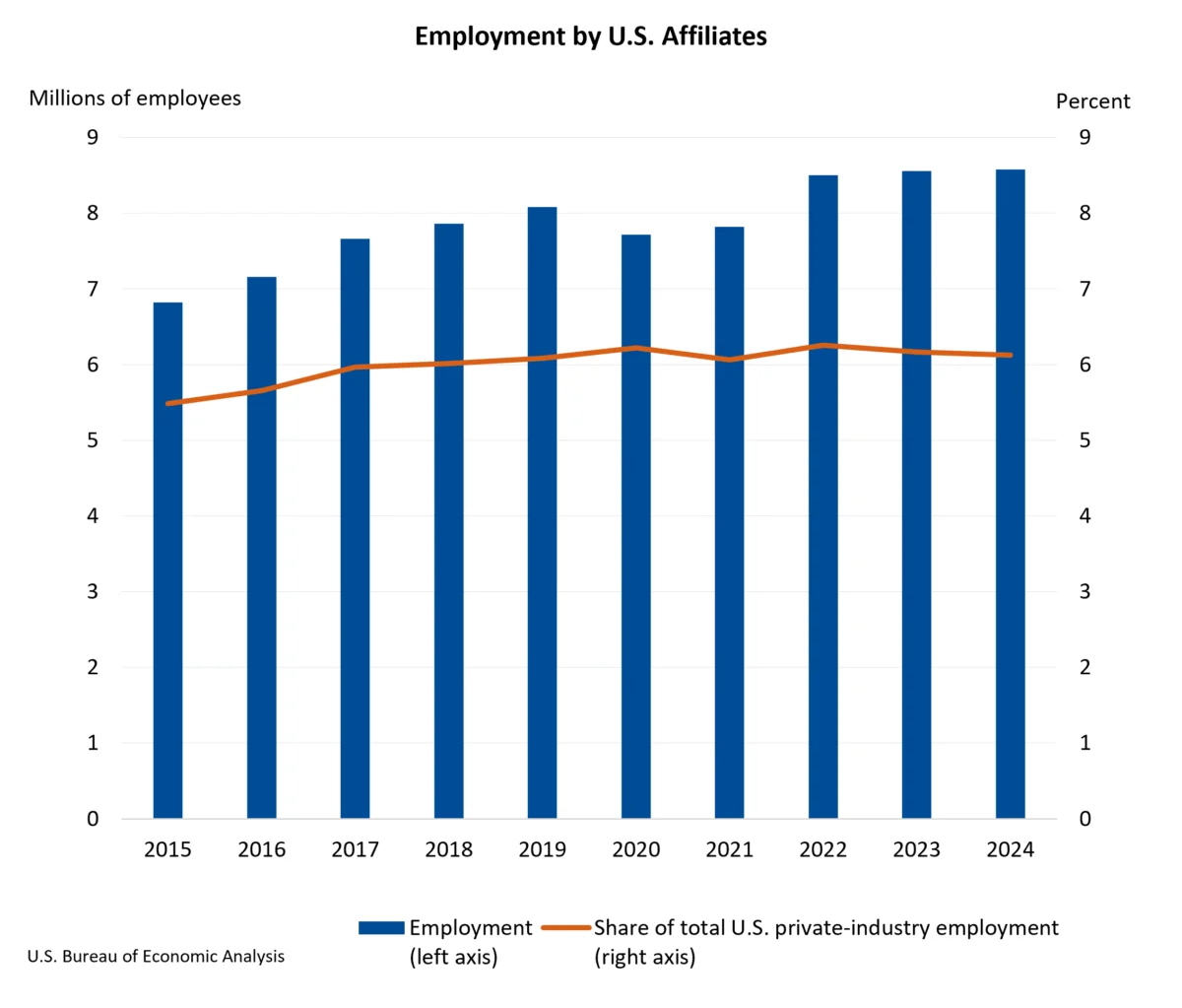
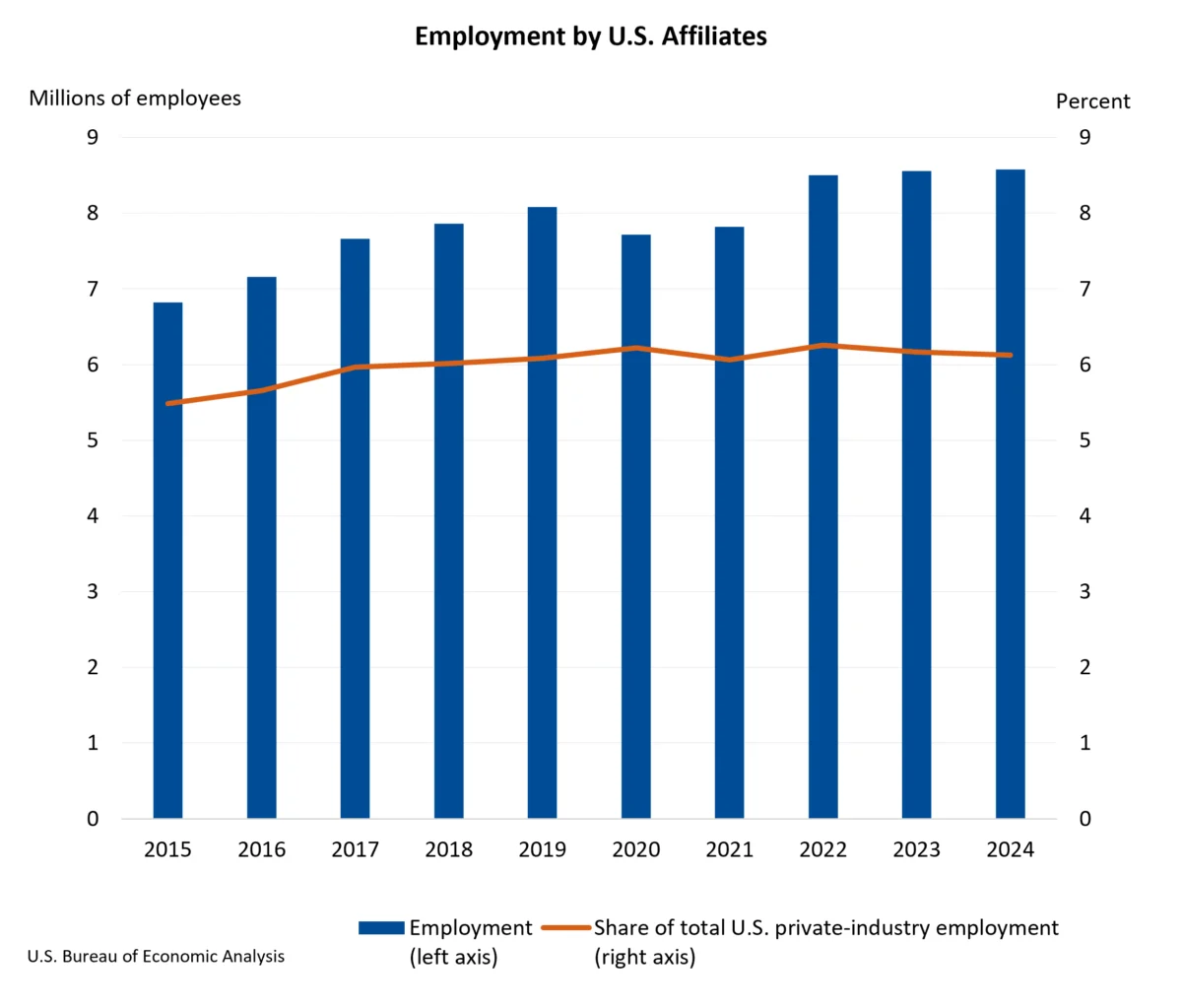
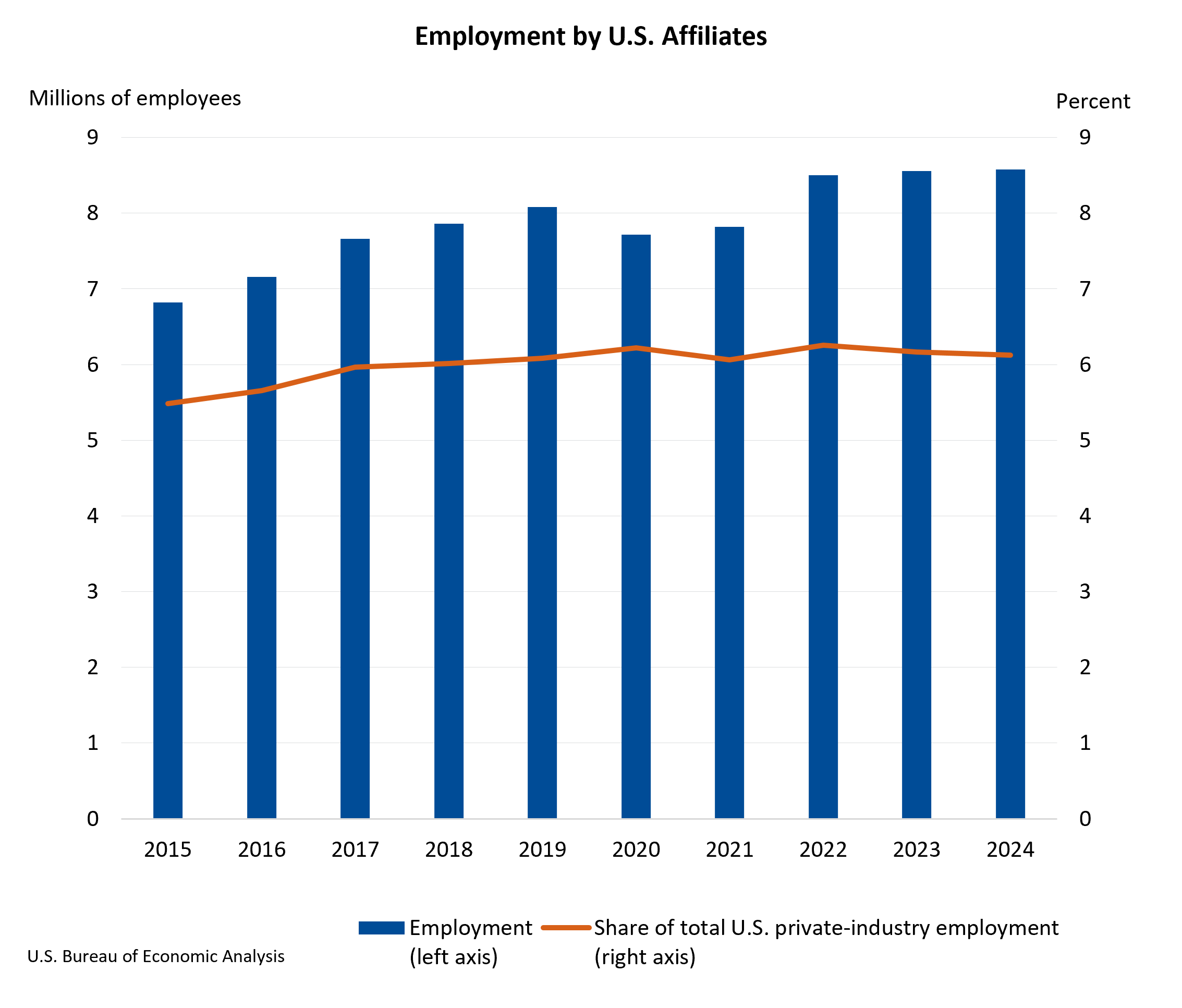
The majority-owned U.S. affiliates of foreign multinational enterprises (MNEs) demonstrated continued strength in the American economy during 2024, contributing significantly to employment and economic output, according to newly released statistics from the U.S. Bureau of Economic Analysis (BEA). These entities, which are legally incorporated in the United States but are controlled by foreign parent companies, employed 8.57 million workers across the nation. This figure represents a modest 0.2 percent increase from the 8.56 million workers employed in 2023, underscoring the sustained role of foreign investment in the U.S. labor market.
These statistics, released today, paint a comprehensive picture of the economic activities and financial operations of these crucial foreign-owned entities within the United States. While the overall share of private-industry employment attributed to U.S. affiliates saw a slight dip from 6.2 percent in 2023 to 6.1 percent in 2024, the absolute number of jobs maintained a positive trajectory. This segment of the economy remains a vital component of the nation’s workforce, particularly in key sectors.
Key Economic Contributions and Sectoral Distribution
The manufacturing and retail trade sectors emerged as the largest employers among U.S. affiliates of foreign MNEs. These industries have historically been significant recipients of foreign direct investment, leveraging global expertise and capital to drive domestic production and consumption. The BEA data further highlighted that affiliates with ultimate beneficial owners (UBOs) in the United Kingdom, Japan, and Germany were the most substantial contributors to overall employment within this group. These nations have long-standing and robust investment ties with the United States, reflecting deep economic partnerships and shared market interests.
Beyond employment, the economic impact of these foreign-owned enterprises extends to their direct contribution to U.S. gross domestic product (GDP). The current-dollar value added by U.S. affiliates, a key metric reflecting their contribution to the nation’s economic output, surged by 4.3 percent to an impressive $1.52 trillion in 2024. This growth signifies an expansion of their economic footprint. Although their share of total U.S. business-sector value added slightly decreased from 6.8 percent in 2023 to 6.7 percent in 2024, the absolute increase in value added underscores their persistent importance to the U.S. economy. This metric is a critical indicator of the productive capacity and economic health generated by these entities.
Investment and Innovation Driven by Foreign Affiliates
The commitment of foreign MNEs to their U.S. operations is further evidenced by their capital expenditures. Expenditures for property, plant, and equipment by these affiliates saw a robust increase of 3.3 percent, reaching $328.0 billion. This substantial investment signals a confidence in the long-term prospects of the U.S. market and an expansion of physical infrastructure, which can lead to further job creation and economic activity. Such capital injections are crucial for modernizing industries, enhancing productivity, and maintaining a competitive edge in the global marketplace.
Innovation remains a cornerstone of the U.S. economy, and foreign-owned affiliates are significant contributors to this vital area. Research and development (R&D) performed by these entities increased by a notable 5.3 percent, totaling $95.5 billion in 2024. This figure accounts for a substantial 12.4 percent of all U.S. business R&D expenditures. This highlights the critical role foreign companies play in driving technological advancement and scientific discovery within the United States, fostering a dynamic ecosystem of innovation that benefits the broader economy. Their R&D investments often translate into new products, processes, and intellectual property, solidifying the U.S. as a global leader in technological progress.
Geographic Distribution of Employment
The impact of foreign MNEs is felt across the nation, with significant concentrations of employment in key states. California led the nation in U.S. affiliate employment, with 885,200 workers. Texas followed with 717,400 employees, and New York secured the third position with 556,700 workers. In each of these leading states, the manufacturing sector was the primary driver of employment within U.S. affiliates. This concentration underscores the strategic importance of these states for foreign direct investment and the role of manufacturing in both job creation and economic development.
Chronology of Data Release and Revisions
The release of the 2024 statistics follows a well-established annual cycle by the BEA, providing crucial insights into the ongoing economic engagement of foreign MNEs. The BEA’s commitment to data accuracy is further demonstrated through its annual revision process. Statistics for 2023, initially released as preliminary estimates in December 2025, have been revised to incorporate newly available and updated source data. These revisions offer a more refined understanding of the economic landscape in the preceding year.
For instance, the number of employees in 2023 was initially estimated at 8,661.8 thousand, but the revised estimate stands at 8,556.9 thousand. Similarly, value added saw a revision from a preliminary $1,469.1 billion to $1,456.3 billion. Expenditures for property, plant, and equipment were revised from $322.7 billion to $317.6 billion, while R&D expenditures saw an upward revision from $87.8 billion to $90.6 billion. These adjustments are critical for maintaining the integrity and reliability of economic data used by policymakers, businesses, and researchers.
Broader Implications and Future Outlook
The sustained presence and growth of U.S. affiliates of foreign MNEs have profound implications for the U.S. economy. They provide essential jobs, contribute significantly to GDP, drive innovation through R&D, and fuel economic activity through capital investment. Their operations often bring advanced technologies, management practices, and access to global supply chains, enhancing the competitiveness of U.S. industries.
The BEA’s detailed data tables, accessible through its Interactive Data Application and comprehensive data files, allow for in-depth analysis of various aspects of these affiliates’ activities. This includes data on sales, balance sheet and income statement items, compensation of employees, and trade flows. The granularity of this information is invaluable for understanding the complex web of international economic engagement and its impact on domestic markets.
Updates to Data Methodologies
The BEA continuously works to enhance its data collection and reporting methods. Recently, the BEA has updated its disclosure avoidance method, employing techniques such as coarsening, which includes rounding, aggregation, and the use of ranges. This strategic adjustment aims to allow the BEA to publish a greater volume of data while simultaneously ensuring the confidentiality of its survey respondents. This modernization of methodologies is crucial for maintaining public trust and enabling more comprehensive data dissemination.
The next release of statistics on the activities of U.S. affiliates of foreign MNEs is anticipated in the Spring of 2027, which will cover data for the 2025 fiscal year. This forward-looking schedule ensures that stakeholders have access to timely and relevant economic information to inform decision-making and policy development. The continued focus on these statistics by the BEA underscores their importance in understanding the dynamics of globalization and its impact on the U.S. economic landscape. The resilience and growth observed in 2024 suggest that foreign investment will continue to be a vital engine of economic prosperity for the United States in the years to come.