Nila Kartika Wati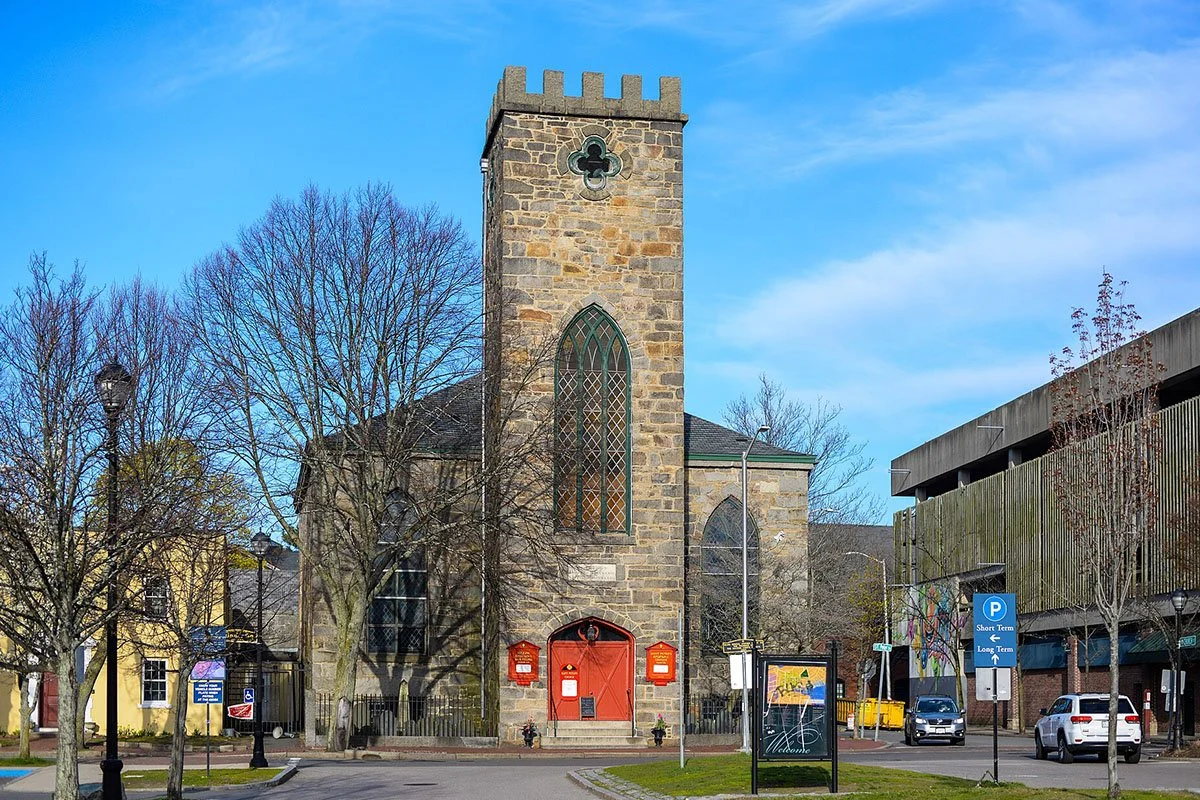
The trajectory of St. Peter’s–San Pedro Episcopal Church in Salem, Massachusetts, took a dramatic turn in December 2022 during a routine utility visit. For years, the historic congregation had been operating under an illusion of low energy expenses, only to discover that a malfunctioning gas meter had been undercounting consumption for a significant period. When the local utility replaced the faulty equipment, the financial reality was immediate and staggering: monthly heating costs surged from $100 to $3,000 almost overnight. This fiscal shock served as the catalyst for the "Heaven and Earth Project," a pioneering renewable energy initiative that seeks to transform a 19th-century granite landmark into the anchor of a cutting-edge community energy network.
Led by Reverend Nathan Ives, the project represents a convergence of historic preservation, social justice, and advanced engineering. By integrating solar power and a networked geothermal system, the church aims to eliminate its reliance on fossil fuels while providing a sustainable energy blueprint for the surrounding downtown district. The project is designed to serve approximately two dozen buildings, including residential units, municipal offices, and renowned cultural institutions, effectively creating a localized green microgrid in one of America’s most historic coastal cities.
A Legacy of Resilience and Adaptation
St. Peter’s–San Pedro has been a fixture of the Salem community for nearly three centuries. Founded in 1733, the church currently occupies a Gothic Revival structure built in the early 1800s. The building is characterized by its massive granite masonry, arched stained-glass windows, and traditional wooden box pews. Its square bell tower houses the oldest church bell in the United States, a symbol of the site’s deep roots in American history. In 1976, the church was included in the Salem Common Historic District’s listing on the National Register of Historic Places, a designation that traditionally complicates modern infrastructural upgrades.
The challenge of retrofitting such a structure is significant. Historic preservation standards often restrict visible changes to a building’s exterior, making the installation of modern HVAC systems or solar arrays a complex bureaucratic and architectural undertaking. However, the church leadership viewed these constraints not as barriers, but as a mandate for innovation. Reverend Ives, who has led the bilingual English and Spanish congregation since 2018, noted that the urgency of the climate crisis and the immediate threat of insolvency due to energy costs required a "radical" departure from conventional heating and cooling methods.
The Technical Framework of the Heaven and Earth Project
The Heaven and Earth Project utilizes a dual-technology approach to achieve energy independence. The "Heaven" component involves the installation of a robust solar photovoltaic system combined with battery storage. These units are slated for the roof of the Parish Hall, a structure abutting the main sanctuary that offers a more viable surface for solar harvesting without compromising the aesthetic integrity of the primary historic facade. This solar-plus-storage system is designed to ensure that the church can function as a "climate resilience hub," providing uninterruptible green energy to the community during extreme weather events or grid failures.
The "Earth" component of the project is a networked geothermal system, often referred to as a Thermal Energy Network (TEN). Unlike individual ground-source heat pumps, which serve a single building, a networked system connects multiple properties to a shared loop of underground pipes. The plan involves a 1.25-mile network of pipes circulating a mixture of water and antifreeze. These pipes will connect to hundreds of boreholes, each approximately 500 feet deep, drilled beneath the historic Salem Common park.
At that depth, the Earth maintains a constant temperature of roughly 56 degrees Fahrenheit year-round. In the winter, the system extracts heat from the ground to warm the connected buildings; in the summer, the process is reversed, with the system pulling heat out of the buildings and depositing it back into the earth. This method is significantly more efficient than traditional gas furnaces or air-source heat pumps, particularly in the volatile New England climate.
Chronology of Development and Stakeholder Engagement
The project’s development has followed a structured timeline since the 2022 utility crisis:
- December 2022: A new gas meter installation reveals years of under-billing, resulting in a 3,000% increase in monthly heating costs.
- Early 2023: St. Peter’s–San Pedro begins consultations with HEET (Home Energy Efficiency Team), a Boston-based nonprofit specializing in the transition from gas utilities to networked geothermal energy.
- Late 2023: The "Heaven and Earth Project" is formally conceptualized, and a coalition of partners is formed, including the City of Salem, local engineering firms, and geothermal specialists.
- 2024: The project secures over $850,000 in grant funding, including $349,000 from the Massachusetts Department of Environmental Protection and $50,000 from HEET for feasibility and community outreach.
- December 2024: A comprehensive feasibility study is completed. The project team holds discussions with owners of 24 buildings within the proposed network footprint.
- 2025–2026 (Projected): Finalization of governance structures and commencement of the pilot phase, with the goal of the church operating on green energy within two years.
Economic Implications and Funding Strategy
The upfront capital required for the Heaven and Earth Project is substantial, with estimates reaching into the tens of millions of dollars. Zeynab Magavi, executive director of HEET, describes the investment as "buying 50 years of fuel up front." While the initial costs are high, the long-term economic benefits are multifaceted. By sharing the infrastructure across two dozen buildings—including Salem’s City Hall, public housing blocks, the Salem Witch Museum, and buildings belonging to the Peabody Essex Museum—the per-unit cost of the transition is reduced.
Furthermore, the project aligns with the Commonwealth of Massachusetts’ aggressive climate mandates. The state’s Global Warming Solutions Act and subsequent legislation require a transition to net-zero greenhouse gas emissions by 2050. As natural gas prices are expected to remain volatile and carbon taxes or regulations increase, the move toward a stabilized, self-contained geothermal loop offers predictable long-term energy costs for participants. For a congregation that has historically assisted its low-income members with heating bills, this stability is a core component of its mission.
Social Equity and the Resilience Hub Concept
The social dimension of the project is centered on "El Punto" (the Point), a predominantly Latino and low-income neighborhood adjacent to the church. Historically, marginalized communities are the first to suffer from rising energy costs and the last to receive infrastructure upgrades. Reverend Ives has emphasized that the project is a defensive measure for a "beleaguered" community currently facing both economic pressures and a shifting political landscape.
By establishing the church as a climate resilience hub, the project provides a tangible safety net. In the event of a heatwave or a winter power outage, the church’s solar-and-battery-backed geothermal system will remain operational, offering a bilingual refuge where residents can access heating, cooling, and electricity. This model mirrors similar efforts in other parts of the country, such as New Orleans’ "Community Lighthouse" program, which aims to place solar-powered resilience centers within a 15-minute walk of every resident.
Collaborative Governance and Broader Impact
A critical aspect of the Heaven and Earth Project is its governance model. Unlike a top-down utility project, this initiative is being built through "shared power." Ongoing discussions are being held in both Spanish and English to determine how the network will be managed and whether the church should serve as a standalone pilot or if the entire neighborhood network should be activated simultaneously.
The City of Salem has been a supportive partner, viewing the project as a vital component of its own net-zero roadmap. The inclusion of municipal buildings and high-profile cultural sites like the Peabody Essex Museum ensures that the project has the institutional weight necessary to navigate the complexities of urban drilling and historic district regulations.
Zeynab Magavi of HEET notes that the project’s success depends as much on social networking as it does on mechanical networking. "You have to network the people to network the buildings," she stated, highlighting the necessity of community trust in implementing large-scale infrastructure changes in dense, historic urban environments.
Conclusion and Future Outlook
The Heaven and Earth Project stands as a testament to the role of faith-based organizations in leading climate adaptation. By leveraging its historic status and central location, St. Peter’s–San Pedro is demonstrating that even the oldest structures can be part of a high-tech, carbon-neutral future. As the project moves toward its construction phase over the next 24 months, it will serve as a high-stakes case study for other historic cities in New England and beyond.
If successful, the Salem model could prove that "Networked Geothermal" is not only technically feasible in historic districts but is also a viable strategy for protecting vulnerable populations from the dual threats of energy poverty and climate change. For Reverend Ives and his congregation, the project is a continuation of a 300-year legacy of presence: an effort to ensure that the church remains a stable, welcoming beacon on the same curb where it has stood since the colonial era.