Nila Kartika Wati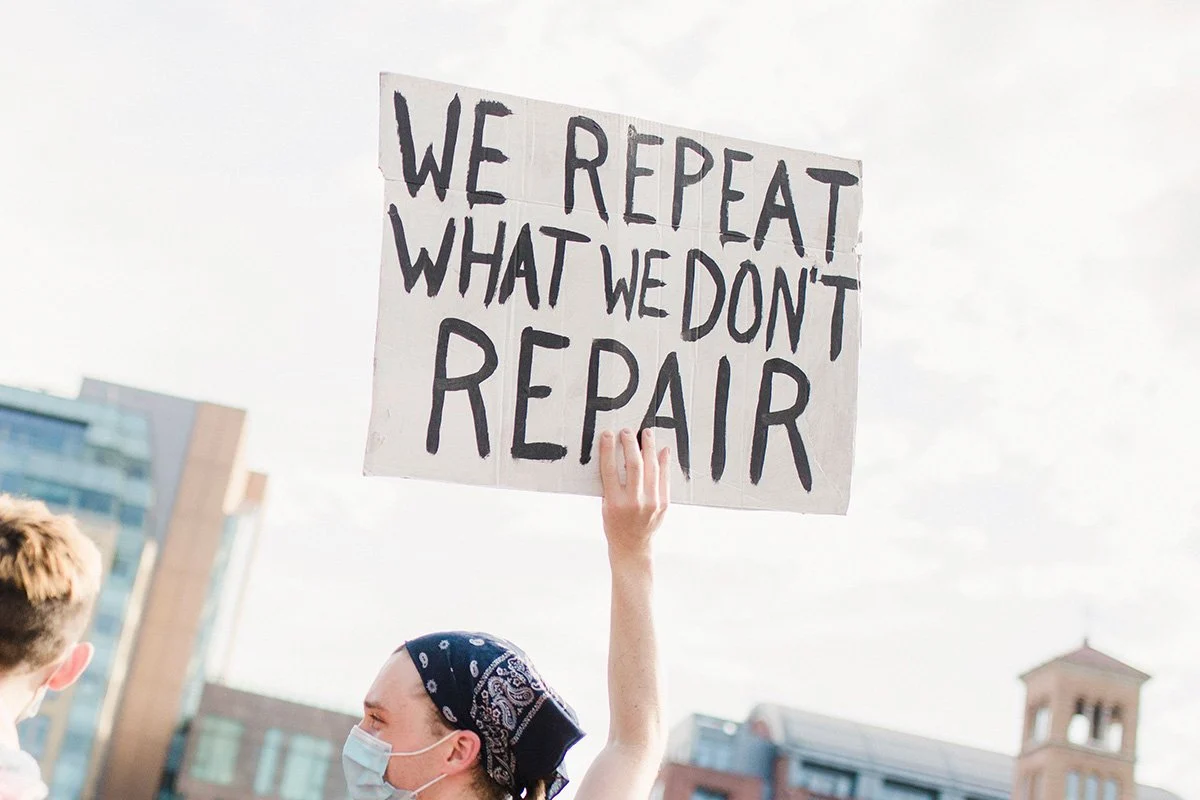
The ongoing debate surrounding economic inequality in the United States has increasingly moved beyond simple discussions of income disparity to a more profound examination of systemic exclusion and the structural mechanisms that preserve generational wealth. As the nation grapples with a widening gap between the wealthiest citizens and the working class, a growing movement of economists, policymakers, and business leaders is advocating for a dual-pronged approach: the implementation of fair taxation and the formal establishment of reparations for Black Americans. This perspective posits that the current economic landscape is not merely the result of market forces, but the product of decades of intentional policy choices that have historically favored white capital accumulation while systematically extracting wealth from Black communities.
The Evolution of a Retail Empire: A Case Study in Access
The trajectory of the Save Mart Supermarkets chain, founded in 1952 in Modesto, California, serves as a poignant microcosm of the broader American economic narrative. Established by the son of Italian immigrants, the company began with a single storefront funded by accessible capital during a period of significant post-war economic expansion. Over the ensuing decades, particularly under leadership in the 1980s and 1990s, the business expanded into a regional powerhouse, operating over 200 stores by the 2010s.
While the narrative of such enterprises is often framed as a triumph of individual merit and the "American Dream," a closer analysis reveals the role of systemic advantages. The mid-century era was characterized by a robust availability of small business loans and favorable credit terms, which were frequently denied to Black entrepreneurs through both informal social practices and formal institutional policies. Furthermore, the rapid expansion of the company coincided with the Reagan administration’s shift toward deregulation, reduced antitrust enforcement, and significant corporate tax incentives. These "business-friendly" policies allowed established capital to compound at an accelerated rate, creating a generational wealth engine that was largely inaccessible to those outside of specific racial and socioeconomic circles.
The Paradox of Internal Corporate Economics
The ethical contradictions inherent in the modern corporate model became evident when the leadership of Save Mart began analyzing internal employee data. Despite the company’s reputation as a family-owned business that provided union wages and benefits, a significant portion of its workforce remained in a state of precariousness. Data indicated that many employees were forced to rely on public assistance programs, such as the Supplemental Nutrition Assistance Program (SNAP), to purchase groceries at the very stores where they worked.
This phenomenon highlights a systemic failure in the current "business rulebook," which prioritizes the minimization of tax liabilities and the treatment of labor as a strictly controlled expense to maximize returns for owners and shareholders. When the cost of living exceeds the compensation provided by profitable enterprises, the public sector effectively subsidizes private wealth by providing the necessary safety nets for the workforce. This disconnect has led some industry leaders to conclude that voluntary corporate social responsibility is insufficient to address the scale of the crisis; instead, they argue for a fundamental restructuring of the tax code to ensure that wealth is not built at the expense of those who produce it.
The Racial Wealth Gap: A Statistical Reality
The disparity in wealth accumulation between white and Black families in the United States is one of the most persistent indicators of historical injustice. According to the Federal Reserve’s 2022 Survey of Consumer Finances, the median white family holds roughly $285,000 in wealth, compared to just $44,900 for the median Black family. A primary driver of this disparity is the mechanism of inheritance. While approximately 26 percent of white families can expect to receive an inheritance or significant intergenerational gift, only 8 percent of Black families have access to such foundational capital.
This gap is not an accident of history but the result of specific exclusionary practices:
- The GI Bill: While it helped millions of white veterans enter the middle class through low-cost mortgages and education, Black veterans were largely excluded from these benefits.
- Redlining: Federal policies in the mid-20th century explicitly discouraged investment in Black neighborhoods, preventing families from building equity in their homes—the primary source of wealth for the American middle class.
- Agricultural Exclusion: Black farmers were historically denied loans and assistance from the USDA, leading to the loss of millions of acres of land.
The compounding nature of wealth means that these historical exclusions continue to manifest in the present day, as those with inherited capital can invest in education, housing, and entrepreneurship, while those without it remain trapped in cycles of debt and low-wage labor.
The Structural Imbalance of the American Tax Code
A central tenet of the argument for economic reform is the current disparity in how the tax code treats earned income versus passive wealth. Under the prevailing system, labor is often taxed at a higher effective rate than capital gains and dividends. This structure inherently rewards those who already possess wealth while placing a heavier burden on those who must work for a living.
Critics of the current system point to the "Buffett Rule"—named after billionaire Warren Buffett, who famously noted that he pays a lower effective tax rate than his secretary—as evidence of a fundamental flaw in the tax architecture. When wealth is taxed at a lower rate than work, the concentration of capital at the top of the economic pyramid becomes inevitable. This concentration not only limits economic mobility but also threatens the stability of the democratic process by giving a small number of individuals disproportionate influence over public policy.
The Historical Link Between Taxation and Democracy
The relationship between private wealth and public power has long been a concern for American sociologists and legal scholars. Vanessa Williamson, a senior fellow at the Brookings Institution, has argued that oligarchic interests have historically sought to keep governments underfunded as a means of protecting private power from public oversight. This dynamic was evident in the antebellum South, where slaveholders feared that a strong central government might use its taxing power to dismantle the institution of slavery.
In the 20th century, Supreme Court Justice Louis Brandeis famously warned that the United States could have "great wealth gathered in a few hands, or it can have self-government—but not both." Modern empirical research supports this observation. A 2014 study by Martin Gilens and Benjamin Page found that the preferences of the average American voter have a "near-zero, statistically non-significant impact upon public policy," whereas the preferences of economic elites and organized interest groups have a significant influence. When inequality reaches extreme levels, it tends to erode the social trust and institutional integrity required for a functioning democracy.
Reparations as a Tool for Social Transformation
While fair taxation is a necessary tool for addressing current imbalances, many advocates argue it is incomplete without a formal process of reparations. Reparations are defined not merely as financial transfers, but as a holistic process of restorative justice. This includes:
- Reckoning: A formal acknowledgement of the state’s role in perpetrating and maintaining racial exclusion.
- Accountability: Establishing responsibility for the long-term economic impacts of slavery, Jim Crow, and systemic discrimination.
- Redress: Targeted investments in Black communities to provide the capital access that was historically denied.
The goal of reparations is to "repair the wound" rather than simply treating the symptoms of inequality. By addressing the foundational harms that prevented Black families from building generational wealth, the state can create a more level playing field for future generations.
Economic and Societal Implications of Reform
The move toward progressive taxation and reparations is often framed by opponents as a "sacrifice" or an "overreach." However, proponents argue that these measures are actually investments in the long-term health of the American economy. A 2020 report by Citi GPS estimated that closing the racial wealth gap could have added $16 trillion to the U.S. GDP over the previous two decades. By increasing the purchasing power of millions of families and fostering a more diverse entrepreneurial landscape, the economy as a whole stands to grow.
Furthermore, reducing economic inequality is seen as a vital defense against the rise of authoritarianism. Research into the erosion of democracies globally has found that high levels of economic inequality are one of the strongest predictors of democratic backsliding. When a large segment of the population feels that the economic system is "rigged" against them, they are more susceptible to populist movements that promise to dismantle established institutions.
Conclusion: A Path Toward an Enduring Democracy
The integration of fair taxation and racial reparations represents a comprehensive strategy to ensure the longevity of the American democratic project. By modernizing the tax code to value work as much as wealth and by formally addressing the historical exclusions that have hampered Black economic progress, the United States has the opportunity to create a more resilient and inclusive society.
As the nation approaches its 250th anniversary, the choice remains between a system that continues to concentrate power in the hands of a few and one that empowers the many. The evidence suggests that a country that works for all its citizens is not only a moral imperative but an economic and political necessity for a stable future. Through structural reform and restorative justice, the goal is to build a democracy that can no longer be bought, but instead belongs to the people it was designed to serve.